
When you start searching for a garage door opener, the name LiftMaster comes up everywhere. This brand is trusted by millions of homeowners and businesses for its reliability, smart features, and strong performance. But one big question stands out: *How much does a LiftMaster garage door opener really cost?*
The answer is not simple. The price depends on many things: the model, features, where you buy it, installation costs, and more. If you’re new to garage door openers, the huge range of prices and options can be confusing. Are you paying for bells and whistles you don’t need? Or are you missing important features by going too cheap?
This guide explains every cost factor, from the basic models to the most advanced smart openers. You’ll learn about the prices, what affects the total cost, and how to choose the best LiftMaster opener for your needs and budget. Whether you’re a first-time buyer or upgrading an old system, this article will help you make a smart decision without regrets.
Why Choose Liftmaster?
Before getting into prices, it’s important to know why so many people pick LiftMaster. This brand, owned by Chamberlain Group, is known for its quality, long life, and advanced technology. They offer:
- Quiet operation (great for attached garages)
- Strong motors that handle heavy or oversized doors
- Smartphone control with MyQ app
- Battery backup for power outages
- Secure access features (rolling codes, automatic locks)
Many professional installers and home builders recommend LiftMaster because it often lasts longer and needs less maintenance than cheaper brands.
Main Types Of Liftmaster Garage Door Openers
LiftMaster offers several types of garage door openers. Each type affects the price, installation, and features.
1. Chain Drive Openers
These use a metal chain to move the door. They are strong and affordable but can be a bit noisy. Good for detached garages.
2. Belt Drive Openers
These use a rubber belt. They are quieter and often have more advanced features. They cost more than chain drive models.
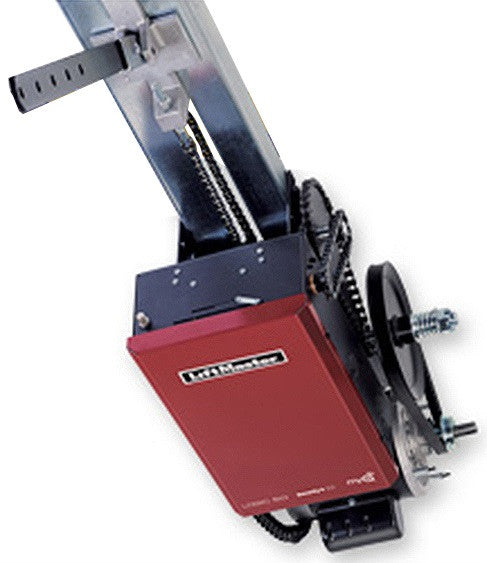
3. Wall Mount (jackshaft) Openers
These mount on the garage wall, not the ceiling. They save space and are very quiet. Usually used for high-lift or commercial doors.
4. Screw Drive Openers (less Common Now)
These use a threaded steel rod. Rare in newer LiftMaster lines.
5. Smart Openers
Many LiftMaster openers now include MyQ smart control, which lets you open or close the garage from your phone.
Each type comes in several models, with different features and prices.
What Affects The Price Of A Liftmaster Opener?
Many factors impact the cost of a LiftMaster garage door opener. Here are the main ones:
Model And Features
Basic models are cheaper, but advanced features add cost. For example, an opener with smartphone control, battery backup, and a quiet belt drive costs more than a basic chain drive with no smart features.
Motor Power
Most home garage doors use 1/2 or 3/4 horsepower (HP) motors. Heavier doors (like solid wood or oversized) need a stronger motor, which raises the price.
Drive Type
Chain drive is the cheapest, belt drive is mid-range, and wall mount is usually the most expensive.
Where You Buy
Buying from a dealer or installer often costs more than buying online or from a hardware store. But dealers usually include installation and warranty support.
Installation Costs
Professional installation can add $150–$350, depending on the model and your garage setup.
Accessories
Extra remotes, keypads, cameras, and smart locks add to the final price.
Regional Price Differences
Prices can be higher in some areas due to labor, delivery fees, or local demand.
Average Price Range For Liftmaster Openers
To give you a clear idea, here are the typical price ranges for new LiftMaster garage door openers (device only, no installation):
- Chain Drive Models: $170–$300
- Belt Drive Models: $220–$450
- Wall Mount Models: $350–$700
Smart features and battery backup push prices toward the higher end.
Here’s a comparison of average retail prices for popular models:
| Model | Drive Type | MyQ Smart Control | Battery Backup | Average Price (Device Only) |
|---|---|---|---|---|
| 8165W | Chain | Yes | No | $200–$250 |
| 8550WLB | Belt | Yes | Yes | $350–$430 |
| 8500W | Wall Mount | Yes | Yes | $400–$600 |
| 87504-267 | Belt | Yes | Yes | $420–$500 |
| 8587WL | Chain | Yes | No | $300–$380 |
Prices change often, and sales can lower these numbers. Always compare both online and local prices before buying.
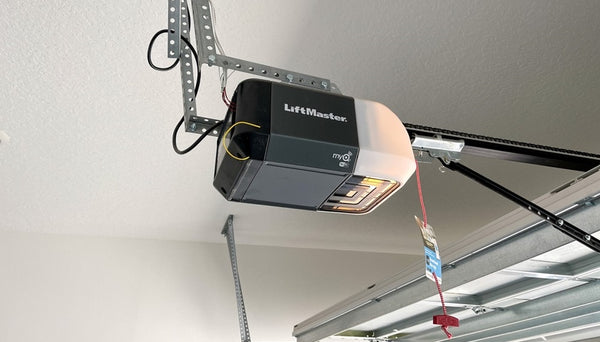
Detailed Price Breakdown By Opener Type
Chain Drive Models
Chain drive openers are often the most affordable. They’re strong and last a long time. However, they’re louder than other types. Here’s what you should know:
- Entry-level models (e.g., 8165W) can cost around $170–$250.
- Premium chain drive models (e.g., 8587WL with a heavy-duty motor) may reach $350–$400.
Who should buy? If your garage is detached or noise isn’t a problem, chain drive models offer great value.
Belt Drive Models
Belt drive openers are known for quiet operation. They use a reinforced rubber belt instead of a chain.
- Basic belt drive models (e.g., 8155W) start at $220–$300.
- High-end belt models (e.g., 87504-267 with camera and MyQ) cost $400–$500.
Who should buy? If your garage is attached to your house or near bedrooms, a belt drive model is worth the extra cost.
Wall Mount (jackshaft) Models
Wall mount openers sit beside the door, not overhead. They save ceiling space and are nearly silent.
- Standard wall mount (e.g., 8500W) starts at $400–$500.
- Top-of-the-line models (e.g., 98022 with extra features) can reach $600–$700.
Who should buy? Homeowners with high ceilings, limited overhead space, or special doors. Also great if you want a very quiet and clean setup.
Smart Openers
Most new LiftMaster models include smart features. But if you want the latest MyQ control, built-in cameras, or Amazon Key support, expect to pay more.
- Smart upgrades add $40–$150 to the opener cost.
- Camera-equipped models (e.g., 87504-267) usually cost $450 and up.
If you want to add MyQ smart control to an older opener, MyQ retrofit kits are $40–$80.
Battery Backup
California and some other regions require battery backup by law. Models with battery backup typically cost $50–$100 more than similar models without it.
Tip: If you live in an area with frequent power cuts, battery backup is a wise investment.
Professional Installation Costs
Buying just the device is only part of the cost. Most homeowners need professional installation for safety and warranty reasons.
- Typical installation costs: $150–$350
- Complex installs (wall mount, unusual doors, or rewiring) can reach $400+
What does installation include?
- Removing the old opener (if needed)
- Mounting the new opener and hardware
- Setting up remotes, keypads, and safety sensors
- Programming MyQ smart features
- Basic adjustments
If you have an old or heavy door, you might also pay for new springs or hardware.
DIY installation is possible but not recommended for most people. Mistakes can be dangerous and void the warranty.
Accessories And Add-ons
The base price usually includes two remotes and a wall button. But many people want more accessories:
- Wireless keypad: $40–$60
- Extra remote controls: $30–$50 each
- Garage door monitor: $40–$60
- Smart camera: $80–$120
- Automatic garage lock: $60–$100
Adding these can raise your total cost, so plan your budget.
Warranty And Long-term Value
Most LiftMaster openers come with a 1–5 year warranty on parts and motor, depending on the model. Higher-end models may offer lifetime motor warranties.
Why does this matter? While you might pay $100–$200 more for a LiftMaster compared to a no-name brand, you often save money in the long run because:
- Fewer repairs and replacements
- Reliable performance for 10–15 years or more
- Better support and part availability
Non-obvious insight: Some low-cost openers only last 3–5 years or break down quickly, costing you more in repairs and replacements.
Price Comparison: Liftmaster Vs Other Brands
To see if LiftMaster is worth the price, let’s compare it to other popular brands:
| Brand | Typical Price Range | Warranty | Smart Features |
|---|---|---|---|
| LiftMaster | $200–$700 | 1–5 years (motor lifetime on some) | MyQ (most models) |
| Chamberlain | $160–$450 | 1–5 years | MyQ (some models) |
| Genie | $170–$500 | 5–10 years (motor lifetime on some) | Aladdin Connect (some models) |
| Craftsman | $140–$400 | 1–5 years | AssureLink (some models) |
| Ryobi | $250–$400 | 3 years | Optional add-ons |
Key point: LiftMaster is usually priced higher, but you get better build quality, advanced features, and strong customer support.
Real-world Examples: What Homeowners Pay
To give you a better idea, here are three real-world scenarios:
1. Basic Upgrade (detached Garage)
- Opener: LiftMaster 8165W (chain drive, MyQ smart)
- Device price: $200
- Installation: $180
- Total: $380
2. Quiet Smart Home (attached Garage)
- Opener: LiftMaster 87504-267 (belt drive, MyQ, camera, battery backup)
- Device price: $470
- Installation: $250
- Wireless keypad: $50
- Total: $770
3. Premium Setup (high Ceiling Garage)
- Opener: LiftMaster 8500W (wall mount, MyQ, battery backup)
- Device price: $500
- Installation: $350
- Automatic garage lock: $80
- Total: $930
Prices can be higher in cities or for complex garages, but these examples are typical for most US locations.
How To Choose The Right Liftmaster Opener For Your Budget
Selecting the best model means balancing features with cost. Here’s how to make the right choice:
1. Know Your Door
Is your door heavy, wooden, or oversized? You’ll need a stronger motor and possibly a wall mount. For standard aluminum doors, a 1/2 or 3/4 HP model is enough.
2. Consider Noise
If your garage is under a bedroom or next to living space, pick a belt drive or wall mount for quiet operation.
3. Decide On Smart Features
Do you want to control your door from your phone? Most new LiftMasters have MyQ, but older models or basic types may not.
4. Think About Power Outages
If your area loses power often, get a battery backup model.
5. Set Your Budget
- Under $300: Basic chain drive, few extras
- $300–$500: Quiet belt drive, smart features, battery backup
- $500+: Wall mount, camera, advanced accessories
6. Get Multiple Quotes
Prices can vary by $100 or more between dealers. Ask for quotes including installation, old opener removal, and extra accessories.
7. Don’t Forget The Warranty
Longer warranties often mean better quality. Don’t save $50 if it means a weaker opener.
Non-obvious insight: Some online sellers offer low prices but no warranty or support. Always check the seller’s reputation.
What’s Not Included In The Price?
Many buyers are surprised by extra costs. Here’s what’s usually not included:
- Electrical outlet near opener (installation may cost extra if needed)
- Repair or replacement of old springs, rails, or door parts
- Hauling away the old opener (some installers charge $20–$50)
- Extended warranty (optional, $50–$100 extra)
Ask for a full price breakdown before agreeing to buy.
How To Save Money On A Liftmaster Opener
Want the best value? Try these tips:
1. Wait For Sales
Big hardware stores often discount openers around holidays.
2. Buy From A Local Dealer
Sometimes local installers get better pricing and include installation in the package.
3. Bundle Accessories
Get remotes, keypads, and cameras together for a better deal.
4. Use A Myq Retrofit Kit
If you already have a working opener, adding MyQ smart control is cheaper than a new device.
5. Check For Rebates
Some utility companies offer rebates for energy-efficient openers.
Is Liftmaster Worth The Price?
Most experts and homeowners agree: LiftMaster costs more up front but saves money over time. The openers last longer, need fewer repairs, and offer strong smart features.
If you plan to stay in your home for years, the extra $100–$200 is a good investment. If you’re selling soon, a smart, quiet opener can be a selling point for buyers.

Where To Buy Liftmaster Garage Door Openers
You can buy LiftMaster products from:
- Authorized dealers (includes installation and warranty)
- Online retailers (Amazon, Home Depot, Lowe’s)
- Local hardware stores
LiftMaster does not sell directly to consumers from their website, but you can find local dealers using the official LiftMaster dealer locator.
Common Buyer Mistakes
Beginners often make these errors:
- Choosing too weak a motor
Heavy doors need more power. Undersized openers wear out quickly.
- Ignoring noise level
Chain drives can be noisy in attached garages.
- Not budgeting for installation
Always include professional install in your total cost.
- Forgetting about accessories
Buying remotes, keypads, or cameras separately costs more.
- Ignoring warranty and support
Cheap online deals may not include help if something breaks.
Future Trends: What’s Next In Garage Door Openers?
LiftMaster continues to innovate. Expect to see more:
- Built-in cameras with two-way audio
- Integration with smart home systems (like Alexa, Google Home)
- Better battery technology for longer backup power
- Enhanced security features (like auto-locks and delivery access)
New features may increase prices, but also add value and convenience.
Frequently Asked Questions
How Long Does A Liftmaster Garage Door Opener Last?
Most LiftMaster openers last 10–15 years with regular use and maintenance. Some models last over 20 years if installed and maintained properly. Cheaper brands may wear out in half the time.
Can I Install A Liftmaster Opener Myself?
DIY installation is possible for people with electrical and mechanical experience. However, for safety, warranty, and performance reasons, most people should hire a professional installer.
Are Liftmaster And Chamberlain The Same?
LiftMaster and Chamberlain are both made by the Chamberlain Group. LiftMaster is usually sold through dealers and considered more professional grade, while Chamberlain is often sold in retail stores.
Is Myq Smart Control Free To Use?
MyQ lets you open, close, and monitor your garage door for free through the app. Some features, like linking to Amazon Key for in-garage delivery, may have a small subscription fee.
Where Can I Find Official Liftmaster Pricing?
LiftMaster does not sell directly, but you can find authorized dealers and pricing using the LiftMaster dealer locator or check major retailers like Home Depot and Amazon for current prices.
Choosing a LiftMaster garage door opener means investing in security, convenience, and peace of mind for years to come. With a clear understanding of the costs, features, and what to expect, you can confidently choose the right model for your home and budget.