
The sudden, unnerving sound of a garage door opener clicking but refusing to budge can be a frustrating and even alarming experience. You’re likely rushing to get somewhere, only to be met with this mechanical protest. This isn’t just an inconvenience; it can leave your vehicle trapped or your home vulnerable.
Understanding the potential causes behind this common issue is the first step toward a swift resolution.
When your garage door clicks and fails to open, it signals a problem within the complex system of springs, cables, rollers, tracks, and the opener itself. These systems work in harmony, and a single malfunctioning component can bring the entire operation to a halt.
Whether it’s a simple fix you can handle yourself or a sign of a more serious mechanical failure requiring professional attention, identifying the source of the click is crucial. This guide will walk you through the most common reasons your garage door might be making noise but not moving, empowering you with the knowledge to diagnose and potentially resolve the problem.
Key Takeaways
- Obstructions: Check the door’s path for physical blockages.
- Trolley/Carriage Issue: The trolley might be disengaged or jammed.
- Photo Eye Sensors: Misaligned or dirty sensors are a frequent culprit.
- Limit Settings: Incorrectly set travel limits can prevent operation.
- Drive Mechanism: Issues with the chain, belt, or screw drive can cause clicking.
- Motor/Capacitor Problems: The opener’s motor or its starting capacitor may be failing.
- Broken Springs or Cables: These critical components can cause immediate failure and clicking.
- Manual Lock Engaged: Ensure the manual release or lock isn’t activated.
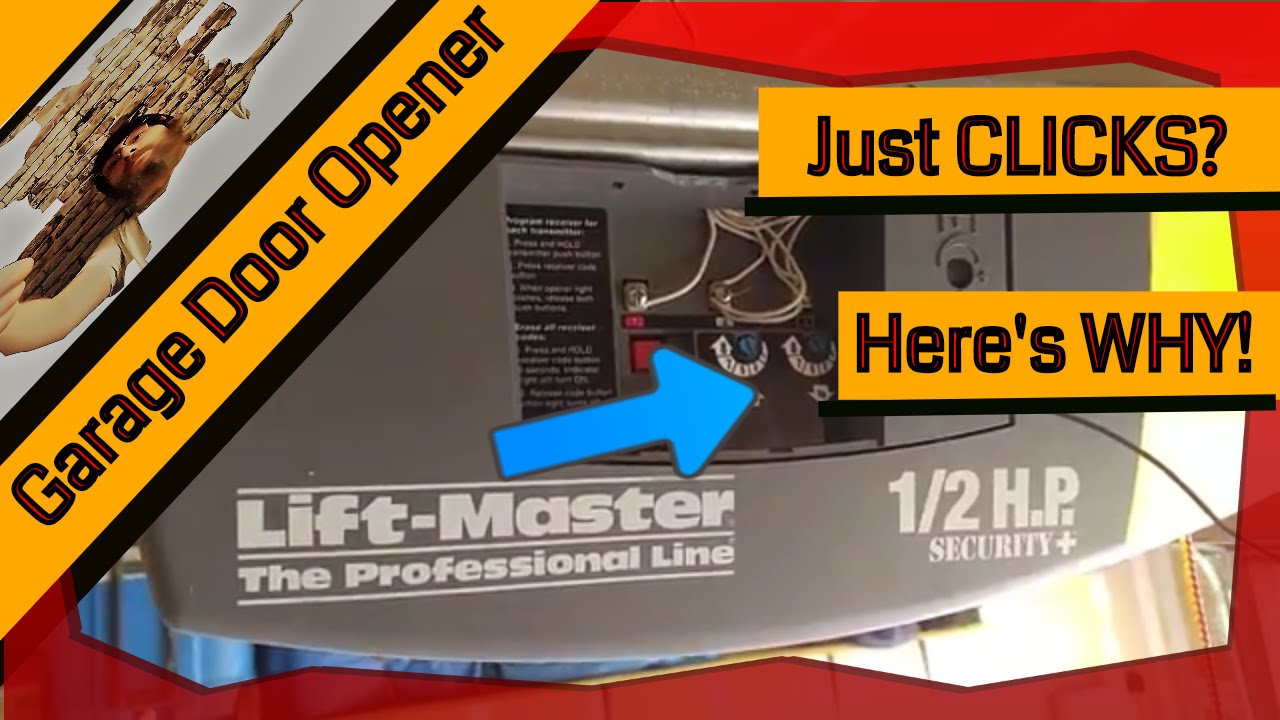
Credit: www.youtube.com
Understanding The Garage Door Opener Mechanism
Before diving into the specific reasons for a clicking, non-opening garage door, it’s beneficial to understand the basic components and how they work together. A typical garage door opener system consists of several key parts, each playing a vital role in lifting and lowering the heavy door.
The Opener Unit
This is the motor-driven component, usually mounted on the ceiling. It houses the motor, gears, and the logic board that controls the door’s movement. The opener connects to the garage door via a drive mechanism.
Drive Mechanisms
There are three primary types of drive mechanisms:
- Chain Drive: Uses a chain to move a trolley along a rail. This is often the most robust and affordable option, but can be noisier.
- Belt Drive: Similar to a chain drive, but uses a rubber belt. This is a quieter alternative, often preferred for attached garages.
- Screw Drive: Utilizes a threaded rod for movement. These are generally reliable but can be less common in newer installations.
The Trolley (carriage)
This is a crucial component that moves along the rail. It attaches to the garage door via a J-arm or similar connector. The trolley is driven by the chain, belt, or screw, and its movement is what lifts or lowers the door.
The Rail And Motor Assembly
The rail is the track along which the trolley travels. It’s typically mounted to the ceiling or header above the garage door. The motor assembly is the main unit that powers the drive mechanism.
Safety Features: Photo Eyes And Limit Settings
Modern garage door openers are equipped with safety features to prevent accidents.
- Photo Eyes: Located near the bottom of the tracks on either side of the door, these sensors emit an invisible beam. If the beam is broken while the door is closing, the door will reverse. If they are misaligned or obstructed, the opener might refuse to close or, in some cases, exhibit unusual behavior.
- Limit Settings: These settings tell the opener when to stop moving up or down. If they are incorrectly set, the opener might stop prematurely or not engage fully.
The Emergency Release Mechanism
This is a crucial manual override. Pulling the cord attached to the trolley disengages the opener from the door, allowing you to lift or lower it manually. This is often used during power outages or when the opener malfunctions.
When the opener clicks but doesn’t move, it means the motor is likely receiving power and attempting to engage, but something is preventing the mechanical action from occurring. This could be a problem within the opener itself, the drive system, or the door’s mechanics.
Common Causes For A Clicking Garage Door That Won’t Open
The sound of a click from your garage door opener is often the motor engaging, but something is preventing it from completing its cycle. Pinpointing the exact cause requires a systematic approach, examining various components from the opener itself to the door’s physical structure.
1. The Trolley Is Disengaged Or Jammed
The trolley, also known as the carriage, is the part that connects the opener’s drive mechanism (chain, belt, or screw) to the garage door. If this trolley is not properly engaged with the drive mechanism, or if it’s physically stuck, the opener will click but the door won’t move.
Disengaged Trolley
- Accidental Pull of the Emergency Release Cord: The most common reason for a disengaged trolley is pulling the emergency release cord. This cord, usually red, is designed to be pulled in emergencies (like power outages) to allow manual operation. If it’s accidentally pulled, the trolley will no longer be connected to the moving chain, belt, or screw. The opener motor might run and click, but the trolley, and thus the door, won’t move.
- Solution: To re-engage the trolley, you typically need to move it back into position on the rail and re-connect it to the drive mechanism. This often involves moving the trolley manually along the rail until it locks back onto the chain or belt. Consult your opener’s manual for specific instructions, as the procedure varies by brand and model. Some require manually lifting the trolley, while others might need the opener to be cycled.
Jammed Trolley
- Obstruction on the Rail: The trolley can become jammed if there’s an obstruction on the opener’s rail, such as a piece of debris, a bent section of the rail, or a loose part.
- Internal Opener Issues: Less commonly, the trolley itself might be internally damaged or jammed within the opener’s mechanism.
- Solution: First, check the rail for any visible obstructions. Clear them away. If the rail appears damaged, it may need to be straightened or replaced. If the trolley seems stuck internally, it might indicate a more significant opener problem requiring professional diagnosis.
2. Photo Eye Sensors Are Blocked Or Misaligned
Garage door openers are equipped with safety photo eyes located at the bottom of the vertical tracks on each side. These sensors are crucial for preventing the door from closing on an obstruction. If these sensors are dirty, blocked, or misaligned, the opener might refuse to operate, often accompanied by a clicking sound as it attempts to engage.
Blocked Sensors
- Physical Obstruction: Anything blocking the path of the invisible beam between the two sensors, a trash can, a bicycle, stored items, or even a thick layer of dust or cobwebs, will prevent the opener from working.
- Weather Conditions: Heavy rain, snow, or fog can sometimes interfere with the beam.
- Solution: Thoroughly inspect both sensors and the area between them. Remove any obstructions. Clean the lenses of the sensors with a soft, dry cloth or a mild glass cleaner.
Misaligned Sensors
- Impact or Vibration: The sensors can become misaligned due to vibrations from the opener, accidental bumps, or settling of the garage structure. When the sensors aren’t perfectly aimed at each other, the connection is broken.
- Solution: Gently adjust the sensors. Most sensors have a small adjustment screw or a movable lens that allows you to fine-tune their alignment. Look for an indicator light on one of the sensors; when the beam is properly aligned, this light will typically be solid green or amber. The other sensor usually has a light that indicates it’s receiving the signal. You may need to reposition the sensor slightly until the indicator light confirms a solid connection. This can sometimes be a trial-and-error process.
3. Drive Mechanism Issues (chain, Belt, Or Screw)
The drive mechanism is what transmits power from the motor to the trolley. Problems here can lead to clicking sounds without movement.
Loose Or Broken Chain/belt
- Chain Drive: If the chain becomes too loose, it may slip on the sprocket, causing a clicking or grinding sound but failing to move the trolley. A severely worn or broken chain will also prevent operation.
- Belt Drive: Similarly, a loose or broken belt will cause the opener to click without lifting the door. Belts can stretch over time or break if they encounter significant resistance.
- Solution: Inspect the chain or belt for tension and wear. If it’s loose, it might need to be tightened. Many chain drive openers have an adjustment mechanism on the rail. For belt drives, adjustment mechanisms also exist. If the chain or belt is broken or significantly worn, it will need to be replaced. You can learn how to adjust the chain on a garage door opener for minor tension issues.
Worn Sprocket Or Pulley
- Tooth Wear: The sprocket (on chain drives) or pulley (on belt drives) that engages with the chain or belt can wear down over time. If the teeth become rounded or broken, they won’t grip the drive mechanism effectively, leading to clicking and slippage.
- Solution: This usually requires replacing the worn sprocket or pulley. This is often a more involved repair that may necessitate professional assistance.
Stripped Gear In The Opener
- Internal Gear Damage: Inside the opener unit, gears transmit power from the motor to the drive mechanism. If these gears strip or break, the motor might spin and click, but no rotational force will be transferred to the chain, belt, or screw. This is a common cause of clicking sounds.
- Solution: Replacing the internal gears is possible but can be complex and requires disassembling the opener unit. For many homeowners, it’s more practical and cost-effective to replace the entire opener unit, especially if it’s older.
4. Limit Settings Are Incorrectly Adjusted
Garage door openers have limit settings that dictate how far the door travels up and down before stopping. If these limits are set too high (for opening) or too low (for closing), the opener might not engage fully or might stop prematurely, sometimes resulting in a click.
Opening Limit Too High
- Opener Stops Too Soon: If the opening limit is set such that the opener believes the door is already fully open, it will stop shortly after starting, even though the door is still partially closed.
- Stalling Motor: In some cases, if the limit is set incorrectly, the motor might engage, try to move the door, hit the perceived “open” limit, and then stop, producing a click.
- Solution: You’ll need to adjust the opening limit settings on your garage door opener. The process varies significantly by brand (e.g., LiftMaster, Chamberlain, Genie) and model. Typically, there are adjustment screws or buttons on the opener unit itself. You’ll need to refer to your opener’s manual. For example, with some Chamberlain or LiftMaster models, you might need to press and hold an UP or DOWN button while observing the door’s travel.
Closing Limit Too Low
- Door Doesn’t Seal: If the closing limit is set too high, the door might stop before it’s fully closed, leaving a gap.
- Clicking Without Movement: While less common for clicking specifically, an improperly set closing limit can cause the opener to stop abruptly, potentially creating a clicking sound if the motor struggles against the limit.
- Solution: Adjust the closing limit settings. Similar to the opening limit, consult your opener’s manual for the specific procedure for your model.
5. The Garage Door Itself Has A Mechanical Issue
Sometimes, the problem isn’t with the opener but with the garage door’s own mechanics. The opener might be trying to lift a door that is too heavy or is physically bound.
Broken Torsion Spring
- Critical Component Failure: The torsion springs, located above the garage door, store and release energy to counterbalance the door’s weight. If one or both springs break, the door becomes incredibly heavy. The opener will strain, often making a clicking sound as its motor attempts to lift the unassisted weight, but it won’t be able to lift it. This is a dangerous situation.
- Warning: Broken springs are under extreme tension and can cause serious injury. Do not attempt to repair or replace them yourself.
- Solution: If you suspect a broken spring, immediately disconnect the opener (by pulling the emergency release cord) and manually close the door if possible. Contact a professional garage door technician for spring replacement.
Snapped Or Unwound Lift Cables
- Cable Function: The lift cables, attached to the bottom corners of the door and wound around pulleys connected to the torsion spring system, help lift the door. If a cable snaps or comes off its pulley, the door will not lift evenly or at all, and the opener may click as it tries to compensate.
- Solution: Similar to broken springs, snapped or detached cables are a serious issue. The door can become unbalanced and unsafe. This requires professional repair.
Damaged Tracks Or Rollers
- Binding: If the tracks are bent, dented, or misaligned, or if the rollers are damaged, worn out, or seized, the door can bind as it tries to move. The opener will encounter significant resistance, leading to clicking sounds as the motor strains.
- Solution: Inspect the tracks and rollers. Straighten any minor bends in the tracks carefully. Replace any damaged or worn rollers. Lubricating rollers can also help, which you can learn about here: How Do You Lubricate Garage Door Rollers for Smooth Operation?
Door Is Unbalanced
- Spring Tension: A garage door should ideally be balanced, meaning it can be held open manually at any position without slamming shut or flying up. If the springs are not properly tensioned (or if one is broken), the door will be unbalanced. The opener will struggle to lift an unbalanced door, potentially causing clicking.
- Solution: Proper spring tension is crucial for balance. This is a job for a qualified technician, as adjusting torsion springs is dangerous.
6. The Opener Motor Or Capacitor Is Failing
The motor itself or its starting capacitor can fail, leading to the clicking sound without any movement.
Faulty Motor
- Internal Failure: The motor might be burnt out, have damaged windings, or a seized bearing. In such cases, you might hear a click as the motor attempts to start, but it lacks the power or ability to turn.
- Solution: If the motor has failed, the entire opener unit will likely need to be replaced.
Bad Starting Capacitor
- Capacitor Role: The capacitor is a component that provides the initial surge of power needed to start the motor. If the capacitor is weak or dead, the motor won’t have enough power to begin turning, even though the opener is receiving electricity. This can result in a single click or a series of rapid clicks as the opener tries and fails to start the motor.
- Solution: Replacing a capacitor is a relatively straightforward repair for someone with electrical experience. However, it involves working with potentially dangerous electrical components. If you’re not comfortable, it’s best to call a professional.
7. The Manual Lock Is Engaged
Some garage door systems have a manual lock mechanism, often a slide bolt or a key-operated lock on the inside of the door. If this lock is engaged, it will physically prevent the door from being lifted, even if the opener is functioning correctly. The opener will click as it tries to overcome the locked bolt.
- Solution: Check the inside of your garage door for any slide bolts or locking mechanisms. Ensure they are fully disengaged before attempting to operate the opener.

Credit: www.youtube.com
Troubleshooting Steps: A Practical Guide
When faced with a garage door that clicks but won’t open, a methodical approach to troubleshooting can save you time and potential expense. Start with the simplest checks and progress to more complex ones.
Step 1: Check For Obstructions And Basic Settings
- Visual Inspection: Walk along the path of the garage door. Look for any objects, tools, or debris that might be blocking its downward or upward travel. Check the tracks for any damage or foreign objects.
- Photo Eye Sensors: Examine the photo eye sensors at the bottom of the tracks. Are they aligned? Is there a solid indicator light on both (usually green or amber)? Clean the lenses with a soft cloth. Remove any objects blocking the beam’s path.
- Manual Lock: Inspect the inside of the garage door for any manual slide locks or bolts. Ensure they are disengaged.
- Emergency Release Cord: Locate the emergency release cord (usually red). Is it pulled down, indicating the trolley is disengaged?
Step 2: Test Manual Operation
- Disengage the Opener: If the emergency release cord is not already pulled, pull it to disengage the opener from the door.
- Lift the Door Manually: Attempt to lift the garage door by hand.
- If the door lifts smoothly and stays put: This suggests the problem is likely with the opener itself (motor, capacitor, limit settings, or trolley engagement). Proceed to Step 3.
- If the door is extremely heavy, won’t lift, or slams down: This strongly indicates a problem with the door’s balance, most likely a broken torsion spring or snapped lift cable. Warning: This is a dangerous situation. Do not force the door. Disconnect the opener entirely and call a professional garage door technician immediately.
Step 3: Re-engage The Opener And Test Basic Opener Functions
- Re-engage the Trolley: If the door lifted manually and the issue is likely opener-related, re-engage the trolley. This usually involves moving the trolley back onto the rail until it clicks into place, or following your opener’s specific re-engagement procedure. Refer to your manual.
- Test Opener Operation (Remote & Wall Button): Try operating the opener using both the remote control and the wall-mounted button.
- If it works: The issue might have been a temporary glitch, a loose connection that reseated itself, or the trolley needed re-engagement. Monitor it closely.
- If it still clicks and doesn’t move: The problem is more persistent.
Step 4: Investigate Opener-specific Issues
- Listen to the Click: Try to pinpoint where the click is coming from. Is it from the motor unit itself, or from the rail area?
- Click from Motor Unit: This often points to internal issues like a stripped gear or a failing motor/capacitor.
- Click from Rail Area: This could be the trolley trying to engage with a stripped sprocket, a loose chain/belt, or a damaged drive mechanism.
- Check Drive Mechanism: Inspect the chain or belt for tension and damage. Ensure the sprocket or pulley teeth are not excessively worn.
- Review Limit Settings: If you are comfortable doing so and have your manual, check and potentially reset the travel limit settings for your opener. Incorrect settings are a common cause of openers stopping prematurely. You can find guides on how to reset your garage door opener.
Step 5: When To Call A Professional
If you’ve gone through these steps and the problem persists, or if you suspect a dangerous issue like a broken spring or cable, it’s time to call a professional.
- Broken Springs or Cables: Always. These are high-tension components and extremely dangerous to handle without proper training and equipment.
- Stripped Gears or Motor Failure: While sometimes repairable, replacement of the opener unit is often more practical. Professionals can diagnose this accurately.
- Bent Tracks or Significant Rail Damage: These require specialized tools and expertise to fix correctly.
- Persistent Clicking Without Clear Cause: If you’ve checked the obvious and can’t identify the problem, a technician has the diagnostic tools and experience to find it.
Credit: www.newbraunfelsgarage.com
Comparing Common Opener Malfunctions
To better understand the potential issues, consider this comparison table of common clicking garage door problems.