
The garage door is more than just an entryway; it’s a significant component of your home’s security, convenience, and curb appeal. When it malfunctions or you’re looking to upgrade, an automatic garage door opener is often the solution. But understanding the cost involved can be complex, as numerous factors influence the final price. From the type of opener to installation fees and additional features, the investment can vary widely.
This comprehensive guide will break down the typical costs associated with purchasing and installing an automatic garage door opener. We’ll explore the different types of openers available, the factors that drive up or down the price, and what you can expect to pay for professional installation versus a DIY approach.
Whether you’re replacing an old unit or installing one for the first time, this information will help you budget effectively and make an informed decision for your home.
Key Takeaways
- Average Cost: Expect to spend between $300 and $800 for a new automatic garage door opener, including installation.
- Opener Type: Chain drive openers are the most affordable ($150-$300), followed by belt drives ($250-$400), and then screw drives ($250-$400).
- Horsepower: Higher horsepower (1 HP) openers for heavier doors can cost more than standard 1/2 HP models.
- Brand & Features: Premium brands and openers with advanced features like smartphone control, battery backup, and enhanced security can add $100-$300+ to the cost.
- Installation: Professional installation typically adds $200-$400 to the total cost. DIY installation saves money but requires tools and technical skill.
- Additional Costs: Potential expenses include new remote controls, keypads, safety sensors, or reinforcing the garage door structure.
- Lifespan & Maintenance: Openers generally last 10-15 years. Regular maintenance, like lubricating rollers, can extend its life and prevent costly repairs.
Understanding The Components Of Garage Door Opener Costs
When you’re looking into the price of an automatic garage door opener, it’s crucial to understand that the cost isn’t just for the motor unit itself. Several factors contribute to the overall expense, and identifying these can help you get a clearer picture of your potential investment.
The Opener Unit Itself
This is the primary component and the most significant part of the cost. The opener unit houses the motor, gears, and electronic components that lift and lower your garage door. Prices vary dramatically based on the type of drive system, horsepower, brand reputation, and included features. We will delve deeper into these in subsequent sections.
Installation Labor
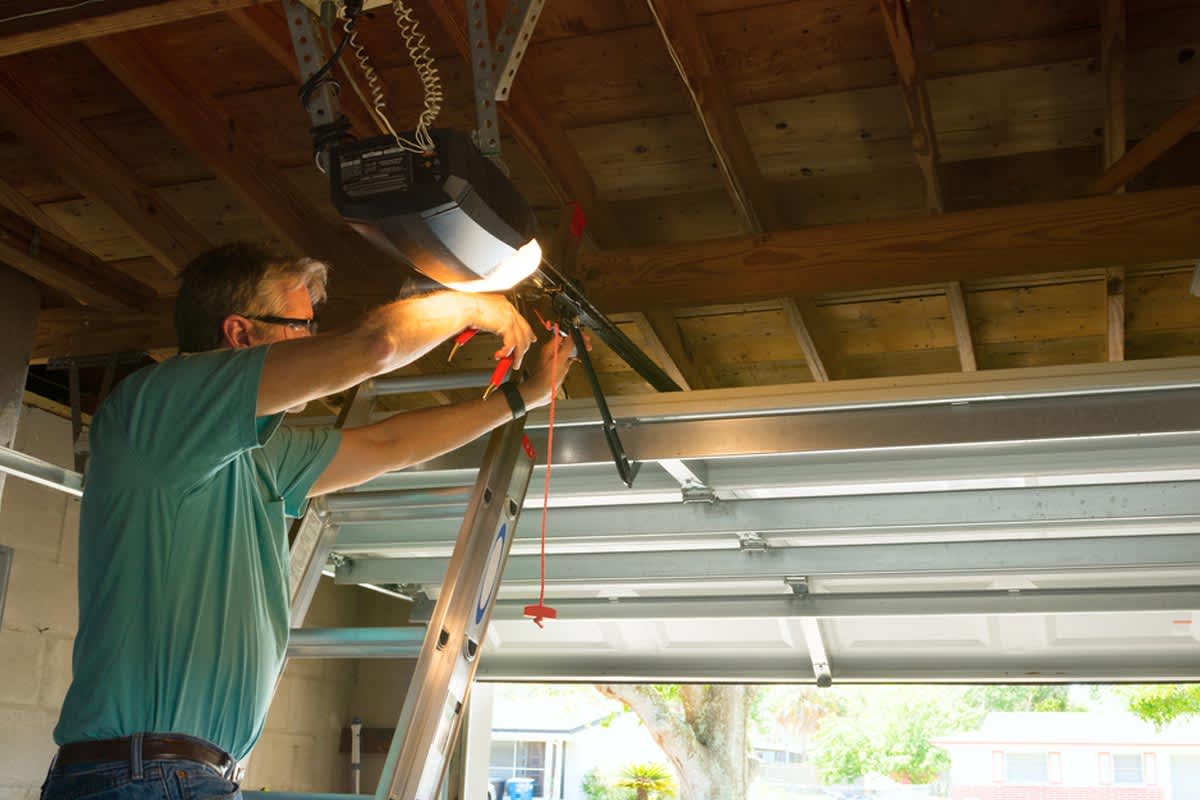
Unless you’re a seasoned DIYer with the right tools and knowledge, professional installation is highly recommended. This cost covers the technician’s time, expertise, and the tools they use. Factors influencing labor costs include the complexity of the installation, your geographic location, and the installer’s hourly rate or project fee.
Many professional installers also offer warranties on their work, adding an extra layer of trust.
Accessories And Additional Parts
Beyond the main opener unit, you might need or want additional accessories. These can include:
- Extra Remote Controls: If you need more than the one or two typically included.
- Wireless Keypads: For entry without a remote.
- Smart Home Integration: Devices that allow control via smartphone apps or voice assistants.
- Battery Backup: Essential for power outages, providing a few cycles of operation.
- Upgraded Safety Sensors: Newer models often have enhanced photo-eye sensors for increased safety.
- Reinforcement Brackets: Sometimes needed to strengthen the garage door itself to handle the opener’s force, especially for older or lighter doors.
Potential For Garage Door Reinforcement
While not directly part of the opener cost, some heavier garage doors, particularly older or lighter-weight models, may require structural reinforcement before an opener can be safely installed. This involves adding a steel header bracket or reinforcing the top section of the door to prevent damage. This can add anywhere from $50 to $200 or more to the total project cost, depending on the work required. A professional installer will assess your door’s condition and advise if this is necessary.

Credit: homeguide.com
Types Of Garage Door Openers And Their Price Points
The mechanism by which the opener lifts and lowers the door is the primary differentiator in cost and performance. Each type has its own set of advantages and disadvantages, influencing both the initial purchase price and long-term satisfaction.
Chain Drive Openers
Chain drive openers are the most common and generally the most affordable option. They operate using a chain, similar to a bicycle chain, that pulls or pushes a trolley along a rail to open and close the door.
- Pros: Cost-effective, durable, and reliable. They are a good choice for most standard garage doors.
- Cons: Can be noisy due to the metal chain mechanism, which might be a concern if your garage is attached to your living space.
- Price Range: Typically range from $150 to $300 for the unit itself.
Belt Drive Openers
Belt drive openers use a rubber belt, often reinforced with steel, to move the trolley along the rail. This design makes them significantly quieter than chain drives.
- Pros: Quieter operation, making them ideal for attached garages or homes where noise is a concern. They also offer a smoother ride.
- Cons: Generally more expensive than chain drives. While durable, some argue they are slightly less robust than a heavy-duty chain.
- Price Range: Typically range from $250 to $400 for the unit.
Screw Drive Openers
Screw drive openers utilize a long metal rod with a threaded screw. A motor turns this rod, causing a trolley to move up and down the rail.
- Pros: Can be powerful and have fewer moving parts than chain or belt drives, potentially leading to less maintenance. They are also relatively quiet, though typically not as silent as belt drives.
- Cons: Can be sensitive to temperature fluctuations, which might affect performance in extreme climates. They can also be slower than other types.
- Price Range: Typically range from $250 to $400 for the unit.
Direct Drive Openers
Direct drive openers are a newer technology where the motor is built directly into the tube of the opener rail. The drive mechanism is essentially the motor shaft itself, which rotates to move the door.
- Pros: Extremely quiet and smooth operation due to minimal moving parts. They are also often more compact.
- Cons: Typically the most expensive option. They are less common, and parts might be harder to find.
- Price Range: Can range from $300 to $500+ for the unit.
Comparison of Opener Types:
| Opener Type | Typical Unit Cost | Noise Level | Durability | Best Use Case |
|---|---|---|---|---|
| Chain Drive | $150 – $300 | High | High | Budget-conscious, detached garages |
| Belt Drive | $250 – $400 | Low | High | Attached garages, noise-sensitive environments |
| Screw Drive | $250 – $400 | Medium | High | Moderate climates, reliable power |
| Direct Drive | $300 – $500+ | Very Low | High | Luxury homes, extreme quietness required |
Credit: homeguide.com
Factors Influencing The Cost Of An Automatic Garage Door Opener
Beyond the fundamental type of opener, several other elements can significantly impact the final price you pay. Understanding these variables will help you refine your budget and make the most cost-effective choice for your needs.
Horsepower And Door Weight
Garage door openers are rated by horsepower (HP), indicating their lifting power. Standard single-car garage doors typically require a 1/2 HP opener, while larger, heavier, or double garage doors might need a 3/4 HP or even a 1 HP unit.
- 1/2 HP Openers: Sufficient for most standard residential doors. They are usually the most affordable.
- 3/4 HP to 1 HP Openers: Necessary for heavier doors (e.g., solid wood, steel-clad, or double-wide doors). These units will naturally cost more due to the increased motor power and robust construction.
Pro Tip: Overpowering a lighter door won’t provide significant benefits and will likely cost more. Conversely, underpowering a heavy door can strain the motor, leading to premature failure and potential safety hazards.
Brand Reputation And Quality
Like many products, garage door openers come from various manufacturers, each with its own reputation for quality, reliability, and price.
- Budget Brands: Offer basic functionality at a lower price point but may have a shorter lifespan or fewer features.
- Mid-Range Brands: Provide a good balance of features, durability, and price. Brands like Chamberlain, Genie, and Craftsman often fall into this category.
- Premium Brands: Often include advanced technology, superior build quality, and longer warranties, but at a higher cost.
Smart Features And Connectivity
The rise of the Internet of Things (IoT) has brought smart technology to garage door openers. These openers can connect to your home Wi-Fi network, allowing you to control them via a smartphone app.
- Basic Smart Features: Remote open/close, status notifications (door open/closed).
- Advanced Smart Features: Integration with voice assistants (Alexa, Google Assistant), scheduling capabilities, and advanced security protocols.
These smart features add to the cost, often by $50 to $200 or more compared to a non-smart model.
Battery Backup Systems
A battery backup system is a valuable feature, especially in areas prone to power outages. It ensures you can still operate your garage door even when the electricity is out.
- Cost: A unit with a built-in battery backup will typically cost $50 to $150 more than a standard model. Some older models might require a separate battery pack purchase.
Security Features
Modern openers incorporate advanced security measures to protect against code grabbing and unauthorized access.
- Rolling Codes: Most modern openers use rolling code technology, where the remote’s code changes with each use, making it difficult for thieves to capture and reuse.
- Encryption: Higher-end models may offer enhanced encryption for added security.
While standard security features are now commonplace, advanced encryption or multi-factor authentication (if available) might add to the price.
Warranty
The length and terms of the warranty can be an indicator of the manufacturer’s confidence in their product and can influence the price.
- Shorter Warranties (1-3 years): Common on budget models.
- Longer Warranties (5-10 years, or lifetime on motor): Often found on mid-range to premium models and typically come with a higher initial cost.
A longer warranty can offer peace of mind and potentially save you money on repairs down the line.

Credit: www.homeadvisor.com
Professional Installation Vs. Diy: Cost Breakdown
The decision to hire a professional or tackle the installation yourself has a significant impact on the total cost. Each approach has its own set of considerations.
Professional Installation Costs
Hiring a professional garage door installer offers convenience and ensures the job is done correctly and safely.
- Average Cost: Professional installation typically adds $200 to $400 to the price of the opener unit. This can vary based on labor rates in your area and the complexity of the installation.
- What’s Included: This cost usually covers the technician’s time, expertise, basic tools, and sometimes a limited warranty on the installation work.
- Benefits:
- Expertise: Professionals have the knowledge to ensure proper alignment, safety settings, and compatibility with your specific garage door.
- Safety: Garage doors are heavy and can cause serious injury if not handled properly. Professionals have the training and equipment to manage these risks.
- Time Savings: Frees up your time to focus on other tasks.
- Warranty: Many installers offer warranties on their labor, providing recourse if issues arise.
Diy Installation Costs
If you’re comfortable with mechanical and electrical tasks, DIY installation can save you money on labor.
- Cost Savings: You save the $200 to $400 in labor costs.
- Tools Required: You’ll need a ladder, a drill, various bits, wrenches, a level, safety glasses, and potentially a garage door opener installation kit. The cost of purchasing or renting these tools can range from $50 to $200 if you don’t already own them.
- Time Investment: DIY installation can take several hours, sometimes a full day, depending on your experience and the complexity of the job.
- Risks:
- Safety Hazards: Incorrect installation can lead to the door malfunctioning, becoming a safety risk, or damaging the opener or door.
- Voided Warranties: Some manufacturers may void the opener’s warranty if it’s not installed by a certified professional.
- Potential for Errors: Mistakes in wiring, alignment, or tensioning can lead to performance issues or premature wear.
Example Scenario:
Let’s say you choose a mid-range belt drive opener that costs $350.
- With Professional Installation: Total cost = $350 (opener) + $300 (installation) = $650.
- With DIY Installation (assuming you need to buy some tools): Total cost = $350 (opener) + $100 (tools) = $450.
In this scenario, DIY saves $200, but it requires your time and carries inherent risks.
Additional Costs To Consider
Beyond the opener unit and installation, a few other expenses might arise, either immediately or down the line. Planning for these can prevent unexpected budget overruns.
Remote Controls And Keypads
Most new openers come with one or two remote controls. If you need more for additional vehicles or family members, each additional remote can cost between $20 and $60. Wireless keypads, which mount outside the garage, typically range from $30 to $70.
Safety Sensors
All modern garage door openers are equipped with safety sensors (photo-eyes) located near the bottom of the tracks. These sensors detect obstructions and prevent the door from closing on a person or object. While usually included, if yours are old, damaged, or you want to upgrade to more advanced models, they can cost $30 to $70 per set. Ensuring these are properly aligned is crucial for safety. You can find guides on how to reset your garage door opener, which may involve recalibrating these sensors.
Wi-fi Connectivity Modules
If you purchase a non-smart opener but later decide you want smartphone control, you might be able to add a Wi-Fi connectivity module. These devices, like the MyQ Home Bridge for Chamberlain/LiftMaster, can cost $50 to $100. However, it’s often more cost-effective to buy a smart opener initially if this feature is desired.
Unexpected Repairs
Even with a new opener, components can sometimes fail. While a warranty should cover defects, accidental damage or wear and tear outside the warranty period could lead to repair costs. These can range from $100 for minor adjustments to $300+ for motor or gear issues. Regular maintenance, such as lubricating moving parts, can help prevent many common issues.
Electrical Work
In rare cases, your garage’s electrical outlet might not be up to code or may require an upgrade to safely power a new opener, especially a higher-horsepower model. This could involve hiring an electrician, adding $100 to $300 to the overall cost.
Real-world Cost Examples
To provide a clearer picture, let’s look at a few hypothetical scenarios based on common choices. These figures are estimates and can vary based on location, specific product choices, and installation complexity.
Scenario 1: The Budget-conscious Homeowner
- Need: Basic, reliable opener for a standard single-car garage. Noise is not a primary concern.
- Choice: Chain drive opener from a reputable mid-range brand (e.g., Craftsman or Chamberlain).
- Features: Standard 1/2 HP, two remotes, rolling code security.
- Installation: DIY.
- Estimated Cost:
- Opener Unit: $180
- Tools (if needed): $75
- Total: ~$255
Scenario 2: The Comfort-focused Family
- Need: Quiet operation for an attached garage, smartphone control for convenience.
- Choice: Belt drive opener with integrated Wi-Fi from a premium brand (e.g., LiftMaster or Genie).
- Features: 1/2 HP, quiet belt drive, battery backup, smartphone control, two remotes.
- Installation: Professional.
- Estimated Cost:
- Opener Unit: $380
- Battery Backup: Included (or $70 if separate)
- Professional Installation: $300
- Total: ~$680 – $750
Scenario 3: The Heavy-duty Upgrade
- Need: Powerful opener for a heavy, solid wood double garage door, maximum security.
- Choice: Screw drive or high-power chain drive opener (3/4 HP or 1 HP) from a premium brand.
- Features: Higher horsepower, robust construction, enhanced security features, possibly an external keypad.
- Installation: Professional.
- Estimated Cost:
- Opener Unit: $350 – $450
- Professional Installation: $350
- External Keypad: $50
- Total: ~$750 – $850+
These examples illustrate how different choices in opener type, features, and installation method can lead to a wide range of final costs.
Lifespan And Maintenance Of Garage Door Openers
Investing in an automatic garage door opener is a long-term decision. Understanding its expected lifespan and the importance of maintenance can help you maximize your investment and avoid premature replacement or costly repairs.
Expected Lifespan
A well-maintained automatic garage door opener typically lasts between 10 to 15 years. However, this can vary significantly based on:
- Usage Frequency: Doors that are opened and closed multiple times a day will experience more wear than those used less frequently.
- Type of Opener: While all types are generally durable, some may inherently last longer due to simpler mechanisms or more robust construction.
- Environmental Factors: Extreme temperatures, humidity, and exposure to dust or salt can impact longevity.
- Quality of Installation: A properly installed opener is less likely to experience strain and premature wear.
- Maintenance: Regular upkeep is arguably the most significant factor in extending an opener’s life.
Essential Maintenance Tasks
Performing routine maintenance can prevent many common issues and ensure your opener functions reliably for years.
- Lubrication: Regularly lubricate the chain or belt, trolley mechanism, and rollers (if applicable). Use a silicone-based spray or a specialized garage door lubricant. This reduces friction, noise, and wear. For detailed guidance, refer to resources on how to lubricate garage door rollers.
- Check and Tighten Hardware: Periodically inspect all mounting brackets, bolts, and screws for looseness. Tighten as needed.
- Inspect the Chain/Belt: Check for any signs of wear, damage, or sagging. If a chain is loose, it may need adjustment; see guides on how to adjust the chain on your garage door opener.
- Test Safety Features: Regularly test the auto-reverse function by placing a piece of wood (like a 2×4) on the floor in the door’s path. The door should reverse upon contact. Also, test the photo-eye sensors by interrupting the beam while the door is closing; it should stop