
Investing in a new garage door opener is a significant decision that impacts your home’s security, convenience, and daily routine. With a plethora of options on the market, discerning the right features and technology can feel overwhelming. This guide will equip you with the knowledge to make an informed choice, ensuring you select a garage door opener that perfectly suits your needs and budget.
Key Takeaways
- Motor Power: Choose a motor that matches your garage door’s size and weight, typically ½ HP for standard doors and ¾ HP for heavier ones.
- Drive Type: Consider the noise level and maintenance requirements of chain, belt, and direct drive systems.
- Security Features: Prioritize rolling codes and advanced encryption to protect against unauthorized access.
- Smart Technology: Look for Wi-Fi connectivity, smartphone app control, and integration with smart home systems for enhanced convenience and security.
- Backup Power: Battery backup systems are crucial for ensuring operation during power outages.
- Safety Sensors: Ensure auto-reverse and obstruction detection are standard for the safety of people and property.
- Brand Reputation & Warranty: Opt for reputable brands with robust warranties for long-term reliability.
Understanding Garage Door Opener Types And Technologies
The garage door opener market offers a variety of technologies, each with its own set of advantages and disadvantages. Understanding these differences is the first step in selecting the right opener for your home. The primary distinctions lie in the drive system, which dictates how the opener moves the door, and the power source of the motor.
Drive Systems Explained
The drive system is the mechanical heart of your garage door opener. It’s what connects the motor to the garage door and dictates the speed, noise level, and maintenance needs of the unit. There are three main types:
- Chain Drive Openers: These are the most traditional and often the most budget-friendly option. A chain, similar to the one on a bicycle, runs along a rail and pulls or pushes the garage door.
- Pros: Durable, reliable, and generally less expensive than other types. They are also well-suited for heavier doors.
- Cons: They tend to be the noisiest type of opener due to the metal chain and sprocket mechanism. This can be a significant drawback if your garage is attached to your home or if you have living spaces directly above the garage.
- Maintenance: Requires periodic lubrication of the chain and tension adjustment. You can learn more about maintaining smooth operation by reading our guide on how to lube garage door rollers.
- Belt Drive Openers: These use a rubber or composite belt, often reinforced with steel, to move the door along the rail. They operate on a similar principle to chain drives but are significantly quieter.
- Pros: Nearly silent operation, making them ideal for attached garages or homes where noise is a concern. They are also generally considered lower maintenance than chain drives as the belt doesn’t require lubrication.
- Cons: Typically more expensive than chain drive openers. While durable, the belt can potentially wear out over time, though this is uncommon with quality brands.
- Direct Drive Openers: In this system, the motor itself is integrated into the trolley that moves along the rail. There’s no separate chain or belt. The motor rotates along the stationary rail, moving the door directly.
- Pros: Extremely quiet operation, often considered the quietest option. They have fewer moving parts, which can translate to higher reliability and lower maintenance.
- Cons: Generally the most expensive type of opener. Repair parts might be less readily available compared to more common chain or belt drives.
Motor Power (horsepower – Hp)
The power of the garage door opener’s motor is measured in horsepower (HP). The required HP depends on the size, weight, and type of your garage door.
- Standard Doors (e.g., single-car, lightweight sectional doors): A ½ HP motor is usually sufficient.
- Heavy Doors (e.g., double-car, solid wood doors, doors with springs nearing end-of-life): A ¾ HP motor provides more robust power and is recommended to prevent strain on the motor and components.
It’s crucial not to undersize the motor, as this can lead to premature wear and tear, frequent breakdowns, and potential safety hazards. Conversely, an overpowered motor isn’t necessarily better; it might just be more expensive to purchase. Always consider the weight and balance of your garage door. A properly balanced door should lift relatively easily by hand, indicating the springs are doing their job.
Battery Backup Systems
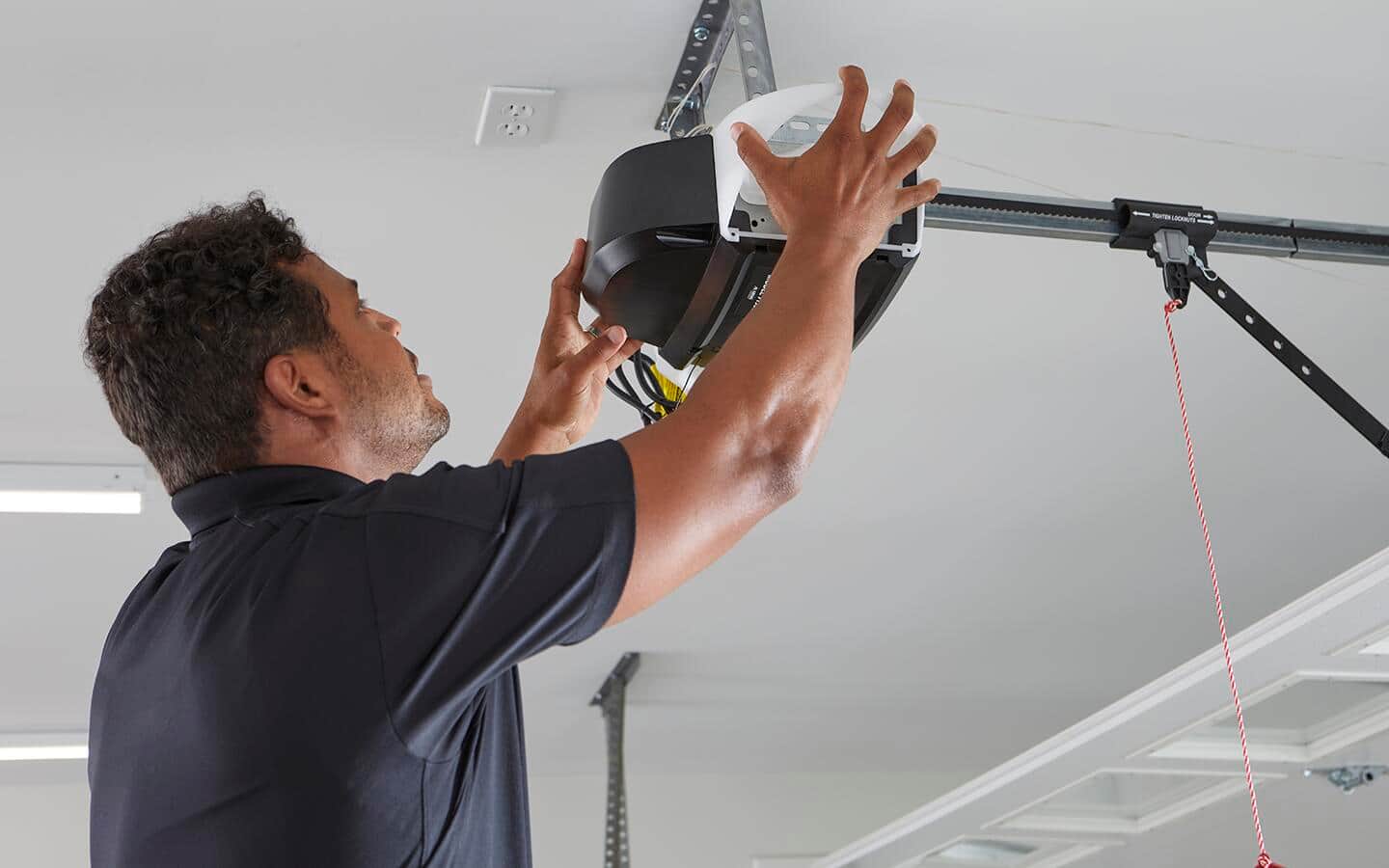
In an era where power outages can occur unexpectedly, a battery backup system is becoming an increasingly valuable feature. This system allows your garage door opener to function for a limited number of cycles even when the main power is out. This is invaluable for ensuring you can get your car out in an emergency or simply to access your home. Many new openers come with integrated battery backup, while others offer it as an optional add-on.
Credit: www.homedepot.com
Security Features: Protecting Your Home
A garage door opener is a critical component of your home’s security system. Modern openers incorporate advanced features to prevent unauthorized access and protect against sophisticated hacking attempts.
Rolling Codes And Encryption
The most significant advancement in garage door opener security is the rolling code technology. Older openers used fixed codes, meaning the same code was transmitted every time you pressed the remote. This made them vulnerable to code-grabbing devices.
- How Rolling Codes Work: Each time you use the remote, a new, unique code is generated and transmitted. The opener and the remote have a synchronized system that understands the sequence of codes. This makes it virtually impossible for someone to “capture” your code and use it to open your garage later.
- Encryption Levels: Look for openers that specify the encryption level. Higher encryption standards (e.g., 128-bit AES) offer a greater degree of security. Brands like LiftMaster’s Security+ 2.0 are well-known for their robust rolling code technology.
Keypad Security
Your garage door keypad is another entry point that needs to be secured.
- Wireless Keypads: These allow entry without a remote. Ensure the keypad you choose also utilizes rolling code technology to transmit its signal securely.
- Programmable Codes: The ability to easily change or delete keypad codes is essential, especially if you’ve had service personnel or guests who previously had access. Many modern keypads allow for temporary codes or codes that expire after a set number of uses. Our guide on how to reprogram Genie garage door keypads can help you manage these settings.
Vacation Mode And Lock Features
Some advanced openers offer a vacation mode or lock feature. When activated, this disables the remote and keypad, preventing the door from being opened accidentally or intentionally from the outside while you are away. This adds an extra layer of security when you’re not home.
Credit: www.homedepot.com
Smart Technology And Connectivity
The rise of the Internet of Things (IoT) has transformed garage door openers into smart devices, offering unprecedented convenience and control.
Wi-fi Connectivity And Smartphone Apps
Many modern garage door openers come equipped with Wi-Fi connectivity, allowing you to control and monitor your garage door from anywhere in the world via a smartphone app.
- Remote Operation: Open or close your garage door from your phone, whether you’re at work, on vacation, or just running errands.
- Real-time Alerts: Receive notifications on your smartphone when the garage door opens or closes, or if it’s left open for an extended period. This is invaluable for peace of mind.
- Activity Logs: Many apps provide a history of when the door was operated, by whom (if multiple users are set up), and at what time.
Smart Home Integration
For those with existing smart home ecosystems, choosing an opener that integrates seamlessly is a significant advantage.
- Voice Control: Many smart openers work with popular voice assistants like Amazon Alexa, Google Assistant, or Apple HomeKit. You can simply say, “Hey Google, close the garage door.”
- Automation: Integrate your garage door with other smart devices. For example, set it to close automatically when your smart home system detects you’ve left the geofenced area, or have your entryway lights turn on when the garage door opens after dark.
Example: Myq Technology
LiftMaster’s MyQ technology is a prime example of integrated smart features. It allows users to monitor and control their garage door opener, as well as other MyQ-enabled accessories, through a single smartphone app. This includes receiving real-time alerts, opening and closing the door remotely, and setting up custom alerts for specific times or events. This level of connectivity offers both enhanced convenience and improved security.

Credit: justalittlefurther.com
Safety Features: Essential Protections
Safety should be paramount when selecting a garage door opener. Modern openers are equipped with several features designed to prevent accidents and protect your family and property.
Auto-reverse And Obstruction Detection
This is a non-negotiable safety feature. All modern garage door openers are legally required to have an auto-reverse function.
- How it Works: If the garage door encounters an obstruction while closing, the auto-reverse mechanism will stop the door and then reverse its direction, opening it back up.
- Types of Sensors:
- Safety Sensors (Photo-Eye Sensors): These are small sensors installed near the bottom of the garage door tracks. They emit an invisible light beam across the opening. If the beam is broken by a person, pet, or object while the door is closing, the door will immediately stop and reverse. These are crucial and should be properly aligned.
- Force Sensitivity Adjustment: In addition to sensors, openers have a setting that monitors the amount of force required to move the door. If the force exceeds a pre-set limit (indicating an obstruction or a binding door), the opener will reverse.
Manual Release And Emergency Access
It’s essential to know how to operate your garage door manually in case of a power outage or opener malfunction.
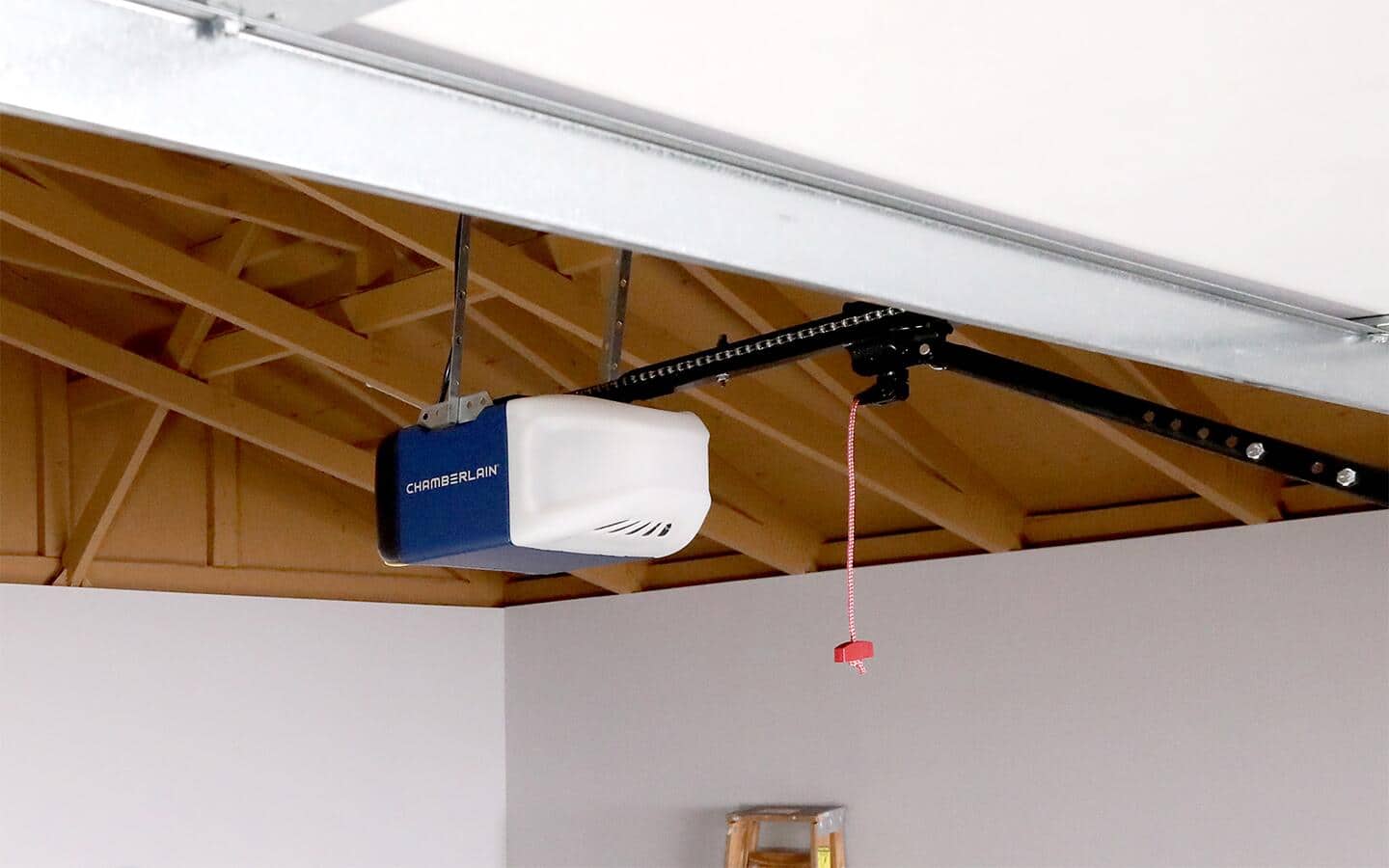
- Emergency Release Cord: Most openers have a red emergency release cord hanging from the trolley mechanism. Pulling this cord disengages the opener from the door, allowing you to lift it manually. Always ensure the door is securely propped open if you need to leave it partially open. You can find detailed instructions in our guide on how to open your garage door manually.
- Manual Operation: Once disengaged, you can lift the door by hand. If the door is heavy or unbalanced, this can be difficult. It’s a good indicator that your door’s springs may need adjustment or replacement.
Soft Start And Soft Stop
Some higher-end openers feature a soft start and soft stop function. This gradually increases the door’s speed as it begins to open and slows it down as it reaches the fully open position. Similarly, it slows the door as it approaches the closed position before stopping. This reduces wear and tear on the door and opener mechanism and makes operation quieter and smoother.
Choosing The Right Opener For Your Needs
Beyond the technical specifications, several practical considerations will help you narrow down your choices and select the opener that best fits your lifestyle and home.
Noise Level Considerations
As mentioned earlier, the drive system significantly impacts noise.
- For Attached Garages or Noise-Sensitive Environments: Belt drive or direct drive openers are highly recommended. The quiet operation prevents disturbances to sleeping family members or neighbors.
- For Detached Garages or Less Sensitive Areas: Chain drive openers can be a perfectly acceptable and often more budget-friendly choice.
Durability And Reliability
When purchasing a garage door opener, you’re investing in a product that will be used daily, often multiple times a day, for many years.
- Brand Reputation: Stick with established brands known for quality and reliability. Companies like LiftMaster, Chamberlain, Genie, and Overhead Door have a long history in the industry and generally offer good products and support.
- Warranty: Pay close attention to the warranty offered. A longer warranty, especially on the motor and internal components, often indicates the manufacturer’s confidence in the product’s durability. Warranties can range from 1-2 years on parts to 10 years or even lifetime coverage on the motor.
Budget And Cost
Garage door openers can range in price from a few hundred dollars for basic chain drive models to over $500 for advanced smart openers with belt drives.
- Basic Models: Offer essential functionality (opening, closing, basic security) and are suitable for detached garages or when budget is the primary concern.
- Mid-Range Models: Often include quieter drives (belt drive), better security features, and perhaps basic smart capabilities.
- High-End Models: Feature the quietest drives, advanced smart home integration, battery backup, and premium security protocols.
Remember to factor in installation costs if you’re not a DIY installer. Professional installation can add $100-$300 or more to the total cost. You can explore general garage door costs in our article on how much a garage door costs.
Ease Of Installation And Maintenance
- DIY vs. Professional: If you’re comfortable with DIY projects, many openers are designed for relatively straightforward installation. However, working with electrical components and heavy garage doors carries risks. If you have any doubts, professional installation is recommended.
- Maintenance: Consider the ongoing maintenance required. Chain drives may need occasional lubrication and tension adjustments. Belt and direct drives are generally lower maintenance. Regular checks of safety sensors and the emergency release mechanism are advisable for all types.
Comparison Of Popular Garage Door Opener Brands
While many brands offer quality products, a few stand out for their innovation, reliability, and feature sets. Here’s a brief look at some of the most popular options:
| Feature | LiftMaster | Chamberlain | Genie | Overhead Door |
|---|---|---|---|---|
| **Drive Types** | Chain, Belt, Wall Mount | Chain, Belt, Wall Mount | Chain, Belt, Direct Drive, Trolley | Chain, Belt, Trolley |
| **Smart Technology** | MyQ (Wi-Fi, App Control, HomeKit, Alexa) | MyQ (Wi-Fi, App Control, HomeKit, Alexa) | Aladdin Connect (Wi-Fi, App Control) | OHD Anywhere (Wi-Fi, App Control) |
| **Security** | Security+ 2.0 (Rolling Code) | Security+ 315/390 MHz (Rolling Code) | IntelliCode (Rolling Code) | CodeDodger (Rolling Code) |
| **Battery Backup** | Available on many models | Available on many models | Available on many models | Available on many models |
| **Motor Power** | ½ HP, ¾ HP, DC Motors | ½ HP, ¾ HP, DC Motors | ½ HP, ¾ HP, DC Motors | ½ HP, ¾ HP |
| **Warranty** | Varies (often 1-10 years on parts) | Varies (often 1-10 years on parts) | Varies (often 1-10 years on parts) | Varies (often 1-10 years on parts) |
| **Price Range** | Mid to High | Mid | Mid | Mid to High |
Note: Specific features and warranty details can vary significantly between individual models within each brand. Always check the product specifications for the exact opener you are considering.
Final Considerations And Best Practices
Before making your final decision, here are a few additional points to keep in mind:
- Remote Controls: Ensure the opener comes with at least one remote, and check if additional remotes or keypads are easily available and affordable. Some systems allow you to program multiple remotes and keypads. If you lose a remote, you’ll want to be able to easily reset your opener’s codes, as outlined in guides like how to reset Liftmaster garage door opener remotes or the more general garage door opener reset guide.
- Wall Control Panel: Most openers include a wired wall control panel inside the garage. Consider the features it offers, such as a vacation lock button or an illuminated keypad.
- Lighting: Some openers have integrated LED lighting, which can be a convenient addition, illuminating your garage when the door opens.
- Enclosure Material: While most openers are made of durable plastic, some higher-end models might feature metal casings for added durability.
Frequently Asked Questions
What Is The Difference Between A Chain Drive And A Belt Drive Opener?
A chain drive opener uses a metal chain to move the trolley along the rail, similar to a bicycle chain. This is a durable and often less expensive option but tends to be noisier. A belt drive opener uses a rubber or composite belt, reinforced with steel, which operates much more quietly.
Belt drives are typically more expensive but are ideal for attached garages where noise is a concern.
How Much Horsepower Do I Need For My Garage Door Opener?
For most standard single-car or lightweight double-car garage doors, a ½ HP motor is sufficient. For heavier doors, such as solid wood doors, double doors made of heavier materials, or doors with older springs, a ¾ HP motor is recommended to ensure adequate power and prevent strain on the opener.
Are Smart Garage Door Openers Worth The Extra Cost?
Smart garage door openers offer significant convenience and enhanced security. The ability to monitor and control your garage door remotely via a smartphone app, receive real-time alerts, and integrate with smart home systems provides peace of mind and modern functionality.
If these features align with your lifestyle and home automation plans, they are generally considered a worthwhile investment.
What Is The Most Important Safety Feature To Look For?
The most critical safety feature is the auto-reverse function, which must be present in all modern openers. This system uses safety sensors (photo-eyes) or force-sensing technology to detect obstructions and reverse the door’s direction, preventing accidents involving people, pets, or property. Always ensure these sensors are properly installed and aligned.
How Long Do Garage Door Openers Typically Last?
With proper maintenance, a good quality garage door opener can last anywhere from 10 to 15 years, or even longer. Factors influencing lifespan include the quality of the unit, the frequency of use, the weight of the garage door, and regular maintenance. Chain drives might require more frequent attention than belt or direct drive systems.
By carefully considering these factors, you can confidently choose a garage door opener that enhances your home’s convenience, security, and overall functionality for years to come.