
The Ticking Time Bomb: Can You Open The Garage Door With A Broken Spring?
A broken garage door spring is more than just an inconvenience; it’s a significant safety hazard. These high-tension coils are the unsung heroes of your garage door system, counterbalancing the immense weight of the door and allowing it to open and close smoothly. When one snaps, the delicate balance is violently disrupted, leaving you with a door that might feel impossibly heavy or refuse to move at all. The immediate question that springs to mind for many homeowners is: “Can I still open my garage door with a broken spring?” The short answer is yes, but it’s extremely risky and strongly discouraged. Attempting to operate a garage door with a broken spring can lead to severe damage to the opener mechanism, the door itself, and, most importantly, potential injury to anyone attempting to force it open. Understanding the mechanics at play and the inherent dangers is crucial before you even consider touching that opener button.
Key Takeaways
- Extreme Danger: Operating a garage door with a broken spring is incredibly dangerous, risking severe injury and damage to the door and opener.
- Weight Imbalance: Springs counterbalance the door’s weight; a broken spring leaves the door dangerously heavy and unstable.
- Manual Operation is Risky: While technically possible to open manually, the extreme weight makes it difficult and hazardous.
- Opener Damage: The opener is not designed to lift the full weight of the door and will likely be damaged if forced.
- Immediate Professional Help: The safest and most recommended course of action is to contact a qualified garage door technician immediately.
- Springs are Under High Tension: Garage door springs store a massive amount of energy, making them inherently dangerous when compromised.
- Cost of Repair: While the repair itself is often manageable, the potential damage from attempting DIY operation can be far more expensive.

Credit: allied-doors.com
Understanding Garage Door Springs
Garage doors are heavy, often weighing several hundred pounds. Imagine trying to lift a solid wood or steel slab that weighs as much as a small car, it’s not feasible for most individuals. This is where garage door springs come into play. They are the critical components that make lifting and lowering this substantial weight manageable. There are two primary types of garage door springs: torsion springs and extension springs.
Torsion Springs
Torsion springs are typically mounted on a metal rod above the garage door opening. As the garage door closes, the springs are wound, storing energy. When the door opens, this stored energy is released, assisting in lifting the door. They are generally considered more durable and safer than extension springs because they are mounted securely above the door, reducing the risk of them snapping and flying off. A broken torsion spring will often make a loud bang noise when it snaps, and the door will likely become very heavy and may not open at all.
Extension Springs
Extension springs are usually installed along the horizontal tracks above the garage door. They run parallel to the door’s tracks. As the door opens, these springs stretch, and as it closes, they contract. They are under significant tension when the door is closed and can be quite dangerous if they break.
A broken extension spring can sometimes whip around and cause damage or injury. The door will feel extremely heavy on the side where the extension spring has broken.
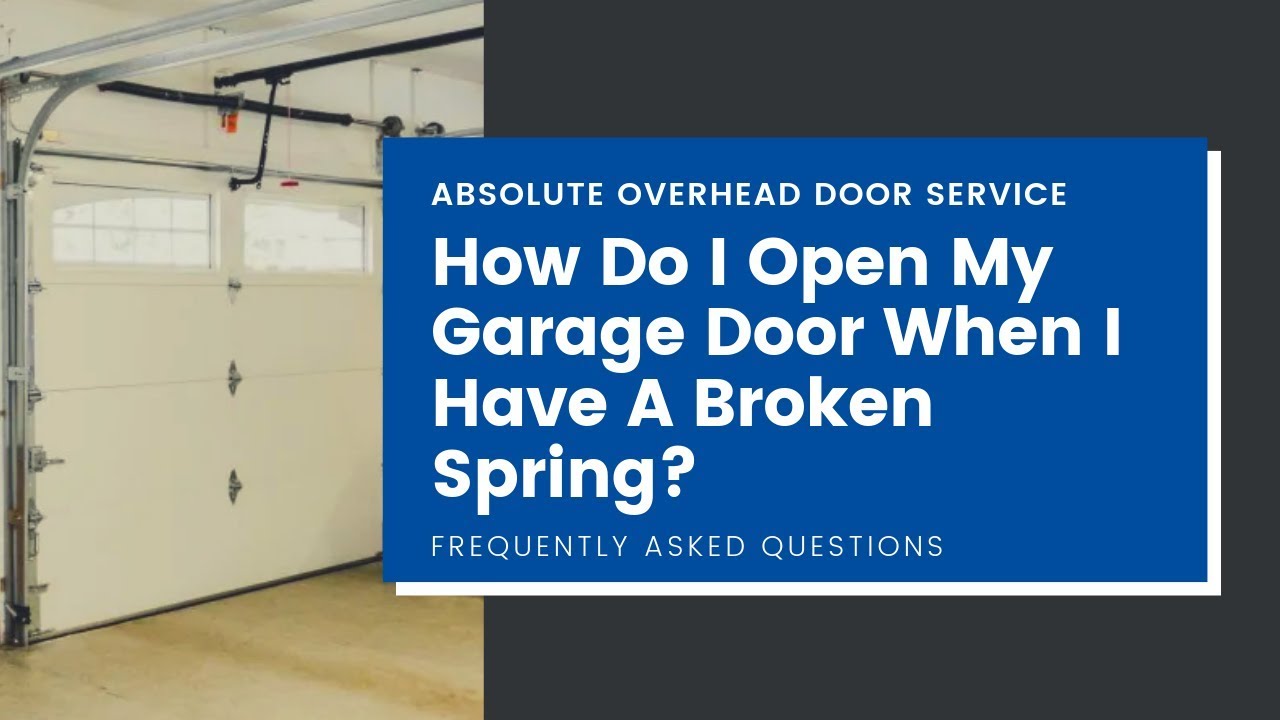
Credit: www.youtube.com
The Perils Of A Broken Spring
When a garage door spring breaks, the entire system is thrown out of balance. The springs’ primary function is to counterbalance the weight of the door. Without this counterbalance, the garage door opener is left to do all the heavy lifting. This is a task it is absolutely not designed for, and attempting to operate the door in this state carries significant risks.
Safety Hazards
The most immediate concern is personal injury. Garage door springs are wound incredibly tightly, storing a tremendous amount of potential energy. When a spring breaks, it can snap with considerable force.
- Flying Debris: A broken spring, especially an extension spring, can whip around violently, potentially striking anyone nearby.
- Sudden Door Drop: If you manage to lift a door with a broken spring, it can become unstable. If the remaining spring or the opener fails, the heavy door could drop suddenly and unexpectedly, causing severe crushing injuries.
- Manual Operation Strain: Trying to manually lift a door that weighs several hundred pounds without the spring assistance can lead to back injuries, strains, or falls.
Damage To Garage Door Components
Attempting to operate a garage door with a broken spring can cause a cascade of damage to other parts of the system.
- Opener Strain and Failure: Garage door openers are designed to assist the springs, not to lift the entire door weight. Forcing the opener to do so can cause the motor to overheat, strip gears, or burn out completely. This is a common and costly consequence of ignoring a broken spring.
- Track and Roller Damage: The increased, uneven strain on the door can bend or misalign the vertical and horizontal tracks, damage the rollers, or even break the door panels themselves.
- Cable Issues: The cables that run along the tracks can become frayed, snapped, or detached under the excessive and unbalanced load.

Credit: www.doorvana.com
Can You Open It Manually? The Risks Involved
In an emergency, you might wonder if you can manually open the garage door despite a broken spring. While it’s technically *possible* in some scenarios, it is highly inadvisable. The process involves disengaging the opener and attempting to lift the door by hand.
The Manual Release
Most garage door openers have a manual release cord, usually a red handle hanging from the opener’s trolley. Pulling this cord disengages the opener from the door, allowing you to move it by hand. You can find detailed instructions on how to do this in guides like How Can I Open My Garage Door Manually: Step-by-Step Guide.
The Immense Weight
Once the opener is disengaged, you are left to lift the entire weight of the garage door. A standard residential garage door can weigh anywhere from 100 to 400 pounds. Without the spring’s assistance, this weight can feel overwhelming.
- Scenario 1: One Broken Torsion Spring: If you have a double torsion spring system and one breaks, the door might still be partially counterbalanced by the remaining spring. However, it will be significantly heavier and will likely sag on one side. Lifting it will still require considerable force and carries the risk of the door becoming unstable.
- Scenario 2: One Broken Extension Spring: If an extension spring breaks, the door will feel extremely heavy on that side. It may be impossible to lift evenly, and the unbalanced weight can cause the door to bind or jam in the tracks.
- Scenario 3: Both Springs Broken (or one severely damaged): If both torsion springs are broken, or if an extension spring has completely failed, the door will be exceptionally heavy. Attempting to lift it by hand is not only difficult but also extremely dangerous due to the risk of the door falling unexpectedly.
Why Manual Lifting Is A Bad Idea
Even if you manage to lift the door manually, you are still putting the opener and other components at risk. The sudden engagement and disengagement, coupled with the extreme weight, can cause immediate damage. In my experience, homeowners who attempt this often end up needing repairs not just for the springs but also for the opener itself, significantly increasing the overall cost.
It’s a classic case of trying to save a little money now and costing yourself a lot more later.
What To Do When A Garage Door Spring Breaks
The moment you suspect or confirm a broken garage door spring, the safest and most cost-effective course of action is to stop all attempts to operate the door and call a professional.
Immediate Steps To Take
- Do Not Operate the Door: Resist the urge to press the garage door opener button or try to lift the door manually.
- Secure the Area: Keep children and pets away from the garage door. If the door is partially open, ensure it is stable. If it has fallen, keep everyone clear.
- Visually Inspect (Safely): If you can do so safely from a distance, try to identify which spring has broken. Look for a visible gap in a torsion spring above the door or a snapped extension spring along the track. Do not get close to the springs or attempt any adjustments.
- Disengage the Opener (Optional, with caution): If you absolutely need to prevent the opener from being accidentally activated, you can pull the manual release cord. However, be aware that this allows the door to be moved freely, which is why securing the area is paramount. If you are unsure, leave it engaged and simply do not use the opener.
Why Professional Repair Is Essential
Garage door spring replacement is not a DIY job for the average homeowner. It requires specialized tools, knowledge of high-tension systems, and a deep understanding of safety protocols.
- Expertise and Experience: Professional technicians have the training and experience to handle the immense forces involved. They know how to safely remove the old springs and install new ones without causing further damage or injury.
- Proper Tools: Special winding bars and other tools are required to safely tension torsion springs. Using incorrect tools can lead to accidents.
- Correct Spring Selection: There are many different types and sizes of garage door springs, each designed for specific door weights and sizes. Using the wrong spring can lead to premature failure or unsafe operation.
- Warranty and Guarantees: Reputable garage door repair companies offer warranties on their parts and labor, giving you peace of mind.
The Cost Of Spring Repair Vs. Potential Damage
Many homeowners hesitate to call a professional due to the perceived cost of spring replacement. However, the cost of professional repair is almost always significantly less than the cost of repairing the damage caused by attempting to operate the door with a broken spring.
Typical Spring Repair Costs
The cost of replacing garage door springs varies depending on the type of spring, the number of springs, and your geographic location.
- Torsion Springs: Typically range from $150 to $350 per spring, including labor. Double spring systems will cost more.
- Extension Springs: Generally range from $100 to $250 per spring, including labor.
These figures are estimates, and actual costs can vary. You can find more detailed information on pricing in articles like How Much for a Garage Door: Costs, Factors, and Savings Tips.
The Hidden Costs Of Diy Attempts
Let’s compare these costs to the potential expenses incurred by attempting to open a door with a broken spring:
| Component Damaged | Estimated Repair Cost Range | Notes |
|---|---|---|
| Garage Door Opener | $300 – $1000+ | Motor burnout, gear stripping, logic board damage. May require full replacement. |
| Tracks and Rollers | $150 – $500 | Bending, misalignment, damaged rollers requiring replacement. |
| Cables | $100 – $300 | Snapped or frayed cables requiring replacement. |
| Door Panels | $200 – $1000+ | Cracks, dents, or complete breakage, especially if the door falls unevenly. |
| **Total Potential Damage** | **$750 – $2800+** | **Excludes the cost of spring replacement itself.** |
| **Professional Spring Replacement** | **$150 – $350** | **Includes labor and parts for springs only.** |
As you can see, the potential damage far outweighs the cost of professional spring replacement. A broken opener, in particular, can be a very expensive repair, often exceeding the cost of the spring replacement itself.
Maintaining Your Garage Door Springs
Preventative maintenance can help extend the life of your garage door springs and reduce the likelihood of unexpected breakage. While springs do have a finite lifespan, proper care can make a significant difference.
Lubrication
One of the simplest yet most effective maintenance tasks is lubricating the moving parts of your garage door system. This includes the rollers, hinges, and even the springs themselves (though springs require a specific type of lubricant). Regular lubrication, as detailed in guides like How Do You Lubricate Garage Door Rollers for Smooth Operation?, reduces friction, prevents rust, and allows components to move more freely, reducing strain on the springs. Use a silicone-based spray lubricant or a light machine oil. Avoid using heavy greases, which can attract dirt and debris.
Visual Inspections
Periodically (e.g., every 6 months), conduct a visual inspection of your garage door springs. Look for signs of wear and tear, such as:
- Rust: Significant rust can weaken the metal.
- Cracks: Small cracks can quickly turn into complete breaks.
- Gaps: A visible gap in a torsion spring is a clear indicator of breakage.
- Fraying Cables: Check the lift cables for any signs of wear.
If you notice any of these issues, it’s best to have them inspected by a professional before they lead to a failure.
Weight Considerations
Be mindful of the weight you hang from your garage door. Attaching heavy items like bikes, kayaks, or storage racks directly to the door can put undue stress on the springs and opener. If you need to store items, consider using overhead storage solutions instead.
Frequently Asked Questions
What Are The Signs Of A Broken Garage Door Spring?
The most common sign is a loud bang or popping noise when you try to operate the door. Visually, you’ll see a gap in the torsion spring above the door, or an extension spring will appear snapped or hanging loosely. The door will also feel extremely heavy when you try to lift it manually, or it may refuse to open at all. The garage door opener may also strain or make unusual noises as it tries to compensate for the lack of spring assistance.
Can I Drive My Car Out If The Spring Is Broken?
No, it is extremely unsafe to attempt to drive your car out if a spring is broken. The door will be incredibly heavy and unstable. Trying to lift it enough to clear a vehicle could result in the door falling unexpectedly, causing severe damage to your car and potentially trapping it. It could also lead to serious injury. The safest approach is to leave the car inside and call for professional repair.
How Long Does A Garage Door Spring Typically Last?
Garage door springs are designed to last for a certain number of cycles, which is one full open and close of the door. Most residential springs are rated for 10,000 to 20,000 cycles. This can translate to anywhere from 5 to 15 years, depending on how frequently you use your garage door. Factors like climate (extreme temperatures can affect metal) and maintenance (proper lubrication) can influence their lifespan.
Is It Possible To Replace Garage Door Springs Myself?
While some ambitious DIYers might consider it, replacing garage door springs yourself is strongly discouraged and potentially dangerous. These springs are under immense tension and can cause serious injury or death if handled improperly. They require specialized tools (like winding bars for torsion springs) and specific knowledge to install safely. The risk of injury and damage to the door system far outweighs any potential cost savings. It’s a job best left to trained professionals.
What Happens If I Ignore A Broken Garage Door Spring?
Ignoring a broken garage door spring is a recipe for disaster. The garage door opener will be subjected to extreme strain, likely leading to its failure, which is a costly repair. The tracks and rollers can become bent or damaged due to the unbalanced weight. The door panels themselves could crack or break if the door falls unevenly. In essence, a small problem (a broken spring) can quickly escalate into a much larger, more expensive repair encompassing multiple components of your garage door system.
When your garage door spring breaks, it signals a critical failure in the system that demands immediate attention. While the temptation to bypass the problem and force the door open might be strong, the risks involved, ranging from severe personal injury to extensive damage to your garage door opener and structure, are simply too great.
The most prudent and ultimately cost-effective solution is always to cease operation immediately and contact a qualified garage door technician. They possess the specialized knowledge, tools, and experience to safely replace the broken springs and ensure your garage door operates correctly and securely once more.
Prioritizing safety and professional repair will save you from potential accidents and far more expensive repairs down the line.