
The garage door spring is a critical component that balances the immense weight of your garage door, making it easy to lift and close. Without properly functioning springs, operating your garage door can be a strenuous and potentially dangerous task. Among the different types of garage door springs, torsion springs are the most common for residential use. When it comes to these torsion springs, a frequently asked question revolves around the number of turns required to achieve the correct tension. This number isn’t arbitrary; it’s directly linked to the weight of the garage door and the diameter of the spring. Understanding this relationship is paramount for proper installation, adjustment, and maintenance, ensuring your garage door operates safely and efficiently.
Key Takeaways
- The number of turns on a 12 ft garage door spring is not a fixed value but depends primarily on the door’s weight and the spring’s specifications.
- Torsion springs are the most common type for residential garage doors, and their tension is adjusted by winding or unwinding them.
- A general guideline for winding torsion springs is between 6.5 to 7.5 turns for a standard upward-moving garage door, but this is a starting point, not a definitive rule.
- Door weight is the most crucial factor; heavier doors require more tension (more turns) and lighter doors require less.
- The spring’s dimensions (wire diameter, inside diameter, and length) also dictate how much tension each turn provides.
- Incorrect spring tension can lead to door imbalance, damage to components, and safety hazards.
- Measuring the door weight accurately is essential, often done by weighing the door itself or calculating it based on material and size.
- Professional installation and adjustment are highly recommended, especially for those unfamiliar with garage door spring mechanics, due to the significant stored energy and potential for injury.
- Signs of improper tension include the door opening or closing too quickly, sagging, or being difficult to lift manually.
- Regular maintenance, including lubrication, can help prolong the life of garage door springs and ensure consistent operation.
Credit: www.youtube.com
Understanding Garage Door Springs: Torsion Vs. Extension
Before diving into the specifics of turns on a 12 ft garage door spring, it’s essential to understand the two primary types of garage door springs: torsion springs and extension springs. While both serve to counterbalance the weight of the door, they operate on different principles and have distinct installation and adjustment methods. Most modern residential garage doors, especially those with a 12 ft width, utilize torsion springs.
Torsion Springs: The Standard For Balance
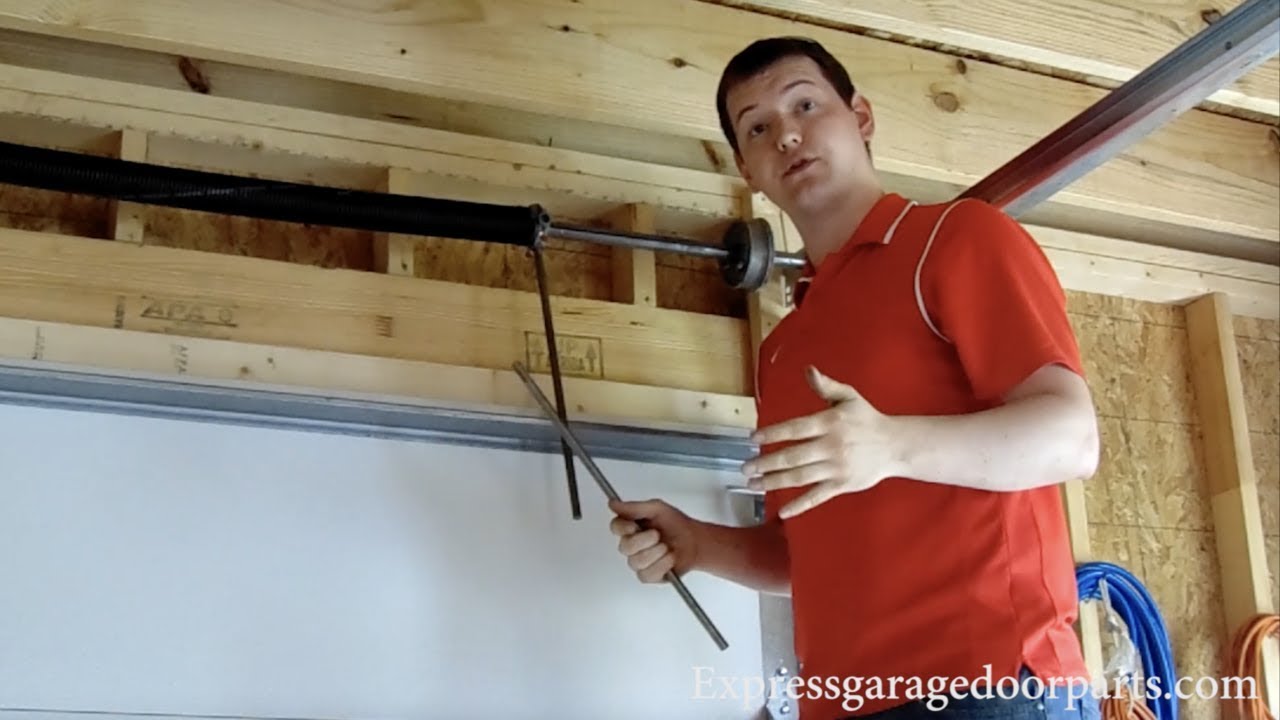
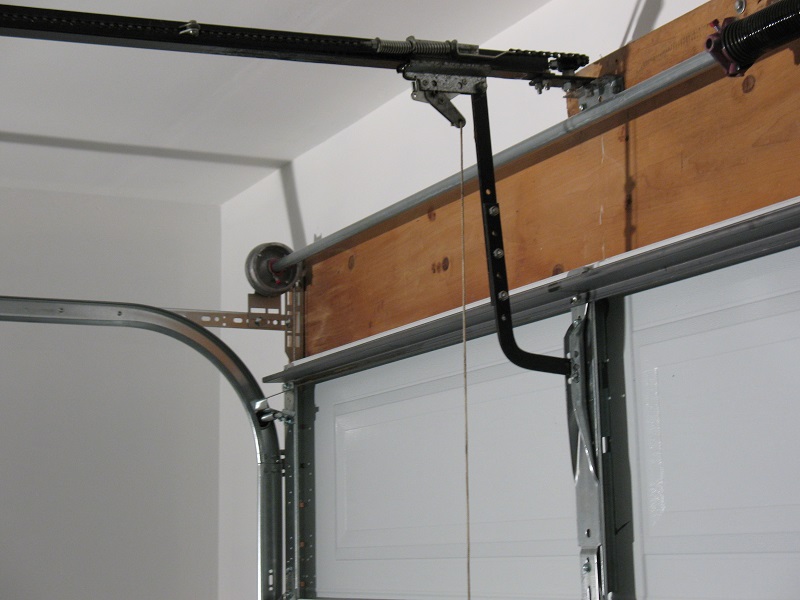
Torsion springs are typically mounted on a steel rod above the garage door opening, running parallel to the door track. They are single or double coils of heavy-duty steel. When the garage door is closed, the springs are wound tightly. As the door is opened, the springs unwind, releasing their stored energy to help lift the door’s weight. This mechanism provides a smooth, balanced lift. For a 12 ft wide garage door, a torsion spring system is almost always the standard, offering superior balance and control compared to extension springs. The “turns” refer to how many rotations the spring is wound onto the rod.
Extension Springs: An Alternative Mechanism
Extension springs are usually mounted in two parallel tracks above the horizontal door tracks. They run the length of the door’s travel. When the door is closed, the extension springs are stretched, storing energy. As the door opens, the springs contract, assisting in lifting the door. While simpler in concept, extension springs can sometimes lead to a less balanced feel, especially with heavier doors, and can be more prone to “sagging” over time. They often incorporate safety cables to prevent the spring from snapping and causing damage or injury if it breaks. For a 12 ft door, while less common for primary lifting, they might be used in conjunction with other systems or for lighter-duty doors. The concept of “turns” doesn’t directly apply to extension springs in the same way; their tension is determined by their stretch length.
The Crucial Role Of Door Weight In Spring Tension
The single most important factor determining the number of turns on a garage door spring is the weight of the garage door. A 12 ft garage door can vary significantly in weight depending on its material, construction, insulation, and any additional hardware like windows or decorative elements. A lightweight aluminum door will require a different spring tension than a heavy, solid wood or insulated steel door of the same 12 ft width.
Why Weight Matters
Garage door springs are designed to counterbalance the door’s weight. This means they store enough potential energy when wound to effectively negate the force of gravity pulling the door down. If the spring is under-tensioned (not enough turns), it won’t be able to fully lift or hold the door open, making it feel heavy and difficult to operate. If it’s over-tensioned (too many turns), the spring will exert too much force, causing the door to snap open rapidly, potentially damaging the opener or causing injury.
Estimating And Measuring Door Weight
Accurate door weight measurement is the first step in determining the correct spring tension. Here are common methods:
- Weighing the Door: This is the most accurate method. Detach the spring system and lift the door manually. Use a reliable scale (like a bathroom scale placed under a support point) to measure the force required. Divide the total force by the number of support points if applicable.
- Using a Spring Scale: A specialized spring scale can be attached to the bottom bracket of the garage door to measure the lifting force required. This force directly correlates to the door’s weight.
- Calculation Based on Materials: Manufacturers often provide specifications for their doors, including weight. If you know the material (e.g., steel, wood, aluminum), gauge thickness, and insulation type, you can often find charts online or consult the manufacturer to estimate the weight. For example, a standard 12 ft steel garage door might weigh between 120-150 lbs, while a solid wood door could weigh 200-300 lbs or more.
- Consulting Previous Installations: If the spring system was previously working correctly, you might be able to determine the weight based on the existing spring’s specifications and the number of turns it had. However, this should be verified.
Understanding the exact weight is fundamental. A difference of just 10-20 pounds can necessitate a change in spring tension or even the spring itself. For a 12 ft garage door, this precision is crucial for safe operation.

Credit: www.reddit.com
Factors Influencing The Number Of Turns
While door weight is paramount, other factors contribute to the final number of turns required for a 12 ft garage door spring. These include the spring’s physical characteristics and the type of winding (how the spring is wound).
Spring Dimensions And Wire Gauge
Every torsion spring has specific dimensions that affect how much tension it can generate per turn. These include:
- Inside Diameter (ID): The diameter of the spring coil itself.
- Wire Diameter (WD): The thickness of the steel wire used to make the spring. A thicker wire (larger WD) means the spring is stronger and requires more force to wind, but also stores more energy.
- Length: The overall length of the unwound spring.
- Number of Coils: The number of active coils in the spring.
These dimensions are often correlated with a spring’s torque rating. A higher torque rating means the spring can provide more lifting power. Spring manufacturers provide charts or calculators that help match a specific spring’s characteristics to the door weight and desired lift height. For a 12 ft door, the spring selected will be rated for a specific torque, and the number of turns will be calculated to achieve that torque based on the door’s weight.
Winding Direction And Turns
Torsion springs are wound onto a torsion tube or bar. The winding process is critical:
- Clockwise (CW) vs. Counter-Clockwise (CCW): When you face the garage door from inside the garage, with the spring above the door, the winding direction matters. If the winding cone is on the left, it’s typically a CW spring; if on the right, it’s CCW. This distinction is important for compatibility with the mounting hardware.
- Number of Turns: For a standard upward-acting garage door, the initial winding is typically done with full turns. A common starting point for many residential doors is between 6.5 and 7.5 turns. However, this is a generalization.
- Full Turns: Each full turn (360 degrees) adds a consistent amount of tension.
- Quarter Turns: Sometimes, fine-tuning might involve quarter turns, but for initial setup, full turns are standard.
The total number of turns will directly correspond to the required torque. For example, if a specific spring needs to provide 200 inch-pounds of torque and each full turn provides 30 inch-pounds, you would need approximately 200 / 30 = 6.67 turns. This would typically be rounded to 6.5 or 7 full turns, depending on the spring’s design and the manufacturer’s recommendations.
Lift Height And Travel Distance
The height the garage door travels also influences the spring’s required tension. A 12 ft garage door might have a standard lift (where the tracks run horizontally along the ceiling), high lift (where the tracks angle upwards significantly before going horizontal), or vertical lift (where the door travels straight up).
- Standard Lift: This is the most common and requires the least amount of spring travel.
- High Lift/Vertical Lift: These configurations often require longer springs or additional tension to manage the door’s movement along the steeper tracks. The number of turns might be adjusted to account for the longer travel distance and the specific angle of the tracks.
Credit: ddmgaragedoors.com
Calculating The Ideal Number Of Turns For A 12 Ft Garage Door
Calculating the precise number of turns for a 12 ft garage door spring involves a systematic approach that prioritizes safety and proper function. It’s not a simple one-size-fits-all answer, but rather a calculated outcome based on several variables.
Step-by-step Calculation Process
- Determine the Door Weight: As discussed, accurately measure or estimate your 12 ft garage door’s weight. Let’s assume for an example that the door weighs 150 lbs.
- Identify Spring Specifications: You need to know the inside diameter, wire diameter, and length of the spring you are using or intend to use. Alternatively, you’ll need the torque rating of the spring. Let’s assume you’ve chosen a spring with a wire diameter of 0.250 inches and an inside diameter of 2.5 inches, and it’s rated for a specific torque when wound.
- Consult Spring Charts or Calculators: Garage door spring manufacturers provide detailed charts or online calculators. You input your door weight, spring dimensions (or select a pre-matched spring), and the desired lift height. The calculator then outputs the recommended number of turns.
- Example Scenario: Using an online calculator for a 150 lb door with a 0.250″ wire diameter and 2.5″ ID spring, designed for a standard lift height, the calculator might suggest 7 full turns.
- Consider the Manufacturer’s Recommendations: Always defer to the specific recommendations provided by the garage door manufacturer or the spring manufacturer. They account for subtle variations in their products.
- Factor in Lift Height: If your 12 ft door has a high lift track, you might need to add 0.5 to 1 full turn to the calculated amount to ensure sufficient tension throughout the entire travel path.
Formulaic Approach (simplified)
While calculators are common, the underlying principle can be understood with a simplified formula:
Torque = (Door Weight x Door Height) / 2
This calculates the torque required at the drum. This torque must then be provided by the spring. The spring’s torque output is often expressed as:
Spring Torque = (Turns x TPI x WD^4 x G) / (8 x ID x L)
Where:
- TPI = Turns Per Inch (related to spring length and coils)
- WD = Wire Diameter
- G = Modulus of Rigidity for steel (a constant)
- ID = Inside Diameter
- L = Length of the spring
This formula is complex and typically handled by software. However, it illustrates that more turns directly increase the torque output. For practical purposes, using manufacturer data is the most reliable method.
Data-driven Example Table
Let’s illustrate how door weight and spring type might influence the number of turns for a 12 ft garage door. This table provides hypothetical examples and actual values can vary significantly.
| Door Weight (lbs) | Door Material Example | Spring Wire Diameter (in) | Spring Inside Diameter (in) | Recommended Turns (Standard Lift) | Estimated Torque Needed (in-lbs) |
|---|---|---|---|---|---|
| 120 | Lightweight Aluminum | 0.218 | 2.5 | 6.5 – 7 | 1800 |
| 150 | Insulated Steel | 0.250 | 2.5 | 7 – 7.5 | 2250 |
| 180 | Wood (Standard) | 0.262 | 2.5 | 7.5 – 8 | 2700 |
| 220 | Heavy Wood/Wood Core | 0.273 | 2.5 | 8 – 8.5 | 3300 |
Note: This table is for illustrative purposes only. Always use manufacturer-specific data and consult a professional for precise calculations. The “Estimated Torque Needed” is a simplified representation and actual calculations involve door height and drum diameter.
The Dangers Of Incorrect Spring Tension
Improperly tensioned garage door springs, whether under-tensioned or over-tensioned, pose significant risks. The stored energy within a garage door spring is substantial, making adjustments a task that requires extreme caution. For a 12 ft garage door, the forces involved are considerable.
Under-tensioning Risks
- Door Sagging: The door may not stay fully open or may sag downwards, making it difficult to walk under.
- Opener Strain: The garage door opener will have to do most of the work to lift the door, leading to premature wear and potential motor burnout. In my experience, openers are not designed to lift the full weight of the door; that’s the spring’s job.
- Manual Operation Difficulty: The door will feel excessively heavy when operated manually, requiring significant force.
- Unbalanced Movement: The door might move unevenly or bind in the tracks.
Over-tensioning Risks
- Sudden Opening: The door can snap open rapidly and forcefully, potentially causing injury to people or damage to objects in its path.
- Component Damage: The excessive force can damage the tracks, rollers, cables, and even the opener’s drive mechanism.
- Spring Failure: While less common, extreme over-tensioning can stress the spring beyond its limits, potentially leading to premature failure.
- Difficulty Closing: The door might resist closing or close too quickly.
Safety Precautions During Adjustment
Adjusting garage door springs is inherently dangerous due to the high tension involved. It is strongly recommended that this task be performed by a qualified garage door technician. If you choose to attempt it yourself, observe these critical safety measures:
- NEVER work on springs alone. Have a helper.
- ALWAYS disconnect the garage door opener from the power source and the door.
- USE locking pliers or C-clamps to secure the door to the track to prevent accidental movement.
- USE the correct winding bars (specifically designed for your spring type and size). Never use a drill or power tool.
- NEVER stand directly in the path of the winding bar or the spring.
- ALWAYS wind the spring in small increments (e.g., quarter or half turns) and check tension frequently.
- ENSURE the set screws on the winding cone are tightened securely after adjustment.
- WEAR safety glasses and work gloves.
A 12 ft garage door spring system carries significant force. Attempting adjustments without proper knowledge and tools can lead to severe injury.
Signs Of Improper Spring Tension
Recognizing the symptoms of incorrect spring tension is crucial for maintaining your 12 ft garage door’s safe and efficient operation. These signs often appear gradually or suddenly, indicating that an adjustment is needed.
Common Indicators
- Door Opens or Closes Too Quickly/Slowly: A properly balanced door should open and close at a moderate, controlled pace, typically taking about 5-10 seconds. If it slams shut or flies open, it’s likely over-tensioned. If it moves sluggishly or requires significant effort to open or close manually, it’s likely under-tensioned.
- Door Won’t Stay Open: If you lift the door manually and it immediately starts to fall or won’t stay in the fully open position, the spring tension is insufficient.
- Door is Difficult to Lift Manually: A balanced door should feel relatively lightweight when you lift it by hand. If it feels extremely heavy, the spring is under-tensioned or failing.
- Sagging in the Middle: A 12 ft door that sags noticeably in the center when closed or partially open can indicate a lack of proper spring tension.
- Straining Garage Door Opener: If your garage door opener sounds like it’s struggling, or if it frequently trips its safety reverse mechanism, it might be because the opener is compensating for poorly balanced springs. You can test this by disengaging the opener and trying to lift the door manually. If it’s very heavy, the opener is doing the work. You can learn more about how to reset your garage door opener if it has been strained.
- Noisy Operation: While some noise is normal, excessive creaking or groaning, especially during opening and closing, can sometimes be linked to spring issues or lack of lubrication. You can explore how to lube garage door rollers to address general operational noise.
When To Call A Professional
If you observe any of these signs, it’s time to assess the spring tension. While minor adjustments might be possible for experienced DIYers, most homeowners should contact a professional garage door technician. They have the specialized tools, knowledge, and experience to safely diagnose and correct spring tension issues. For a 12 ft garage door, the risks associated with DIY spring adjustments are amplified due to the scale of the door and the potential forces involved. Professionals can also ensure the correct spring is used for the door’s weight and dimensions, as outlined in guides on how much a garage door costs, which often includes spring considerations.
Maintenance And Longevity Of Garage Door Springs
Proper maintenance is key to ensuring your garage door springs, particularly the torsion springs on a 12 ft door, operate safely and reliably for their intended lifespan. Springs are designed to last for a certain number of cycles (one cycle being one full open and close operation), typically ranging from 10,000 to 20,000 cycles, depending on quality and usage.
Routine Inspection
Regularly inspect your garage door springs for signs of wear and tear. Look for:
- Rust: Surface rust is common, but excessive corrosion can weaken the spring.
- Cracks or Gaps: Any visible cracks or breaks in the coils are a critical sign of imminent failure.
- Sagging: As mentioned, a spring that appears visibly sagged when the door is closed can indicate it’s lost tension or is nearing the end of its life.
- Loose Components: Ensure the winding cones and stationary cones are securely attached to the torsion tube and mounting bracket, respectively.
Lubrication
While springs themselves don’t require lubrication in the same way rollers or tracks do, keeping other moving parts clean and lubricated can reduce overall strain on the spring system. Ensure your garage door rollers are properly lubricated. A guide on how to lubricate garage door rollers can help maintain smooth operation.
Cycle Count Awareness
Be mindful of how often you use your garage door. High-traffic households will put more wear on the springs. If your door is used multiple times a day, you might reach the spring’s cycle limit sooner than