
When the power goes out or your garage door opener stops working, knowing how to open a garage door manually can be a real lifesaver. Many people never think about this until they’re stuck, unable to get their car out during an emergency or after a long day.
Manual operation of a garage door may sound intimidating, but with the right guidance, it’s safe, straightforward, and highly practical. This guide will walk you through every step, including essential tips, safety precautions, and details for different types of garage doors.
You’ll also learn what to do if things go wrong and how to avoid common mistakes that often lead to injuries or damage.
Why Manual Operation Matters
Most modern garage doors use automatic openers. These are convenient and reliable, but they depend on electricity and electronics. When there’s a power outage, a failed motor, or a remote control problem, the door stops responding. Without manual access, you could be locked in or out.
Manual operation is not just a backup plan; it’s a basic safety skill for any homeowner or tenant.
Surprisingly, studies show that nearly 70% of homeowners do not know how to operate their garage door manually, and many have never even tested the release mechanism. Being prepared can save you time, prevent frustration, and help in emergencies like fire or severe weather.
Understanding Your Garage Door System
Before you touch anything, it’s important to understand how your system works. Garage doors come in different styles, and the manual release mechanism can vary.
Main Types Of Garage Doors
- Sectional doors: Most common in US homes. They have several horizontal panels connected with hinges.
- One-piece tilt-up doors: Solid slab that lifts up in one piece.
- Roll-up doors: Usually found in commercial garages but sometimes in homes.
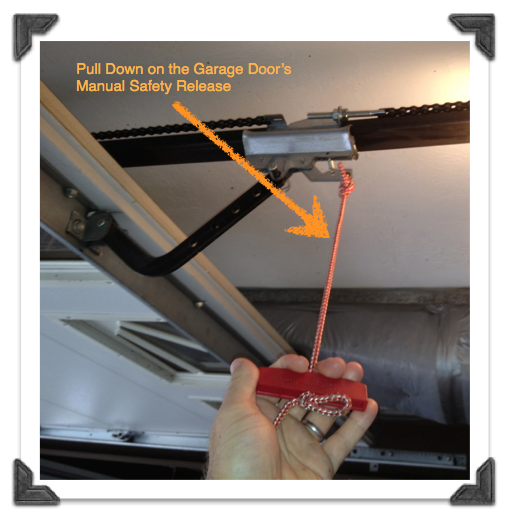
Each type uses springs (torsion or extension), tracks, and a lifting mechanism. The emergency release cord is the key part for manual operation. It’s usually a red rope or handle hanging from the opener rail.
Key Garage Door Parts
- Emergency release cord
- Door tracks
- Spring system (torsion or extension)
- Manual lock/latch
- Handle (outside or inside)
Understanding these will help you troubleshoot and open the door safely.

Safety Precautions Before You Begin
Opening a garage door manually is not dangerous if done correctly, but you must respect the power of the springs and the weight of the door.
- Do not attempt to force the door if it’s jammed or off the tracks.
- Clear the area: Keep children and pets away.
- Use gloves if possible, to improve grip.
- Never let go of the door while it’s partially open.
- Disconnect power: Unplug the opener before manual operation to prevent accidental activation.
One less-known tip: Springs store a lot of energy. If you see a broken spring or hear a loud snap, do not try to open the door yourself—call a professional.
Step-by-step Guide: How To Open A Garage Door Manually
Follow these steps carefully. The process works for most overhead, sectional garage doors.
1. Ensure The Door Is Fully Closed (if Possible)
If your door is halfway open, carefully close it before disengaging the opener. This prevents the door from slamming shut unexpectedly, which can cause injury or damage.
2. Disconnect The Automatic Opener
Find the emergency release cord—usually a red rope or handle hanging from the opener track. Pulling this cord disconnects the door from the opener trolley.
- Pull the cord down and away from the door. You’ll often hear a click.
- The opener is now disengaged, and the door moves freely on the tracks.
Pro tip: Some openers require a firm pull, especially if the cord hasn’t been used in years.
3. Lift The Door Manually
Stand with your feet shoulder-width apart. Place both hands on the door at a comfortable height.
- Lift smoothly and steadily. Do not jerk.
- Be ready for the door to feel heavy—the springs should do most of the work, but if they’re weak, the door may be hard to move.
- Raise the door until fully open. Do not let go until you’re sure it will stay up on its own.
If the door is too heavy to lift, stop immediately. This means the springs are broken or the mechanism is jammed.
4. Secure The Door In The Open Position
Some doors have a manual prop or locking bar. If yours does, engage it. Otherwise, never leave the door unattended while open, as it could fall suddenly.
- Use a sturdy object to prop the door if you must keep it open temporarily. Never use your body.
5. Close The Door Manually
To close, pull the door down gently. Keep hands away from pinch points. Lower it all the way until it touches the ground.
- Some doors may have a manual locking mechanism. Engage it if you’re leaving the door unattended.
6. Reconnect The Opener
After power is restored or the opener is repaired, you can reconnect the door.
- Pull the emergency release cord toward the door until you hear a click, or manually move the door until it clicks back into the opener trolley.
- Test with your remote or wall button.
Not all openers re-engage the same way. If it doesn’t work, check your owner’s manual or contact the manufacturer.
How To Open A Garage Door Manually From Outside
If you’re locked out and there’s no other way in, some garage doors have an external emergency release kit.
- Look for a small keyhole in the center of the door near the top.
- Insert the key, turn, and pull out the lock tumbler. This exposes a cable.
- Pull the cable to disengage the opener inside.
- Lift the door manually.
Tip: If your garage doesn’t have this feature, you can have one installed by a professional.
Manual Operation For Different Door Types
Not all garage doors are the same. Here’s how the process changes with different styles.
Sectional Overhead Doors
- Most common in homes.
- Emergency release cord is standard.
- Always make sure the door is closed before pulling the release.
One-piece Tilt-up Doors
- May not have an emergency release.
- Manual lifting is harder because of the door’s weight.
- Often require two people to lift safely.
Roll-up Doors
- Typically used for commercial garages.
- May have a chain hoist for manual operation.
- Release lever or pin disconnects the door from the motor.
Garage Door Openers (chain, Belt, Screw Drive)
- All have emergency release but may look slightly different.
- Check for specific instructions in your opener’s manual.
Common Problems And How To Solve Them
Manual operation sometimes doesn’t go as planned. Here’s how to deal with common issues.
Door Won’t Move
- Possible causes: Broken spring, jammed track, locked door.
- Solution: Do not force. Check for visible blockages or damage.
Door Is Too Heavy
- Possible causes: Weak or broken springs.
- Solution: This is dangerous. Call a garage door technician.
Release Cord Won’t Pull
- Possible causes: Rust, lack of use, jammed mechanism.
- Solution: Try gentle rocking. If stuck, use lubricant or contact a pro.
Door Comes Down Too Fast
- Possible causes: Springs not working.
- Solution: Hold the door firmly and lower slowly. Do not let go. Arrange for spring repair.
Opener Won’t Re-engage
- Possible causes: Misalignment, wrong reconnection method.
- Solution: Slide the door along the track until it clicks, or consult the manual.
Key Differences: Manual Vs Automatic Operation
Manual and automatic operation each have their strengths and weaknesses. Here’s a side-by-side look:
| Aspect | Manual Operation | Automatic Operation |
|---|---|---|
| Ease of Use | Requires physical effort | Push-button convenience |
| Power Requirement | No electricity needed | Needs power supply |
| Speed | Slower, controlled by user | Fast and consistent |
| Reliability | Works when opener fails | Can fail due to power or mechanical issues |
| Security | Depends on manual lock | Usually auto-locks |
Safety Risks And How To Avoid Them
Garage doors can weigh over 150 pounds and the springs are under high tension. Accidents can happen if you’re not careful.
Most Common Safety Hazards
- Finger injuries from pinch points between panels.
- Back strain from lifting heavy doors.
- Door slamming down if spring tension is lost.
- Unexpected opener activation if power returns suddenly.
How To Stay Safe
- Always keep hands clear of moving parts.
- Never let children operate the door manually.
- Use two people for heavy or old doors.
- If something feels wrong, stop and call a professional.
Important Maintenance For Manual Operation
A well-maintained garage door is much easier and safer to operate manually. Here’s what you should check:
Regular Inspection
- Look for rust, frayed cables, or worn rollers.
- Test the emergency release cord every six months.
- Lubricate moving parts with silicone-based spray.
Spring And Track Care
- Check for gaps in torsion springs—a sign of breakage.
- Clean tracks to prevent jams.
- Tighten any loose bolts or brackets.
Emergency Release Test
- With the door closed, pull the release cord.
- Lift the door manually to ensure it moves smoothly.
- Reconnect the opener after the test.
Insight: Many people forget to test the emergency release until it’s too late. Doing a quick test twice a year prevents surprises during real emergencies.
What To Do If Manual Operation Fails
Sometimes, the emergency release or manual lifting doesn’t work. Here’s what to do.
1. Check For Lock Or Obstruction
- Make sure manual locks are disengaged.
- Look for objects blocking the tracks.
2. Inspect The Springs
- If you see a gap or hear a snap, the spring is broken.
- Do not attempt to repair springs yourself.
3. Call A Professional
- Garage door repair companies have the tools and experience to fix problems safely.
- Most emergency repairs can be done same-day.
4. Consider Upgrading
- If your door is over 20 years old, parts may be worn out.
- Newer doors have better safety features, including easier manual release mechanisms.
Comparing Emergency Release Kits
If you want to be prepared for outside access, you can install an external emergency release kit. Here’s how different kits compare:
| Kit Feature | Basic Kit | Premium Kit |
|---|---|---|
| Includes Key Lock | Yes | Yes |
| Weatherproof Cover | No | Yes |
| Ease of Installation | DIY possible | Professional recommended |
| Cost | Low | Medium |
| Extra Security Features | No | Yes (Anti-pick, reinforced cable) |
Tips For Smooth Manual Operation
Manual operation shouldn’t be hard if your door is in good shape. A few extra steps can make things easier.
- Keep the tracks clean: Dirt and debris can cause jams.
- Lubricate hinges and rollers: At least twice a year.
- Replace worn weather stripping: This prevents sticking, especially in winter.
- Test the door balance: Disconnect the opener and lift halfway—the door should stay put. If it falls, springs may need adjustment.
- Label the emergency release cord: So everyone in your home knows what it’s for.
- Store a flashlight near the garage: Power outages often happen at night.
Mistakes To Avoid
Many people make the same errors when trying to open a garage door manually. These mistakes can cause injury or damage.
- Pulling the release cord with the door open: This can cause the door to slam down suddenly.
- Not supporting the door while open: The door can fall if springs fail.
- Ignoring strange noises: Squeaks, grinding, or banging can signal a mechanical problem.
- Forcing a stuck door: Pushing or pulling too hard can bend tracks or damage panels.
- Leaving tools or objects in the door’s path: This can cause jamming or breakage.
Non-obvious insight: If you have a smart garage door opener, disconnecting it manually will disable most remote monitoring and alerts until you re-engage the opener. Remember to reset your system after power is restored.

How Manual Garage Door Opening Can Save Lives
Manual operation is not just about convenience. In emergencies like fire, earthquake, or medical crisis, the ability to open the garage door quickly can allow you and your family to escape or let first responders in. Some tragic cases have occurred when people were trapped because they didn’t know how to disengage the opener.
Stat: According to the U.S. Fire Administration, more than 6,600 garage fires occur each year, causing injuries and blocking exits. Practicing manual operation is a simple way to improve your home’s safety plan.
When To Call A Professional
Not every garage door problem can be fixed by DIY methods. Call a professional if:
- The door is too heavy to lift.
- The emergency release cord won’t budge.
- There is visible spring or cable damage.
- The opener makes grinding noises but doesn’t work.
- You feel unsure or unsafe at any point.
Hint: Annual professional inspection can catch problems before they become emergencies.
Manual Garage Doors And Security
When operating your garage door manually, security is a top concern.
- Always lock the door: Manual operation often disables automatic locks, so use the manual lock or padlock.
- Do not leave the emergency release cord hanging low: Thieves can fish it with a wire. Tie it up out of reach, but still accessible.
- Upgrade to a reinforced emergency kit if your garage is attached to the house.
For more on home security and garage safety, see this resource from the National Fire Protection Association.
How To Practice Manual Operation
Don’t wait for an emergency to learn how to open your garage door by hand.
- Practice during daylight with the door closed.
- Show all family members how the emergency release works.
- Keep the garage clear so nothing blocks the door.
- Check that keys for external release are accessible.
A good habit is to practice once every season.
Frequently Asked Questions
What If The Emergency Release Cord Is Missing Or Broken?
If the cord is missing, you can often pull the release lever directly with pliers, but only if you can access it safely. If the release mechanism is broken, do not try to force the door. Contact a garage door repair service for help.
Can I Manually Open My Garage Door If The Springs Are Broken?
It is not recommended. Broken springs make the door extremely heavy and dangerous to lift. You risk serious injury. Always call a professional if you suspect a spring is broken.
How Do I Open A Garage Door Manually During A Power Outage?
Follow the steps in this guide: ensure the door is closed, pull the emergency release cord, and lift the door by hand. Use a flashlight if it’s dark, and keep others clear of the door while operating.
Will Opening My Garage Door Manually Damage The Opener?
No, as long as you use the emergency release correctly and do not force the door, manual operation will not harm the opener. Always reconnect the opener when you’re done.
Is It Possible To Add An External Emergency Release To My Garage?
Yes, most doors can be upgraded with an external emergency release kit. This allows access from outside in case of power failure or remote control loss. Installation is best done by a professional for security and reliability.
Opening a garage door manually is an essential skill for every homeowner. With the right knowledge, a little practice, and regular maintenance, you’ll never be caught off guard by a power outage or opener failure. Stay safe, stay prepared, and your garage will always be accessible when you need it most.