
A garage door that will not open but still has a running motor can be confusing and frustrating. You hear the familiar sound of the motor humming or whirring, but the door stays put. This situation often leaves homeowners worried about security, convenience, and repair costs.
The good news is that this issue is usually fixable, and understanding the cause can save you time and money.
Let’s look deeper into why your garage door may not open even though the motor works. You’ll find practical advice, clear troubleshooting steps, and expert tips to help you solve the problem. Whether you have a little experience with home repairs or are completely new to garage door systems, this guide will walk you through everything you need to know.
How A Garage Door Opener Works
Before jumping into solutions, it helps to know how a garage door opener system functions. The opener is an electric motor that pulls or pushes a trolley along a track. This trolley is attached to the garage door and moves it up or down.
Most modern openers use a chain, belt, or screw drive to move the trolley. There are also safety sensors near the floor and a system of springs and cables that balance the door’s weight. If any part of this system fails, the door may stay closed even if the motor runs.
Common Reasons The Garage Door Won’t Open But The Motor Runs
Let’s explore the most frequent causes in detail. Knowing these will help you decide whether to fix the problem yourself or call a professional.
1. Disengaged Or Broken Trolley
The trolley connects the opener to the door. If it becomes disengaged (often called “in manual mode”), the motor moves, but the door does not.
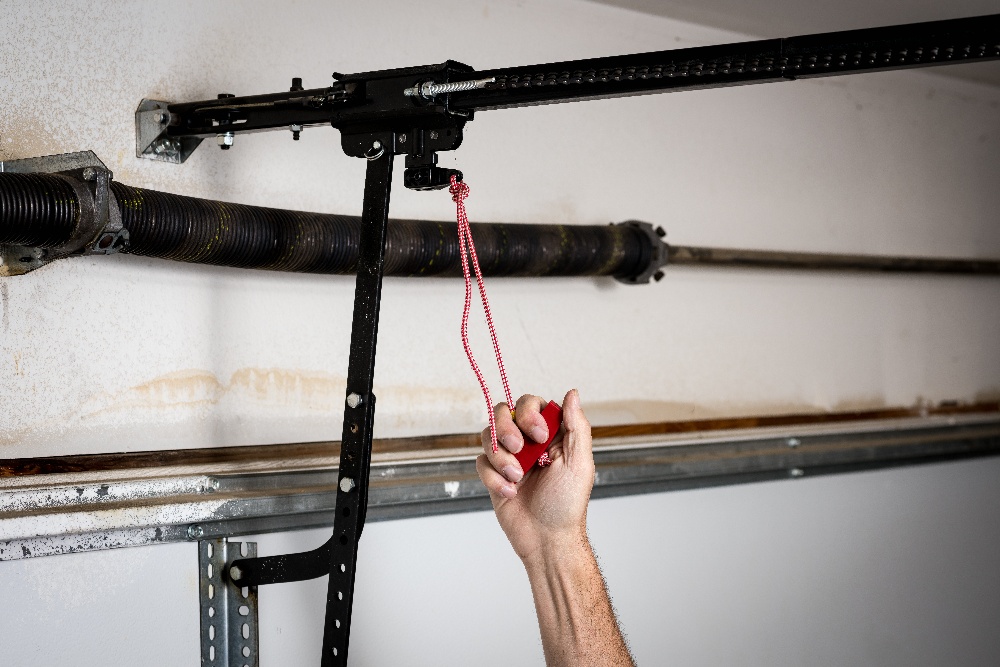
- Manual release handle: Most garage door openers have a red rope or handle. If pulled, it disconnects the trolley from the opener, letting you open the door by hand. Sometimes, this handle gets pulled accidentally or stays unlatched.
- Broken trolley: If the trolley is cracked or damaged, it won’t grip the opener arm. The motor runs, but nothing happens.
Tip: Check the red rope or handle hanging from your opener’s rail. If it’s pulled down, try pushing the door closed, then re-engage it by pulling the handle toward the opener.
2. Broken Garage Door Springs
Garage doors are heavy, often over 150 pounds. Springs (torsion or extension type) balance this weight. If a spring breaks, the opener may not be strong enough to lift the door, even if the motor works.
- Torsion springs are mounted above the door.
- Extension springs run along the tracks.
Signs of a broken spring:
- Loud bang from the garage
- Gap in the torsion spring
- Door feels very heavy or won’t move at all
Important: Never try to repair springs yourself. They are under high tension and can cause serious injury.
3. Faulty Gears Or Drive Mechanism
Inside the opener, plastic gears or metal parts transfer power from the motor to the trolley. Over time, these gears can wear out, especially in older units or after years of heavy use.
Symptoms:
- Motor sounds normal, but door doesn’t move
- You may hear clicking or grinding
What to do: Open the opener’s cover and look for plastic shavings or broken pieces. Replacing gears is possible but requires basic tools and following the manufacturer’s instructions.
4. Chain, Belt, Or Screw Drive Issues
The drive system connects the motor to the trolley. If the chain or belt slips, breaks, or becomes loose, the motor will run but not move the door.
- Loose chain or belt: You’ll see sagging or hear slapping noises.
- Broken drive: The chain or belt is off the sprocket or snapped.
- Screw drive: May become stripped or disconnected.
How to check: Inspect the drive mechanism for obvious damage or looseness. Some openers allow you to tighten the chain/belt with a simple adjustment bolt.
5. Door Off Track
If the garage door is off its track, the opener cannot move it. The motor will run, but the door may be stuck, crooked, or jammed.
- Visual clues: Wheels off the track, bent rails, or gaps between the rollers and track.
- Common causes: Obstructions, impact, or worn rollers.
Do not force the opener if the door is off-track. This can bend or break parts and make repair more expensive.
6. Door Lock Engaged
Some garage doors have a manual lock (like a sliding bar or a deadbolt) that can be engaged from inside. If this is locked, the motor may struggle and fail to open the door.
- Symptoms: Motor hums, but door doesn’t move. You may hear a slight clunk as the lock stops movement.
Always check for a manual lock, especially if you recently closed the door from inside.
7. Remote Or Wall Switch Issues
It’s possible the remote or wall switch is sending a signal to the opener, but not engaging the motor fully. Sometimes, the motor runs, but it’s not getting the right command to move the trolley.
- Weak batteries or faulty wiring can cause inconsistent operation.
- Control board issues may confuse signals.
Try using both the remote and the wall switch to rule out a faulty transmitter.
8. Limit Switch Or Travel Settings Out Of Adjustment
Garage door openers use limit switches to tell the door when to stop. If these settings are incorrect, the motor will run but may not move the door or may only move a little.
- Limit switch: Tells the opener when the door is fully open or closed.
- Travel setting: Controls how far the door moves.
If you recently installed a new opener or adjusted the door, these settings might need calibration.
9. Safety Sensor Misalignment
Most modern garage doors have infrared safety sensors near the floor. If these are blocked or out of alignment, the opener might run but refuse to lift the door.
- Check for: Blinking lights on the sensors, dirt or objects blocking the beam.
- Clean and realign the sensors if needed.
10. Stripped Sprocket Or Drive Gear
Some openers, especially chain-drive models, have a sprocket at the top of the motor. If this part strips, the chain spins freely, but the door does not move.
Inspect for: Metal shavings, broken teeth, or a loose chain. Replacement parts are available for many brands.
11. Power Supply Problems
In rare cases, the opener may have enough power to run the motor but not enough to lift the door, due to a weak power supply or a failing capacitor.
- Dim lights or intermittent power loss are warning signs.
Have an electrician check the power if you suspect wiring issues.
12. Weather-related Issues
Extreme cold or heat can affect your garage door. In winter, parts may freeze, or lubricants may thicken, making the door harder to move.
- Frozen door: Ice may glue the door to the ground.
- Swollen wood: Wooden doors can expand in humidity, sticking in the tracks.
Use a hair dryer or de-icer for frozen doors. Avoid forcing the opener.
13. Obstructions Or Debris
Small objects, rocks, or dirt in the track can stop the door from moving. Even a little debris can jam a roller or derail the door.
- Inspect both tracks for foreign objects.
- Clean regularly to prevent buildup.
14. Broken Or Disconnected Cables
Cables help lift the door evenly. If a cable breaks or slips off the drum, one side of the door may bind, and the opener cannot move it.
- Check for loose or hanging cables on the sides of the door.
Never try to rewind or reconnect cables without proper tools.
15. Opener Age And Wear
If your opener is over 10-15 years old, parts may wear out. Old openers may not be able to handle a heavy or unbalanced door.
- Consider replacement if repairs become frequent or expensive.

Troubleshooting Steps For A Garage Door That Won’t Open
Once you’ve reviewed the common causes, you can follow a systematic process to pinpoint the problem.
Step 1: Listen And Observe
- Does the motor sound normal or make unusual noises?
- Is the chain, belt, or screw moving?
- Is the door moving at all, even a little?
- Are there any flashing error lights on the opener unit?
Step 2: Check The Emergency Release
- Locate the red handle or cord hanging from the rail.
- Pull the handle down and try to open the door by hand.
- If the door moves, the problem is with the opener’s connection, not the door itself.
Step 3: Inspect The Springs And Cables
- Look for a gap in the torsion spring or a dangling cable.
- Do not touch or try to fix springs or cables yourself.
Step 4: Examine The Tracks And Rollers
- Check for bent tracks, off-track rollers, or obstructions.
- Make sure nothing is blocking the door’s path.
Step 5: Test The Safety Sensors
- Clean both sensors with a dry cloth.
- Make sure the alignment is correct (lights should be steady).
- Remove any objects blocking the sensors.
Step 6: Try Both Controls
- Use the wall switch and the remote.
- If one works and the other does not, replace batteries or check wiring.
Step 7: Adjust The Limit Switches
- Locate the limit adjustment screws on the opener.
- Follow the manufacturer’s instructions to set the open and close points.
Step 8: Check The Drive Mechanism
- Open the motor unit and look for worn gears or a loose chain/belt.
- Tighten or replace as needed.
Step 9: Inspect For Manual Locks
- Make sure no one has set a manual lock from inside the garage.
Step 10: Assess The Weather
- If it’s very cold, check for ice buildup.
- Try to gently free any ice before operating the opener.
Diy Fixes Vs. When To Call A Professional
Some issues are safe and easy for homeowners to handle. Others require special tools or knowledge.
Safe Diy Tasks
- Cleaning and realigning safety sensors
- Removing small obstructions from tracks
- Re-engaging the manual release handle
- Replacing remote batteries
- Tightening a loose chain or belt (follow instructions)
Jobs For Professionals
- Replacing or adjusting garage door springs
- Fixing broken cables
- Repairing opener gears or motor
- Realigning a door that is off-track
- Electrical wiring issues
Important: Garage door springs and cables are under high tension. DIY repair is dangerous and not recommended.

Preventive Maintenance For Garage Doors
Regular maintenance can prevent most opener problems. Consider these tips:
- Lubricate moving parts: Use a garage door lubricant on tracks, rollers, and hinges every 6 months.
- Inspect springs and cables: Look for wear or damage monthly.
- Test the balance: Disconnect the opener and lift the door halfway. It should stay put. If not, call a professional.
- Clean the safety sensors: Wipe them down and keep the area clear.
- Tighten hardware: Bolts and screws can loosen over time.
- Replace opener batteries: Do this yearly to avoid surprises.
Cost Comparison: Common Garage Door Opener Repairs
To help you decide whether to repair or replace, here’s an overview of typical repair costs:
| Problem | DIY Cost | Professional Cost | Risk Level |
|---|---|---|---|
| Safety sensor cleaning/adjustment | $0 – $15 | $75 – $120 | Low |
| Remote battery replacement | $3 – $10 | $15 – $40 | Low |
| Broken spring replacement | Not recommended | $180 – $350 | High |
| Gear replacement | $25 – $60 | $130 – $250 | Medium |
| Cable repair | Not recommended | $90 – $180 | High |
| New opener installation | $150 – $350 | $350 – $800 | Medium |
Insight: Simple fixes like sensor cleaning or battery changes are inexpensive. Spring, cable, and gear repairs are best left to professionals due to safety risks.
Features Comparison: Garage Door Opener Types
Understanding your opener type can help with diagnosis and repair. Here’s a quick comparison:
| Opener Type | Drive System | Noise Level | Typical Issues |
|---|---|---|---|
| Chain Drive | Metal Chain | Loud | Chain wear, sprocket damage |
| Belt Drive | Rubber Belt | Quiet | Belt slip, tension loss |
| Screw Drive | Steel Screw | Moderate | Screw stripping, lubrication problems |
| Direct Drive | Motor Moves | Very Quiet | Rare, usually electrical |
Non-obvious tip: Belt drives are quieter but require more frequent tension checks than chain drives.
Real-world Example: Diagnosing A Stuck Garage Door
Suppose your garage door opener hums, but the door does not move. You notice the chain is moving, but the door stays still. You check the red release handle and see it’s hanging down. You push the door until it clicks, re-engage the handle, and try again.
The door opens!
If this does not work, you examine the torsion spring above the door and see a gap. Now you know a broken spring is the real cause. At this point, you call a professional for repair. By following these steps, you saved time and avoided further damage.
Advanced Diagnostics: When The Problem Persists
What if you’ve checked everything, but the door still won’t open? Here are some advanced steps:
- Test the wall outlet: Plug another device (like a lamp) into the opener’s outlet to check for power.
- Inspect the opener’s lights: Many units flash codes. Check your manual for what they mean.
- Listen for repeated clicks: This may signal a bad circuit board or failed relay.
- Feel for heat: If the motor is hot, it may have overheated and shut down.
If you are still stuck, it’s time to call a garage door technician.
When To Replace Your Garage Door Opener
Sometimes, replacement is better than repair. Consider a new opener if:
- The unit is over 15 years old.
- Repairs are more than 50% of a new unit’s cost.
- You want better safety features (like rolling code remotes, battery backup, or Wi-Fi control).
- The opener is unreliable or noisy.
Modern openers are safer, quieter, and more secure. For more information, see this Wikipedia overview on garage door openers.
Safety Precautions For Homeowners
Always keep safety in mind:
- Unplug the opener before working on it.
- Never adjust springs or cables yourself.
- Keep children and pets away from the door during repairs.
- If unsure, call a professional.
Non-obvious safety tip: If your door is stuck open, secure it with clamps or locking pliers to prevent it from falling during inspection.
Frequently Asked Questions
Why Does My Garage Door Opener Run But The Door Only Moves A Few Inches?
This often means the limit switch or travel setting needs adjustment. It can also be caused by a broken spring, blocked tracks, or a misaligned safety sensor.
Can A Garage Door Opener Burn Out If The Door Is Stuck?
Yes, if the opener tries to lift a stuck door for too long, the motor can overheat and fail. Most openers have automatic shutoff, but repeated attempts can cause damage.
Is It Safe To Use The Manual Release If The Door Is Stuck Closed?
Usually yes, but be careful. If a spring is broken, the door may be very heavy and hard to lift. Do not force the door. If in doubt, call a professional.
How Do I Know If My Garage Door Spring Is Broken?
Look for a gap in the torsion spring above the door. You may also hear a loud bang when it breaks, and the door may feel much heavier than usual.
What Regular Maintenance Prevents Opener Problems?
Lubricate moving parts, clean sensors, test the door’s balance, and inspect springs and cables every few months. Replace opener batteries yearly for reliable performance.
A stuck garage door can be stressful, but with the right knowledge, you can solve most problems quickly. Pay attention to details, follow safety rules, and do not hesitate to call an expert for tricky repairs. This way, your garage door will keep working smoothly for years to come.