
A garage door opener may not be the most exciting thing you buy, but it’s one of the most important for home security and daily convenience. If your current opener is noisy, slow, or just stopped working, you’re probably wondering: how much is a new garage door opener? The answer depends on many factors, from the type and brand to installation and extra features. Choosing the right opener is more than picking a price; it’s about finding something reliable, safe, and suitable for your garage.
This article breaks down all the costs, options, and decisions involved in buying a new garage door opener. You’ll learn what affects the price, the different types, which features matter, and how professional installation compares to DIY. You’ll also see real examples and data, so you can budget wisely and avoid common mistakes.
Whether you want basic functionality or smart-home integration, you’ll find everything you need to know before making your purchase.
What Impacts The Cost Of A Garage Door Opener?
Many homeowners are surprised by how much prices can vary. The cost of a new garage door opener is not just about the motor. Here’s what influences the final price:
- Type of drive system (chain, belt, screw, direct, or jackshaft)
- Motor power and quality
- Brand and warranty
- Extra features (smart controls, battery backup, lighting)
- Professional installation vs. DIY
- Location and local labor rates
- Removal of old equipment
Let’s explore these factors in detail to understand how each one impacts your wallet.
Type Of Drive System
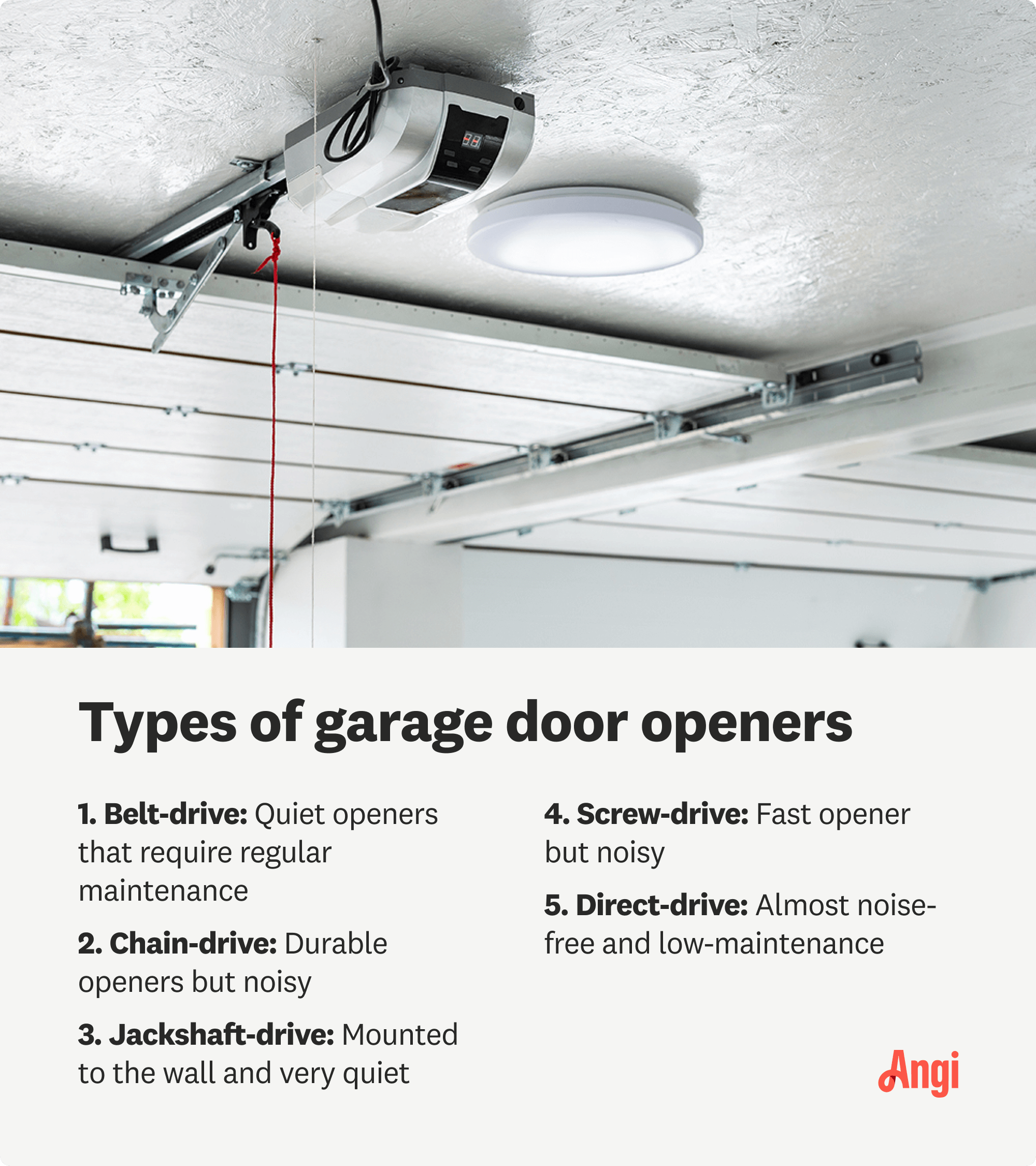
The drive system is how the opener moves your garage door up and down. Each type has its own price range and pros and cons:
- Chain drive: Most common, usually the cheapest. Noisy, but reliable.
- Belt drive: Quieter and smoother. More expensive.
- Screw drive: Fewer moving parts, moderate noise. Mid-range price.
- Direct drive: Very quiet, high-end, and often costly.
- Jackshaft: Mounted on the wall, good for high or unusual ceilings. Usually the most expensive.
Motor Power And Quality
Motor strength is measured in horsepower (HP) or newton (N) ratings. Most homes use ½ HP or ¾ HP. Heavier doors need stronger motors, which cost more. High-quality motors with better parts last longer and often come with longer warranties.
Brand And Warranty
Major brands like Chamberlain, LiftMaster, and Genie tend to cost more, but they usually offer better support and warranties. Cheaper brands may save you money upfront but can cost more in repairs and replacements.
Extra Features
Modern openers can do more than open your door. Features that add to the price include:
- Smartphone control
- Battery backup
- LED lighting
- Security systems
- Quiet operation technology
Some features are essential for safety or convenience, while others are optional luxuries.
Professional Installation Vs. Diy
Installation is a big part of the total cost. Hiring a pro ensures safety and often includes a warranty, but DIY can save money if you have the tools and skills.
Location And Local Labor Rates
Prices vary by region. Urban areas or places with high labor costs will charge more for installation. Some areas also require special permits or code compliance.
Removal Of Old Equipment
Some installers charge extra to remove your old opener or repair the garage door itself. This can add $50–$150 to your bill.
Cost Breakdown: What You Can Expect To Pay
Let’s look at real numbers. The cost of a new garage door opener in the US usually falls in these ranges:
- Opener unit only: $120 – $450+
- Professional installation: $150 – $350
- Total installed cost: $270 – $800+
For a basic opener and standard install, most homeowners spend $300 to $600. High-end models with top features or complex installation can push the price to $800 or more.
Below is a comparison of average costs for different drive systems:
| Drive System | Unit Cost | Installation Cost | Total |
|---|---|---|---|
| Chain Drive | $120–$250 | $150–$300 | $270–$550 |
| Belt Drive | $180–$350 | $150–$350 | $330–$700 |
| Screw Drive | $200–$350 | $175–$350 | $375–$700 |
| Direct Drive | $250–$450 | $200–$350 | $450–$800 |
| Jackshaft | $350–$600 | $200–$350 | $550–$950 |
Types Of Garage Door Openers
Choosing the right type is essential. Each type serves a different need and budget.
Chain Drive
Chain drives are the oldest and most common. They use a metal chain to move the door. They’re reliable and inexpensive, but they can be noisy. This is a good choice for detached garages or where noise isn’t a concern.
Pros: Lowest price, reliable, easy to find parts
Cons: Noisy, needs lubrication
Typical cost: $120–$250 unit, $270–$550 installed
Belt Drive
Belt drives use a rubber or fiberglass belt instead of a chain. This reduces noise a lot and gives smoother operation. They’re more expensive but ideal for garages under bedrooms.
Pros: Quiet, smooth, low maintenance
Cons: Costs more, belts can wear out
Typical cost: $180–$350 unit, $330–$700 installed
Screw Drive
Screw drives use a threaded steel rod. They have fewer moving parts and need less maintenance. They’re quieter than chain but not as quiet as belt drives.
Pros: Low maintenance, good for heavy doors
Cons: Not as quiet, can be affected by temperature changes
Typical cost: $200–$350 unit, $375–$700 installed
Direct Drive
Direct drive openers move the entire motor along the rail with the door. This makes them very quiet and reliable. They’re often used in luxury homes.
Pros: Quietest, few moving parts, long-lasting
Cons: Expensive, not widely available
Typical cost: $250–$450 unit, $450–$800 installed
Jackshaft
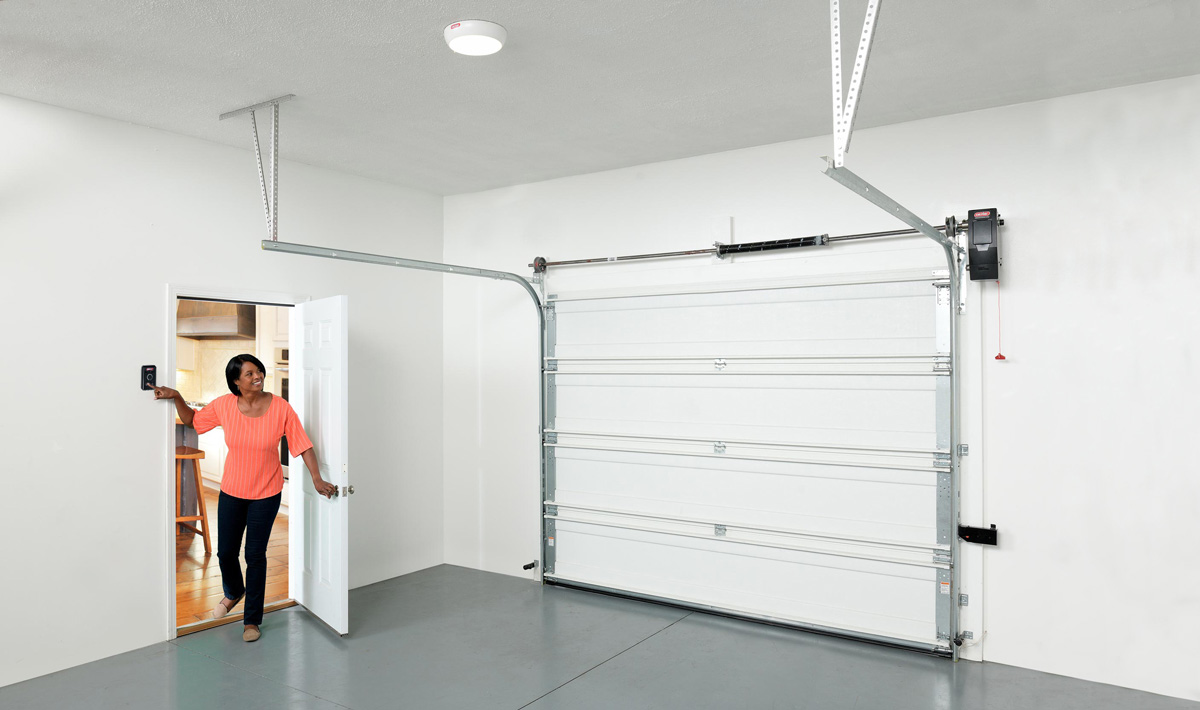
Jackshaft openers are mounted on the wall beside the garage door. They’re perfect for garages with high or sloped ceilings, or where overhead space is limited.
Pros: Saves ceiling space, quiet, advanced features
Cons: Highest cost, may need professional install
Typical cost: $350–$600 unit, $550–$950 installed
Key Features That Affect Price
Not all openers are equal. Features can make a big difference in cost and convenience.
Horsepower/strength
Most homes use ½ HP or ¾ HP openers. Heavy wooden or insulated doors need more power, which costs more. 1 HP models are for very large or commercial doors.
- ½ HP: $120–$250 (good for single garage doors)
- ¾ HP: $160–$300 (for double doors or heavy doors)
- 1 HP: $250+ (commercial or oversized doors)
Smart Controls
Many new openers connect to your smartphone through Wi-Fi. You can open, close, or check the status from anywhere. Brands like MyQ by Chamberlain are popular.
- Adds $30–$100+ to the price
- May require a subscription for advanced features
Battery Backup
Some openers include a battery so you can open the door during a power outage. This is now required by law in some states (like California).
- Adds $50–$100 to the cost
- Essential for safety in areas with frequent outages
Lighting And Security
Modern openers often come with powerful LED lights, motion sensors, or even security cameras. These features add convenience and safety but increase price.
- LED lighting: $20–$50 extra
- Integrated cameras: $50–$150 extra
Rail Length And Custom Fittings
Standard rails fit 7-foot doors. Taller or custom doors need longer rails, costing $20–$50 more. Odd-shaped garages may need special fittings.
Accessories
Extra remotes, wireless keypads, and vehicle integration kits can add $10–$75 each. Some packages include these, while others charge extra.
Brand Comparison: What You Get For Your Money
Top brands usually cost more but offer better quality and support. Let’s compare some popular brands:
| Brand | Entry Price | High-End Price | Special Features | Warranty |
|---|---|---|---|---|
| Chamberlain | $130 | $400+ | MyQ smart, battery backup, LED lights | 1–5 years |
| LiftMaster | $180 | $600+ | MyQ, professional install only, heavy-duty | 1–Lifetime |
| Genie | $120 | $350+ | Aladdin Connect, reliable chain & belt models | 1–5 years |
| Craftsman | $130 | $350+ | Smart controls, budget-friendly | 1–5 years |
| Sommer | $250 | $500+ | Direct drive, ultra-quiet, European design | Lifetime motor |
Pro tip: Big-box store openers are often “DIY” grade, while pro brands like LiftMaster are sold only through dealers and include pro installation.
Professional Installation: What’s Included?
Hiring a professional costs more, but for many, it’s worth the peace of mind. Here’s what most professional installs include:
- Delivery of the opener unit
- Full installation and setup
- Testing of safety sensors
- Removal of the old opener (sometimes extra)
- Adjustments to tracks, springs, and door (if needed)
- Warranty on labor (usually 1 year)
- Instructions and demo for the homeowner
Installers may charge extra for electrical work, new outlets, or fixing damaged doors.
Non-obvious insight: Many warranties require professional installation. DIY can void some warranties or make insurance claims harder.
Diy Installation: Saving Money, Increasing Risk?
Installing a garage door opener yourself can save you $150–$350. Most units come with step-by-step instructions and basic tools. But it’s not a simple task for everyone.
Diy Pros
- Save on labor costs
- Choose your own schedule
- Good for experienced DIYers
Diy Cons
- Can be dangerous (springs and heavy doors)
- Mistakes can damage your door or opener
- May void the warranty
- Takes 2–6 hours, often needs two people
Tip: If your garage door is older or not balanced, professional install is safer and may cost less in the long run.
Real-world Cost Examples
Let’s look at some real examples of what homeowners report spending:
- Basic chain drive, DIY: $150–$250 total
- Belt drive with smart features, pro install: $400–$650 total
- Jackshaft opener, pro install, battery backup: $700–$950 total
- Luxury direct drive, custom door: $800+ total
Costs can be higher in major cities, and lower in small towns.
Common Mistakes When Buying A Garage Door Opener
- Choosing the cheapest model: It may not last or may be too weak for your door.
- Ignoring noise: Chain drives are loud! Don’t install them under a bedroom.
- Skipping battery backup: You’ll regret this in a power outage.
- Not checking door balance: An unbalanced door can destroy a new opener.
- DIY without skills: Saving money isn’t worth a broken door or injury.
- Forgetting about warranties: Only some brands support DIY installs.
- Overpaying for smart features you won’t use: Not everyone needs smartphone control.
- Not measuring door height: Extra-long rails cost more.
Is A Garage Door Opener Worth Upgrading?
A new opener can add value, security, and peace of mind. Here are signs it’s time to replace your old one:
- Door reverses or won’t close/open properly
- Opener is more than 10–15 years old
- No safety sensors or battery backup
- You want smart features or quieter operation
- Repair costs are close to a new unit
Non-obvious insight: Modern openers have better safety systems. Old openers may not meet today’s safety codes, putting your family at risk.

How To Choose The Right Garage Door Opener
Here’s a step-by-step guide to picking the best opener for your needs:
- Check your door size and weight: Heavy or double doors need stronger motors.
- Decide on noise level: Belt or direct drives are best for quiet.
- Look for essential features: Battery backup, safety sensors.
- Set your budget: Don’t forget installation and accessories.
- Choose smart features if you’ll use them: Not everyone needs Wi-Fi control.
- Pick a reputable brand: Better support and parts.
- Decide on DIY vs. pro install: Be realistic about your skills.
Additional Costs To Consider
The price tag isn’t the only thing you’ll pay. Here are some other expenses to watch for:
- Old opener removal: $50–$150
- Garage door repairs: $50–$300 (springs, tracks, cables)
- Electrical work: $100–$250 (for new outlets or wiring)
- Permit fees: $0–$75 (in some cities)
- Accessories: Remotes, keypads, vehicle kits ($10–$75 each)
- Annual maintenance: $50–$100 (optional but recommended)
Pro tip: Ask for a bundled quote that includes removal, install, and accessories.
Are Premium Openers Worth The Cost?
Premium models can cost double or triple a basic opener. Are they worth it?
- Yes, if: You want the quietest operation, smart features, or have a heavy/custom door. You value long warranties and fewer repairs.
- No, if: You have a detached garage and just need basic up/down function.
Premium openers often have longer warranties, better security, and less maintenance. Over 10–15 years, the extra cost can be small compared to peace of mind.
Where To Buy Garage Door Openers
You have options:
- Big-box stores (Home Depot, Lowe’s): Good for DIY, wide selection
- Online retailers (Amazon, manufacturer sites): Great for deals and reviews
- Local garage door companies: Best for pro install and support
- Warehouse clubs (Costco, Sam’s): Bundle deals with install
Non-obvious insight: Local companies often offer package discounts and faster service, especially if you need repairs or support later.
How Long Does A Garage Door Opener Last?
With proper care, most openers last 10–15 years. Some high-end models last 20+ years. Regular maintenance and using the right strength opener for your door help extend life.
Signs of trouble:
- Grinding noises
- Door not closing fully
- Intermittent operation
- Excessive vibration
Replacing an old opener before it fails can prevent being locked out or stuck inside.
Environmental And Energy Efficiency Factors
Modern openers use less energy and have LED lighting. Battery backups are safer but need proper recycling when replaced. Some states offer rebates for energy-efficient models.
Tip: Look for ENERGY STAR or similar ratings if you want lower energy bills.
Warranty And Support: What To Expect
Warranties vary by brand and model. Motors often have longer coverage (5–lifetime years), while parts and labor are usually 1–5 years. Always read the fine print.
- Motor warranty: 5–lifetime years
- Parts warranty: 1–5 years
- Labor warranty: 1 year (if pro installed)
Some brands require pro install for full warranty. Keep your receipt and installation paperwork.
Smart Garage Door Openers: Are They A Good Value?
Smart openers let you control your garage from your phone, get alerts, and even connect to Amazon Key for package delivery. They cost more but add a lot of convenience.
Pros:
- Open/close from anywhere
- Get alerts if you forget to close
- Integrate with smart homes
Cons:
- Higher initial cost
- May need Wi-Fi upgrades
- Some features need a subscription
If you travel often or want peace of mind, smart features are worth it. If you never plan to use your phone to open the garage, save the money.
Diy Vs. Professional: A Closer Look
Let’s compare the costs, risks, and benefits side by side:
| Factor | DIY | Professional Install |
|---|---|---|
| Cost | Lower ($0 labor) | Higher ($150–$350 labor) |
| Skill Needed | Moderate to high | None (handled by pro) |
| Warranty | May be limited | Usually full coverage |
| Time | 2–6 hours | 1–3 hours |
| Safety | Some risk | Safe, insured |
Bottom line: DIY is best for skilled homeowners. For most people, pro install is safer and ensures the opener works correctly.
How To Get The Best Value
- Get multiple quotes for installation if hiring a pro.
- Shop sales at big-box stores or online.
- Bundle removal and install for discounts.
- Choose only the features you’ll use.
- Don’t skip battery backup if it’s required in your area.
- Ask about warranties and keep your paperwork.
Where To Find More Information
For more technical details or code requirements, see the official ENERGY STAR Garage Door Openers resource.
Frequently Asked Questions
How Long Does Professional Installation Take?
Most professional installations take 1–3 hours for a standard opener. Complex setups, custom doors, or electrical work can add time.
Can I Install A Garage Door Opener Myself?
Yes, if you’re comfortable with tools and basic wiring. Most units include instructions. However, it can be risky if your door is old, heavy, or unbalanced. Mistakes can damage the opener or cause injury.
Do I Need To Replace My Garage Door, Too?
Not always. If your garage door is in good condition and balanced, you can just replace the opener. If the door is damaged, unbalanced, or very old, consider replacing both for safety and best performance.
How Often Should I Maintain My Opener?
Check your opener and door every 6–12 months. Lubricate moving parts, test safety sensors, and check for loose bolts or worn cables. Annual professional maintenance is a good idea.
What Should I Do If My Opener Stops Working?
First, check the power supply and remote batteries. Make sure the safety sensors are clear. If the opener still doesn’t work, call a pro. Don’t try to force the door open, as this can cause more damage.
Replacing your garage door opener is a smart investment in convenience, safety, and home value. By understanding all the factors that influence price, you can make a confident decision and avoid surprises. Whether you choose a simple chain drive or a high-tech smart opener, the right choice keeps your garage secure and your life running smoothly for years to come.