
Every day, thousands of people rely on their electric garage doors for convenience and security. But what happens when the power goes out, or the opener suddenly stops working? Many homeowners find themselves stuck outside—or inside—their garage, unsure of what to do next.
The good news is, you can open your electric garage door manually if you know the right steps. Understanding how to do this can save you frustration and keep your day running smoothly, even when technology fails.
This guide will walk you through the entire process of manually opening an electric garage door, step by step. You’ll learn how to prepare, the tools you might need, how to stay safe, and what to do in special situations.
Along the way, you’ll also find common mistakes to avoid and answers to the most frequent questions. Whether you’re a new homeowner or just want to be prepared, this detailed guide has you covered.
Why You Might Need To Open Your Garage Door Manually
Most electric garage doors work reliably for years, but sometimes you need to open them by hand. Here are the main reasons:
- Power outage – The most common reason. Without electricity, the garage door opener won’t work.
- Opener malfunction – If the motor or electronics fail, remote controls and wall buttons may stop responding.
- Remote issues – Dead batteries or lost remotes can leave you locked out.
- Safety – In emergencies, such as fire or earthquake, you might need to exit quickly without waiting for the motor.
- Maintenance – Sometimes, you must disconnect the door for repairs or adjustments.
Knowing how to switch to manual operation means you’re never completely dependent on technology.
Understanding Your Electric Garage Door System
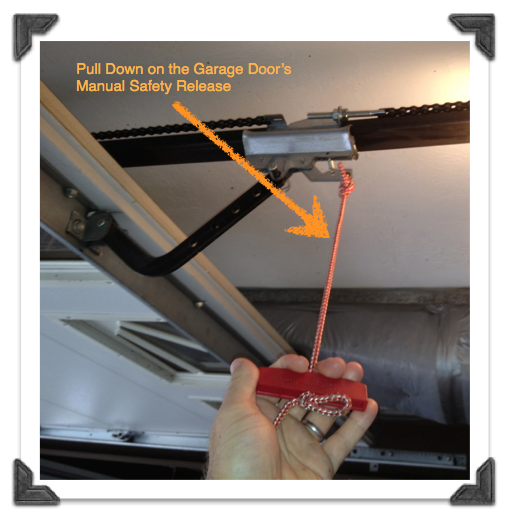
Before you start, it helps to know how your garage door works. Most modern garage doors use a trolley system connected to a track above your car. The opener pulls a metal arm, which lifts or lowers the door. There is usually a manual release mechanism—often a red cord or handle—built into the opener.
Different brands and models have slight differences, but the basic parts include:
- Garage door panels – The sections of the door itself.
- Tracks and rollers – Guide the door as it opens and closes.
- Torsion or extension springs – Help lift the heavy door.
- Opener motor – Provides the power.
- Manual release cord – Lets you disconnect the door from the opener.
Understanding these parts makes manual operation much easier and safer.
Safety Precautions Before Manual Operation
Garage doors are heavy—many weigh 150 to 300 pounds or more. If the springs or parts are damaged, the door could fall quickly and cause injury. Always follow these safety tips:
- Check for visible damage – Look for broken springs, cables, or bent tracks.
- Clear the area – Make sure no one, especially children or pets, is near the door.
- Wear gloves – Protect your hands from sharp edges or dirt.
- Have a flashlight – If it’s dark or there’s a power outage.
- Don’t force stuck doors – Forcing can damage the system or hurt you. Investigate the cause first.
Many accidents happen when people rush or skip these steps. Take a minute to prepare.
Tools You Might Need
Usually, you can open a garage door manually with just your hands. Still, having a few tools ready can help if you run into problems:
- Step ladder – To reach the release cord if it’s high.
- Flathead screwdriver – Useful if the release mechanism is stuck.
- Pliers – For grabbing stubborn cords or parts.
- Flashlight – To see inside the garage if there’s no light.
Most manual release cords are easy to reach, but if your garage has high ceilings or a tall vehicle, a ladder is essential.
How To Open Your Electric Garage Door Manually
Follow these steps carefully to open your electric garage door by hand.
1. Ensure The Door Is Fully Closed (if Possible)
If the door is stuck partway, closing it first (if safe) will prevent sudden movement when you pull the release cord. If you’re locked outside and the door is closed, move to the next step.
2. Disconnect The Garage Door Opener
Find the manual release cord—usually a red handle hanging down from the opener rail.
- Pull the cord firmly downward or toward the door (depending on the model). This disconnects the door from the opener trolley.
- You may hear a click or feel it release.
Important: Only pull the cord when the door is closed, or be ready to support the door’s weight.
3. Lift The Door Manually
With the opener disconnected:
- Stand with feet shoulder-width apart.
- Grasp the handle or the bottom edge of the door.
- Lift the door smoothly and steadily. If the springs are working, it should move with moderate effort.
- Raise the door all the way until it stops moving.
If the door feels extremely heavy or won’t budge, the springs may be broken. Do not force it—call a professional for help.
4. Secure The Door Open (if Needed)
If you need the door to stay open, prop it with a sturdy object like a 2×4 or use the door’s lock (if it has one). Never leave the door unsupported, as it could fall.
5. To Close The Door
Simply pull the door down slowly using the handle or bottom edge. Keep fingers away from joints to avoid pinching.
6. Reconnect The Opener
When power returns or repairs are done:
- Pull the release cord toward the garage door or the opener (check your model).
- Activate the opener using the remote or wall button. The trolley should reconnect automatically.
- Test the door by opening and closing it with the motor.
If it doesn’t reconnect, consult your door’s manual or contact a technician.
Special Situations And Troubleshooting
Sometimes, opening the garage door manually is not straightforward. Here are solutions for common problems.
Locked Out Of Your Garage (no Interior Access)
If you can’t enter the garage (for example, if there’s no side door), you may need an emergency release kit. Many doors have a lock on the outside with a cable that activates the manual release.
- Insert the key, turn, and pull the lock to release the opener from outside.
If your door doesn’t have this feature, you may need professional help or to install an emergency release for future safety.
Broken Springs Or Cables
If the springs are broken, the door may be impossible to lift or could crash down dangerously. Springs hold much of the door’s weight.
- If the door is very heavy or moves unevenly, do not try to force it. Contact a professional immediately.
Jammed Or Off-track Door
If the door is crooked, jammed, or making grinding noises, stop. Trying to open a damaged door can cause more harm.
- Inspect the tracks for blockages or bends.
- If you see obvious damage, call a technician.
Manual Release Cord Is Stuck
Sometimes, the release cord gets stuck or won’t move.
- Use a little WD-40 to loosen it, or gently tap with a screwdriver.
- Never yank hard—this can break the mechanism.
Comparing Manual Release Mechanisms
Garage doors have several types of manual release systems. Here’s how they compare:
| Type | How It Works | Pros | Cons |
|---|---|---|---|
| Pull Cord | Red cord disconnects opener | Easy to use, common | Can be out of reach for tall ceilings |
| Keyed Emergency Release | Key outside, cable inside | Lets you open door from outside | May require installation |
| Lever Release | Manual lever near opener | Simple, durable | Less common in modern doors |
Most homeowners have the pull cord system, but if you live in an area with frequent outages or only garage access, consider a keyed release.
Preventive Tips For Smooth Manual Operation
Opening your garage door manually should be a last resort, not a regular task. However, regular maintenance can make the process easier and safer.
- Test the manual release twice a year – Pull the cord to make sure it works, then reconnect.
- Lubricate moving parts – Use garage door lubricant on tracks, rollers, and hinges.
- Check balance – Disconnect the opener and lift the door halfway. It should stay in place. If not, springs may need adjustment.
- Inspect springs and cables – Look for rust, wear, or gaps in the springs.
- Replace worn parts quickly – Don’t wait for a total failure.
A well-maintained door is much easier to lift if you ever need to do it by hand.
What If Your Garage Door Is Very Heavy?
Some older or oversized garage doors can weigh over 300 pounds. If your door feels much heavier than expected, or if you can’t lift it at all, do not force it. This often means the springs are broken or out of adjustment.
- Never try to fix springs yourself—they are under high tension and can cause serious injury.
- Call a qualified garage door technician for repairs.
If you have a wood or solid steel door, consider upgrading to a newer, lighter model for safety and energy savings.
Opening Double Garage Doors Manually
If you have a two-car garage with a single large door, the process is similar but requires extra caution:
- Stand in the center to distribute your lifting force.
- If the door is too heavy for one person, get help.
- Make sure both tracks are clear before lifting.
Double doors are more prone to going off-track if lifted unevenly.

Reconnecting The Opener: Step-by-step
After manual operation, you need to reconnect the door to the opener so it works automatically again.
- Close the garage door fully by hand.
- Pull the manual release cord toward the opener, which resets the mechanism (some models may require a push instead).
- Press the wall button or remote—the trolley will catch and reconnect.
- Test the door by opening and closing it several times.
If the door does not reconnect, consult your garage door’s instruction manual. Some openers have a lock feature that must be disengaged.
Comparing Common Garage Door Problems
Understanding why your door won’t open helps you decide what to do next. Here’s a quick comparison:
| Problem | Symptoms | Manual Opening Possible? | Solution |
|---|---|---|---|
| Power Outage | No response from motor | Yes, using manual release | Open manually, wait for power |
| Broken Remote | Wall button works, remote doesn’t | Yes | Replace remote battery |
| Broken Spring | Door is too heavy to lift | No, unsafe | Call technician |
| Jammed Track | Door won’t move, grinding noise | Sometimes, if damage is minor | Clear blockage, call for repairs |
Knowing the cause helps you avoid unnecessary effort or damage.
When To Call A Professional
While many garage door problems can be managed by hand, certain issues require expert help:
- Broken springs or cables
- Door won’t stay open or closed
- Heavy or uneven movement
- Repeated jams or derailments
- Manual release not working
Garage doors have powerful springs under tension. DIY repairs can be dangerous if you lack experience. Always call a licensed garage door technician for these problems.
The Role Of Emergency Release Kits
If your garage has no other entrances, an emergency release kit is a smart investment. This kit adds a lock and cable on the outside, so you can disconnect the opener even if you’re locked out.
Most kits cost $20–$50 and can be installed in about 30 minutes. They are especially useful for attached garages without side doors. For more details, check the guide from the Family Handyman.
Real-world Example: Power Outage At Night
Imagine this scenario: It’s 10 PM, and a thunderstorm knocks out the power in your neighborhood. You return home to find your garage door won’t budge. Here’s what to do:
- Use a flashlight to see inside.
- Check for obvious damage.
- Pull the manual release cord.
- Lift the door steadily, making sure it moves smoothly.
- Secure the door open if you need to park inside.
- When power returns, reconnect the opener.
Many people panic in this situation, but with a little preparation, it’s easy to solve.
Common Mistakes To Avoid
Even experienced homeowners make errors when opening garage doors by hand. Watch out for these:
- Pulling the release cord when the door is open – The door could fall quickly.
- Trying to lift a door with broken springs – This can cause injury.
- Forgetting to secure the door open – Unsecured doors can fall without warning.
- Not testing the door after power returns – Make sure it reconnects properly.
- Ignoring yearly maintenance – Leads to stuck or dangerous doors.
Learning from others’ mistakes can help you avoid costly repairs.
Advanced Tips: Making Manual Operation Easier
If you want to be fully prepared, consider these expert tips:
- Mark the release cord with glow tape – Easy to find in the dark.
- Install a backup battery – Some openers come with battery packs that work during outages.
- Keep a spare emergency key outside – Prevents lockouts.
- Practice the process – Try opening and closing manually once every 6 months.
Most people never test their manual release until an emergency. Practicing now means less stress later.
Comparing Garage Door Weights
Garage doors come in different weights, depending on material and size. Here’s a quick reference:
| Door Type | Single (Pounds) | Double (Pounds) |
|---|---|---|
| Aluminum | 80–120 | 160–240 |
| Steel | 100–180 | 200–350 |
| Wood | 150–250 | 300–450 |
| Fiberglass | 90–130 | 180–260 |
Knowing your door’s weight helps you understand how hard it should be to lift. If it feels much heavier, call a technician.
Final Checks After Manual Operation
Once the power is back or repairs are done, run through these checks:
- Reconnect the opener and test the door several times.
- Listen for strange noises—grinding or squeaking means something needs lubrication.
- Check the safety sensors—make sure nothing blocks the path.
- Reset any door locks you used for manual operation.
- Update your family—make sure everyone knows the process for emergencies.
These final steps keep your garage door safe and reliable.

Frequently Asked Questions
How Do I Find The Manual Release Cord?
The manual release cord is usually a red rope or handle hanging from the opener track, near the center of the garage. It may be labeled or have a plastic grip. If you can’t find it, check your garage door opener manual for the exact location.
Is It Safe To Open My Garage Door Manually During A Power Outage?
Yes, if the door and springs are in good condition and you follow safety steps. Always check for damage first, clear the area, and never force a stuck or heavy door. If the door feels too heavy, the springs may be broken—call a technician for help.
What If My Garage Door Won’t Open Even After Pulling The Release Cord?
If the door won’t move, check for:
- Broken springs or cables
- Jammed tracks
- Obstructions along the path
Don’t force the door. If you’re stuck, it’s safest to call a garage door professional.
Can I Reconnect The Opener Myself After Manual Use?
In most cases, yes. Close the door, pull the release cord toward the opener, then press the remote or wall button. The system should reconnect automatically. If not, check your opener’s manual or call for service.
How Often Should I Test My Garage Door’s Manual Release?
Test the manual release at least twice a year. This ensures it works smoothly in an emergency. Also, include it in your regular garage door maintenance routine.
Opening your electric garage door manually is a useful skill that every homeowner should know. With the right knowledge and a few safety tips, you can get in or out of your garage—no matter what. Remember to maintain your door, practice the manual release, and always call for help with major repairs.
With a little preparation, you’ll never be caught off guard again.