
A malfunctioning garage door can be a significant inconvenience, disrupting daily routines and potentially compromising home security. When faced with an unexpected repair, many homeowners turn to their home warranty for assistance, hoping to mitigate unexpected costs. A common question that arises is whether these crucial, yet often overlooked, components, garage door springs, are covered under a typical home warranty plan.
The answer, like many things in home warranty coverage, is nuanced and depends heavily on the specific policy details, the type of spring, and the reason for its failure. Understanding these intricacies is vital for homeowners to manage their expectations and budget effectively when such a problem arises.
Key Takeaways
- General Coverage Varies: Home warranties typically cover parts of the garage door system, but coverage for springs is often conditional and depends on the specific plan.
- Spring Type Matters: Extension springs are more commonly covered than torsion springs, though this isn’t a universal rule.
- Cause of Failure is Crucial: Wear and tear is usually excluded, while mechanical failure or malfunction due to covered components might be included.
- Contractual Details are King: Always read your home warranty contract thoroughly to understand exclusions, limitations, and specific coverage for garage door components.
- Service Call Fees Apply: Even if covered, expect to pay a deductible or service call fee for each repair visit.
- Pre-existing Conditions are Excluded: Home warranties do not cover issues that existed before the coverage period began.
- Maintenance is Your Responsibility: Failure to perform routine maintenance can void coverage for related issues.
Credit: www.ahs.com
Understanding Home Warranty Coverage For Garage Doors
Home warranties are service contracts that cover the repair or replacement of major home systems and appliances that break down due to normal wear and tear. They are distinct from homeowner’s insurance, which covers damage from unforeseen events like fire or theft.
When it comes to garage doors, most home warranty plans include coverage for the entire system, which encompasses the door panels, tracks, rollers, hinges, openers, and, importantly, the springs. However, the specifics of this coverage can vary significantly from one provider to another and even between different plans offered by the same company.
The garage door system is complex, and its springs are particularly critical components responsible for counterbalancing the weight of the door. This allows for smooth opening and closing, whether manually operated or assisted by an opener. When these springs fail, the door becomes extremely heavy and difficult, if not impossible, to operate safely.
Given their essential function, it’s understandable why homeowners would expect them to be covered.
What Typically Constitutes A “covered” Garage Door Component?
Most home warranty policies will list the components of a garage door system that are eligible for coverage. This usually includes:
- Garage Door Opener: The motor, drive mechanism, and remote control system.
- Tracks and Rollers: The system that guides the door’s movement.
- Hinges and Cables: The various hardware that connects the door sections and facilitates movement.
- Springs: The counterbalance system.
However, the devil is often in the details. The contract will usually specify what constitutes “normal wear and tear” versus a “mechanical failure” or “malfunction. ” This distinction is paramount when it comes to springs, as they are subject to significant stress over time and are designed to last a certain number of cycles, not indefinitely.
The Role Of “normal Wear And Tear”
A common exclusion in most home warranty contracts is coverage for issues arising from normal wear and tear. Garage door springs, by their very nature, are subject to repeated stress with every cycle of the door. Over thousands of cycles, they will eventually weaken and break. A home warranty company will often classify a broken spring due to age or accumulated use as a result of normal wear and tear, and therefore, not a covered repair.
This means that if your springs are original to the house and have been in use for many years, a warranty provider might deny coverage. They might argue that the springs have reached the end of their expected lifespan, and replacement is a maintenance responsibility, not a warranty claim.
This is a frequent point of contention between homeowners and warranty companies.
Mechanical Failure Vs. Wear And Tear
The key distinction a warranty company will look for is whether the spring failed due to an inherent mechanical defect or a sudden malfunction that isn’t directly attributable to age or cumulative stress. For example, if a spring snaps unexpectedly and prematurely, and there’s no evidence of abuse or lack of maintenance, a warranty company *might* consider it a covered repair. However, proving this can be challenging.
In my experience, warranty companies often err on the side of caution and lean towards classifying spring failures as wear and tear unless there is a clear, documented mechanical fault independent of age. This is why thoroughly understanding your contract and documenting the circumstances of the failure are crucial.
Credit: www.ahs.com
Types Of Garage Door Springs And Their Warranty Implications
Garage doors primarily use two types of springs: torsion springs and extension springs. The type of spring installed can sometimes influence whether it’s covered by a home warranty.
Torsion Springs
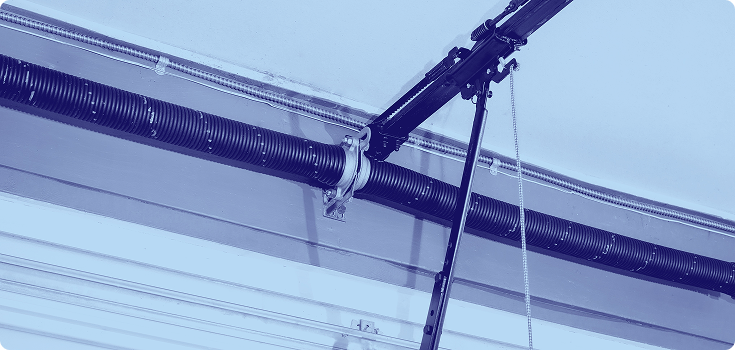
Torsion springs are mounted on a rod above the garage door, parallel to the top of the door. As the door closes, the springs wind up, storing energy. When the door opens, this energy is released, helping to lift the door.
Torsion springs are generally considered more durable and safer than extension springs, but they are also more complex.
Coverage for torsion springs by home warranties can be particularly tricky. Because they are a more integrated part of the garage door system and often considered a critical structural component, some policies may have specific clauses regarding their coverage. Some providers might exclude them entirely, while others might cover them under the general garage door system coverage, subject to the usual wear and tear exclusions.
Example: A homeowner with a torsion spring system finds their spring has snapped. If the warranty contract explicitly states “torsion springs excluded,” the claim will be denied. If it broadly covers “garage door system components,” the company will likely investigate the cause of failure, focusing on whether it was due to wear and tear or a manufacturing defect.
Extension Springs
Extension springs are mounted along the horizontal tracks above the garage door. They run parallel to the tracks. When the door is closed, the springs are stretched, storing energy. As the door opens, the springs contract, assisting in lifting the door.
Extension springs are often perceived as simpler and less expensive than torsion springs. Some home warranty providers may be more inclined to cover extension springs than torsion springs, perhaps due to their more straightforward mechanical nature. However, this is not a hard and fast rule.
The same principles of wear and tear, mechanical failure, and contract specifics still apply.
Pro Tip: Always identify the type of springs you have in your garage door system. This information can be crucial when discussing coverage with your home warranty provider. You can usually find this by visually inspecting the area above your garage door.
The Lifespan Of Garage Door Springs
Garage door springs are designed to last a specific number of cycles, typically between 10,000 and 20,000 cycles. A cycle is one full opening and closing of the door. If a household opens and closes the garage door an average of four times a day, a spring rated for 10,000 cycles could last approximately 6.
8 years. Those rated for 20,000 cycles could last nearly 14 years.
Home warranty companies often use these cycle counts and typical lifespans to determine if a spring failure is due to wear and tear. If your springs are approaching or have exceeded their expected lifespan, it strengthens their argument for excluding the repair from coverage.
Factors Influencing Warranty Coverage
Beyond the type of spring and the cause of failure, several other factors can influence whether your garage door springs are covered by your home warranty. These include the specific terms of your contract, the service provider’s policies, and the condition of the rest of your garage door system.
Reading Your Home Warranty Contract
This cannot be stressed enough: the contract is king. Your home warranty policy document is the ultimate authority on what is covered and what is not. Look for sections detailing:
- Specific Exclusions: Many policies will explicitly list items or types of failures that are not covered. Garage door springs might be listed, or the exclusion might be phrased as “components subject to wear and tear.”
- Coverage Limits: Some policies may have a dollar limit for specific repairs or for the garage door system as a whole.
- Maintenance Requirements: Some contracts stipulate that the homeowner must perform regular maintenance on covered systems. Failure to do so can void coverage for resulting issues.
- Definition of “Normal Wear and Tear”: Understand how the company defines this term, as it’s the most common reason for denying spring coverage.
If you are unsure about any part of your contract, contact your home warranty provider directly and ask for clarification in writing.
The Service Provider’s Interpretation
Home warranty companies often contract with third-party service technicians to perform repairs. The technician will inspect the issue and report their findings to the warranty company. The warranty company then makes the final decision on coverage. This means there can be a degree of subjective interpretation involved.
A thorough report from the technician, detailing the condition of the spring and other components, can be beneficial. If the technician believes the failure is due to a defect rather than wear and tear, their assessment can carry weight. However, the warranty company’s internal policies and risk assessment will ultimately guide their decision.
Condition Of The Overall Garage Door System
Home warranty companies may look at the overall condition of your garage door system when evaluating a claim for spring replacement. If other parts of the system are in disrepair, such as worn rollers, bent tracks, or a malfunctioning opener, they might argue that the entire system is poorly maintained, and the spring failure is a consequence of this neglect.
Conversely, if the rest of the garage door system is in excellent condition, it might lend more credibility to an argument that the spring failure was an isolated mechanical issue.
Pre-existing Conditions
Home warranties typically do not cover pre-existing conditions. If your garage door springs were already showing signs of damage, weakness, or were known to be failing before your warranty coverage began, the warranty company will likely deny the claim. It is the homeowner’s responsibility to disclose known issues when purchasing a warranty.

Credit: alphabuildinginspections.com
The Claims Process For Garage Door Spring Repair
When your garage door springs break, initiating a claim with your home warranty provider is the first step. This process typically involves several stages, and understanding them can help you navigate potential challenges.
How To Initiate A Claim
- Contact Your Warranty Provider: Call the customer service number provided by your home warranty company or log in to their online portal to submit a service request.
- Provide Details: Be prepared to describe the problem clearly. Mention that the garage door springs have broken and that the door is inoperable. Provide your policy number and address.
- Schedule an Inspection: The warranty company will assign a service technician to your case. You will need to schedule a convenient time for them to visit your home.
- Technician’s Assessment: The technician will inspect the garage door springs and the overall system. They will determine the cause of the failure and assess whether it is covered under your warranty.
- Report to Warranty Company: The technician will submit a report to the home warranty company detailing their findings.
- Coverage Decision: The warranty company will review the technician’s report and make a decision on whether to approve the repair.
- Repair Authorization: If approved, the warranty company will authorize the repair, and you will typically be informed about any co-pays or service fees.
- Repair Completion: The technician will then proceed with the repair or replacement of the garage door springs.
Warning: Do not attempt to repair or replace garage door springs yourself unless you have the proper training and equipment. Garage door springs are under extreme tension and can cause serious injury or death if handled improperly. Always rely on qualified professionals.
Understanding Service Call Fees And Deductibles
Even when a repair is covered by a home warranty, you will almost always be responsible for a service call fee (also known as a deductible). This is a flat fee paid to the service technician each time they visit your home to diagnose and repair a covered issue. The amount of the service call fee varies by provider and plan, typically ranging from $75 to $150.
This fee is paid regardless of whether the repair is ultimately approved or completed. It’s important to factor this cost into your budget when considering a home warranty.
What To Do If Your Claim Is Denied
If your home warranty claim for garage door springs is denied, you have a few options:
- Review the Denial Letter: Carefully read the reason for denial provided by the warranty company. Understand their specific reasoning, whether it’s wear and tear, an exclusion, or another clause.
- Appeal the Decision: If you believe the denial is incorrect or unfair, you can appeal the decision. Provide any additional documentation or evidence that supports your case, such as a technician’s report that contradicts the warranty company’s assessment.
- Seek Professional Opinion: You might consider getting a second opinion from an independent garage door technician. Their assessment could help you build a stronger case for appeal.
- Pay for the Repair Out-of-Pocket: If the appeal is unsuccessful or you choose not to appeal, you will have to pay for the repair yourself. The average cost to replace garage door springs can range from $200 to $400, depending on the type of spring and your location. You can explore resources like garage door cost guides for more detailed pricing information.
- Consider a Different Warranty Provider: If you find that your current warranty consistently denies claims for essential components like garage door springs, you might consider switching to a different provider at your next renewal, carefully reviewing their terms for garage door coverage.
When Home Warranties Might Not Be The Best Solution
While home warranties can offer peace of mind for unexpected repairs, they are not always the most cost-effective or comprehensive solution for every issue, especially for components like garage door springs that have a finite lifespan.
The Cost-benefit Analysis
Consider the cost of the warranty itself (annual premium) plus the service call fees for potential repairs, versus the actual cost of replacing garage door springs. If springs fail only once every 7-14 years (depending on their rating), and the total cost of warranty premiums and service fees over that period exceeds the out-of-pocket repair cost, then the warranty might not be a financially sound investment for this specific component.
For example, if a home warranty costs $500 annually and has a $100 service fee, over 10 years you’d spend $5,000 plus any service fees. If a spring replacement costs $300, and you only need it once in those 10 years, paying out-of-pocket would be significantly cheaper.
The Importance Of Routine Maintenance
One of the most effective ways to prevent premature garage door spring failure and ensure longevity is through regular maintenance. This includes:
- Lubrication: Regularly lubricating the rollers, hinges, and tracks can reduce strain on the entire system, including the springs. You can find detailed guides on how to lube garage door rollers to ensure smooth operation.
- Inspection: Visually inspect the springs for any signs of wear, such as gaps, rust, or cracks.
- Professional Tune-ups: Consider having a professional garage door technician perform an annual inspection and tune-up. They can identify potential issues before they become major problems.
Neglecting maintenance can not only lead to more frequent repairs but can also be used by warranty companies as a reason to deny coverage.
Alternatives To Home Warranties For Spring Issues
- Dedicated Garage Door Service Contracts: Some specialized garage door companies offer maintenance plans or service contracts that might specifically cover routine inspections and even certain repairs for a fixed annual fee. These might offer more targeted coverage for garage door components than a general home warranty.
- Savings Account for Repairs: For homeowners who are comfortable with DIY maintenance and have a good understanding of their home’s systems, setting aside a dedicated savings account for potential repairs can be a prudent strategy. This allows you to pay for repairs as needed without being constrained by warranty limitations.
- Homeowner’s Insurance (for specific events): While not for wear and tear, if your garage door springs are damaged due to a covered peril like a storm or a vehicle impact, your homeowner’s insurance might cover the repair, not your home warranty.
Comparing Warranty Providers For Garage Door Coverage
When selecting a home warranty provider, it’s crucial to compare their offerings specifically for garage door coverage. Not all plans are created equal, and some may offer better protection for these essential components than others.
Key Features To Compare
When evaluating home warranty plans for garage door coverage, consider the following:
- Scope of Coverage: Does the plan cover the entire garage door system, including springs, opener, tracks, and rollers?
- Exclusions: What specific parts or types of failures are excluded? Pay close attention to any mention of garage door springs or wear and tear clauses.
- Service Call Fees: What is the cost of the service call fee, and does it vary by trade (e.g., plumbing vs. garage door repair)?
- Coverage Limits: Are there any dollar limits on garage door repairs or the overall system?
- Provider Network: Does the warranty company have a reliable network of qualified garage door technicians in your area?
- Customer Reviews and Reputation: Research customer reviews and the company’s reputation for handling claims, especially those related to garage doors.
Data-driven Comparison Table
Here’s a hypothetical comparison of three different home warranty plans, illustrating how coverage for garage door springs might differ:
| Feature | Plan A (Basic) | Plan B (Standard) | Plan C (Premium) |
|---|---|---|---|
| Garage Door Opener Coverage | Yes | Yes | Yes |
| Springs Coverage (General) | No | Yes, if due to mechanical failure, not wear and tear. | Yes, includes wear and tear up to $XXX per incident. |
| Torsion Spring Specifics | Not Covered | Subject to general spring coverage rules. | Covered, with a specific limit of $YYY. |
| Extension Spring Specifics | Not Covered | Subject to general spring coverage rules. | Covered, with a specific limit of $YYY. |
| Service Call Fee | $100 | $85 | $75 |
| Annual Premium | $400 | $550 | $700 |
| Annual Coverage Limit (Garage Door System) | $1,000 | $1,500 | $2,000 |
*Note: This table is illustrative. Actual coverage and pricing will vary significantly between providers.*
This table highlights how a “Premium” plan might offer more comprehensive coverage, potentially including wear and tear for springs up to a certain limit, whereas a “Basic” plan might exclude them entirely. The “Standard” plan offers a middle ground, covering mechanical failures but not general aging.
Case Study: The “wear And Tear” Debate
Consider a homeowner, Sarah, whose garage door springs broke after 8 years of use. Her warranty is with Company X, which has a standard “wear and tear” exclusion for garage door springs.
- Sarah’s Claim: Sarah files a claim, expecting it to be covered.
- Company X’s Response: Company X denies the claim, stating that 8 years of use for garage door springs constitutes normal wear and tear, and therefore, it is not a covered repair. They cite the springs’ expected lifespan of 10,000-15,000 cycles.
- Sarah’s Counter-Argument: Sarah argues that the springs failed suddenly and unexpectedly, and she believes it was a manufacturing defect, not just age. She points out that her neighbor’s springs, similar age, are still working.
- Outcome: Company X stands by its decision, as their policy allows them to deem failures after a certain age or usage as wear and tear. Sarah is left to pay for the repair out-of-pocket, which costs $350. This situation is common and underscores the importance of understanding the “wear and tear” clause in your contract. If Sarah had a premium plan that covered wear and tear up to a certain amount, her outcome might have been different.
Frequently Asked Questions
What Is The Average Lifespan Of Garage Door Springs?
The average lifespan of garage door springs is typically measured in cycles, with most springs rated for 10,000 to 20,000 cycles (one cycle being a full open and close). This can translate to roughly 7 to 14 years of service, depending on the frequency of use and the quality of the springs.
However, factors like climate, maintenance, and the weight of the garage door can influence their actual lifespan.