
When the power flickers and dies, your automatic garage door opener, a marvel of modern convenience, becomes just another piece of metal and machinery. The familiar hum of the motor is replaced by an unnerving silence, leaving you potentially stranded inside or outside your home.
Fortunately, understanding how to operate your garage door during an electrical outage is not just about convenience; it’s a crucial aspect of home preparedness. This guide will walk you through the essential steps and considerations for safely opening and closing your garage door when the electricity is out, ensuring you maintain access and security.
Key Takeaways
- Locate the emergency release cord: This is the primary mechanism for manually disengaging the opener.
- Understand your opener type: Different brands and models have slightly varied release mechanisms.
- Safety first: Always ensure the door is stable before attempting manual operation.
- Power backup options: Consider battery backups or manual overrides for future power outages.
- Regular testing: Periodically test manual operation to ensure it functions correctly.
- Re-engaging the opener: Learn how to reconnect the opener after power is restored.
Understanding Your Garage Door Opener’s Manual Release
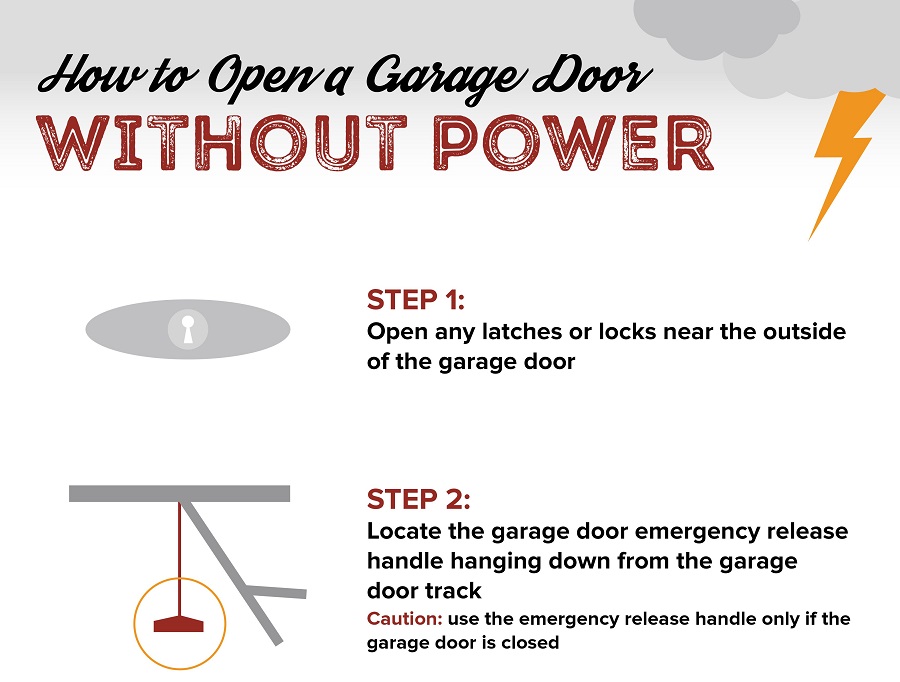
The most critical component for operating your garage door during a power outage is the emergency release cord. This cord, typically a red rope hanging from the trolley mechanism that moves along the opener’s rail, is designed to disconnect the opener’s drive system from the door itself. This allows you to lift or lower the door manually.
Locating And Identifying The Release Cord
Most garage door openers manufactured in the last few decades feature a clearly visible emergency release cord. It’s usually a brightly colored rope, often red, attached to a plastic or metal lever. This lever is part of the trolley, which is the part of the opener that moves back and forth along the drive rail (either a chain, belt, or screw drive). The trolley is directly attached to the garage door when engaged.
If you can’t immediately spot the cord, consult your garage door opener’s manual. In some cases, the cord might be tucked away or designed differently. However, it’s almost always accessible from underneath the opener unit.
How The Emergency Release Works
When your garage door opener is functioning normally, the trolley is locked onto the drive mechanism. This means the motor controls the movement of the trolley, and by extension, the garage door. Pulling the emergency release cord typically disengages a clutch or a locking mechanism within the trolley. This action effectively separates the motor’s power from the door, allowing you to move the door freely by hand.
What To Do Before Pulling The Cord
Before you pull the release cord, it’s imperative to take a moment to assess the situation.
- Ensure the door is closed (or as closed as possible): If the door is partially open when the power goes out, it might be more challenging to operate manually. However, if it’s already partially open, you’ll likely need to lift it further. If it’s fully closed, you’ll need to lift it from the bottom.
- Check for obstructions: Make sure there are no objects blocking the door’s path. This is crucial because you will be providing all the force to move it.
- Assess the door’s balance: A properly balanced garage door should lift and lower with moderate effort when disengaged. If it feels excessively heavy or unbalanced, there might be an issue with the torsion springs or extension springs. Attempting to force a heavy or unbalanced door can lead to injury or further damage. In such cases, it’s best to contact a professional. You can check the balance by manually lifting the door about halfway. If it stays in place without you holding it, it’s likely balanced. If it slams down or springs up, the springs need adjustment. For more on this, see our guide on adjusting the chain, which is related to the opener’s overall function, and the importance of balanced doors.
Credit: www.allstyledoor.com
Step-by-step Guide To Manually Opening The Garage Door
Once you’ve located the release cord and confirmed the area is safe, you can proceed with manually opening the door. This process is generally straightforward but requires careful execution.
Step 1: Pull The Emergency Release Cord
- Action: Firmly pull the red cord downwards. You should hear or feel a click as the trolley mechanism disengages from the drive chain or belt.
- Important Note: Do not pull the cord unless you intend to operate the door manually. Once disengaged, the opener will not function automatically until it is re-engaged.
Step 2: Lift The Garage Door
- Action: Grasp the center handle of the garage door (not the edges, which can pinch fingers). Lift the door upwards slowly and steadily.
- Effort Required: The amount of force needed will depend on the size and weight of your door, as well as the condition of its springs. A well-maintained, balanced door should lift with relative ease, perhaps requiring the strength of one adult.
- Pro Tip: If the door is very heavy, you might need assistance from another person. Ensure you both have a firm grip and coordinate your movements. If the door feels excessively heavy, stop immediately and reassess.
Step 3: Securing The Door In The Open Position
- Action: Once the door is lifted to your desired open position, it should ideally stay in place due to the counterbalance of the springs.
- If it doesn’t stay: If the door starts to drift down, it indicates an imbalance issue with the springs. In this scenario, you may need to prop it open temporarily with a sturdy object, like a piece of lumber placed securely under the bottom edge, but this is a temporary and potentially risky solution. It’s a strong indicator that professional maintenance is needed.

Credit: frontrangeraynor.com
Step-by-step Guide To Manually Closing The Garage Door
Closing the garage door manually when the power is out follows a similar process, with a few additional considerations for safety and re-engagement.
Step 1: Lower The Garage Door
- Action: Grasp the center handle of the garage door. Slowly and carefully lower the door downwards.
- Control is Key: Guide the door smoothly. Avoid letting it drop suddenly, as this can damage the door, the track, or cause injury. You are providing the braking force here, so maintain control throughout the descent.
Step 2: Securing The Door In The Closed Position
- Action: Once the door reaches the floor, ensure it sits flush and is securely closed.
- Locking Mechanisms: If your garage door has a manual slide lock or bolt on the inside, engage it for added security, as the opener’s automatic locking feature will not be active without power.
Step 3: Re-engaging The Opener Mechanism
- Crucial Step: Before the automatic opener can function again, you must re-engage the trolley mechanism. This is usually done by pulling the emergency release cord again, but this time in a specific manner.
- Method: Most systems require you to pull the cord again, sometimes at an angle, or to operate the opener’s arm mechanism. Refer to your opener’s manual for the exact procedure. Often, simply moving the opener’s drive chain or belt forward with your hand can re-engage the trolley. Some systems might require you to operate the opener’s remote or wall button after pulling the cord to reset it.
- Testing: After re-engaging, test the opener by pressing the remote or wall button. If it engages properly, the trolley should move with the drive mechanism. If it doesn’t, you may need to repeat the re-engagement process or consult your manual.

Credit: drakereeddoorco.com
Alternative Methods And Backup Systems
While the emergency release cord is the standard method, several other options and backup systems can help you manage garage doors during power outages. These range from simple battery backups to more sophisticated manual overrides.
Battery Backup Systems
Many modern garage door openers come equipped with or can be retrofitted with a battery backup system. These systems provide a limited amount of power to the opener during an outage, allowing you to operate the door a set number of times (typically 5-10 open/close cycles).
- How they work: The battery stays charged when the power is on and automatically kicks in when the main power is interrupted.
- Benefits: Offers convenience without the need for manual operation, ensuring access even during extended outages.
- Considerations: Battery life is limited, and they need periodic replacement (usually every 3-5 years). They also add to the initial cost of the opener.
Solar-powered Openers
Some advanced systems utilize solar power. While primarily designed for off-grid applications, they can also serve as a backup during power outages, provided there’s sufficient sunlight.
- How they work: Solar panels charge a battery, which then powers the opener.
- Benefits: Environmentally friendly and can provide continuous operation if sunlight is available.
- Considerations: Performance is dependent on weather and sunlight exposure. May not be sufficient for very frequent use during prolonged cloudy periods.
Manual Garage Doors
Older or simpler garage door setups might not have an automatic opener at all. These manual garage doors are designed to be operated solely by hand.
- Operation: They rely entirely on the balance provided by torsion or extension springs to make lifting and lowering easy.
- Benefits: No reliance on electricity, making power outages irrelevant for operation.
- Considerations: Requires physical effort to open and close, which can be challenging for some individuals. Maintenance of springs and hardware is still critical for smooth operation.
Keypads And Remote Resets
While not directly for opening during an outage, understanding how to reset or reprogram your remotes and keypads can be essential once power is restored or if you suspect a malfunction. For instance, after a power surge or outage, you might need to reset your Liftmaster garage door opener remote or reprogram your Genie keypad if it loses its settings. Similarly, knowing how to reprogram a Genie garage door keypad can be a lifesaver. These procedures are typically done once power is back.
Safety Precautions And Best Practices
Operating a garage door manually during a power outage requires adherence to safety protocols to prevent injury and damage. The weight of the door and the potential for spring failure are the primary safety concerns.
Prioritizing Personal Safety
- Clear the Area: Ensure children and pets are away from the garage and the door’s path of motion.
- Proper Grip: Always use the designated handle on the garage door. Avoid placing fingers near the edges or in the tracks to prevent pinching.
- Controlled Movement: Lift and lower the door slowly and deliberately. Do not let go of the handle until the door is securely in its final position.
- Seek Assistance: If the door feels too heavy or difficult to manage, do not force it. Ask for help from another person.
Protecting Your Garage Door And Opener
- Avoid Forcing: Never try to force a stuck door. This can cause significant damage to the door panels, tracks, or the opener mechanism.
- Check for Spring Issues: If the door feels exceptionally heavy or unbalanced when manually operated, the torsion springs or extension springs may need attention. These springs are under high tension and are critical for balancing the door’s weight. Improperly functioning springs can cause the door to fall unexpectedly. For more on maintaining your door, consider learning how to lubricate garage door rollers.
- Re-engagement Caution: When re-engaging the opener, ensure it connects properly. If you are unsure, consult your owner’s manual or a professional. An improperly re-engaged opener can malfunction.
Regular Maintenance And Testing
- Test Manual Operation: Periodically (e.g., every six months), test the manual release and operation of your garage door. This ensures the mechanism is working correctly and familiarizes you with the process. Do this when the power is on so you can easily re-engage the opener afterward.
- Inspect Components: Regularly inspect the springs, cables, rollers, and tracks for signs of wear or damage. Lubricate moving parts as recommended by the manufacturer. A well-maintained door is safer and easier to operate manually.
Troubleshooting Common Issues During Power Outages
Even with the right knowledge, you might encounter specific problems when trying to operate your garage door without power. Understanding these common issues and their potential solutions can save you time and frustration.
The Door Is Too Heavy To Lift
- Cause: The most common reason is a malfunction or imbalance in the torsion springs or extension springs. These springs are designed to counterbalance the weight of the door, making it feel light when operated manually. If they are broken, weak, or improperly adjusted, the door will feel extremely heavy.
- Solution: Do not attempt to force the door. This can lead to serious injury or damage. The springs need professional inspection and likely replacement or adjustment. Contact a qualified garage door technician. This is a critical safety issue, as broken springs can release stored energy violently.
The Release Cord Pulled But The Door Won’t Budge
- Cause 1: The release mechanism is not fully disengaged. Sometimes, a single pull isn’t enough, or the cord might be worn.
- Solution 1: Try pulling the cord again, perhaps with a slightly different angle or more force (but not excessive force). Check your opener’s manual for specific instructions on the release mechanism.
- Cause 2: The door is physically obstructed. Something might be jammed in the tracks or preventing the door from moving.
- Solution 2: Visually inspect the tracks and the door’s path for any obstructions. Remove them carefully.
- Cause 3: The opener trolley itself is damaged or seized.
- Solution 3: This is less common but may require professional assessment.
The Opener Won’t Re-engage After Power Restored
- Cause 1: The trolley was not properly aligned or seated when you attempted to re-engage it.
- Solution 1: Follow the re-engagement procedure in your manual precisely. This often involves pulling the release cord and then operating the opener’s drive chain or belt, or using the remote/wall button. Ensure the trolley moves freely along the rail. You might need to manually move the trolley to the opener’s motor unit end of the rail. Our guide on how to manually open a garage door covers the disengagement, and re-engagement is the reverse, often requiring a specific sequence.
- Cause 2: The power surge during the outage or restoration damaged the opener’s logic board or motor.
- Solution 2: If re-engagement fails after multiple attempts, the opener might require professional repair or replacement. You can try resetting your garage door opener as a general troubleshooting step.
The Door Operates Unevenly Or Makes Loud Noises
- Cause: This could be due to worn-out rollers, bent tracks, or a lack of lubrication.
- Solution: Lubricate the rollers and tracks with a silicone-based spray lubricant. Ensure the rollers are intact and the tracks are clean and free of debris. If the issue persists, check out guides on how to lube garage door rollers. Bent tracks or significant wear may require professional repair.
Preparing For Future Power Outages
Being prepared for a power outage involving your garage door is about more than just knowing how to operate it manually. It involves proactive measures to ensure convenience, safety, and security.
Installing A Battery Backup
As mentioned earlier, a battery backup system is one of the most effective ways to ensure your garage door remains operational during power outages. These systems are relatively inexpensive and easy to install on most modern openers. They provide peace of mind, knowing you can still access your home or vehicle.
Considering A Manual Override System
Some high-end garage doors and openers offer more advanced manual override capabilities that might not rely solely on the pull cord. These could include:
- Keyed Manual Release: A lock cylinder on the exterior of the garage door that allows you to insert a key and disengage the opener from the outside. This is particularly useful if you are locked out and cannot access the emergency cord inside.
- Integrated Manual Operation: Systems where the opener itself can be cranked manually using a provided tool.
Maintaining Your Garage Door System
Regular maintenance is key to ensuring your garage door operates smoothly, both with and without power.
- Lubrication: Keep rollers, hinges, and tracks lubricated. Use a silicone-based spray designed for garage doors.
- Spring Checks: Inspect torsion and extension springs annually for any signs of wear, rust, or damage. These are critical safety components.
- Opener Maintenance: Check the drive chain or belt for proper tension. Refer to guides like how to adjust chain on garage door opener for specifics. Ensure all hardware is tightened.
Emergency Preparedness Kit
Include essential items in your home’s emergency kit that relate to your garage door:
- Flashlight and extra batteries: Crucial for visibility when operating the door in the dark.
- Owner’s Manual: Keep a physical or digital copy of your garage door opener’s manual accessible. It contains specific instructions for your model, including emergency release and re-engagement procedures.
- Basic Tools: A ladder might be needed to reach the release cord, and basic tools could help with minor adjustments or obstructions.
Garage Door Opener Types And Manual Operation Differences
While the principle of the emergency release cord is universal, there can be subtle differences in how manual operation is handled depending on the type of garage door opener you have: chain drive, belt drive, or screw drive.
Chain Drive Openers
- Mechanism: Uses a chain running along a rail to move the trolley.
- Manual Operation: The emergency release cord disengages the trolley from the chain. Once disengaged, you can lift or lower the door. When re-engaging, you typically pull the release cord, and then the chain needs to be moved (often by pulling it manually or by operating the opener’s drive mechanism slightly) to reconnect the trolley. The chain is usually robust and can handle manual lifting.
Belt Drive Openers
- Mechanism: Uses a rubber or composite belt instead of a chain. These are generally quieter than chain drives.
- Manual Operation: Similar to chain drives, the release cord disconnects the trolley from the belt. Lifting and lowering are done manually. Re-engaging involves pulling the cord and ensuring the trolley re-engages with the belt, often by moving the belt or using the opener’s motor momentarily once power is restored. Belts are durable but should still be handled with care.
Screw Drive Openers
- Mechanism: Uses a threaded metal rod (screw) and a trolley that moves along it.
- Manual Operation: The release cord disengages the trolley from the screw drive mechanism. Manual lifting and lowering are then possible. Re-engagement typically involves pulling the cord and allowing the trolley to thread back onto the screw drive, or using the opener’s motor to guide it back into place. Screw drives can sometimes feel slightly more resistant to manual movement than chain or belt drives, but a properly balanced door should still be manageable.
Comparison of Opener Drive Types
| Feature | Chain Drive | Belt Drive | Screw Drive |
|---|---|---|---|
| **Noise Level** | Louder | Quieter | Moderate |
| **Durability** | High | High | High |
| **Cost** | Generally lower | Moderate to high | Moderate to high |
| **Manual Release** | Standard, disengages trolley from chain | Standard, disengages trolley from belt | Standard, disengages trolley from screw |
| **Re-engagement** | Pull cord, move chain/trolley | Pull cord, move belt/trolley | Pull cord, move screw/trolley |