
Choosing the right garage door opener is crucial for ensuring smooth operation, security, and convenience. While many homeowners focus on brands or features, the size and power of the opener are paramount. An opener that’s too weak will struggle to lift your door, leading to premature wear and tear, while an overpowered one might be unnecessarily expensive and complex. This guide will walk you through everything you need to consider to determine precisely how big of a garage door opener you need, ensuring a perfect fit for your specific door and lifestyle.
Key Takeaways
- Door Weight and Size are Primary: The most critical factors are your garage door’s weight and dimensions (height and width). Heavier and larger doors require more powerful openers.
- Horsepower (HP) Matters: Garage door openers are rated in horsepower (HP) or equivalent terms (e.g., DC motor wattage). Higher HP generally means more lifting power.
- Tension and Balance are Crucial: A properly balanced and tensioned garage door is easier to lift, reducing the strain on the opener.
- Door Type Influences Needs: Sectional, one-piece, carriage house, and wood doors have different weight and operating characteristics.
- Frequency of Use and Environment: Heavy usage, extreme temperatures, and frequent manual operation can influence the durability and power required.
- Headroom and Installation Space: The physical space above your garage door and along the ceiling will dictate the type of opener mechanism (chain, belt, screw, or direct drive) that can be installed.
- Smart Features and Battery Backup: Consider modern conveniences like Wi-Fi connectivity, remote access, and battery backups, which may influence model selection but not necessarily the core power requirement.
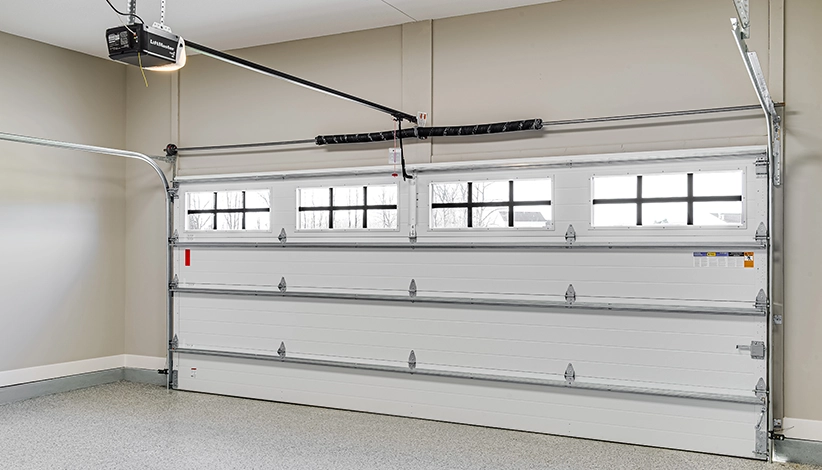
Credit: www.clopaydoor.com
Understanding Garage Door Opener Power Ratings
The “size” of a garage door opener isn’t about its physical dimensions, but rather its lifting capacity and motor strength. This is typically measured in horsepower (HP). However, with the advent of DC motors, you’ll also see ratings in watts or terms like “equivalent HP.”
Horsepower (hp) Explained
Historically, garage door openers were rated using fractional horsepower motors. Common ratings included:
- 1/3 HP: Suitable for lighter, standard-sized garage doors (typically up to 7 feet tall and 150-200 lbs).
- 1/2 HP: A common choice for most standard residential garage doors (up to 8 feet tall and 200-350 lbs). This offers a good balance of power and efficiency for typical use.
- 3/4 HP: Recommended for heavier doors, such as those made of solid wood, carriage house designs, or double-width doors (over 350 lbs).
Important Note on HP: The listed HP is often the *peak* horsepower. The continuous running horsepower might be lower. It’s essential to look at the opener’s lifting capacity in pounds, which is a more direct indicator of its strength.
Dc Motors And Equivalent Power
Modern garage door openers increasingly utilize DC (Direct Current) motors. These motors offer several advantages, including quieter operation, more precise control, and often a more compact design. DC openers are typically rated in watts or may be advertised with an “equivalent HP.”
- DC Motor Wattage: While there isn’t a universal conversion chart, a DC motor in the range of 100-150 watts can often provide the lifting power comparable to a 1/2 HP AC motor.
- “Equivalent HP” Claims: Manufacturers might market DC openers as having “equivalent” HP. Always cross-reference this with the opener’s maximum lifting capacity stated in pounds.
Lifting Capacity (pounds)
The most reliable specification to look for is the maximum lifting capacity, usually stated in pounds (lbs). This tells you the maximum weight the opener can reliably lift and control. A general rule of thumb is that the opener should be rated to lift at least 50% more than the actual weight of your garage door.
- Example: If your garage door weighs 200 lbs, you should look for an opener with a lifting capacity of at least 300 lbs. This margin provides a safety buffer and prevents the motor from constantly operating at its absolute limit, extending its lifespan.
Factors Determining Your Garage Door Opener Needs
Several variables contribute to the type and power of the garage door opener you’ll require. Ignoring these can lead to a poorly performing system or premature failure.
Garage Door Weight
This is the single most important factor. Garage doors vary significantly in weight based on their material, construction, and size.
- Steel Doors: Typically range from 150 to 350 lbs, depending on insulation and gauge.
- Aluminum Doors: Generally lighter, often between 100 to 200 lbs.
- Wood Doors: Can be very heavy, often exceeding 300 lbs, especially solid wood varieties.
- Carriage House/Specialty Doors: Often made from wood or composite materials, these can be the heaviest, frequently ranging from 300 to 500+ lbs.
How to Determine Your Door’s Weight:
- Check Manufacturer Specifications: If you know the brand and model of your garage door, search for its specifications online or in any documentation you have.
- Weigh It (Carefully): This is tricky. A professional installer might have a large scale. Alternatively, you can try to estimate by checking the weight of similar doors or materials.
- Consult a Professional: The most reliable method is to have a garage door technician weigh your door during an inspection.
Garage Door Size And Type
Beyond weight, the dimensions and type of door play a role.
- Standard Single Door: Typically 8 feet wide and 7 feet tall.
- Standard Double Door: Typically 16 feet wide and 7 feet tall.
- Non-Standard Heights: Doors can be 8, 9, 10, or even 12 feet tall. Taller doors require longer trolley rails for the opener mechanism.
- Door Type:
- Sectional Doors: The most common type, made of multiple panels that roll up along tracks.
- One-Piece Doors (Tilting Doors): Less common residentially, these pivot outwards and upwards as a single unit. They can be heavier and require specific opener types.
- Carriage House Doors: Often designed to mimic older styles, these can be heavy due to materials and decorative elements.
- Wood Doors: Naturally heavier than lighter materials like steel or aluminum.
Door Balance And Spring Tension
A well-balanced garage door should stay open on its own when you manually lift it halfway. The springs counterbalance the weight of the door, making it easy to lift and lower.
- Proper Balance: If your door is difficult to lift manually or slams shut, the springs may be improperly tensioned or worn out. An opener will struggle immensely with an unbalanced door, leading to excessive wear on the motor, gears, and drive mechanism.
- Professional Adjustment: Spring adjustment is a dangerous task due to the immense tension involved. It should always be performed by a qualified garage door technician. A properly balanced door significantly reduces the required force from the opener. You can learn more about maintaining smooth operation by reading about how to lube garage door rollers.
Drive Mechanism Of The Opener
The way the opener moves the door (chain, belt, screw, or direct drive) doesn’t directly dictate the *power* needed, but it’s related to the installation and potential noise levels.
- Chain Drive: Uses a metal chain. Generally powerful and reliable, but can be noisy. Suitable for most door types and weights.
- Belt Drive: Uses a rubber belt. Quieter than chain drives, often preferred for attached garages. Equally capable of lifting standard to heavy doors with the right motor.
- Screw Drive: Uses a rotating steel rod. Can be fast but may require more maintenance in extreme temperatures. Good for heavy doors.
- Direct Drive: Motor is mounted directly on the torsion spring shaft. Very quiet and compact, often found in higher-end models. Power is typically comparable to other types.
The choice of drive mechanism is more about noise tolerance, budget, and installation preferences than the fundamental power requirement dictated by door weight.
Frequency Of Use And Environmental Factors
Consider how often your garage door will be operated and the conditions it will face.
- High-Traffic Garages: Homes with multiple vehicles or frequent in-and-out use will put more strain on the opener. A slightly more powerful opener with a robust motor and durable components is advisable.
- Extreme Temperatures: Very cold or very hot climates can affect the lubricants and mechanics of both the door and the opener. DC motors often perform more consistently across a wider temperature range.
- Frequent Manual Operation: If you anticipate needing to open the door manually often (e.g., during power outages), ensure the door is exceptionally well-balanced. The opener’s power rating is less relevant here, but the overall system’s ease of manual operation is. You can learn how to open your garage door manually if needed.
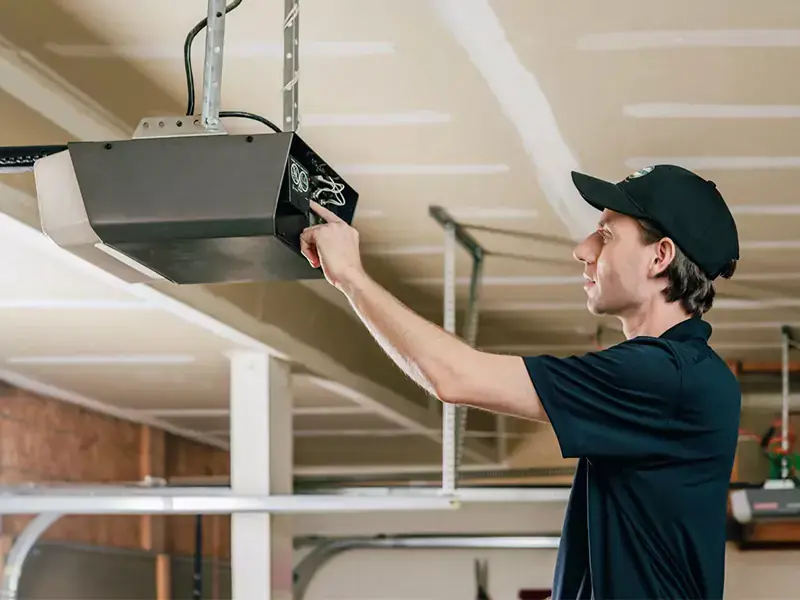
Credit: www.precisiondoor.net
Matching Opener Power To Door Specifications
Let’s break down typical recommendations based on door characteristics. These are general guidelines, and always consult the manufacturer’s specifications for the specific opener model.
Light Residential Doors (up To 150 Lbs)
- Characteristics: Lightweight aluminum, thin steel doors, or smaller single-car doors.
- Recommended Opener: A 1/3 HP AC motor or a DC equivalent (around 100 watts or less).
- Lifting Capacity: Look for openers rated for at least 200-250 lbs.
Standard Residential Doors (150-350 Lbs)
- Characteristics: Most common single and double-width steel doors, insulated doors, standard aluminum doors.
- Recommended Opener: A 1/2 HP AC motor or a DC equivalent (around 120-150 watts). This is the most common requirement for typical homes.
- Lifting Capacity: Aim for openers rated for 300-400 lbs.
Heavy Residential Doors (350+ Lbs)
- Characteristics: Solid wood doors, carriage house designs, custom-built doors, older heavy steel doors, or double doors made of thick materials.
- Recommended Opener: A 3/4 HP AC motor or a powerful DC equivalent (often 150+ watts, though specific ratings vary).
- Lifting Capacity: Seek openers rated for 500 lbs or more. For doors significantly over 400 lbs, consider heavy-duty commercial-grade openers, though these are less common in residential settings.
Example Scenario: The Double Wood Door Dilemma
Consider a homeowner with a 16-foot wide, solid wood carriage house style garage door. These doors are often custom-made and can easily weigh 400-500 lbs or more.
- Weight: 450 lbs (estimated).
- Required Lifting Capacity: At least 50% more than the weight = 450 lbs * 1.5 = 675 lbs.
- Recommended Opener: A 3/4 HP or higher AC motor, or a high-output DC motor, with a rated lifting capacity of 600 lbs or more. A standard 1/2 HP opener would likely struggle and fail prematurely.
Example Scenario: The Lightweight Aluminum Door
A homeowner has a standard 8-foot wide, single-layer aluminum garage door. These are typically quite light, perhaps around 120 lbs.
- Weight: 120 lbs.
- Required Lifting Capacity: 120 lbs * 1.5 = 180 lbs.
- Recommended Opener: A 1/3 HP AC motor or a basic DC opener with a rated lifting capacity of 200-250 lbs. An overpowered opener isn’t necessary and might offer no additional benefit.

Credit: spectrumoverheaddoor.com
Installation Space And Headroom Considerations
The physical space available in your garage is as important as the door’s weight. This impacts the type of opener you can install and may influence your choice even if power requirements are met.
Headroom Requirements
Headroom is the vertical space between the top of the garage door (when fully open) and the garage ceiling. Different opener drive mechanisms have varying headroom needs.
- Standard Chain/Belt Drive: Typically require at least 5-6 inches of headroom for the rail system.
- Torsion Spring Systems: These springs are mounted above the garage door on a bar. They require more headroom, often 10-12 inches or more, depending on the spring length and drum size.
- Low Headroom: Special low-headroom track systems and opener mounts are available for garages with limited vertical space (e.g., 4-5 inches).
- Direct Drive: These motors often mount directly to the torsion spring shaft, potentially requiring less rail space but still needing clearance for the shaft and springs.
Clearance Along The Wall
The opener’s motor unit needs space along the garage wall where the drive mechanism attaches to the door. Ensure there’s enough clearance for the motor housing and the trolley that moves along the rail.
Driveway Slope And Door Travel
If your driveway has a significant slope leading into the garage, or if your door tracks are angled, this can add slight resistance. While usually not a major factor for residential doors, it’s something a professional installer might consider for very specific setups.
Beyond Power: Other Important Opener Features
While power is king for determining “how big” an opener you need, other features enhance usability and security.
Security Features
- Rolling Codes: Most modern openers use rolling codes, meaning the code changes with each use, making it much harder for thieves to capture and reuse your signal.
- Encryption: Higher-end models may offer advanced encryption protocols for added security.
Smart Home Integration
- Wi-Fi Connectivity: Allows you to monitor and control your garage door remotely via a smartphone app. You can check if the door is open or closed, open it for a visitor, or receive alerts.
- Compatibility: Check compatibility with existing smart home systems like Amazon Alexa, Google Assistant, or Apple HomeKit.
Battery Backup
- Power Outage Operation: A battery backup ensures you can still operate your garage door during a power outage. This is a highly recommended feature, especially in areas prone to frequent power disruptions. The battery typically allows for a limited number of open/close cycles.
Lighting
- Integrated LED Lighting: Many modern openers feature powerful LED lighting systems that illuminate your garage when the door is activated, enhancing safety and convenience. Some offer extended runtimes or motion-detection features.
Remote Controls And Keypads
- Multi-Button Remotes: Allow control of multiple garage doors or gates.
- Wireless Keypads: Provide convenient entry without a remote. Some offer features like temporary access codes for guests. You might need to learn how to reprogram a Genie keypad or similar for a different brand.
Maintenance And Longevity
Proper maintenance ensures your chosen opener operates reliably for years.
Regular Lubrication
Keeping the door’s rollers, hinges, and tracks lubricated reduces friction and strain on the opener. Use a silicone-based spray lubricant specifically designed for garage doors. Refer to guides on how to lubricate garage door rollers for best practices.
Opener System Checks
Periodically check the chain tension (for chain drive openers) or belt tension (for belt drive openers). Improper tension can lead to performance issues or damage. You can find guidance on how to adjust the chain on a garage door opener.
Professional Inspections
Schedule annual inspections with a qualified technician. They can check the spring balance, diagnose potential issues with the opener’s motor or gears, and ensure all safety mechanisms are functioning correctly.
Common Misconceptions About Opener Size
- “Bigger is always better”: Installing an unnecessarily powerful opener won’t hurt, but it’s often more expensive and doesn’t offer significant advantages over a correctly sized unit. The key is matching the lifting capacity to the door’s weight.
- Confusing HP with physical size: Opener motors are compact. The “size” refers to their power output, not their physical dimensions.
- Ignoring the door’s balance: Many people blame the opener when the real issue is an unbalanced door. An opener can only compensate so much for a door that’s difficult to move manually.
Choosing The Right Opener: A Summary Table
Here’s a simplified table to help visualize the recommendations. Remember that actual door weight is the most critical factor.
| Garage Door Type & Weight | Typical HP Rating (AC Motor) | Typical DC Equivalent | Recommended Lifting Capacity (lbs) | Considerations |
|---|---|---|---|---|
| Lightweight Residential (e.g., Aluminum, up to 150 lbs) | 1/3 HP | ~100 Watts | 200 – 250 lbs | Basic models sufficient. Focus on quiet operation if needed. |
| Standard Residential (e.g., Steel, Insulated, 150-350 lbs) | 1/2 HP | ~120 – 150 Watts | 300 – 400 lbs | Most common choice. Good balance of power, price, and features. |
| Heavy Residential (e.g., Solid Wood, Carriage House, 350+ lbs) | 3/4 HP | 150+ Watts (high output) | 500+ lbs | Essential for heavy doors. May require heavy-duty specific models. |
When To Call A Professional
While DIY installation is possible for some, certain situations warrant professional help:
- Uncertainty about Door Weight: If you cannot accurately determine your door’s weight.
- Complex Installation: Low headroom, unusual door configurations, or structural issues in the garage.
- Spring Adjustments: Never attempt to adjust garage door springs yourself. This is extremely dangerous.
- Electrical Work: If you’re uncomfortable with electrical connections.
- Troubleshooting: If your existing opener is malfunctioning and you suspect a deeper issue.
A professional installer can assess your specific door, recommend the correct opener, and ensure safe and proper installation. You can find general cost information on how much a garage door costs, which may include opener installation.
Frequently Asked Questions
How Do I Know If My Garage Door Opener Is Too Weak?
An opener that is too weak will often struggle to lift the door, making slow, grinding noises, or stopping midway. You might notice the motor overheating or smelling burnt. In severe cases, it might fail to lift the door at all or reverse prematurely due to safety sensors.
A properly sized opener should lift and lower the door smoothly and without excessive strain.
Does The Type Of Garage Door (e.g., Steel Vs. Wood) Affect The Opener Size Needed?
Yes, significantly. Wood doors are generally much heavier than standard steel or aluminum doors. A solid wood or intricately designed carriage house door will require a more powerful opener (typically 3/4 HP or higher with a high lifting capacity) compared to a lightweight, uninsulated steel door (which might only need 1/3 or 1/2 HP).
Always prioritize the actual weight of your door.
What Is The Difference Between Ac And Dc Garage Door Openers In Terms Of Power?
AC (Alternating Current) openers have been traditional and are rated in horsepower (HP). DC (Direct Current) openers are newer, often quieter, more energy-efficient, and can offer variable speed. They are typically rated in watts or advertised with an “equivalent HP.” While a 1/2 HP AC motor is common, a DC motor around 100-150 watts often provides comparable lifting power. The most crucial specification remains the lifting capacity in pounds (lbs),