
Choosing the right garage door opener can feel like a complex decision, especially with the variety of options available. It’s not just about pushing a button; it’s about ensuring security, convenience, and reliability for your home. A well-chosen opener will seamlessly integrate into your daily routine, while a poor choice can lead to frustration, frequent repairs, and even security vulnerabilities.
From understanding the different drive mechanisms to considering smart features and horsepower, this guide will equip you with the knowledge to make an informed purchase that best suits your needs and budget.
Key Takeaways
- Drive Type Matters: Chain drives are robust and affordable but noisy. Belt drives offer quiet operation, ideal for attached garages. Screw drives are fast but can be less smooth. Direct drive is quiet and efficient but typically pricier.
- Horsepower (HP) and Lifting Capacity: Match the opener’s HP to your garage door’s weight and size. Most residential doors need 1/2 HP, but heavier doors might require 3/4 HP or more.
- Security Features: Look for rolling codes to prevent unauthorized access and consider Wi-Fi connectivity for remote monitoring and control.
- Brand Reputation and Warranty: Opt for established brands with good customer reviews and robust warranties, which often indicate product longevity and manufacturer confidence.
- Smart Home Integration: Many modern openers offer compatibility with systems like Alexa, Google Assistant, or Apple HomeKit, allowing for voice control and automation.
- Noise Level: Consider where your garage is located relative to living spaces. Belt drives and direct drives are significantly quieter than chain drives.
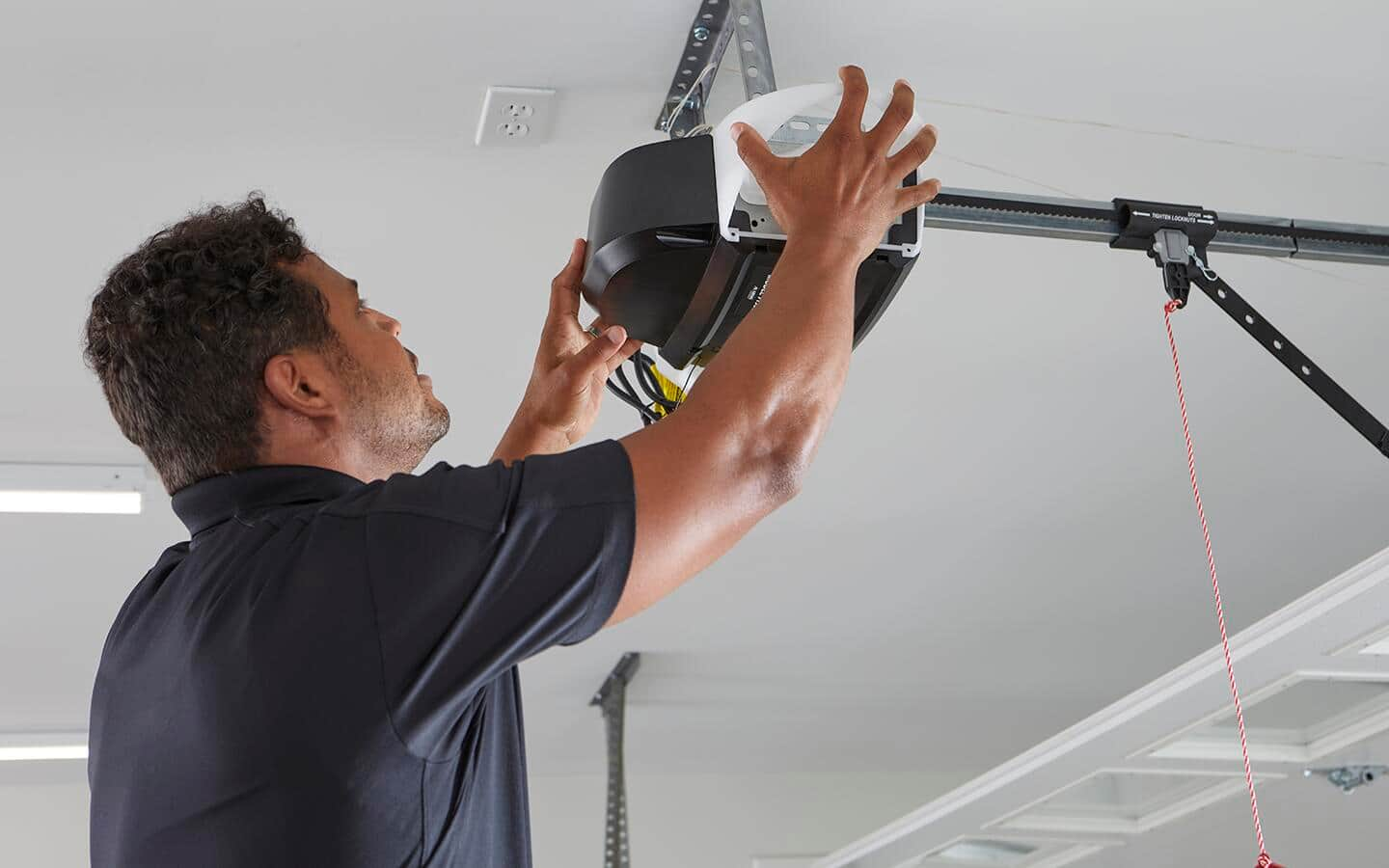
Credit: www.homedepot.com
Understanding Garage Door Opener Types: Drive Mechanisms
The heart of any garage door opener is its drive mechanism. This is the system that actually lifts and lowers your garage door. Understanding the differences between the primary types, chain drive, belt drive, screw drive, and direct drive, is crucial for selecting an opener that meets your specific needs for noise, maintenance, and budget.
Each has its own set of advantages and disadvantages that can significantly impact your daily experience.
Chain Drive Openers
Chain drive openers are the most traditional and widely used type. They operate much like a bicycle chain, using a metal chain to move the trolley along a steel rail, which in turn opens or closes the garage door.
- Pros:
- Durability and Reliability: The robust nature of the chain and motor makes them very dependable.
- Cost-Effective: Generally the most affordable option upfront.
- Strong Lifting Power: Capable of lifting heavy doors with ease.
- Cons:
- Noise: The metal-on-metal action of the chain can be quite loud, which can be disruptive, especially if your garage is attached to your living space.
- Maintenance: The chain may require periodic lubrication and tightening.
- Best For: Homes with detached garages, budgets where initial cost is a primary concern, or for very heavy garage doors where maximum power is needed.
Belt Drive Openers
Belt drive openers use a rubber belt, often reinforced with fiberglass or steel, to move the trolley along the rail. This mechanism is similar to how a serpentine belt works in a car engine.
- Pros:
- Quiet Operation: The rubber belt significantly dampens noise, making belt drives the quietest option available. This is ideal for attached garages or homes where noise is a significant concern.
- Smooth Operation: The belt provides a smoother, less jarring movement than a chain.
- Low Maintenance: Belts typically do not require lubrication and are less prone to stretching or loosening than chains.
- Cons:
- Higher Cost: Belt drive openers are generally more expensive than chain drive models.
- Potentially Less Power for Heavy Doors: While modern belt drives are powerful, extremely heavy doors might still benefit from the raw power of a chain drive, though this gap is narrowing.
- Best For: Attached garages, homes with bedrooms or living spaces near the garage, or for homeowners who prioritize quiet operation.
Screw Drive Openers
Screw drive openers utilize a long steel rod with a continuous thread, similar to a bolt. A motor turns this rod, causing a threaded collar (attached to the trolley) to move along its length, thereby opening or closing the door.
- Pros:
- Speed: Can open and close garage doors very quickly.
- Fewer Moving Parts: Compared to chain or belt drives, they have a simpler mechanical design, potentially leading to fewer issues.
- Cons:
- Noise: While quieter than chain drives, they can still produce a noticeable whirring or grinding sound.
- Sensitivity to Temperature/Humidity: The threaded rod can be affected by extreme temperature fluctuations or high humidity, potentially leading to sticking or requiring more frequent adjustments.
- Maintenance: The rod needs to be kept clean and lubricated.
- Best For: Garages in moderate climates where extreme temperature swings are not an issue, and for users who prioritize speed.
Direct Drive Openers
In a direct drive system, the motor itself is the moving part. The motor is mounted to the garage door shaft, and the motor’s internal components rotate the shaft directly to lift and lower the door.
- Pros:
- Extremely Quiet: With no chains, belts, or rotating rods, these are among the quietest openers available.
- Smooth Operation: The direct connection ensures a very smooth and controlled movement.
- Minimal Maintenance: Very few moving parts outside the motor itself.
- Cons:
- Higher Price Point: Typically the most expensive type of opener.
- Limited Availability: Fewer manufacturers offer direct drive models.
- Power Limitations: May not be suitable for extremely heavy or unusually balanced doors.
- Best For: High-end installations where ultimate quietness, smoothness, and minimal maintenance are desired, and budget is less of a concern.

Credit: justalittlefurther.com
Horsepower (hp) And Lifting Capacity: Matching Power To Your Door
The horsepower (HP) rating of a garage door opener is a key indicator of its power and its ability to lift your specific garage door. It’s crucial to match the opener’s HP to the weight and size of your door to ensure optimal performance, longevity, and safety. An underpowered opener will struggle, leading to premature wear and potential failure, while an overpowered one might be unnecessary and more expensive.
Understanding Horsepower Ratings
Garage door openers typically come with horsepower ratings of 1/2 HP, 3/4 HP, or sometimes even 1 HP.
- 1/2 HP: This is the most common rating for standard residential garage doors. It’s generally sufficient for most lightweight to moderately weighted single-car and double-car doors made of materials like aluminum or thin steel.
- 3/4 HP: This rating is recommended for heavier doors, such as those made of solid wood, carriage-house style doors, or double-car doors that are particularly large or made of denser materials.
- 1 HP: While less common for residential use, 1 HP openers are designed for the heaviest of garage doors, often found in commercial applications or for very large, custom-built residential doors.
Factors Affecting Lifting Capacity
Beyond the HP rating, several other factors influence how much lifting capacity your opener needs:
- Door Weight: This is the most critical factor. A heavy wooden door will require more power than a lightweight aluminum door. You can often find the weight of your door specified by the manufacturer or by weighing it.
- Door Size: Larger doors, even if made of lighter materials, have more surface area and can be affected by wind, requiring more force to move.
- Balance of the Door: A properly balanced garage door should feel nearly weightless when you pull the emergency release cord. If your door is poorly balanced (e.g., it springs open or slams shut when partially lifted manually), the opener will have to work much harder, and you may need a more powerful unit or, more importantly, address the door’s balance first. You can test this by:
- Manually opening the door halfway.
- Releasing the opener’s drive mechanism using the emergency release cord.
- Seeing if the door stays in place, slowly drifts down, or springs up.
If it doesn’t stay put, it indicates an imbalance. For issues with door balance, consulting a professional or looking into how to adjust chain on garage door opener (if applicable and you’re comfortable with the mechanics) can be beneficial, but for significant problems, professional repair is advised.
- Frequency of Use: If your garage door is used multiple times a day, a more robust opener might be beneficial for longevity.
- Climate: Extreme cold can make garage doors heavier and harder to move as seals stiffen and materials contract.
Pro Tip: Always err on the side of caution. If you have a heavy door or are unsure of its exact weight, opt for the higher HP rating (e.g., 3/4 HP instead of 1/2 HP). This ensures the opener won’t be overstressed and will likely last longer.
Essential Features For Modern Garage Door Openers
Beyond the core drive mechanism and power, modern garage door openers offer a range of features designed to enhance security, convenience, and connectivity. When selecting an opener, consider which of these features are most important for your lifestyle and home security needs.
Security Features
Security is paramount for any home access point. Garage door openers have evolved significantly in this regard.
- Rolling Codes (Security+): This is a must-have feature. Instead of using a fixed code, rolling code technology changes the access code every time the remote is used. This makes it virtually impossible for thieves to “capture” your code using a code-grabbing device. Most major brands offer this technology, often branded under names like Security+ (LiftMaster/Chamberlain) or IntelliCode (Genie).
- Keyless Entry Pads: These allow you to open your garage door using a personal identification number (PIN). Look for models with rolling code technology for enhanced security. Many can be reprogrammed if you suspect the code has been compromised. For example, you might need to know how to reprogram Genie garage door keypad or how to reprogram Chamberlain garage door keypad if you change your PIN or move.
- Vacation Lock/Lockout Feature: This feature disables the remote control access, preventing the door from being opened remotely while you’re away, adding an extra layer of security.
Connectivity And Smart Features
The rise of smart homes has extended to garage door openers, offering unprecedented control and monitoring capabilities.
- Wi-Fi Connectivity: Openers with built-in Wi-Fi allow you to connect to your home network. This enables control and monitoring via a smartphone app. You can open or close the door remotely, receive notifications when the door is in use, and check its status from anywhere.
- Smartphone App Control: The companion apps for Wi-Fi enabled openers typically offer features like:
- Remote Operation: Open or close the door from your phone.
- Status Monitoring: See if the door is open or closed.
- Activity Log: Track who opened or closed the door and when.
- Alerts/Notifications: Get push notifications for door activity.
- Guest Access: Grant temporary access to family members or service providers.
- Smart Home Integration (Voice Control): Many Wi-Fi openers are compatible with popular smart home ecosystems like Amazon Alexa, Google Assistant, and Apple HomeKit. This allows you to control your garage door using voice commands, such as “Alexa, open the garage door.”
Convenience Features
These features add layers of convenience to your daily use of the garage door.
- Automatic Close: A popular feature that automatically closes the garage door after a set period (e.g., 5, 10, or 30 minutes). This is a great safety net if you forget to close the door.
- Battery Backup: In areas prone to power outages, a battery backup system is invaluable. It allows you to operate the garage door a limited number of times during a power failure, ensuring you can still get in or out.
- Motion-Detecting Wall Console: Some openers come with a wall-mounted control panel that includes a motion sensor. When you enter the garage, the light automatically turns on, and sometimes the opener can be activated by motion.
- Durable Remote Controls: Look for remotes with durable buttons and a good range. Some advanced remotes may have small screens displaying door status.
- Quiet Operation: As discussed with belt and direct drive openers, quiet operation is a significant convenience for many households.
Lighting Features
- Integrated LED Lighting: Many newer openers feature built-in LED lighting, which is energy-efficient and provides brighter illumination for your garage compared to traditional incandescent bulbs. Some offer multi-directional lighting or motion-activated lighting.
Example: A family with young children might prioritize a battery backup and automatic close feature, while a tech-savvy homeowner might focus on Wi-Fi connectivity and smart home integration for remote access and voice control.

Credit: centraloregongaragedoor.com
Brands, Warranties, And Installation Considerations
When you’re ready to purchase a garage door opener, the brand reputation, the warranty offered, and how you plan to install it are critical factors that influence the long-term value and satisfaction you’ll receive. Investing in a reputable brand often means better quality components and more reliable performance.
Leading Garage Door Opener Brands
Several manufacturers have established themselves as leaders in the garage door opener market, known for their quality, innovation, and customer support. Some of the most trusted brands include:
- Chamberlain: A very popular brand offering a wide range of openers, from basic chain drives to advanced smart openers. Their MyQ technology is widely integrated for smart home connectivity.
- LiftMaster: Often considered a more professional-grade line by Chamberlain, LiftMaster openers are known for their durability and advanced features, commonly found in installations by professional garage door technicians.
- Genie: Another long-standing and respected brand, Genie offers a variety of drive types and smart features, including their Aladdin Connect Wi-Fi system.
- Craftsman: Known for its tools and home equipment, Craftsman also offers reliable garage door openers, often at competitive price points.
- Sommer: This brand is notable for its direct drive openers, which are exceptionally quiet and have fewer moving parts.
- Overhead Door: While primarily known for garage doors themselves, Overhead Door also offers openers, often integrated with their door systems.
Understanding Warranties
A warranty is a strong indicator of a manufacturer’s confidence in its product. When comparing openers, pay close attention to the warranty terms:
- Motor Warranty: This is often the longest part of the warranty, sometimes covering the motor for the lifetime of the original purchaser.
- Parts Warranty: Covers other components like the chain, belt, gears, and circuit boards. This typically ranges from 1 to 5 years.
- Labor Warranty: If you’re using a professional installer, inquire about their labor warranty on the installation itself. The opener manufacturer usually does not cover installation labor.
Example: A 1/2 HP belt drive opener from a reputable brand might come with a limited lifetime warranty on the motor, a 5-year warranty on parts, and a 1-year warranty on the belt.
Installation: Diy Vs. Professional
The installation process for a garage door opener can range from relatively straightforward to quite complex, depending on your mechanical aptitude and the specific opener model.
- DIY Installation:
- Pros: Can save significant money on labor costs. Offers a sense of accomplishment.
- Cons: Requires tools, time, and a good understanding of mechanical and electrical systems. Mistakes can lead to poor performance, damage to the opener or door, or safety hazards. If you’re comfortable with DIY projects, resources like instruction manuals and online tutorials (e.g., watching videos on how to adjust a Chamberlain garage door opener or similar for other brands) can be helpful.
- Considerations: Ensure the opener is compatible with your existing garage door system (track, springs, etc.). You’ll need to properly balance the door and ensure the opener is securely mounted.
- Professional Installation:
- Pros: Ensures the opener is installed correctly and safely, minimizing risks. Professionals have the right tools and expertise. Often comes with a labor warranty. Can advise on the best opener for your specific door.
- Cons: Higher upfront cost due to labor charges.
- Considerations: Get quotes from multiple reputable local garage door companies. Check their reviews and ask about their experience with the specific brand you’re considering. Professional installation is often recommended, especially for heavier doors or if you’re unfamiliar with garage door mechanics.
Pro Tip: Even with professional installation, it’s wise to understand the basics of your opener. Knowing how to open your garage door manually in case of a power outage or malfunction is essential. Resources like guides on how can I open my garage door manually are invaluable.
Choosing The Right Opener For Your Specific Needs
With a solid understanding of the different types, power requirements, features, and brands, you can now focus on selecting the opener that best fits your unique situation. It’s about prioritizing what matters most to you and your household.
For The Budget-conscious Homeowner
If your primary concern is cost without sacrificing essential functionality, a chain drive opener is likely your best bet.
- Recommendation: A 1/2 HP chain drive opener from a reputable brand like Chamberlain or Craftsman.
- Key Features to Look For:
- Rolling Code Security: Essential for basic security.
- Decent Remote Range: Ensure it works reliably from your driveway.
- Basic Safety Features: Auto-reverse and obstruction sensors.
- Installation: Consider DIY installation if you are comfortable with the process to save on labor costs.
- Potential Trade-offs: Expect more noise, and the chain may require occasional maintenance.
For Quiet Operation And Attached Garages
If your garage is attached to your home, or you simply value a peaceful environment, a belt drive opener is the superior choice.
- Recommendation: A 1/2 HP or 3/4 HP belt drive opener from Chamberlain, LiftMaster, or Genie.
- Key Features to Look For:
- Rolling Code Security: Non-negotiable.
- Battery Backup: Highly recommended for power outage convenience.
- Wi-Fi Connectivity/Smart Home Features: If you want remote control and monitoring.
- Installation: Professional installation is often recommended to ensure optimal alignment and performance of the quieter system.
- Considerations: While more expensive than chain drives, the quiet operation often justifies the cost for peace of mind and reduced disruption.
For Maximum Convenience And Smart Home Integration
For those who want the latest technology and seamless integration with their digital lives, a smart opener is the way to go.
- Recommendation: A Wi-Fi enabled belt drive or direct drive opener from Chamberlain (MyQ), LiftMaster, or Genie (Aladdin Connect).
- Key Features to Look For:
- Robust Smartphone App: Check reviews for app usability and reliability.
- Smart Home Compatibility: Ensure it works with your existing smart home system (Alexa, Google Home, etc. ).
- Advanced Security Features: Beyond rolling codes, consider encryption levels.
- Integrated Lighting: LED lighting is a nice bonus.
- Installation: Professional installation is often beneficial to ensure all smart features and network connections are set up correctly.
- Considerations: These openers are typically the most expensive but offer the highest level of control and convenience.
For Heavy Or Specialty Doors
If you have a solid wood door, a carriage-house style door, or an oversized double door, you’ll need more power.
- Recommendation: A 3/4 HP or even 1 HP opener. A heavy-duty chain drive or a robust belt drive specifically rated for heavy doors would be suitable.
- Key Features to Look For:
- High Horsepower Rating: Crucial for lifting capacity.
- Durable Construction: Look for openers with metal gears and robust housing.
- Proper Door Balance: Ensure your door is professionally balanced before installation; an opener can’t compensate for a poorly balanced door. If you’re unsure, a professional can assess this.
- Installation: Professional installation is strongly recommended for heavy doors to ensure safety and proper operation. Improper installation can be dangerous.
- Considerations: These openers might be noisier (if chain drive) or more expensive. Regular maintenance, like checking how to lube garage door rollers, becomes even more important for smooth operation.
Example: A homeowner with a beautiful, solid oak carriage-house style garage door would likely need a 3/4 HP belt drive opener with smart features for convenience and security, and professional installation to ensure it operates smoothly and safely.
Frequently Asked Questions
How Do I Know If My Garage Door Is Too Heavy For A Standard Opener?
You can estimate your garage door’s weight by observing its balance. When disconnected from the opener (using the emergency release cord), a properly balanced door should stay open roughly halfway without assistance and should not slam shut or spring upwards.
If it feels excessively heavy to lift manually or seems unbalanced, it might be too heavy for a standard 1/2 HP opener. Solid wood doors, older steel doors, or large double doors are often heavier than standard