
The garage door opener is a marvel of modern convenience, silently lifting and lowering the heavy barrier to our homes with the simple press of a button. But how far back does this technology actually go? Understanding the history and evolution of garage door openers not only satisfies our curiosity but also provides valuable context for the sophisticated systems we rely on today.
From early manual contraptions to the smart, connected devices of the 21st century, the journey of the garage door opener is a fascinating narrative of innovation driven by the desire for security, convenience, and efficiency.
Key Takeaways
- The earliest forms of automated garage door systems emerged in the late 19th and early 20th centuries, driven by the burgeoning popularity of automobiles.
- Early systems were often manual or relied on basic electric motors, with limited range and features compared to modern openers.
- The development of radio frequency (RF) technology in the mid-20th century was a pivotal moment, enabling remote operation and significantly increasing convenience.
- Key advancements include rolling codes for enhanced security, quieter motor technologies (like DC and belt drives), and integration with smart home systems.
- Modern garage door openers offer features like smartphone control, battery backup, and advanced safety sensors, representing decades of continuous improvement.
- Understanding the historical progression helps appreciate the complexity and reliability of current garage door opener technology.
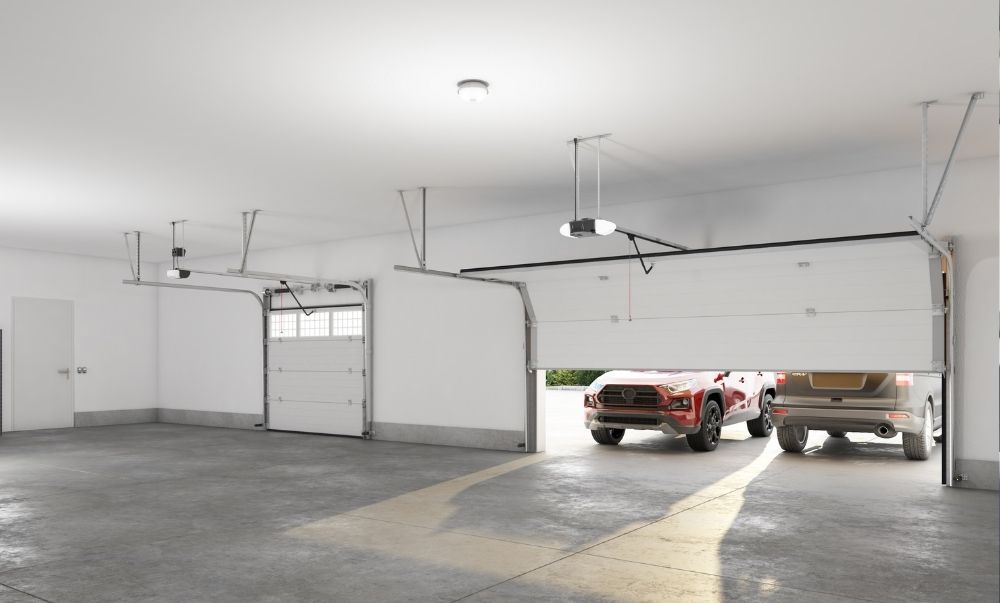
Credit: store.geniecompany.com
The Dawn Of Automated Entry: Early Innovations
The concept of automating the garage door began to take shape as the automobile transitioned from a luxury item to a more common mode of transportation in the early 20th century. Before the advent of the electric garage door opener, homeowners would manually lift and lower their garage doors, a task that could be cumbersome, especially for heavier wooden doors.
The desire for a more convenient and less physically demanding way to access their vehicles spurred early inventors to explore mechanical and electrical solutions.
One of the earliest patents for a garage door opener system dates back to 1926, credited to C. G. Johnson. This system, like many early iterations, was quite rudimentary by today’s standards. It typically involved an electric motor connected to a chain or belt that would engage with the garage door mechanism.
The operation was often initiated by a pull chain inside the garage or a simple switch. The range of these early openers was extremely limited, often requiring the user to be inside the garage to activate the device. Security was also a significant concern, as many early systems used fixed codes that could potentially be duplicated.
The initial adoption of these early openers was slow. They were expensive, and the technology was not yet widely understood or trusted. Furthermore, the infrastructure to support widespread electrical use in residential garages was still developing. However, these pioneering efforts laid the groundwork for future innovations, demonstrating the feasibility and desirability of an automated garage door solution.
The focus in these early years was primarily on the mechanical aspect of lifting the door, with convenience and security being secondary considerations.
The Role Of Early Electric Motors
The development and increasing availability of electric motors were crucial to the evolution of garage door openers. Early systems relied on relatively simple, robust electric motors that could generate enough torque to overcome the weight of the garage door. These motors were often powered by the home’s electrical supply and were connected to the door through a system of gears, chains, or belts.
The drive mechanism would engage a trolley that moved along a rail, attached to the garage door itself, causing it to open or close.
The reliability of these early motors was a key factor in their adoption. While not as sophisticated or quiet as modern units, they were designed for durability. Maintenance often involved basic lubrication and occasional adjustments to the drive chain or belt.
The noise generated by these early openers was considerable, a characteristic that many homeowners accepted as part of the automated system. However, the fundamental principle of using an electric motor to automate door operation remained the core of garage door opener technology for decades.
Limitations Of Pre-remote Era Openers
Before the widespread adoption of radio frequency technology, garage door openers presented several significant limitations. The most obvious was the lack of remote control. Users had to be physically present inside the garage to operate the opener, typically by pulling a cord or flipping a wall-mounted switch.
This negated much of the convenience factor, as the primary benefit of an opener is the ability to open the door without leaving your vehicle.
Furthermore, the security features were minimal. Many early systems used a simple on/off switch or a fixed code mechanism. If a code was used, it was often a series of dip switches set to a specific configuration. This made them vulnerable to “code grabbing” or simple guesswork by unauthorized individuals.
The range of operation was also extremely limited, as the activation mechanism was always within close proximity to the opener unit itself. These limitations highlighted the need for advancements that would bring greater convenience and security to the garage door opener.
Credit: www.reddit.com
The Radio Revolution: Introducing Remote Control
The mid-20th century marked a transformative period for garage door openers with the advent of radio frequency (RF) technology. This innovation fundamentally changed how people interacted with their garage doors, ushering in an era of unprecedented convenience. The ability to operate the garage door from the comfort and security of a vehicle was a significant leap forward, directly addressing the primary limitations of earlier systems.
The introduction of the remote control meant that drivers no longer had to exit their cars, especially in inclement weather or late at night, to open their garage doors. This was a substantial improvement in user experience and personal safety. Early remote systems, while groundbreaking, often used simple, fixed codes. This meant that every remote for a particular brand or model would transmit the same signal. While convenient, this posed a security risk, as a determined individual could potentially capture the signal and replicate it to gain unauthorized access.
Despite the initial security concerns, the convenience offered by RF remote controls led to their rapid adoption. The technology quickly became a standard feature, transforming the garage door opener from a niche mechanical device into a common household amenity. This era saw the rise of several key players in the garage door opener market, each contributing to the refinement and popularization of remote-controlled systems.
The Impact Of Fixed Code Remotes
The initial wave of remote-controlled garage door openers utilized fixed code technology. In this system, the transmitter (the remote) and the receiver (the opener unit) were programmed to recognize a specific, unchanging radio signal. This signal was often determined by a series of small dip switches located inside both the remote and the opener unit. The user would manually set these switches to match a particular pattern.
While this offered a significant improvement in convenience over manual operation or wired switches, it had a major security drawback. Because the code was fixed and broadcasted wirelessly, it could be intercepted by a device designed to “listen” for these signals. Once captured, this code could be used to open the garage door remotely, posing a significant security vulnerability. For instance, if a neighbor had the same brand of opener with the same dip switch settings, their remote could inadvertently open your garage door. This inherent weakness was a driving force behind the next major technological leap in garage door opener security.
The Emergence Of Multi-function Remotes
As the technology evolved, garage door opener remotes began to incorporate more sophisticated features. Beyond simply opening and closing the door, manufacturers started integrating the ability to control other devices, such as exterior lighting or even other garage doors. This often involved using multiple buttons on a single remote, each programmed to send a different signal or activate a different function.
This trend towards multi-function remotes reflected a broader desire for integrated home automation, even in its nascent stages. Homeowners could consolidate multiple remotes into one, simplifying their keychain and enhancing their control over their home’s exterior access points. However, the underlying technology for signal transmission still largely relied on fixed codes in many of these multi-function remotes, meaning the security concerns remained largely unaddressed until the next generation of technology emerged.

Credit: support.chamberlaingroup.com
Security Enhancements: The Evolution Of Rolling Codes
The inherent security flaws of fixed code systems led to the development of a much more robust solution: rolling code technology, also known as hopping codes. This innovation, which began appearing in garage door openers in the 1990s, revolutionized the security of automated garages. Instead of transmitting a static, unchanging signal, rolling code systems generate a new, unique code each time the remote is used.
This is achieved through a sophisticated algorithm shared by the transmitter and receiver. When a button on the remote is pressed, it generates a code based on a pre-determined sequence. The garage door opener, which knows the same sequence, recognizes this new code.
After the signal is sent and received, both the remote and the opener advance to the next code in the sequence. This constant changing of the code means that even if a signal is intercepted, it is only valid for that single use.
Attempting to use an older, captured code will result in the opener ignoring the command, effectively preventing unauthorized access.
This technological advancement significantly boosted user confidence and home security. It addressed the vulnerability of code grabbing, making it virtually impossible for intruders to replicate the signal. The implementation of rolling codes marked a critical turning point in the history of garage door openers, shifting the focus from mere convenience to a more balanced approach that prioritized both ease of use and robust security.
How Rolling Codes Work: A Simplified Explanation
At its core, rolling code technology relies on a shared, synchronized pseudo-random number generator (PRNG) between the garage door opener and the remote. Think of it like a secret handshake that changes every time.
- Initial Synchronization: When you first program a rolling code remote to your garage door opener, a unique, synchronized stream of codes is established between the two devices.
- Signal Transmission: When you press the button on your remote, it generates the “next” code in this pre-defined, pseudo-random sequence.
- Receiver Recognition: The garage door opener’s receiver is also synchronized to this sequence. It anticipates receiving the “next” code.
- Code Validation: If the code received by the opener matches the expected code in its sequence, it validates the command and opens or closes the door.
- Sequence Advancement: Crucially, after a successful transmission (or even an unsuccessful one, depending on the system), both the remote and the opener advance to the next code in the sequence. This means the code used for that specific operation is now “used up” and will not be valid again.
- Security: If someone were to intercept the radio signal, they would capture a code that is only valid for that one instance. The next time they tried to use it, the opener would be expecting a different, subsequent code, rendering the captured signal useless.
This continuous synchronization and advancement of codes make it incredibly difficult for any unauthorized party to gain access. Brands like LiftMaster, Chamberlain, and Genie have all implemented their proprietary versions of rolling code technology, such as LiftMaster’s Security+ and Genie’s Intellicode.
The Importance Of Code Synchronization
Maintaining code synchronization between the remote and the garage door opener is paramount for the proper functioning of rolling code systems. If, for any reason, the sequences fall out of sync, perhaps due to a power surge, a dead remote battery, or an accidental button press, the remote may stop working.
Most modern garage door openers have a re-synchronization or re-pairing procedure. This usually involves pressing and holding a specific button on the opener unit itself (often a “Learn” or “Program” button) and then pressing the button on the remote. This process realigns the sequences, allowing the remote to communicate with the opener once more. Understanding how to perform this re-synchronization is a key piece of knowledge for any owner of a rolling code garage door opener. Many manufacturers, like LiftMaster and Craftsman, offer detailed guides on how to reset and reprogram their remotes, such as those found in guides on how to reset a Liftmaster garage door opener remote.
Motor Technology And Drive Systems: Quieter, Stronger, Smarter
Beyond security, significant advancements have been made in the motor technology and drive systems of garage door openers. Early openers were often noisy, chain-driven units. Over time, manufacturers have developed quieter, more efficient, and more powerful options to cater to a wider range of needs and preferences. The choice of drive system can significantly impact the noise level, speed, and maintenance requirements of an opener.
The primary drive systems commonly found today include chain drives, belt drives, and screw drives. Each has its own set of advantages and disadvantages. The evolution of these systems reflects a continuous effort to improve performance, reduce noise, and enhance the overall user experience. Furthermore, the motors themselves have become more sophisticated, with many modern openers utilizing DC (Direct Current) motors which offer benefits like variable speed control, quieter operation, and often better energy efficiency compared to traditional AC (Alternating Current) motors.
Chain Drive Openers: The Traditional Workhorse
Chain drive garage door openers have been around for a long time and remain a popular choice due to their durability and affordability. They operate much like a bicycle chain, with a motor turning a sprocket that pulls a chain. This chain is attached to a trolley that moves along a rail, opening and closing the garage door.
- Pros: Generally the most budget-friendly option, known for their robustness and reliability. They can handle heavy doors with ease.
- Cons: The primary drawback is noise. The metal chain and the motor can produce a significant amount of sound and vibration as they operate, which can be disruptive, especially in attached garages. Maintenance often involves periodic lubrication of the chain.
Chain drives are a solid, dependable choice, particularly for detached garages or situations where noise is not a primary concern. They represent a long-standing staple in garage door opener technology.
Belt Drive Openers: The Quiet Alternative
Belt drive garage door openers have gained significant popularity because they offer a much quieter operation compared to chain drives. Instead of a metal chain, these openers use a reinforced rubber belt (often made of materials like steel-reinforced rubber) to move the trolley along the rail. The belt is driven by a motor that turns a pulley.
- Pros: Significantly quieter than chain drives, making them ideal for attached garages or homes where noise is a concern. They offer a smooth and efficient operation.
- Cons: Belt drives are typically more expensive than chain drives. While durable, the belt itself might require replacement over a longer lifespan than a chain, though modern belts are very long-lasting.
The near-silent operation of belt drives is a major selling point, providing a more pleasant living environment. For many homeowners, the added cost is well worth the reduction in noise pollution.
Screw Drive Openers: Speed And Simplicity
Screw drive garage door openers use a long steel rod with a threaded screw mechanism. A motor rotates this rod, causing a threaded collar (the trolley) to move up and down the rod, thereby opening or closing the door.
- Pros: Known for their speed and relatively simple design with fewer moving parts compared to chain or belt drives. They can be very efficient.
- Cons: They can be noisier than belt drives, though often quieter than older chain drives. They are also more sensitive to temperature fluctuations, which can affect their performance and potentially require more frequent adjustments. Their performance can also be impacted by the weight of the door.
Screw drives offer a good balance of speed and simplicity, but their sensitivity to environmental factors and noise levels make them a less common choice than belt or chain drives for many residential applications.
The Rise Of Dc Motors And Battery Backup
A significant evolution in motor technology has been the widespread adoption of DC (Direct Current) motors in newer garage door openers. Unlike traditional AC motors, DC motors offer several advantages:
- Quieter Operation: DC motors are inherently quieter and smoother running.
- Variable Speed Control: They allow for variable speed, enabling openers to start and stop more gradually, reducing wear and tear on the door and mechanism, and further minimizing noise.
- Energy Efficiency: They often consume less power, especially in standby mode.
- Integrated Battery Backup: Many DC-powered openers come with or can easily accommodate a battery backup system. This is a crucial feature that ensures your garage door can still be opened and closed during a power outage. This is particularly important for safety and security, allowing you to exit your garage if needed.
The integration of battery backup systems is a testament to the increasing focus on reliability and safety in garage door opener design. It provides peace of mind, ensuring access even when the main power is unavailable.
Smart Technology And Connectivity: The Modern Opener
The latest frontier in garage door opener evolution is the integration of smart technology and connectivity. Modern openers are no longer just about opening and closing a door; they are becoming integral parts of the connected home ecosystem. This allows for unprecedented control, monitoring, and integration with other smart devices.
The core of this smart functionality is typically Wi-Fi connectivity, enabling the opener to communicate with your home network and, consequently, with your smartphone or tablet. This opens up a world of possibilities, from remote operation to enhanced security features and integration with voice assistants.
The ability to monitor and control your garage door from anywhere in the world adds a significant layer of convenience and peace of mind.
Smartphone Control And Monitoring
One of the most significant advancements in modern garage door openers is the ability to control and monitor them via a smartphone app. This functionality is usually enabled by openers with built-in Wi-Fi or through add-on smart controllers that can be retrofitted to older openers.
With a smartphone app, you can:
- Open or close your garage door remotely: This is useful if you forget to close it or need to grant access to a family member or trusted visitor when you’re not home.
- Receive real-time alerts: Get notifications on your phone when the garage door opens or closes, or if it has been left open for an extended period. This enhances security and awareness.
- Check the door’s status: See whether your garage door is currently open or closed, regardless of your location.
- Schedule door operation: Some systems allow you to set schedules for your garage door to open or close automatically at specific times.
This level of remote control and monitoring transforms the garage door opener from a standalone appliance into a connected device that enhances home security and convenience. For example, many Chamberlain and LiftMaster models now come with this capability standard or as an easy upgrade.
Integration With Smart Home Ecosystems
Modern smart garage door openers are increasingly designed to integrate seamlessly with popular smart home ecosystems and voice assistants like Amazon Alexa, Google Assistant, and Apple HomeKit. This integration allows for voice commands to control your garage door, further enhancing convenience.
- Voice Control: You can simply say, “Alexa, open the garage door,” or “Hey Google, close the garage door.” (Note: For security reasons, most systems require a voice PIN or confirmation for opening commands).
- Automation Routines: The garage door opener can be included in broader smart home routines. For instance, a “Goodnight” routine could trigger the garage door to close and turn off exterior lights simultaneously.
- Cross-Platform Compatibility: Many smart openers are designed to work with multiple platforms, offering flexibility for users with different smart home setups.
This interconnectivity means your garage door opener can work in concert with your lights, thermostats, security cameras, and other smart devices, creating a more automated and responsive home environment. The ability to integrate with systems like Chamberlain keypads or Genie keypads via smart hubs further enhances this interconnectedness.
Advanced Safety Features And Sensors
While safety sensors have been a standard feature for decades, modern garage door openers boast even more advanced and reliable safety mechanisms. The primary safety feature is the photo-eye sensor system located near the bottom of the garage door tracks. These sensors emit an invisible beam of light. If the beam is broken by an object, person, or pet while the door is closing, the opener will automatically reverse the door’s direction, preventing entrapment or injury.
Newer systems often feature:
- Enhanced Sensor Sensitivity: Improved sensors that can detect smaller obstructions or react more quickly.
- Obstruction Detection: Some openers can detect unusual resistance or strain on the door mechanism, indicating a potential issue or obstruction, and stop or reverse operation.
- Automatic Close Timers: As mentioned, these timers can be programmed to automatically close the garage door after a set period, ensuring it’s not accidentally left open.
- Smart Monitoring Alerts: If the door is tampered with or fails to close properly, smart openers can send alerts to your smartphone.
These advanced safety features are crucial for protecting family members, pets, and property, reflecting the continuous commitment to safety in garage door opener design.
The Lifespan And Maintenance Of Garage Door Openers
Understanding how far back garage door openers go also leads to considering their longevity and the maintenance required to keep them functioning optimally. Like any electromechanical device, garage door openers have a finite lifespan, and their performance is directly tied to the care they receive.
The lifespan of a garage door opener can vary significantly based on factors such as the quality of the unit, the frequency of use, the type of drive system, and, critically, the maintenance it undergoes. Regular maintenance not only extends the life of the opener but also ensures its safe and reliable operation. Neglecting maintenance can lead to premature failure, costly repairs, and potential safety hazards.
Typical Lifespan And Factors Affecting It
A typical residential garage door opener can last anywhere from 10 to 15 years, though some well-maintained units may last even longer. Several factors influence this lifespan:
- Usage Frequency: Openers used multiple times a day will naturally experience more wear and tear than those used less frequently.
- Drive