
The garage door is a complex mechanism, and its springs are vital components responsible for counterbalancing the door’s weight. Understanding the number of turns on a garage door spring is crucial for proper installation, maintenance, and repair. This knowledge not only ensures the safe operation of your garage door but also helps prevent potential damage to the mechanism and associated components.
Incorrectly tensioned springs can lead to a door that is too heavy to lift manually, slams shut unexpectedly, or strains the opener system, leading to premature failure.
When a garage door spring is installed or adjusted, it’s wound to a specific tension. This tension is achieved by rotating the spring, and the number of turns directly dictates how much force it will exert. This force is what makes your heavy garage door feel light and easy to operate.
Without the correct spring tension, the door’s weight will not be properly counterbalanced. This guide will explore the intricacies of garage door spring turns, providing insights into how to determine them and why they are so important for the longevity and safety of your garage door system.
Key Takeaways
- Spring Type Matters: The number of turns varies significantly between torsion springs (mounted above the door) and extension springs (running along the horizontal tracks).
- Weight is King: The primary factor determining the number of turns is the weight of the garage door. Heavier doors require more tension (more turns).
- Measuring Tension: The number of turns is typically measured by counting rotations of the winding rod during installation or adjustment.
- Color Coding: While not universally standardized, some manufacturers use color codes on winding rods or springs to indicate tension ranges.
- Safety First: Adjusting garage door springs is inherently dangerous due to the high tension involved. It is strongly recommended to hire a qualified professional for any spring adjustments or replacements.
- Signs of Incorrect Tension: A door that is difficult to lift, slams shut, or feels unbalanced often indicates incorrect spring tension.
- Professional Tools: Specialized winding bars are essential for safely adjusting torsion springs.
Credit: www.youtube.com
Understanding Garage Door Springs: Torsion Vs. Extension
Before delving into the specifics of spring turns, it’s essential to distinguish between the two primary types of garage door springs: torsion springs and extension springs. Each type operates differently and requires a unique approach to tensioning.
Torsion Springs
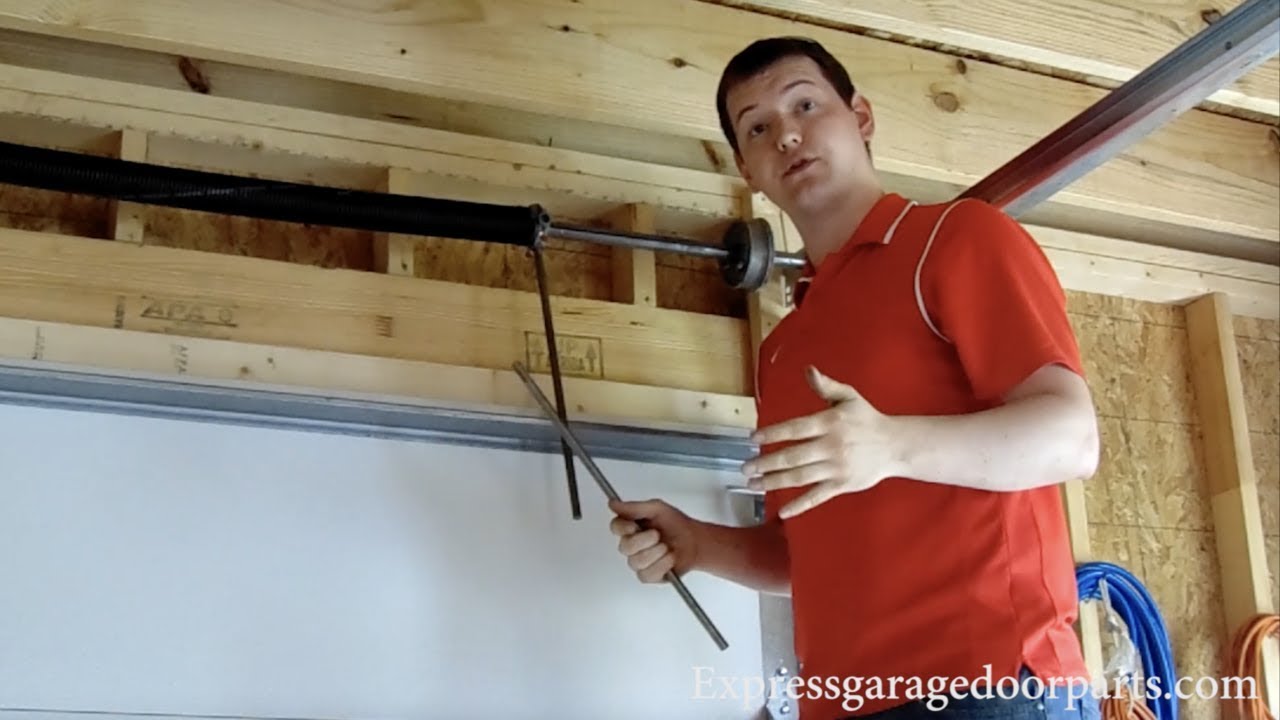
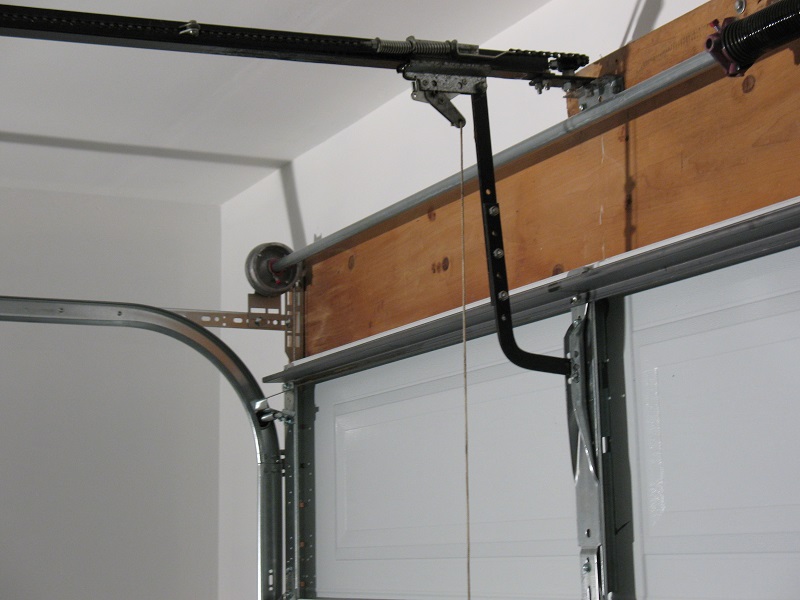
Torsion springs are mounted on a metal rod above the garage door opening, typically centered over the door itself. As the garage door opens, the springs rotate in the opposite direction of the winding, unwinding and releasing stored energy to lift the door. When the door closes, the springs wind up, storing energy. The number of turns applied to a torsion spring directly correlates to the torque it generates, counterbalancing the door’s weight.
Extension Springs
Extension springs are usually installed in parallel with the horizontal tracks of the garage door. They are attached to the tracks at one end and to the pulley system at the other. When the door is closed, the extension springs are stretched, storing potential energy. As the door opens, the springs contract, using their stored energy to assist in lifting the door. They are often used in pairs, with one on each side of the door. The tension in extension springs is typically adjusted by repositioning the cables or attaching points.
How To Determine The Number Of Turns On A Garage Door Spring
Determining the correct number of turns for a garage door spring is a critical step in ensuring its proper function and longevity. This process is not about guessing; it’s about precise calculation based on the door’s characteristics and the spring’s specifications.
The Role Of Door Weight
The weight of the garage door is the single most important factor in determining the required spring tension. Garage doors vary significantly in weight due to differences in material (wood, steel, aluminum, composite), insulation, design, and size. A heavier door requires more torque to lift, which translates to more tension in the springs, and thus, more turns.
- Lightweight Doors: Typically made of aluminum or uninsulated steel, these doors weigh less and require fewer spring turns.
- Medium-Weight Doors: Often insulated steel doors or solid wood doors, these fall in the middle range for weight and tension.
- Heavy Doors: Solid wood doors, carriage house designs, or doors with significant decorative elements are the heaviest and demand the highest spring tension.
A common range for residential garage doors is between 80 to 350 pounds. Accurately weighing your garage door is paramount. This can be done by detaching the opener and measuring the force required to lift the door manually, or by using a bathroom scale placed under the center of the door when it’s halfway open.
Calculating Turns For Torsion Springs
For torsion springs, the number of turns is directly related to the torque needed to balance the door. The formula for calculating the required torque is:
Torque (in-lbs) = (Door Weight (lbs) x Door Height (inches)) / 2
Once the required torque is known, you can determine the number of turns. The torque provided by a torsion spring is dependent on its length, wire size, inside diameter, and the number of turns. Manufacturers provide charts or use formulas to correlate these spring dimensions with the torque they produce per turn.
Pro Tip: Most manufacturers provide specific winding charts or software that take into account the door weight, door height, spring dimensions, and required torque to calculate the exact number of turns. It’s crucial to consult these resources.
The winding process for torsion springs involves using winding bars to rotate the spring. For initial winding or adding tension, you typically turn the spring clockwise. For reducing tension, you turn it counter-clockwise. Each full rotation of the winding bar equates to one turn of the spring.
Calculating Turns For Extension Springs
Extension springs are tensioned differently. Instead of winding, their tension is adjusted by altering the stretch of the spring. The goal is to have the springs stretched to a specific length when the door is closed. This stretch is what provides the lifting force.
- Standard Stretch: For a typical extension spring setup, the spring is usually stretched by about 25% of its free length when the door is fully closed.
- Adjustment Points: Tension is adjusted by moving the cable attachment points on the horizontal tracks. Moving the attachment point further away from the header (the wall above the garage door) increases tension, while moving it closer decreases tension.
A common method for extension springs involves using a spring calculator or consulting the manufacturer’s guidelines. These often specify the required spring length and the amount of stretch needed based on the door weight and height.
The Significance Of Color Coding
While not a universal standard across all manufacturers, some companies use color coding on their winding bars or even directly on the springs to provide a visual cue for tension. These color codes typically indicate a range of turns or the intended door weight the spring is designed for.
For example, a specific color might signify that a spring is intended for a door weighing between 100-150 lbs and requires approximately 7-8 turns. However, relying solely on color coding can be risky, as variations exist. It’s always best to verify the required turns through calculation or by consulting the manufacturer’s specifications for your specific spring model.

Credit: californiagaragerepair.com
The Danger Of Incorrect Spring Tension
Incorrectly tensioned garage door springs pose significant safety risks and can lead to costly damage to your garage door system. The high tension stored in these springs makes them powerful components, and mishandling them can have severe consequences.
Too Little Tension (under-tensioned)
When a garage door spring has too little tension, it means it’s not providing enough force to adequately counterbalance the weight of the door. This often manifests in several ways:
- Difficulty Lifting: The garage door will feel exceptionally heavy when you attempt to lift it manually. You might struggle to open it fully, and it may not stay open on its own, wanting to fall shut.
- Strain on the Opener: Your automatic garage door opener will have to work much harder to lift the door. This excessive strain can lead to overheating, premature wear, and eventual failure of the opener’s motor and internal components.
- Slamming Shut: An under-tensioned door may not stay balanced, leading to it slamming shut unexpectedly, which is a serious safety hazard for anyone or anything in its path.
- Unbalanced Operation: The door may not open or close smoothly, exhibiting jerky movements as the opener struggles against the unbalanced weight.
Too Much Tension (over-tensioned)
Conversely, over-tensioning a garage door spring stores excessive energy. While it might seem like more power is better, it can also be detrimental:
- Difficulty Closing: The door might be difficult to close manually, as the springs are actively trying to pull it open with too much force.
- Damage to Tracks and Rollers: The excessive upward force can put undue stress on the vertical and horizontal tracks, potentially causing them to bend or warp over time. The rollers can also experience increased friction and wear.
- Damage to the Opener: While the opener might not struggle to lift, the excessive tension can create shock loads on the opener system, especially at the point where the opener arm connects to the door. This can lead to damage to the opener’s trolley or arm.
- Spring Failure: In extreme cases, over-tensioning can put so much stress on the spring itself that it leads to premature failure or breakage.
- Potential for Injury: If an over-tensioned spring or its components fail, the sudden release of energy can cause parts to fly off with considerable force, posing a severe risk of injury.
The Extreme Danger Of Spring Replacement
It is critical to reiterate that working with garage door springs, especially torsion springs, is extremely dangerous. These springs are under immense pressure and can snap unexpectedly, causing severe injury or even death. The force involved is substantial, and without the proper training, tools, and safety precautions, attempting to adjust or replace them is highly ill-advised.
In my experience, I’ve seen homeowners attempt DIY spring repairs only to end up with damaged doors, injured limbs, and a much higher repair bill than if they had called a professional in the first place. The specialized winding bars for torsion springs are not just tools; they are safety devices designed to manage this immense energy.
Credit: ddmgaragedoors.com
Professional Tools And Techniques For Spring Adjustment
Given the inherent dangers, professional garage door technicians employ specific tools and techniques to safely adjust and maintain garage door springs. Understanding these methods highlights why professional intervention is usually the best course of action.
Torsion Spring Winding Bars
As mentioned, specialized winding bars are essential for adjusting torsion springs. These are typically solid steel rods, about 18-24 inches long, that fit snugly into the holes on the winding cone at the end of the torsion spring.
- How They Work: Two winding bars are used. One bar is inserted into a hole, and the other is inserted into the next hole up or down. The technician uses body weight and leverage to rotate the spring incrementally. One bar is held firmly in place while the other is rotated. This process is repeated, moving the bars sequentially to achieve the desired number of turns.
- Safety: The use of two bars prevents the spring from slipping unexpectedly during the winding process. Professionals are trained to maintain a firm grip and controlled movements.
Measuring Spring Tension
Professionals have several ways to verify the tension of a torsion spring:
- Counting Turns: The most direct method is to count the turns made during installation or adjustment.
- Measuring Sag: For extension springs, measuring the sag of the spring when the door is fully closed can indicate the tension. A specific amount of sag is usually required for proper counterbalance.
- Door Balance Test: The ultimate test is observing how the door behaves. A properly balanced door should stay open when you lift it halfway and should move smoothly up and down with minimal force.
Extension Spring Adjustment Methods
For extension springs, adjustments are made by altering the cable attachment points on the horizontal tracks.
- Pulley Systems: Many extension spring systems use pulleys. Adjusting the cable tension often involves repositioning the cable within the pulley mechanism or moving the anchor point of the cable.
- Safety Cables: Most modern extension springs come with safety cables running through them. These cables are designed to contain the spring if it breaks, preventing it from flying across the garage. When adjusting tension, ensuring these safety cables are properly installed and tensioned is crucial.
A common practice is to use a spring calculator provided by the manufacturer. These calculators take into account the door’s weight, height, and the specific spring’s dimensions (length, wire diameter, inside diameter) to determine the precise number of turns or the required stretch.
For example, a door weighing 150 lbs and standing 8 feet tall might require a specific torque value. A technician would then consult their spring charts or software to find the number of turns needed for a particular torsion spring to achieve that torque.
If the spring is too short or too long for the required turns, it may need to be replaced.
Factors Influencing The Number Of Turns
Several factors contribute to the final number of turns required for a garage door spring. Understanding these elements provides a comprehensive view of the spring tensioning process.
Spring Type And Size
- Wire Gauge: A thicker wire gauge (smaller number) on a torsion spring will require fewer turns to achieve the same torque as a thinner wire gauge.
- Spring Length: A longer torsion spring will generally require fewer turns to achieve a specific torque compared to a shorter spring of the same diameter and wire gauge.
- Inside Diameter: The inside diameter of the spring also affects its torque output.
Door Height And Width
- Door Height: Taller doors require more torque to lift because the lever arm through which the spring acts is longer. This means more turns are needed for taller doors.
- Door Width: While less impactful than height, door width can also influence the overall weight and thus indirectly affect the required tension.
Material And Construction
As previously mentioned, the material of the door (wood, steel, aluminum) and its construction (insulated, uninsulated, decorative elements) significantly impact its total weight, directly influencing the spring tension and number of turns.
Environmental Factors
While not directly dictating the number of turns during installation, temperature fluctuations can affect the tension of springs over time. Metal expands and contracts with temperature, which can slightly alter the spring’s performance. However, this is usually a minor effect and not a primary consideration for initial tensioning.
Visualizing Spring Turns: A Practical Analogy
To better grasp the concept of spring turns, consider a simple analogy: winding a toy car. When you wind the key on a toy car, you are storing energy in a small spring inside. The more you turn the key, the more tightly wound the spring becomes, and the further the car will travel when released.
Garage door springs work on a similar principle, but on a much larger and more powerful scale. Each turn of the winding bar is like another wind of the key.
- One Turn: Represents a small amount of stored energy.
- Multiple Turns: Represent a significant amount of stored energy, capable of lifting a heavy object.
The “right” number of turns for your garage door is precisely calibrated to match the door’s weight, ensuring it’s perfectly balanced. Too few turns, and the spring won’t have enough “wind” to lift the door effectively. Too many turns, and it’s like over-winding the toy car, it stores excessive energy that can cause damage or become unstable.
Common Scenarios And Troubleshooting
Understanding common issues related to spring tension can help identify when adjustments might be necessary.
Scenario 1: New Door Installation
When a new garage door is installed, the springs must be tensioned correctly from the start. This involves weighing the door and using the manufacturer’s specifications to calculate the precise number of turns for the new torsion springs or the correct stretch for extension springs.
Failure to do so can lead to immediate operational problems.
Scenario 2: Replacing A Broken Spring
If a garage door spring breaks, it must be replaced with a spring of the exact same specifications (length, wire diameter, inside diameter). After installation, it needs to be tensioned according to the door’s weight. This is one of the most dangerous DIY tasks and is best left to professionals. Attempting to use a different size spring can lead to improper balance and potential damage.
Scenario 3: Door Feels Heavy Or Slams Shut
If your garage door suddenly feels much heavier to lift manually, or if it begins to slam shut unexpectedly, it’s a strong indicator that the spring tension has decreased. This could be due to the spring weakening over time or a component in the tensioning mechanism loosening.
Troubleshooting Guide:
| Problem | Possible Cause | Solution |
|---|---|---|
| Door is hard to lift | Insufficient spring tension | Add turns to torsion spring or increase stretch on extension spring. **(Professional recommended)** |
| Door slams shut | Insufficient spring tension | Add turns to torsion spring or increase stretch on extension spring. **(Professional recommended)** |
| Door is hard to close | Excessive spring tension | Remove turns from torsion spring or decrease stretch on extension spring. **(Professional recommended)** |
| Opener strains or overheats | Door is too heavy for opener (under-tensioned) | Increase spring tension. **(Professional recommended)** |
| Door wobbles or is unbalanced | Uneven spring tension or damaged spring | Check and adjust tension on both springs (if applicable). Inspect springs for damage. **(Professional recommended)** |
| Spring makes loud noises | Lack of lubrication or worn components | Lubricate springs and other moving parts. Check for damage. Consider replacement if worn. How to Lube Garage Door Rollers |
When To Call A Professional
The decision to perform DIY maintenance on garage door springs should be made with extreme caution. While some tasks, like lubricating rollers or adjusting the opener’s travel limits, are relatively safe, spring adjustments and replacements are not.
Here are clear indicators that you should always call a qualified garage door technician:
- Broken Springs: Never attempt to remove or replace a broken spring yourself. The risk of serious injury is too high.
- Adding or Reducing Tension: Any adjustment to the winding of torsion springs or the stretch of extension springs should be handled by a professional.
- Uncertainty About Door Weight: If you are unsure of your garage door’s exact weight, a technician can accurately measure it.
- Unusual Noises or Operation: If your door is making new, concerning noises or operating erratically, a professional can diagnose the underlying spring-related issue.
- Lack of Proper Tools: If you do not have the specialized winding bars for torsion springs, do not attempt the adjustment.
Professional garage door technicians have the experience, training, and specialized tools to perform these tasks safely and efficiently. They can also identify other potential issues with your garage door system that might be contributing to operational problems. The cost of a professional service call is often far less than the cost of medical bills or extensive repairs resulting from a DIY attempt gone wrong. For information on general garage door costs, you can refer to How Much for a Garage Door: Costs, Factors, and Savings Tips.
Frequently Asked Questions
How Many Turns Does A Standard Residential Garage Door Spring Typically Need?
The number of turns for a standard residential garage door spring varies widely depending on the door’s weight, its height, and the specific dimensions of the spring. There isn’t a single “standard” number. For a typical 8-foot tall, 150-pound door, a torsion spring might require anywhere from 5 to 9 turns, but this is a general estimate. Always consult the manufacturer’s specifications or a professional for precise calculations.
Can I Use A Regular Wrench To Adjust Torsion Springs?
No, you absolutely cannot use a regular wrench to adjust torsion springs. Torsion springs are under immense tension, and regular wrenches are not designed for this purpose. They can slip, leading to severe injury. You must use specialized winding bars that fit securely into the winding cone of the spring. Even with these bars, the process is dangerous and best left to professionals.
What Happens If I Over-wind My Garage Door Spring?
Over-winding a garage door spring stores too much energy. This can cause the door to be difficult to close manually, put excessive stress on the garage door tracks and opener system, and potentially lead to premature spring failure or damage to other components.
It can also create an unstable system where the door might spring open unexpectedly.
How Do I Know If My Garage Door Spring Needs Adjustment?
Signs that your garage door spring may need adjustment include:
- The door feels unusually heavy or difficult to lift manually.
- The door slams shut quickly when you release it.
- The door doesn’t stay open when you lift it halfway.
- Your garage door opener is struggling to lift the door, making grinding noises, or overheating.
- The door operates unevenly or wobbles as it opens or closes.
Is It Safe To Lubricate Garage Door Springs?
Yes, it is generally safe and recommended to lubricate garage door springs periodically to ensure smooth operation and prevent rust. However, this is different from adjusting tension. Use a silicone-based or white lithium grease spray designed for garage doors