
Opening your garage door manually may seem simple, but when the power goes out or your opener fails, it quickly becomes a real challenge. Many homeowners are surprised by how tricky or even dangerous it can be if they’re not prepared.
Understanding this process can save you time, money, and stress, especially during emergencies. This guide will walk you through every step, share insights most people overlook, and help you handle your garage door safely and confidently, no matter the situation.
Why You Might Need To Open Your Garage Door Manually
There are several reasons you may need to operate your garage door without power or the automatic opener:
- Power outage: Storms, electrical faults, or grid failures can cut off power, making your automatic opener useless.
- Opener malfunction: Mechanical or electrical problems can cause your opener to stop working.
- Remote control issues: Dead batteries, lost remotes, or signal interference can prevent the opener from responding.
- Maintenance or repair: Sometimes, manual operation is required for inspections or repairs.
- Emergencies: Quick manual access can be vital if you need to get your car out during a crisis.
Most people do not realize that garage doors are heavy (often 100–300 pounds for double doors) and the springs do most of the lifting. If the spring is broken, the door will be hard to move and potentially dangerous. Always check for spring issues before proceeding.
Understanding Your Garage Door System
Before attempting manual operation, it helps to know how your system works.
Key Parts Of A Garage Door
- Door panels: The sections that make up the door itself.
- Tracks: Metal rails that guide the door as it moves.
- Torsion or extension springs: Provide the force to lift the door.
- Cables and pulleys: Help distribute the weight evenly.
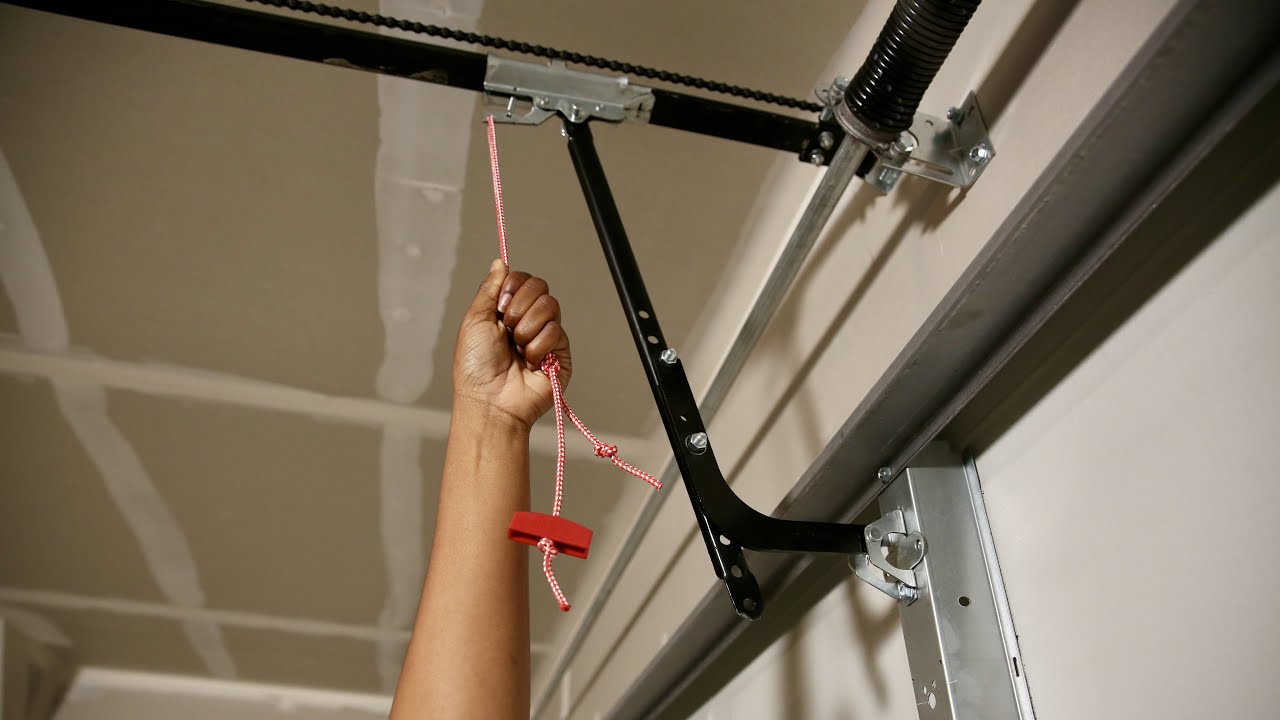
- Emergency release cord: Usually a red handle hanging from the opener rail.
- Opener carriage: The part that connects the opener to the door.
Types Of Garage Doors
There are several common types, each with slightly different mechanisms:
| Type | Description | Manual Operation Difficulty |
|---|---|---|
| Sectional | Made of horizontal panels that bend as the door opens | Moderate |
| One-piece tilt-up | Single solid panel that tilts up and over | Moderate to Hard |
| Roll-up | Rolls into a coil above the opening | Easy to Moderate |
| Side-hinged | Opens outward like regular doors | Easy |
Sectional doors are most common in the US. The process described in this guide applies best to them, but most tips are relevant for all types.
Safety Precautions Before You Start
Manual operation is safe if done correctly, but there are risks. Garage doors are under high tension and can cause injury if mishandled.
- Disconnect power: Unplug the opener so it doesn’t activate unexpectedly.
- Clear the area: Remove objects, pets, and children from the door path.
- Check the springs: If you see a broken spring or hear a loud snap, do not attempt to lift the door. Call a professional.
- Wear gloves: Protect your hands from sharp edges or pinches.
- Work with help: If your door is heavy, ask someone to assist you.
A common mistake is ignoring signs of spring failure (like the door being very hard to lift). Forcing a door with a broken spring can cause injury or further damage.
Step-by-step Guide: How To Open Your Garage Door Manually
Here’s a practical, detailed process for safely opening your garage door by hand. While steps may vary, these instructions fit most modern systems.
1. Ensure It’s Safe
Before touching anything, make sure:
- The garage is secure and well-lit.
- The opener is unplugged or the breaker is off.
- You have a clear exit path.
2. Locate The Emergency Release Cord
Find the emergency release cord—typically a red rope or handle hanging from the opener trolley (the rail above the door).
- It hangs down about 6–8 feet, within reach.
- Do not pull it yet; read the next steps first.
3. Make Sure The Door Is Fully Closed
If possible, only disengage the opener when the door is fully closed. If you disconnect it while open, the door could slam shut due to weight, especially if a spring is failing.
If your car is trapped and you must open a closed door, continue carefully.
4. Pull The Emergency Release Cord
Firmly pull the cord down and away from the door. This action disconnects the opener carriage from the door.
- You may hear a click as it releases.
- The opener will no longer control the door.
5. Lift The Door Manually
Stand with feet apart, knees bent for balance. Grip the door handle (usually at the bottom center).
- Lift straight up in a smooth, controlled motion.
- If the door feels extremely heavy or won’t move, stop. The spring may be broken.
- If it moves easily, continue lifting until fully open.
Pro tip: If the door is hard to lift, ask someone to help from the other side if possible.
6. Secure The Door In The Open Position
Garage doors won’t stay open by themselves if the springs are weak. You must prop it open for safety.
- Use a sturdy object (like a 2×4 piece of wood) under the door.
- Never trust the door to stay up on its own unless you know the springs are good.
7. To Reconnect, Close The Door And Reset The Opener
When power returns or repairs are done:
- Pull the emergency release cord toward the opener unit, not down.
- This re-engages the carriage.
- Use the remote or wall switch to test. The opener should grab the door and operate as normal.
Some openers reconnect automatically when the motor is run; for others, you may need to push the trolley until it clicks back in.
What To Do If The Door Is Stuck
Doors can jam or refuse to move for several reasons. Here’s how to troubleshoot:
| Problem | Possible Cause | What To Do |
|---|---|---|
| Door won’t lift | Broken spring, locked door, or jammed track | Check for visible damage; call a pro for springs |
| Door lifts unevenly | Cable off pulley, bent track | Inspect cables, realign track if safe |
| Door won’t stay open | Weak springs | Prop the door with wood; get springs serviced |
| Handle missing | Older door, lost hardware | Lift from the bottom edge carefully |
Don’t try to force a stuck door, especially if you suspect a spring issue. The tension can be dangerous.
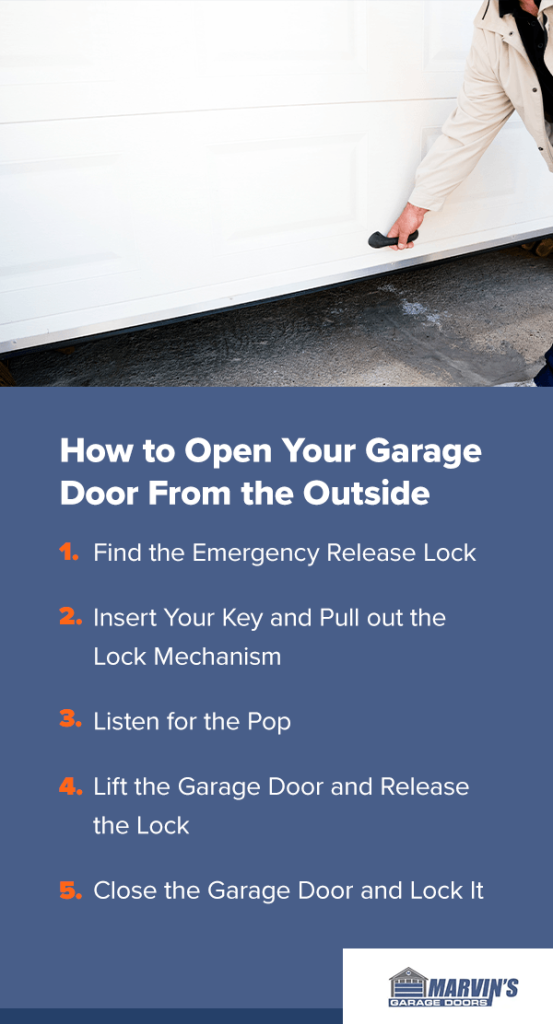
How To Open Your Garage Door From The Outside
Getting locked out is a common problem, especially during a power cut. Some garage doors allow manual access from the outside.
Exterior Emergency Release Lock
Many newer doors have a keyed emergency release outside:
- Look for a small lock (usually in the center of the top door panel).
- Insert your key, turn, and pull out the lock cylinder.
- Attached is a cable—pull to disconnect the opener inside.
- Now you can lift the door by hand.
If you don’t have this feature, consider having it installed for security and peace of mind.
Alternative Methods
If you’re locked out and don’t have an exterior release:
- Check if another door or window provides access.
- Call a locksmith or garage door professional.
Never try to force the door with tools or brute strength. This can damage the door and void warranties.

Safety Tips And Common Mistakes To Avoid
Manual garage door operation is simple, but mistakes can be costly or dangerous.
Common Mistakes
- Forgetting to disconnect power. The opener could activate while you’re working.
- Releasing the emergency cord while the door is open. This can cause the door to crash down.
- Trying to lift a door with a broken spring. The door is much heavier than you think.
- Failing to secure the open door. It can fall unexpectedly.
- Ignoring unusual noises or resistance. These signal a mechanical problem.
Safety Tips
- Always have your mobile phone nearby in case you need help.
- Do not let children operate the door manually.
- Use proper lifting form—keep your back straight, bend your knees.
- Schedule regular professional maintenance to keep springs and tracks in good shape.
Special Cases: Handling Unique Garage Door Situations
Not all garage doors are built the same. Here’s what to do if your setup is different.
Manual (non-automatic) Garage Doors
Some older or side-hinged doors have no opener or emergency cord. Simply unlock and open as you would any regular door.
- Lubricate hinges and tracks regularly for smooth operation.
Garage Doors With Broken Springs
If you suspect a broken spring (loud bang, loose cable, crooked door), do NOT try to open it yourself.
- Contact a certified technician immediately.
- Springs are under extreme tension and can cause injury.
Smart Garage Door Systems
Smart openers may have backup batteries or mobile app features for manual override. Check your manufacturer’s manual for specifics.
- If all else fails, use the emergency cord as described above.
Preventive Maintenance: Keeping Your Door Ready For Manual Use
One of the most overlooked garage door tips is regular preventive maintenance. This not only extends the life of your door but ensures you can operate it manually in emergencies.
Monthly Checks
- Test the emergency release cord to ensure it’s not jammed or stiff.
- Check the balance of the door by lifting it halfway—if it stays, springs are good.
- Listen for squeaks or grinding noises.
Seasonal Tasks
- Lubricate all moving parts (rollers, hinges, tracks) with a silicone-based spray.
- Inspect weather seals for wear.
- Tighten any loose bolts or screws.
Professional Service
Schedule a professional inspection every 1–2 years. They can:
- Adjust spring tension
- Replace worn cables and rollers
- Test opener safety features
This small investment prevents unexpected breakdowns and makes sure you’re ready if you need to open the door by hand.
When To Call A Professional
While many issues can be handled by a careful homeowner, some require expert help:
- Broken or loose springs
- Frayed or snapped cables
- Bent or damaged tracks
- Opener motor problems
Attempting DIY repairs on these parts can be dangerous. Technicians have the tools and training to handle high-tension springs safely.
According to the International Door Association, over 20,000 garage door injuries happen annually in the US—mostly due to DIY repairs. When in doubt, call a pro.
Security Considerations
Manual operation can leave your garage vulnerable. Here’s how to stay secure:
- Always lock the garage door manually after opening if you’ll be away.
- Consider adding a padlock to the inside track.
- If you use an exterior emergency release, make sure it’s a high-quality, pick-resistant lock.
- Reconnect the opener as soon as possible after power returns.
Comparing Manual Vs Automatic Operation
Understanding the pros and cons helps you prepare for emergencies.
| Feature | Manual Operation | Automatic Operation |
|---|---|---|
| Speed | Slower, depends on strength | Fast, with remote |
| Safety | Safe if done properly | Safe with sensors |
| Convenience | Requires effort | Very convenient |
| Power Outage | Always works | May not work |
| Security | Manual locks needed | Auto-locks available |
Manual operation is reliable, but less convenient. Always know how to use both, so you’re never caught off guard.
Real-world Examples: Stories From Homeowners
Sometimes, learning from others’ experiences is the best teacher.
- Case 1: During a snowstorm, the Smith family lost power. They didn’t know about the emergency release, so they were trapped for hours until a neighbor helped.
- Case 2: A homeowner forced a stuck door, causing a cable to snap and injure his hand. Afterward, he learned that a broken spring was the culprit.
- Case 3: An elderly couple regularly test their emergency release and keep a flashlight by the door. When the opener failed, they exited safely in minutes.
Lesson: Familiarize yourself and all family members with the manual process before an emergency happens.
Useful Upgrades For Easier Manual Operation
Consider these enhancements for safety and convenience:
- Exterior emergency release lock: Adds an outside manual option.
- Battery backup opener: Keeps your door working even during power outages.
- Manual locking bar: Provides extra security when opener is disengaged.
- Lighted emergency cord: Easy to find in the dark.
- Smartphone alerts: Notifies you if the door is left open.
These upgrades are affordable and give you greater control over your garage access.
Additional Resources
For in-depth technical details and diagrams, the Family Handyman provides a thorough step-by-step manual and troubleshooting guide.
You can also consult your garage door manufacturer’s website for model-specific instructions and safety guidelines.
Frequently Asked Questions
How Do I Open My Garage Door Manually From Outside If I’m Locked Out?
If your garage door has an exterior emergency release lock, insert your key, turn, and pull out the lock cylinder. Then pull the attached cable to disconnect the opener. This allows you to lift the door by hand. If you do not have this feature, call a professional or locksmith for help.
Is It Dangerous To Open A Garage Door Manually?
It can be, especially if a spring is broken or there’s visible damage to cables or tracks. Do not attempt manual operation if the door feels very heavy or stuck. In these cases, contact a trained technician to avoid injury.
Why Is My Garage Door So Hard To Lift By Hand?
A garage door should be fairly balanced and easy to lift when the springs are intact. If it’s very heavy or resists movement, a spring may be broken or worn out. Do not force it—springs hold a lot of tension and can snap suddenly.
Will Manual Operation Affect My Garage Door Opener?
No, using the emergency release as designed will not damage your opener. When you reconnect the opener (by running the motor or sliding the carriage), it should work as before. Forcing the door while connected to the opener, however, can cause damage.
How Often Should I Test The Emergency Release Function?
Test the emergency release cord every six months. Make sure it moves freely and the door can be operated manually. Regular checks help you spot problems before an emergency occurs.
Opening your garage door manually is an essential skill for every homeowner. With the right knowledge and preparation, you’ll be ready for power outages, equipment failures, or emergencies. Stay safe, maintain your door, and review these steps regularly so you’re never caught off guard.