
The hum of a garage door opener is a familiar sound, a signal that your vehicle is safely tucked away or ready for its next journey. For decades, incandescent and halogen bulbs have been the standard lighting solution for these essential devices. However, with the advent of energy-efficient and long-lasting LED technology, many homeowners are asking: can you use LED bulbs in a garage door opener? The answer is a resounding yes, but it’s not as simple as just screwing in a new bulb. There are specific considerations and potential pitfalls to be aware of to ensure compatibility and optimal performance.
This transition to LED lighting in garage door openers offers significant advantages, from reduced energy consumption and lower electricity bills to a longer lifespan, minimizing the need for frequent replacements. Yet, the unique electromagnetic environment within a garage door opener system can sometimes interfere with the sensitive electronics of LED bulbs, leading to unexpected operational issues.
Understanding these nuances is crucial for a smooth and successful upgrade. We’ll explore the compatibility, benefits, potential challenges, and best practices for using LED bulbs in your garage door opener, ensuring you can enjoy brighter, more efficient lighting without compromising your opener’s functionality.
Key Takeaways
- Compatibility is High, But Not Universal: Most modern garage door openers are designed to work with LED bulbs, but older models may experience interference.
- LED Benefits: LEDs offer significant energy savings, a much longer lifespan, and brighter, more consistent light compared to traditional bulbs.
- Potential Interference: The radio frequency (RF) interference from some LED bulbs can disrupt the opener’s signal, preventing it from functioning correctly.
- Opener-Specific LEDs: Manufacturers now offer LEDs specifically designed for garage door openers, engineered to minimize RF interference.
- Choosing the Right LED: Look for bulbs labeled “garage door opener compatible,” check your opener’s manual, and consider bulb wattage and base type.
- Troubleshooting: If issues arise, try a different LED bulb, check for RF interference sources, or revert to an incandescent bulb.
- Safety First: Always disconnect power to the opener before replacing bulbs.
Understanding Garage Door Opener Lighting
Garage door openers typically house a light bulb within the motor unit. This light serves multiple purposes: illuminating the garage interior when the door is in operation, providing a safety light, and sometimes acting as a diagnostic indicator. Historically, these openers were designed with incandescent or halogen bulbs in mind. These traditional bulbs generate light through a heated filament, a process that produces heat and consumes more energy but is generally less susceptible to the radio frequency (RF) interference that can plague modern electronics.
The motor unit of a garage door opener contains sensitive electronic components, including a radio receiver that communicates with your remote control or keypad. When you press a button on your remote, it sends a radio signal that the opener’s receiver picks up.
This signal tells the opener to activate, initiating the process of lifting or lowering the garage door. The design of the opener’s housing and internal circuitry plays a role in how well it shields these sensitive components from external electromagnetic noise, including that generated by nearby electronic devices.
The Role Of The Opener Light Bulb
The primary function of the light bulb in a garage door opener is to provide illumination. This is particularly useful for safety, preventing trips and falls when entering or exiting the garage in low light conditions. Many openers are designed with automatic timers, so the light will turn on when the door begins to move and then shut off after a preset period, typically between 1.
5 to 5 minutes, depending on the model. Some advanced models allow for customization of this duration. Beyond general illumination, the light bulb can sometimes serve as a visual cue for the opener’s status. For example, a blinking light might indicate a safety sensor obstruction or an error code, helping homeowners diagnose issues.
Incandescent Vs. Halogen: The Traditional Choices
For many years, incandescent bulbs were the de facto standard for garage door openers. These bulbs work by passing an electric current through a thin tungsten filament, causing it to heat up and glow. They are inexpensive to purchase and are generally compatible with all garage door openers without causing interference. However, they are incredibly inefficient, converting most of their energy into heat rather than light, and have a very short lifespan, often lasting only about 1,000 hours.
Halogen bulbs, a type of incandescent lamp, offer slightly better efficiency and a longer lifespan than standard incandescents. They use a halogen gas that allows the filament to operate at a higher temperature, producing brighter light and prolonging bulb life. While an improvement over standard incandescents, they still fall short of LED technology in terms of energy savings and longevity and can also generate significant heat.
Why The Need For Change?
The drive to switch from incandescent and halogen bulbs to LEDs stems from several compelling reasons:
- Energy Efficiency: Incandescent bulbs are notoriously inefficient, with up to 90% of the energy consumed being released as heat. LEDs, on the other hand, convert a much higher percentage of energy into light, leading to significant energy savings.
- Lifespan: Traditional bulbs have a limited lifespan, often requiring replacement every year or two. LEDs can last 25,000 to 50,000 hours or more, meaning they can last for decades under normal use.
- Durability: LEDs are solid-state devices with no filament, making them much more resistant to shock and vibration.
- Reduced Heat Output: The lower heat output of LEDs is beneficial in enclosed spaces like garage door opener motor units, potentially reducing strain on internal components.
- Environmental Impact: Reduced energy consumption and fewer discarded bulbs contribute to a more sustainable footprint.
The Promise And Pitfalls Of Led Bulbs In Garage Door Openers
LED (Light Emitting Diode) technology represents a significant leap forward in lighting. These bulbs use semiconductors to emit light when an electric current passes through them. They are lauded for their exceptional energy efficiency, remarkable longevity, and the quality of light they produce.
However, when it comes to integrating them into garage door openers, a unique set of challenges can arise due to their electronic nature.
Benefits Of Using Leds
The advantages of switching to LED bulbs are substantial and directly address the shortcomings of traditional incandescent and halogen options.
- Dramatic Energy Savings: LEDs consume up to 80% less energy than incandescent bulbs for the same amount of light output. For a garage that might be lit for several hours a week, this can translate into noticeable savings on your electricity bill over time. For example, a 10-watt LED can produce the same light output as a 60-watt incandescent bulb.
- Exceptional Longevity: The lifespan of an LED bulb is its most celebrated feature. While an incandescent bulb might last 1,000 hours, an LED can last 25,000 to 50,000 hours or more. This means a single LED bulb could potentially last for 20-25 years in a garage door opener that cycles its light for a few minutes each day. This significantly reduces the hassle and cost of frequent bulb replacements.
- Brighter, Better Light Quality: LEDs offer a cleaner, brighter light that can be more evenly distributed than the localized light from incandescent bulbs. They are also available in various color temperatures, from warm white to cool daylight, allowing you to customize the ambiance of your garage.
- Reduced Heat Generation: Unlike incandescent bulbs that convert most energy into heat, LEDs produce very little heat. This is advantageous for the sensitive electronics within a garage door opener, as excessive heat can degrade components over time.
- Vibration and Shock Resistance: LEDs are solid-state devices without fragile filaments, making them highly resistant to vibrations and physical shock. This durability is beneficial in an environment like a garage, which can experience vibrations from vehicles and the opener itself.
The Rf Interference Challenge
The primary obstacle when using standard LED bulbs in garage door openers is radio frequency (RF) interference. Garage door openers rely on radio signals to communicate with remotes and keypads. Many standard LED bulbs, particularly older or cheaper models, emit RF noise as a byproduct of their internal electronics (the driver circuit that converts AC power to DC for the LEDs). This electromagnetic noise can interfere with the opener’s receiver, causing it to miss or misinterpret the signals from your remote.
This interference can manifest in several frustrating ways:
- Remote Not Working: The most common issue is the remote control failing to operate the garage door. You press the button, but nothing happens, or the opener only responds intermittently.
- Reduced Range: The effective range of your remote might be significantly diminished, requiring you to be much closer to the opener for it to register the signal.
- Opener Malfunctions: In some cases, the interference can cause the opener to behave erratically, such as opening or closing partially, or not responding at all.
The frequency of this interference is often around 315 MHz or 390 MHz, which are common frequencies used by garage door openers in North America. The driver circuitry within standard LEDs can generate broadband RF noise that spills into these critical frequencies.
Identifying Potential Interference
Several factors can increase the likelihood of RF interference from LED bulbs:
- Bulb Quality: Lower-quality LED bulbs, especially those without proper shielding or filtering in their driver circuits, are more prone to emitting RF noise.
- Opener Age and Design: Older garage door openers might have less robust shielding around their receiver components, making them more susceptible to external interference.
- Bulb Wattage and Brightness: While not a direct cause, higher wattage or brighter LEDs might sometimes contain more complex driver circuits that are more likely to generate interference.
- Proximity: The closer the LED bulb is to the opener’s receiver antenna, the greater the potential for interference.
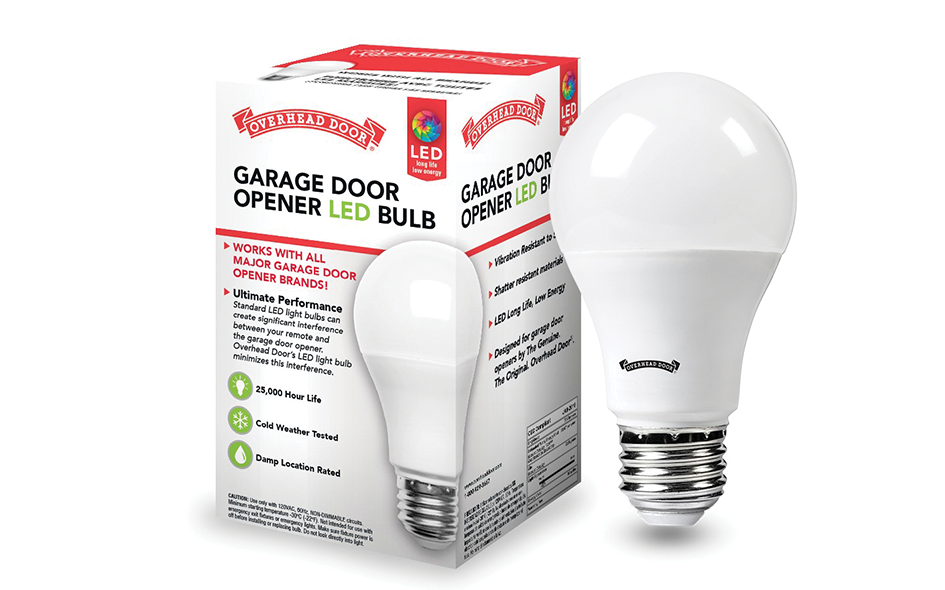
Credit: www.overheaddoor.com
Choosing The Right Led Bulb For Your Garage Door Opener
Given the potential for RF interference, selecting the correct LED bulb is crucial for a successful upgrade. Fortunately, manufacturers have recognized this issue and developed solutions.
Look For “garage Door Opener Compatible” Labels
The most straightforward approach is to purchase LED bulbs specifically designed and labeled for use in garage door openers. Brands like Genie, Chamberlain, LiftMaster, and others now produce LED bulbs engineered to minimize RF interference. These bulbs often undergo rigorous testing to ensure they don’t disrupt the opener’s communication signals.
They typically feature internal shielding and filtering to contain their electromagnetic emissions.
Check Your Opener’s Manual
Before purchasing any LED bulb, consult your garage door opener’s user manual. Most modern opener manuals will specify the type of bulb recommended, including wattage limits, base type (e. g. , E26/Medium standard base), and whether LED compatibility is supported.
Some manuals may even list specific compatible LED bulb models or brands. If your manual explicitly warns against using LEDs or doesn’t mention them, proceed with caution or opt for a manufacturer-specific LED.
Understand Wattage And Lumens
- Wattage: This refers to the power consumption of the bulb. Garage door openers typically have a maximum wattage limit for their light bulb socket to prevent overheating or damaging the opener’s electrical components. This limit is often around 100 watts for incandescent bulbs, but for LEDs, you’ll want to choose bulbs with a much lower actual wattage (e.g., 10-15 watts) that provide equivalent brightness. Always adhere to the maximum wattage specified in your opener’s manual.
- Lumens: This measures the brightness of the light. LEDs are much more efficient, so a lower wattage LED can produce the same or even higher lumen output as a higher wattage incandescent. For a garage, consider a lumen output that provides adequate visibility, typically between 800 and 1600 lumens.
Base Type And Shape
Ensure the LED bulb you choose has the correct base type to fit your opener’s socket. The most common base type for garage door openers is the E26 (standard medium screw base), identical to most household lamps. Also, consider the bulb’s shape and size. Some openers have tight enclosures, so a compact A19 shape or a smaller profile bulb might be necessary. Measure the available space if you’re unsure.
Consider Opener-specific Leds
Many major garage door opener brands now offer their own branded LED bulbs. These are often the safest bet because they are guaranteed to be compatible with their respective opener models. For example, LiftMaster and Chamberlain offer LED bulbs designed to work seamlessly with their openers.
While these might be slightly more expensive than generic LEDs, the peace of mind and guaranteed performance are often worth the investment.
Example: A homeowner with a LiftMaster 8500 opener might look for the LiftMaster 8500LED bulb, specifically designed to avoid interference with the opener’s radio signals.
Comparison Of Bulb Types For Garage Door Openers
Here’s a look at how different bulb types stack up for garage door opener use:
| Feature | Incandescent | Halogen | Standard LED | Garage Door Opener LED |
|---|---|---|---|---|
| Energy Efficiency | Very Low | Low | High | High |
| Lifespan | Short (approx. 1,000 hrs) | Medium (approx. 2,000 hrs) | Very Long (25,000+ hrs) | Very Long (25,000+ hrs) |
| RF Interference Risk | Very Low | Low | High | Very Low |
| Heat Output | High | Medium-High | Low | Low |
| Cost (Initial) | Low | Medium | Medium | Medium-High |
| Availability | High | High | High | Moderate |
| Compatibility | Universal | High | Variable | High (with specific openers) |
Installation And Troubleshooting Common Issues
Installing an LED bulb in your garage door opener is generally a straightforward process, similar to replacing any standard light bulb. However, if you encounter problems, there are specific troubleshooting steps to follow.
Step-by-step Installation Process
- Disconnect Power: Crucially, before attempting to replace the bulb, always disconnect the power to your garage door opener. This can be done by unplugging the unit from the electrical outlet or by turning off the corresponding circuit breaker. This is a vital safety precaution to prevent electrical shock.
- Locate the Bulb Housing: The light bulb is typically located in the motor unit of the garage door opener, often covered by a protective lens or cover.
- Remove the Lens/Cover: This usually involves unscrewing a few screws or releasing clips that hold the lens in place. Refer to your opener’s manual if you’re unsure how to remove it.
- Remove the Old Bulb: Once the lens is off, carefully unscrew the old incandescent or halogen bulb. Be mindful that it might be hot if recently used.
- Install the New LED Bulb: Screw in the new LED bulb gently but firmly. Ensure it’s seated correctly in the socket. Do not overtighten.
- Replace the Lens/Cover: Reattach the protective lens or cover, ensuring all screws or clips are secured.
- Restore Power: Plug the opener back in or turn the circuit breaker back on.
- Test the Opener and Light: Test the garage door opener using your remote control and keypad. Also, check that the LED light illuminates correctly when the door is activated.
Troubleshooting Rf Interference
If your garage door opener malfunctions or your remote stops working after installing an LED bulb, RF interference is the most likely culprit. Here’s how to troubleshoot:
- Try a Different LED Bulb: If you used a standard LED, try a different brand or model known for compatibility, or ideally, a bulb specifically designed for garage door openers. Sometimes, even within the same brand, different models can have varying interference characteristics.
- Test with an Incandescent Bulb: As a diagnostic step, temporarily replace the LED bulb with a known-good incandescent or halogen bulb. If the opener functions correctly with the incandescent bulb, it strongly suggests the LED is causing the interference.
- Check Opener Antenna: Ensure the opener’s antenna (usually a small wire hanging from the motor unit) is not obstructed or damaged. Sometimes, simply repositioning the antenna can improve signal reception.
- Reduce Other RF Sources: While less common, other electronic devices in the garage (like certain smart home hubs, wireless routers, or even some fluorescent lights) can potentially cause interference. Try turning off other devices temporarily to see if it resolves the issue.
- Consider Bulb Placement: If your opener has multiple light sockets, try installing the LED in a different socket if possible, or ensure it’s not directly adjacent to the receiver if space allows.
- Shielding (Advanced): In rare cases, some users have reported success by wrapping the LED bulb in a small amount of RF shielding material (like conductive fabric or foil), though this is not a standard recommendation and should be done with extreme caution to avoid overheating.
When To Revert To Incandescent/halogen
If you’ve tried multiple compatible LED bulbs and still experience persistent interference, or if your garage door opener is particularly old and lacks adequate shielding, it might be best to revert to a traditional incandescent or halogen bulb. While less energy-efficient and shorter-lived, their reliability in preventing RF interference is a significant advantage in such scenarios.
The cost savings from LEDs might not be worth the frustration of a malfunctioning garage door opener.
Safety Considerations And Best Practices
Working with electrical appliances like garage door openers requires adherence to safety protocols. When dealing with light bulbs, these precautions are particularly important.
Electrical Safety First
- Always Disconnect Power: As mentioned, this is the most critical safety step. Never attempt to change a bulb while the opener is powered on. Unplug the unit or switch off the circuit breaker.
- Handle Bulbs Carefully: While LEDs are more durable than glass incandescent bulbs, they can still be damaged. Handle them gently to avoid dropping or breaking. If a bulb does break, ensure you clean up any fragments safely and wear gloves.
- Check for Damage: Before installing a new bulb, inspect the socket for any signs of damage, corrosion, or loose wiring. If you notice any issues, do not install the bulb and consider consulting a qualified technician.
Opener Compatibility And Maintenance
- Adhere to Wattage Limits: Exceeding the maximum wattage specified by the manufacturer can damage the opener’s internal circuitry and pose a fire hazard. Always check your manual.
- Regular Maintenance: While switching to LEDs is a lighting upgrade, don’t forget other essential garage door opener maintenance. Regularly lubricate the tracks and rollers lubricate garage door rollers, check the chain tension adjust chain tension, and ensure safety sensors are aligned. Proper maintenance ensures the overall longevity and safe operation of your system.
- Firmware Updates (Smart Openers): If you have a “smart” garage door opener, check if firmware updates are available. Sometimes, manufacturers release updates that can improve compatibility with newer accessories, including LED lighting.
Environmental Factors
- Extreme Temperatures: While LEDs are generally robust, extremely high or low temperatures can affect their performance and lifespan. Ensure your opener’s motor unit is not excessively exposed to direct sunlight or freezing conditions, which could impact the bulb and the opener itself.
- Moisture: Garages can sometimes be damp environments. Ensure the light bulb housing and the opener unit itself are properly sealed to prevent moisture from reaching the electrical components.
Real-world Examples And Scenarios
Understanding how LED bulbs perform in real-world garage door opener applications can provide valuable insights.
Scenario 1: The Frustrated Homeowner
John, a homeowner with a 10-year-old Chamberlain garage door opener, decided to upgrade his garage lighting by switching his 75-watt incandescent bulbs to energy-efficient 10-watt LEDs. Immediately after installation, his remote control stopped working reliably. He had to be within a few feet of the opener for it to respond, and sometimes it wouldn’t respond at all. After trying a second set of standard LEDs with the same result, John consulted his opener’s manual. It recommended using only incandescent or halogen bulbs up to 75W and explicitly warned against LEDs due to potential RF interference. He then purchased a specific garage door opener LED bulb from a reputable brand. Upon installation, his remote control worked perfectly from the usual distance, and the light was brighter and more consistent. This illustrates the importance of choosing opener-specific LEDs.
Scenario 2: The Tech-savvy Upgrader
Sarah recently purchased a new LiftMaster garage door opener that advertised LED compatibility. She opted for a high-quality, 1200-lumen LED bulb from a well-known lighting manufacturer, ensuring it had an E26 base and was under the opener’s 100W maximum limit.
The installation was seamless, and the opener functioned flawlessly. The brighter LED light significantly improved visibility in her garage, making it safer and more pleasant to use. She also appreciated the long lifespan, knowing