
A garage door opener is one of those modern conveniences you barely notice—until it stops working. Suddenly, you’re stuck outside in the rain, or your car is trapped inside. Fixing a garage door opener might seem complicated, but most problems have simple solutions.
With some basic tools, clear steps, and a little patience, you can often get your opener working again without calling a professional. This guide covers everything you need to know to diagnose, repair, and maintain your garage door opener, helping you save both time and money.
Understanding How A Garage Door Opener Works
Before you start fixing anything, it’s important to know how a garage door opener operates. Most openers use a motor to pull a chain, belt, or screw, which lifts or lowers the door. Sensors prevent the door from closing if something is in the way. Remotes and wall switches send signals to the opener, telling it what to do.
There are three main types:
- Chain drive: Uses a metal chain. Noisy but affordable.
- Belt drive: Uses a rubber belt. Quieter but usually costs more.
- Screw drive: Uses a threaded rod. Requires less maintenance but can be noisy.
Other important parts include the remote control, wall switch, safety sensors, lights, and the circuit board. When your opener fails, the problem is usually in one of these parts.
Common Garage Door Opener Problems
Before you fix anything, you need to know what’s wrong. Here are the most frequent issues:
- The garage door doesn’t respond to the remote or wall switch.
- The door only opens or closes halfway.
- The motor runs, but the door doesn’t move.
- The opener makes strange noises.
- The safety sensors won’t let the door close.
- The opener light blinks or stays on.
- The remote control doesn’t work.
- The wall switch works but the remote doesn’t (or vice versa).
- The door reverses before or after hitting the floor.
- The opener moves slowly or with jerks.
Each of these problems can have multiple causes, but most are easy to check and fix.
Safety First: Precautions Before Repair
Garage doors are heavy and under tension. Safety comes first. Always:
- Disconnect the power before opening the opener’s cover.
- Never remove or adjust the torsion spring—this is dangerous.
- Use a step ladder for high parts.
- Wear gloves and safety glasses.
- Keep children and pets away during repairs.
If you feel unsure at any step, stop and call a professional.
Diagnosing The Problem
Start by observing what happens when you try to use the opener. Does anything move? Does the light blink? Is there a clicking sound? These clues help you find the problem area.
Basic Diagnostic Steps
- Check the power source. Is the opener plugged in? Is the outlet working?
- Listen. Does the opener make any noise?
- Test both remote and wall switch. If only one works, the problem is likely with that control.
- Inspect the door. Can you lift it by hand? Is it stuck or heavy?
- Look for blinking lights. Many openers flash a code to help you diagnose.
Write down any unusual behavior. This will help as you move through the troubleshooting steps.
Fixing Power And Electrical Issues
No lights, no sounds, and no movement usually means a power problem.
Steps To Fix Power Issues
- Check the electrical outlet. Plug in another device (like a lamp) to see if it works.
- Reset the circuit breaker or replace the fuse if needed.
- Inspect the power cord. Look for damage or loose plugs.
- Check the opener’s internal fuse (if your model has one). Replace if blown.
- Test the wall switch wiring. Loose wires can cause the switch to fail.
If you restore power and the opener still does not respond, the issue may be with the circuit board.
When To Replace The Circuit Board
Circuit boards can fail from power surges or age. If the opener gets power (lights turn on), but the motor won’t run, you may need a new circuit board. Most brands sell replacement boards. Installation is usually as simple as unplugging the old board and attaching the new one.
Remote Control And Wall Switch Problems
If your remote control or wall switch doesn’t work, check these areas:
Fixing The Remote Control
- Replace the batteries. Weak batteries are a common cause.
- Reprogram the remote. Sometimes, the code is lost.
- Check for interference. Wireless devices or LED bulbs can block the signal.
- Test the remote near the opener. If it only works up close, the antenna may be damaged or bent.
- Replace the remote if none of these steps work.
Fixing The Wall Switch
- Remove the switch cover and check the wiring.
- Tighten any loose wires or replace broken ones.
- Test the switch with a multimeter. If it’s faulty, buy a new switch.
Many openers have a lock feature that disables remote controls. Make sure this feature is off.
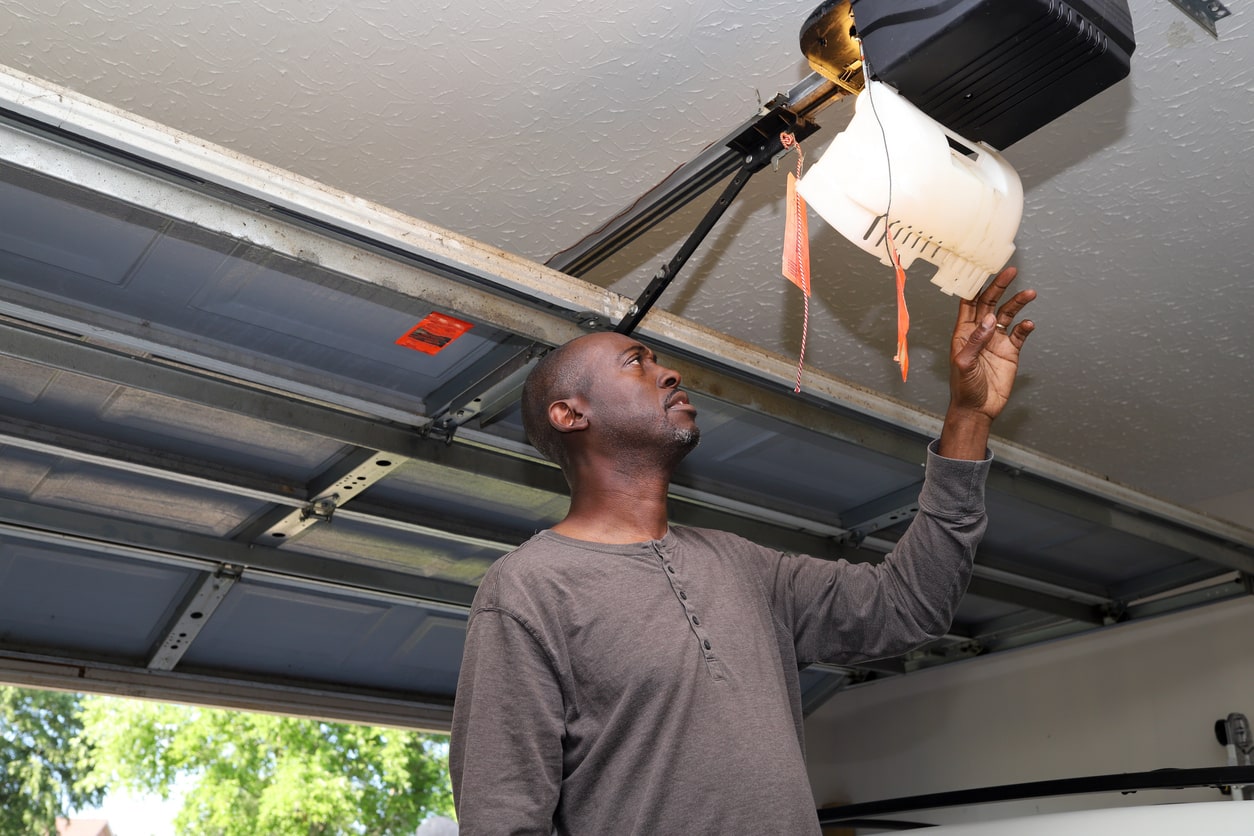
Dealing With Door Movement Issues
If the motor runs but the door doesn’t move, or the door only moves partway, focus on the door mechanism.
Checking The Door’s Balance
Disconnect the opener (usually by pulling the release handle) and try lifting the door by hand. It should move smoothly and stay halfway open. If it’s heavy or slams shut, the springs may need adjustment—this is a job for a professional.
Inspecting The Drive System
Different openers use chains, belts, or screws. Open the cover and look for:
- Broken or loose chains/belts. Tighten or replace as needed.
- Worn sprockets or gears. Replace if teeth are missing or parts are stripped.
- Obstructions in the track. Clear out dirt, spider webs, or anything else.
Lubricate moving parts with garage door lubricant (not WD-40) to reduce friction.
Fixing Limit Switches
Limit switches tell the opener when to stop. If set wrong, the door may not open or close fully.
- Find the limit adjustment screws (see your opener’s manual).
- Turn the screws in small steps and test after each adjustment.
- The door should stop just above the floor when closing and just above the opener when opening.
Tip: Many beginners forget to test after every small change, leading to confusion. Always make tiny adjustments, then test.
Troubleshooting Safety Sensor Problems
Modern openers have safety sensors that prevent the door from closing if something is in the way.
Common Sensor Problems
- Lights on both sensors should be solid. If one or both are off or blinking, there is a problem.
- Dirty lenses can block the signal.
- Misaligned sensors will not “see” each other.
- Broken wires may prevent power.
Steps To Fix Sensors
- Clean the sensor lenses with a soft cloth.
- Check alignment. Both sensor lights should be on. Loosen the bracket and adjust until both lights are solid.
- Inspect wiring for cuts or loose connections.
- Replace damaged sensors if necessary.
Non-obvious insight: Sometimes, sunlight can interfere with sensors in the afternoon. Try shading the sensors if you notice problems only at certain times of day.
Noises, Jerky Movements, And Slow Operation
If your opener is making strange noises or the door moves in a jerky way, the problem is often mechanical.
Reducing Noise
- Tighten all bolts and screws on the opener and door.
- Lubricate the chain, belt, or screw drive.
- Replace worn rollers with nylon ones for quieter operation.
- Check for loose parts in the opener housing.
Fixing Jerky Or Slow Movement
- Clean the tracks and lubricate as needed.
- Check for bent or damaged tracks and replace if necessary.
- Balance the door (see earlier section).
- Adjust the force setting on the opener if available.
Non-obvious insight: Cold weather can make the grease stiff and slow down the door. Use a low-temperature lubricant if you live in a cold area.
Dealing With Reversing Or Non-closing Doors
Sometimes, the garage door reverses before or after hitting the floor, or refuses to close.
Causes And Fixes
- Limit switch setting is off. Adjust as described above.
- Safety sensors are blocked or misaligned. Fix the alignment.
- Obstruction in the track or on the floor. Clear any objects.
- Door is unbalanced. Get professional help for the springs.
Example: If the door hits the floor and immediately goes up, the close limit is set too far. Adjust it until the door closes fully and stays down.
Fixing Garage Door Opener Lights
Garage door opener lights are useful, but they can also indicate problems.
Light Won’t Turn On
- Check the bulb. Replace with a new one (use the type recommended in the manual).
- Check the socket for corrosion or damage.
- Test the circuit board if the bulb and socket are good.
Light Won’t Turn Off
- Check for a stuck relay on the circuit board.
- Test the wall control. Some wall controls have a light switch.
Tip: Avoid using LED bulbs unless the manual says they are compatible. Some LED bulbs can interfere with the remote signal.
When To Call A Professional
Some garage door opener problems are too dangerous or complicated for DIY fixes:
- Broken or stretched springs
- Snapped cables
- Bent or broken door panels
- Major electrical faults
- Stripped gears inside the motor
If you see any of these, it’s safer to call a licensed technician. Attempting these repairs yourself can cause injury or further damage.
Preventive Maintenance For Garage Door Openers
The best way to avoid repairs is regular maintenance. Here’s what you should do every 6-12 months:
- Check and tighten all hardware.
- Lubricate moving parts (chains, rollers, hinges, and tracks).
- Test the door balance and opener force.
- Clean the sensors and tracks.
- Replace remote control batteries once a year.
A little time spent now can prevent costly repairs in the future.
Comparison Of Garage Door Opener Types
To help you understand which type of opener you have (or may want in the future), see this comparison:
| Type | Noise Level | Maintenance | Cost | Durability |
|---|---|---|---|---|
| Chain Drive | Loud | Medium | Low | High |
| Belt Drive | Quiet | Low | Medium | Medium |
| Screw Drive | Moderate | Low | Medium | Medium |
| Direct Drive | Very Quiet | Low | High | High |
Essential Tools For Garage Door Opener Repair
You don’t need a workshop full of tools to fix most problems. Here are the basics:
| Tool | Purpose |
|---|---|
| Screwdrivers | Open covers, adjust switches |
| Adjustable wrench | Tighten bolts and nuts |
| Multimeter | Test electrical circuits |
| Pliers | Bend and cut wires |
| Step ladder | Reach high areas |
| Garage door lubricant | Reduce friction |
Having these tools ready saves time and makes repairs easier.
Common Mistakes To Avoid
Many beginners make errors that can cause more problems:
- Forgetting to disconnect power before repairs. This can cause shocks.
- Using the wrong lubricant (like WD-40). Always use a product made for garage doors.
- Making large limit or force adjustments. Always adjust in small steps.
- Ignoring safety warnings. Don’t touch springs or cables.
- Skipping regular maintenance. Small issues become big if left alone.
Avoid these mistakes, and your repairs will be safer and more successful.
Step-by-step Example: Fixing A Non-working Remote
Let’s walk through a simple real-world repair.
- Remote doesn’t open the garage door.
- Replace the battery. Still doesn’t work.
- Test the wall switch. It works, so the opener is fine.
- Try the remote near the opener. Still no response.
- Check the opener’s antenna. It’s hanging down—good.
- Reprogram the remote using the learn button on the opener. Still nothing.
- Try a different remote. It works. The old remote is bad.
- Buy a replacement remote and program it.
This process avoids unnecessary repairs and saves money.
Cost Comparison: Diy Vs Professional Garage Door Opener Repair
Many people wonder if DIY repair is worth it. Here’s a cost comparison:
| Repair Task | DIY Cost | Professional Cost |
|---|---|---|
| Replace remote | $20-$40 | $60-$120 |
| Replace circuit board | $50-$100 | $150-$250 |
| Sensor adjustment/cleaning | Free-$10 | $80-$150 |
| Lubricate/adjust drive | $10-$20 | $75-$125 |
| Spring replacement | Not recommended | $150-$350 |
DIY saves money on simple tasks, but call a pro for springs or major repairs.

Tips For Long-term Garage Door Opener Health
- Check the door balance every few months.
- Keep the tracks and sensors clean.
- Update remote codes if you lose a remote for better security.
- Use surge protectors to protect the opener’s circuit board.
- Listen for new noises—they often signal developing problems.
These habits help your opener last longer and work better.
Where To Find Parts And Manuals
- Manufacturer websites (Chamberlain, LiftMaster, Genie, etc.) Offer parts and instructions.
- Hardware stores carry universal remotes, lubricants, and basic tools.
- Online retailers like Amazon and Home Depot have sensors, remotes, and circuit boards.
- YouTube and manufacturer support pages have repair videos.
Tip: Always match part numbers before buying replacements.
For more technical information, the Wikipedia: Garage door opener page is a reliable resource.
Frequently Asked Questions
Why Does My Garage Door Only Open A Few Inches And Then Stop?
This usually means the springs are weak or broken, or the limit switch needs adjusting. If the springs are broken, call a professional. For limit switch issues, adjust the settings as described above.
How Do I Reset My Garage Door Opener?
Most openers have a “learn” button near the antenna. Press and hold it until the light blinks, then reprogram your remotes. Always check the manual for your specific brand.
What Should I Do If My Garage Door Opens By Itself?
This could be from a neighbor’s remote on the same frequency, a stuck button, or a wiring problem. Change your remote code and check for stuck wall switch buttons.
Can I Use Led Light Bulbs In My Opener?
Some LED bulbs cause interference with remotes. Use bulbs listed as “garage door opener compatible” or check your opener’s manual for recommendations.
How Often Should I Lubricate My Garage Door Opener?
Lubricate the chain, belt, rollers, and hinges every 6-12 months. Never lubricate the tracks—just clean them.
A working garage door opener is important for daily convenience and security. By following these steps and tips, you can fix most common problems yourself and keep your opener running smoothly for years. If you ever feel unsure, don’t hesitate to call a professional—safety is always the top priority.