
If you’ve ever found yourself standing in front of a garage door that won’t budge, you know how frustrating it can be. Maybe your power is out, or the opener has failed. Suddenly, you need to know how to manually close a garage door.
This is not just about convenience; it’s also about safety and security. An open garage door leaves your belongings and home exposed. Many people don’t realize how simple manual operation can be, or the steps involved. By understanding the process and following a few clear instructions, you can close your garage door quickly and safely, even in an emergency.
Let’s look in detail at how to manually close a garage door, why you might need to do it, and what you should watch out for during the process. You’ll also learn about the different garage door types, tools you might need, and common mistakes to avoid.
This guide is written for anyone who wants a clear and practical approach, whether you’ve never touched a garage door’s mechanism or you just need a reminder.
Understanding Your Garage Door System
Before you start, it helps to know a little about the garage door system in your home. Most modern garage doors use an automatic opener—an electric motor that lifts and lowers the door with the press of a button. However, all garage doors have a way to be operated by hand.
There are two main types of garage doors:
- Sectional doors: These are the most common. They open vertically and slide along tracks into the ceiling.
- One-piece tilt-up doors: These are less common but found in older homes. The whole door tilts out and up as a single piece.
Both types have springs to help lift the heavy weight. Sectional doors usually have either torsion springs (mounted above the door) or extension springs (mounted on the sides). The spring system matters because a broken spring can make the door extremely heavy and dangerous to move manually.
The opener, tracks, springs, and cables all work together. When the opener fails, you need to disconnect it so the door moves freely. That’s where the manual release comes in.
Why You Might Need To Manually Close A Garage Door
There are several situations where you might need to manually close your garage door:
- Power outage: If electricity is out, your automatic opener won’t work.
- Opener malfunction: Electrical or mechanical failure can leave your door stuck open.
- Broken remote or keypad: If you lose or break your remote, you’ll need manual control.
- Maintenance and cleaning: Sometimes you need to move the door by hand for repairs.
- Emergency situations: If you must evacuate and the opener is dead, manual operation is essential.
- Safety: Keeping the door closed protects your home from theft, pests, and weather.
Many homeowners don’t realize how often these problems occur. A study by the International Door Association found that 1 in 5 households has experienced a garage door malfunction in the past two years. Knowing how to respond can save you time, money, and stress.
Safety Precautions Before You Begin
Manual garage door operation is simple in most cases, but safety always comes first. Garage doors are heavy—some weigh over 150 pounds—and under tension from strong springs. A mistake can cause injury or damage.
Follow these safety steps:
- Check for broken springs or cables. If you see gaps in the springs, snapped cables, or hear loud bangs, do NOT try to move the door. Call a professional.
- Clear the area. Make sure pets, kids, and objects are out of the way.
- Use gloves. This helps grip the door and protects your hands from sharp edges.
- Work with a partner if possible. The door may be heavier than you think, especially for older or damaged systems.
- Do not force the door. If it feels stuck, stop and investigate instead of using more strength.
- Be careful with manual release cords. Pulling too quickly can cause the door to drop fast.
- Never stand directly under the door while operating it manually.
Remember, if you are unsure or see signs of damage, consult a professional garage door technician. Safety is more important than speed.
Tools And Materials You Might Need
Most garage doors are designed for manual operation without tools. However, sometimes you’ll need a few basic items:
- Work gloves for grip and protection
- Flashlight if the area is dark (especially during a power outage)
- Step ladder if the release cord or mechanism is out of reach
- Screwdriver or wrench (rarely, to remove a cover or panel)
- Lubricant for sticky tracks or rollers (optional)
For most people, gloves and a flashlight are all you need. If your garage door is particularly tall, a step ladder makes it easier to reach the manual release.
Step-by-step Guide: How To Manually Close A Garage Door
The core of this guide is the step-by-step process. This works for 90% of automatic garage doors in North America. The steps are similar for most brands, including LiftMaster, Genie, Chamberlain, and Craftsman.
1. Make Sure The Doorway Is Clear
Before you touch anything, look around. Remove bikes, tools, cars, or anything else in the path of the garage door. Double check for people or pets. A falling door can cause serious injury or damage.
2. Locate The Manual Release Cord
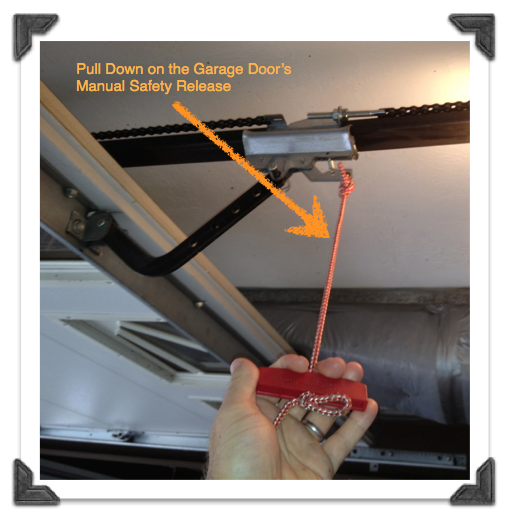
Find the manual release cord—a red rope or handle hanging from the opener rail, usually near the center of the garage ceiling. The cord is often marked with a red color for visibility.
If you can’t find it, check your opener’s model information, usually on the motor or in the owner’s manual. Most cords hang down about 6 to 8 feet from the opener.
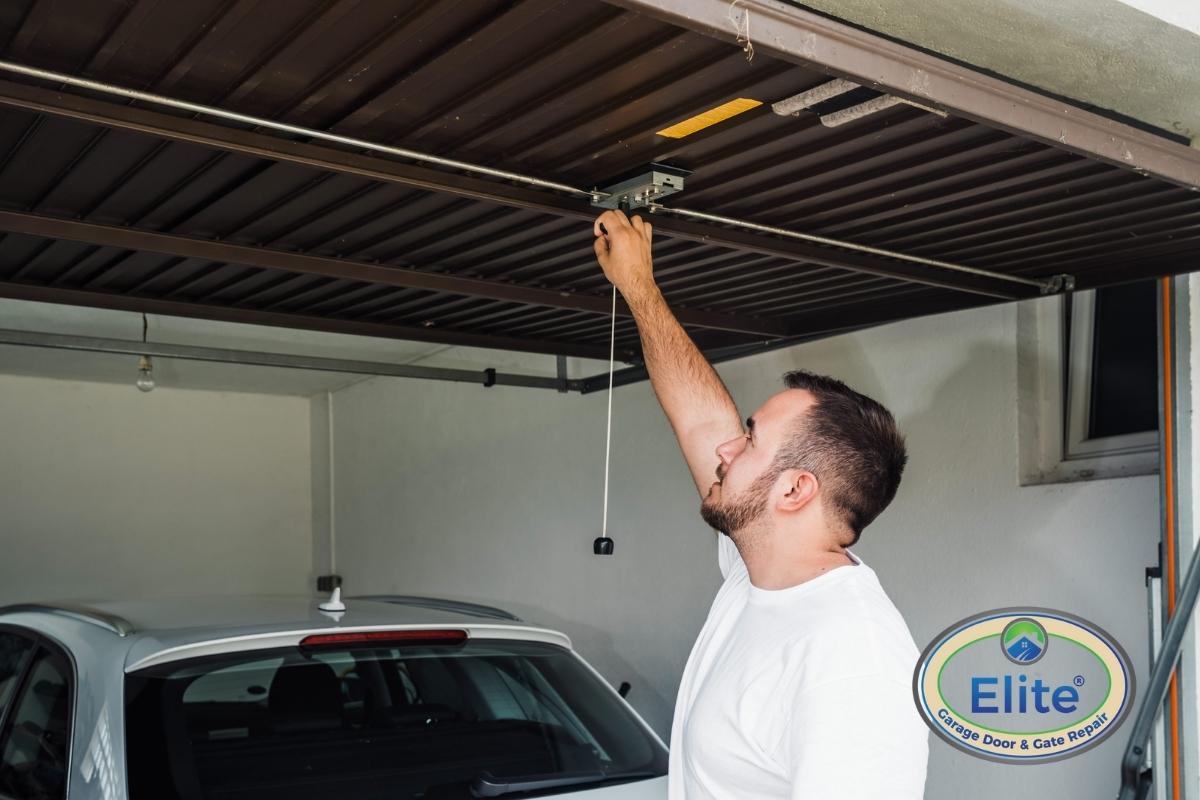
3. Pull Down The Manual Release Cord
Grasp the cord or handle firmly and pull it straight down. This will disconnect the trolley (the part that moves along the rail) from the automatic opener carriage.
You may hear a clicking sound. The cord usually locks in the “disengaged” position, allowing the door to move freely. If your opener has a different design, you might need to pull the cord down and towards the door or back towards the opener.
Check your owner’s manual if it doesn’t disengage easily.
Pro tip: If your garage door was open when the power failed, the springs are under tension. Hold the door steady as you pull the cord to prevent sudden movement.
4. Lower The Door Slowly And Evenly
With the opener disengaged, grasp the door with both hands. Stand in the middle of the door for best control.
Pull the door down gently, keeping it even on both sides. Don’t let one side move faster than the other—this can cause the door to jam in the tracks.
If the door is heavy and hard to move, the springs may be broken. In this case, do NOT force it. If the door moves easily, guide it all the way down until it rests on the ground.
Important: Some doors may not stay closed on their own. If yours starts to drift up, you’ll need to secure it (see the next section).
5. Secure The Door In The Closed Position
Not all garage doors will stay shut after manual operation. This is especially true if the springs are damaged or very old.
To secure the door:
- Use the manual lock (a sliding bolt inside the door, if available)
- Place a C-clamp or locking pliers on the track just above a roller to keep the door from being forced open
- Use a rope or strap to tie the handles together from the inside
Never rely on the weight of the door alone for security. Manual locking is a simple but often overlooked step to keep your garage and home safe.
6. Re-engage The Automatic Opener (after Power Returns)
Once the power is back or repairs are done, you’ll want to restore automatic function.
Most openers reconnect by pulling the manual release cord straight down again, or by running the opener with the remote or wall button. The trolley should “catch” the opener carriage automatically.
If it doesn’t reconnect, consult your opener’s instructions. In rare cases, you may need to push the trolley into place by hand.
Caution: Make sure the area is clear and the door moves smoothly before re-engaging the opener.
Special Situations: What To Do If Things Go Wrong
Manual closing is usually straightforward, but problems can happen. Here are some common issues and what to do:
The Door Feels Extremely Heavy
This usually means a broken spring. The springs do most of the lifting. If they fail, the full weight is on you. Do not try to force the door—call a professional. Forcing a heavy door can cause injury or damage.
The Door Is Stuck Or Jammed
If the door won’t move, check the tracks for debris, bent rails, or broken rollers. Sometimes, a small object or a bent piece of metal can cause a jam. Remove any obstructions before trying again.
The Manual Release Won’t Disengage
If pulling the cord doesn’t disconnect the opener, make sure you’re pulling firmly and in the correct direction. Some models require a pull-down and then a pull towards the door or opener. If it’s still stuck, lubricate the mechanism or consult the manual.
Door Won’t Stay Closed
If the door keeps drifting up after you close it, the springs are over-tensioned, or the opener is not fully disengaged. Lock the door or use clamps as a temporary measure, then have a technician adjust the springs.
The Release Cord Is Missing Or Broken
If you cannot find the release cord, check if it’s tucked up out of sight or has broken off. In some cases, you can manually move the trolley with a stick or by hand (with the opener unplugged). Consider installing a new release cord for safety.
Comparing Garage Door Types For Manual Operation
Here’s how the main garage door types compare when it comes to manual closing:
| Door Type | Ease of Manual Operation | Common Issues | Manual Release Location |
|---|---|---|---|
| Sectional (Torsion Springs) | Easy (if springs are intact) | Heavy if springs break | Ceiling rail (center) |
| Sectional (Extension Springs) | Moderate | Unbalanced if one spring breaks | Ceiling rail (center) |
| One-piece Tilt-up | Harder (heavier door) | Hard to control weight | Near top of door |
| Manual Only (no opener) | Simple | No locking mechanism | N/A |
Non-obvious insight: Sectional doors with torsion springs are usually the easiest to operate by hand, but only if the springs are working. Many homeowners wrongly assume a door is “just heavy”—when it may actually be dangerous to move without the spring’s assistance.
What To Do After Closing Your Garage Door Manually
Closing the door is only part of the job. To keep your garage safe and working well, follow these steps:
- Double-check that the door is secure. Make sure your temporary lock or clamp is in place.
- Unplug the automatic opener if the problem was electrical or mechanical, to prevent accidental operation.
- Inspect the door and tracks for damage or obstructions.
- Call for repairs if you suspect broken springs or cables. Don’t use the door until it’s fixed.
- Test the door balance. With the opener disengaged, the door should stay halfway open if you lift it and let go gently. If it falls or shoots up, the springs need adjustment.
- Keep the manual release accessible. Don’t block it with storage or shelves. In an emergency, quick access is vital.
How To Maintain Your Garage Door For Easier Manual Operation
Many people only think about their garage door when something goes wrong. With simple maintenance, you can avoid problems and make manual closing easier.
- Lubricate moving parts twice a year (rollers, hinges, tracks) with garage door lubricant.
- Inspect springs and cables for wear or rust. Replace at the first sign of damage.
- Test the manual release every few months. Make sure it disengages smoothly.
- Keep tracks clean. Remove dirt, leaves, and cobwebs that can cause jams.
- Check door balance. As mentioned, a well-balanced door is easy to lift by hand.
Regular care prevents most surprises and keeps your system safe. According to the U. S. Consumer Product Safety Commission, garage doors are involved in over 20,000 injuries per year—many due to poor maintenance or failed manual operation.
Common Mistakes To Avoid
Homeowners often make errors when manually closing a garage door. Here are some to watch out for:
- Forcing a stuck door. This can bend tracks, break springs, or cause injury.
- Ignoring broken springs. If you hear a loud bang or see gaps in the spring, don’t attempt manual operation.
- Not securing the door after closing. An unsecured door can be opened by wind, animals, or intruders.
- Standing under the door while moving it. Always stay to the side when possible.
- Losing the manual release cord. If it breaks, replace it immediately.
- Skipping maintenance. A little care makes manual operation easier and safer.
Non-obvious insight: Many people don’t realize that garage door springs are designed to last about 10,000 cycles (open/close). If your door is more than 7–10 years old, inspect the springs often—even if everything seems fine.
When To Call A Professional
Manual closing is a good skill, but it’s not always safe to do it yourself. Contact a professional if:
- The door is very heavy or won’t move
- Springs or cables are broken
- The door is off its tracks
- You see sparks, smoke, or frayed wires
- The door is uneven or slanted
Professional technicians have the tools and experience to fix problems without risking injury. Don’t take chances if you’re unsure.
Cost Comparison: Diy Vs Professional Garage Door Repairs
Is it cheaper to handle garage door problems yourself? Here’s a quick look at typical costs:
| Task | DIY Cost | Professional Cost | Risk Level |
|---|---|---|---|
| Manual Closing | $0 (usually free) | $50–$150 service call | Low (if springs are intact) |
| Spring Replacement | $40–$100 (parts only) | $150–$350 | High (dangerous DIY) |
| Track Cleaning/Lubrication | $10–$20 (supplies) | $75–$200 | Low |
| Manual Release Cord Replacement | $5–$15 | $50–$100 | Low |
Tip: Manual closing is free and safe if your door is in good shape. For spring or cable work, the risk of injury is high—let a pro handle it.

Real-life Example: Power Outage And Emergency Manual Closing
Imagine it’s 9 pm and a thunderstorm knocks out power to your neighborhood. Your garage door is halfway open, and you need to secure your home before bed.
Here’s what you’d do, step by step:
- Use a flashlight to light the garage.
- Check the door for damage, especially the springs.
- Find and pull the manual release cord.
- Carefully lower the door, using gloves for grip.
- Notice the door doesn’t stay down by itself—so you slide the manual lock and add a clamp to the track.
- In the morning, you restore power, re-engage the opener, and test automatic function.
This simple skill can prevent break-ins, protect your car from weather, and help you sleep better during emergencies.
Frequently Asked Questions
How Do I Know If My Garage Door Springs Are Broken?
Look for a gap in the spring (usually 2–4 inches wide), a loose cable, or a sudden heavy feel when lifting the door. You may also hear a loud bang when the spring breaks. If you notice these signs, don’t try to move the door—call a professional for repair.
Can I Manually Close My Garage Door From The Outside?
Most garage doors can only be manually operated from the inside. However, some models have an emergency release lock on the outside, operated with a key. If you need this feature, ask your installer or check your owner’s manual.
Is It Safe To Close A Garage Door Manually If The Power Is Out?
Yes, as long as the springs and cables are intact and the door moves smoothly. Always inspect for damage before starting. If the door feels too heavy or jams, stop and get help.
What Should I Do If The Door Won’t Stay Closed After Manual Operation?
Secure the door with the built-in lock (if available), a clamp on the track, or a rope tying the handles. This prevents the door from drifting open. Schedule a service call to adjust the springs or opener.
How Often Should I Test The Manual Release?
Test the manual release every 3–6 months. Simply pull the cord and check that the door moves by hand, then re-engage the opener. Regular testing ensures you’re prepared for an emergency.
For more on garage door safety and operation, you can visit the Consumer Reports Garage Door Guide.
Knowing how to manually close a garage door is a valuable skill for every homeowner. It gives you confidence during power failures, adds a layer of safety, and can even save you money. By following these steps and staying alert for common issues, you’ll keep your home secure and your garage door working smoothly for years to come.