
Painting a metal garage door is not just about freshening up its look. It’s about protecting your investment, improving curb appeal, and making sure your garage stays safe from rust and weather damage. Many homeowners rush through the process and end up with peeling paint, uneven color, or even early rust spots.
If you want a result that lasts, you need to follow a careful plan, choose the right materials, and understand how each step matters. This guide will walk you through everything—so you can paint your metal garage door with confidence, avoid common mistakes, and achieve a professional finish even if you’re a beginner.
Why Paint A Metal Garage Door?
A metal garage door is strong, but it needs protection. Metal can rust, fade, or lose its shine over time. Painting does three main things:
- Protects against rust: Metal is vulnerable to moisture. Paint forms a barrier that keeps water away.
- Improves appearance: A fresh coat of paint can make your garage door look new, match your house, or even increase home value.
- Extends lifespan: Well-maintained doors last longer, saving money on replacements.
According to real estate data, homes with well-painted exteriors—including garage doors—can sell for up to 5% more than homes with faded or damaged doors. This simple project can make a big difference.
Many people underestimate how much a clean, modern-looking garage door can affect the first impression of a home. For example, if you’re planning to sell your house, even small improvements like a painted garage door can tip buyers in your favor.
You might not notice your garage door every day, but visitors and neighbors do.
What You Need Before Starting
Painting a metal garage door isn’t expensive, but you need the right tools and materials. Missing a key item can slow you down or ruin the result.
Essential Tools And Materials
- Exterior metal paint (choose a quality brand)
- Primer for metal (rust-inhibiting)
- Sandpaper (medium and fine grit)
- Wire brush
- Drop cloths or plastic sheets
- Painter’s tape
- Paint brushes (for corners and edges)
- Rollers (for flat areas)
- Paint tray
- Masking tape
- Rags
- Mild detergent
- Bucket
- Water hose
- Safety gear (gloves, mask, safety glasses)
You might also want to have a step ladder if your garage door is tall, so you can reach the upper panels comfortably. Also, a small hand vacuum can help you clean up paint dust after sanding.
Picking The Right Paint
You cannot use regular wall paint for metal doors. You need paint that’s made for exterior metal surfaces, often labeled as “enamel” or “rust-resistant.” Look for these:
- Acrylic latex paint: Flexible, resists fading, easy to clean.
- Oil-based paint: Durable, good for harsh climates, but slower to dry.
- Epoxy paint: Strongest for industrial settings, but tricky for DIY.
Acrylic latex is the most popular choice for homeowners. It dries quickly and is easy to apply.
One thing most beginners miss: paint sheen matters. Semi-gloss or gloss finishes are easier to clean and resist dirt better than flat or matte paints. If your garage faces the street or a garden, dirt and pollen can build up quickly, so a glossier finish can be easier to maintain.
Primer Matters
Never skip primer. Primer prepares the surface, helps paint stick, and stops rust from forming. For older or previously painted doors, a rust-inhibiting primer is essential.
If your door had deep rust patches, consider using a special “rust converter” primer on those areas. It chemically stops rust and creates a solid base for paint.
Preparing Your Metal Garage Door
Most mistakes happen before the paint even touches the door. Preparation is the foundation for a lasting finish.
Cleaning
Dust, dirt, and grease will stop paint from sticking. Use a mix of mild detergent and water to scrub the door. Rinse with a hose and let dry completely.
- Start at the top and work down.
- Focus on corners and seams where dirt hides.
- Let the door dry for 2–3 hours after rinsing.
Don’t forget to check the bottom edge and the area behind weather stripping, as these spots can hide grime and cause adhesion problems.
Removing Old Paint And Rust
If your garage door has peeling paint or rust, it must be removed.
- Use a wire brush to scrub off loose paint and rust.
- Sand the area with medium-grit sandpaper to smooth rough spots.
- Finish with fine-grit sandpaper for a polished surface.
Don’t try to paint over rust. It will come back quickly.
In some cases, you might find stubborn rust that doesn’t come off with a wire brush. For these spots, use a rust remover solution or a rust converter spray—just be sure to follow the product instructions and let it dry before priming.
Filling Dents And Holes
Small dents or holes can ruin the look. Use metal filler to patch these spots. Let it dry, then sand smooth.
For deep dents, apply filler in thin layers, allowing each one to dry before adding more. This prevents cracking and gives a smoother result.
Masking
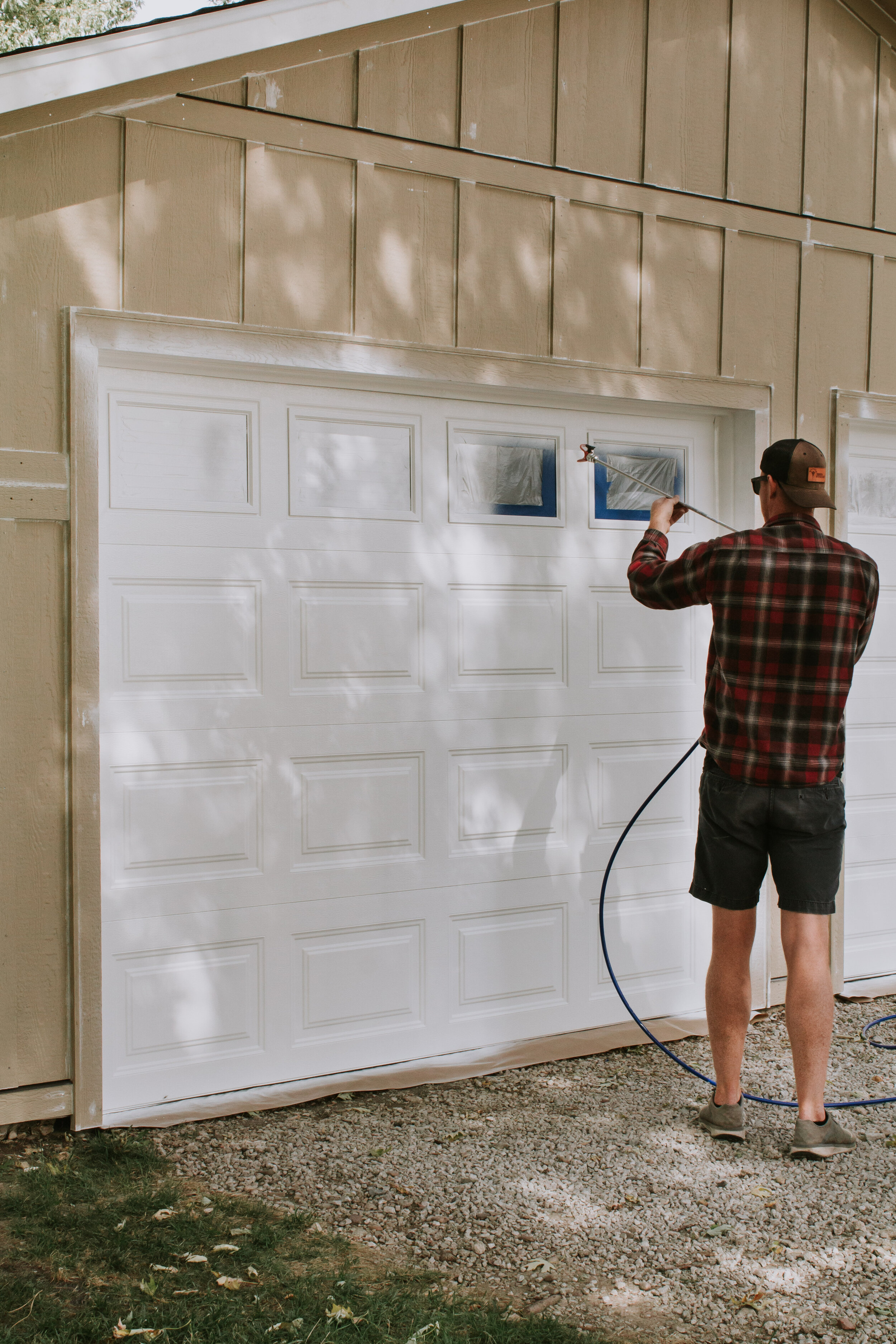
Protect anything you don’t want painted. Use painter’s tape around window frames, handles, or adjacent walls. Place drop cloths on the ground to catch drips.
Extra tip: If your garage door has decorative hardware, remove it if possible. It’s easier than taping around small parts, and you can paint behind them for a seamless look.
Checking Weather
Paint needs dry, mild weather. Ideal temperature is 50–85°F (10–29°C). Avoid painting if rain is expected within 24 hours, or if it’s windy.
High humidity can cause paint to dry slowly and attract dust. If you live in a humid area, wait for a dry spell or paint in the late morning when moisture in the air is lower.
How To Paint A Metal Garage Door: Step-by-step Guide
Now you’re ready to paint. Follow these steps for a result that lasts.
Step 1: Apply Primer
- Stir the primer well.
- Use a brush for edges and corners.
- Roll primer onto flat panels.
- Cover the entire surface evenly.
- Let dry for the time recommended (usually 2–4 hours).
A good primer coat covers old color, seals rust spots, and smooths the surface. Don’t rush this step.
If you see thin spots or areas where metal still shows, apply a second thin coat of primer to those areas. A solid primer base is key for even color and durability.
Step 2: First Coat Of Paint
- Stir paint thoroughly.
- Apply with a brush around edges and tricky spots.
- Use a roller for broad panels.
- Work in sections—top to bottom.
- Keep strokes consistent for a smooth finish.
Don’t overload the brush or roller. Thin coats dry faster and are less likely to drip.
For textured doors, use a “stippling” motion with the brush to work paint into grooves, then smooth the surface with the roller.
Step 3: Let Paint Dry
Most paints need 4–6 hours to dry. Check your paint can for details. Don’t touch or open the door during this time.
If you’re painting in a humid climate, allow extra drying time. If the paint feels tacky to the touch, wait longer before adding another coat.
Step 4: Second Coat
A second coat is essential for durability and even color.
- Repeat the process: Brush for edges, roller for panels.
- Watch for missed spots or thin areas.
- Let dry completely (usually overnight).
If you want a deeper color or your door had major color changes (like painting from black to white), a third thin coat might be needed. Just make sure each coat is fully dry before adding another.
Step 5: Remove Tape And Clean Up
- Remove painter’s tape carefully while the paint is still slightly soft.
- Take away drop cloths and clean brushes.
- Check for any touch-ups needed.
If you notice small mistakes—like paint bleeding under the tape or missed spots—use a small artist’s brush for touch-ups. Always fix these before the paint fully cures for a seamless finish.
Comparing Paint Types For Metal Garage Doors
Many people ask which paint is best. Here’s a comparison of the most common types:
| Paint Type | Durability | Drying Time | Ease of Application | Cost |
|---|---|---|---|---|
| Acrylic Latex | Medium-High | 2–4 hours | Easy | $20–$40/gallon |
| Oil-Based | High | 8–12 hours | Medium | $25–$50/gallon |
| Epoxy | Very High | 24+ hours | Difficult | $40–$80/gallon |
Acrylic latex is recommended for most homeowners. Oil-based is good for older doors or tough climates. Epoxy is best for industrial or commercial doors.
If your garage door is exposed to strong sunlight, look for paint with UV protection. Some high-end acrylic latex and epoxy paints offer this feature, which helps prevent fading and chalking.
How Long Will Painted Garage Doors Last?
The quality of your paint job affects how long it lasts. Typical lifespan:
| Paint Type | Estimated Lifespan | Maintenance Needs |
|---|---|---|
| Acrylic Latex | 5–7 years | Low |
| Oil-Based | 7–10 years | Medium |
| Epoxy | 10–15 years | Low |
Regular cleaning and inspection help your paint last longer. If you notice chips, touch them up quickly to prevent rust.
Another practical tip: Inspect your door after every winter or rainy season. Small chips or scratches can turn into rust if ignored, especially in harsh climates.
Credit: www.paintritepros.com
Common Mistakes And How To Avoid Them
Painting a metal garage door seems simple, but many people make errors. Here are the most common mistakes—and how to avoid them.
1. Skipping Primer
Paint won’t stick well to bare metal. Skipping primer leads to peeling and rust.
2. Painting Over Rust
Covering rust traps moisture, making it worse. Always remove rust before painting.
3. Using Wrong Paint
Wall paint or wood paint will not last on metal. Use paint made for exterior metal surfaces.
4. Rushing Dry Time
Opening or touching the door too soon can ruin your finish. Follow the drying times on the paint can.
5. Painting In Bad Weather
Humidity or rain can cause bubbling and streaks. Always pick a dry, mild day.
6. Not Cleaning Properly
Grease and dirt block paint. Clean thoroughly with soap and water.
7. Applying Thick Coats
Thick paint dries unevenly and can peel. Always use thin, even coats.
8. Forgetting Tape
Skipping painter’s tape leads to messy lines and accidental paint on windows or handles.
9. Not Checking For Dents
Painting over dents makes them more visible. Fill and sand before painting.
10. Using Old Paint
Old paint may have lumps or separated ingredients. Use fresh paint.
A less obvious mistake: Not stirring paint often enough. Pigments can settle as you work, so give your paint a quick stir every 15–20 minutes for consistent color.
Real-life Example: Painting Success Story
Let’s look at a real case. Mary, a homeowner in Ohio, wanted to refresh her garage door. She followed these steps:
- Cleaned the door with detergent and water.
- Removed old paint with a wire brush and sandpaper.
- Filled small dents with metal filler.
- Masked windows and handles.
- Used a rust-inhibiting primer.
- Applied two thin coats of acrylic latex paint.
Mary’s garage door looked brand new. Five years later, the paint is still smooth, with no rust or peeling. She credits careful preparation and patience.
Mary also mentioned that she painted on a calm, sunny day and started early in the morning. This gave her enough daylight to see missed spots and allowed for proper drying between coats. Her story is a great reminder that taking your time pays off.
How Much Time And Money Will It Take?
Painting a metal garage door is a weekend project. Here’s a breakdown:
Time Estimate
- Cleaning and prep: 2–3 hours
- Primer application: 1–2 hours
- Drying primer: 2–4 hours
- First coat of paint: 1–2 hours
- Drying first coat: 4–6 hours
- Second coat: 1–2 hours
- Final drying: Overnight
Total Time: 1–2 Days (including Drying)
If your door needs lots of sanding or dent repair, add an extra hour or two for prep. Working in pairs (one person tapes while the other sands) can speed things up.
Cost Estimate
- Paint: $20–$40
- Primer: $15–$25
- Brushes and rollers: $10–$20
- Tape and drop cloths: $10–$15
- Sandpaper and wire brush: $5–$10
Total: $60–$110
Professional painting can cost $300–$600. Doing it yourself saves money and lets you control the result.
Remember: Investing in better-quality paint and tools may cost more upfront but will save time and effort on future touch-ups.
Choosing The Right Color
The color you pick affects more than looks. It can impact temperature and curb appeal.
- White or light colors: Reflect heat, keep garage cooler.
- Dark colors: Absorb heat, may fade faster.
- Matching trim: Creates a balanced look.
- Contrasting colors: Make your door stand out.
Many homeowners choose neutral colors like white, beige, or gray. Bold colors can work if you want your garage door to be a focal point.
If you live in a neighborhood with a homeowners’ association, check for any rules on exterior colors. It’s better to ask first than have to repaint.
Also, bring home paint swatches or buy small test pots to try a sample color on your door. Colors can look different in outdoor light than in the store.
How To Maintain Your Painted Metal Garage Door
A painted garage door needs care to stay looking good.
Regular Cleaning
Wash your door every few months with mild soap and water. Avoid harsh chemicals.
Inspect For Damage
Check for chips, scratches, or rust spots. Touch up paint as needed.
Lubricate Moving Parts
Painting can sometimes get onto hinges or tracks. Clean and lubricate these areas to keep the door working smoothly.
Annual Inspection
Once a year, check the entire door for wear. Sand and repaint small areas if needed.
Keep a small container of leftover paint for touch-ups. Seal it tightly and store it in a cool, dry place.
Painting A Garage Door Vs. Replacing It
Sometimes people wonder if it’s better to replace a garage door instead of painting it. Here’s a quick comparison:
| Option | Cost | Time Required | Effect on Home Value | Durability |
|---|---|---|---|---|
| Painting | $60–$110 (DIY) | 1–2 days | Moderate | 5–10 years |
| Replacing | $800–$2,500 | 1–2 weeks | High | 15–30 years |
Painting is a cost-effective solution for a door that’s in good shape. Replacement is best for doors with major dents, rust, or mechanical problems.
If you’re unsure, inspect the inside of the door. If you see structural damage or large rust holes, replacement might be a better investment.
Practical Tips For A Professional Finish
Even if you’re not an expert, you can achieve a professional look with these tips:
- Use angled brushes for corners and edges.
- Keep a wet edge while painting to avoid marks.
- Paint on a calm day to avoid dust and bugs.
- Stir paint often to keep color even.
- Wear gloves to avoid stains and irritation.
- Start early in the day so you have plenty of drying time.
A lesser-known tip: If you want a glossy finish, use a clear sealant over your paint. It adds shine and extra protection.
For extra smoothness, lightly sand between coats with very fine sandpaper (like 220 grit), then wipe away dust before the next layer. This step is optional but can give your door a factory-fresh look.
Non-obvious Insights Beginners Miss
- Metal doors expand and contract with temperature changes. Using flexible acrylic latex paint prevents cracking.
- Garage door panels move when opening and closing. Paint each panel separately and avoid painting between joints, so the paint doesn’t crack.
- Primer color affects final color. If you use a dark primer, your paint may look darker. Always match primer color to your final paint shade.
Another useful insight: The bottom edge of the door collects water and salt in winter. Apply an extra-thick coat of paint or sealer there for added protection.
Safety Advice
Painting involves chemicals and tools. Keep safety in mind:
- Wear a mask to avoid breathing fumes.
- Use gloves to protect your skin.
- Keep paint and tools away from children and pets.
- Work in a well-ventilated area.
If you’re using oil-based paints, remember they are flammable. Keep away from open flames.
Store leftover paint in sealed containers, away from heat and sunlight.
When To Call A Professional
If your garage door is very rusty, dented, or you’re unsure about the process, a professional can help. Professionals have tools and experience to handle tough jobs.
Hiring a pro is also a good idea if your door has windows with intricate trim, or if you want a specialty finish (like faux wood grain).
Reliable Resources
For more details, you can check the official guidance from the Home Depot, which covers paint types and surface prep for metal doors.
Frequently Asked Questions
How Long Does It Take To Paint A Metal Garage Door?
Usually, it takes 1–2 days. This includes cleaning, prepping, applying primer, two coats of paint, and drying time. Weather and door size can affect timing.
Can I Paint A Garage Door In Cold Weather?
No. Paint needs temperatures above 50°F (10°C) to dry properly. Painting in cold or humid weather can cause bubbling, cracking, or peeling.
What Is The Best Paint For A Metal Garage Door?
Acrylic latex paint is the best for most homeowners. It’s easy to apply, dries fast, and resists fading and cracking. For harsh climates or older doors, oil-based paint is a good option.
Do I Need To Remove The Garage Door To Paint It?
No, you can paint the door in place. Just make sure it’s closed and locked. Mask surrounding areas to protect from drips and splashes.
How Do I Prevent Paint From Peeling?
Proper prep is key. Clean well, remove rust and old paint, use a rust-inhibiting primer, and apply two thin coats. Avoid painting in bad weather, and let each layer dry fully.
Painting your metal garage door is a simple way to boost your home’s look and protect your investment. With the right tools, materials, and careful steps, anyone can achieve a lasting, beautiful finish. Take your time, follow this guide, and enjoy the results for years to come.