
When your garage door stops working properly, it’s more than just an inconvenience. For many homes, the garage door is the main way people enter and exit the house. If the garage door spring breaks, you might find yourself stuck inside or outside, or even unable to close your garage securely at night. Yet, most homeowners don’t know how to tell if a garage door spring is broken, or what to do next. This guide will show you, step by step, how to identify a broken spring, what causes it, and what you should do if you find a problem.
Why Garage Door Springs Matter
Garage doors are heavy. A standard double garage door can weigh between 150 to 300 pounds. The springs are what make lifting and lowering the door possible—either by hand or with an automatic opener. When the springs work, the door feels light. When they break, the full weight of the door becomes obvious.
There are two main types of springs:
- Torsion springs: Mounted above the closed door, parallel to the door.
- Extension springs: Located above the upper tracks on both sides.
Both types do the same basic job: they counterbalance the weight of the door. If either type breaks, it can create a dangerous situation for you and your family.
Common Signs Of A Broken Garage Door Spring
Recognizing a broken spring is not always simple, especially if you’ve never dealt with one before. These are the most reliable signs:
1. Door Doesn’t Open Or Feels Heavy
If you press your garage door opener and nothing happens—or the motor runs but the door doesn’t move—the spring may be broken. Try to open the door by hand. If it feels extremely heavy or won’t budge, it’s a sign the spring isn’t working.
2. Loud Bang From The Garage
A torsion spring stores a lot of energy. When it breaks, it can make a very loud bang, almost like a firecracker. Sometimes, people think something fell on the roof or a car hit the house. If you hear this sound and your garage door starts acting up soon after, it’s likely the spring broke.
3. Door Opens A Few Inches, Then Stops
Garage door openers have safety systems. If the spring is broken, the motor may struggle to lift the weight. Often, the door will rise a few inches, then stop or go back down. The opener’s force setting can’t compensate for a missing spring.
4. Cables Appear Loose Or Unwound
Springs and cables work together. When the spring breaks, cables may hang loose or appear off their drums. If you see loose cables, do not try to operate the door.
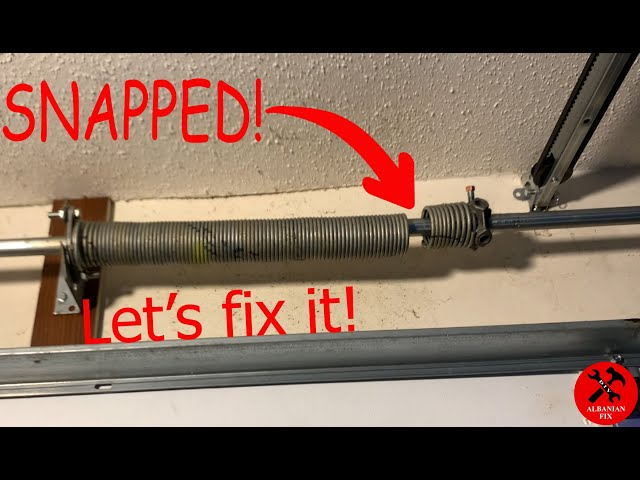
5. Visible Gap In The Torsion Spring
Look at the spring above the door. If you see a two to four-inch gap in the coil, the spring is broken. The gap means the metal has snapped.
6. Door Looks Crooked Or Jerky When Moving
With two extension springs, the door should move evenly. If one spring breaks, the door may rise crooked, with one side higher than the other, or it may get stuck.
7. Manual Lift Test Fails
Disconnect the opener by pulling the emergency release cord. Try lifting the door by hand. A working spring lets you lift the door smoothly. If it’s very hard or impossible, the spring isn’t supporting the weight.
8. Door Slams Shut
If the door closes too quickly or slams, it’s a sign the spring isn’t slowing the descent. This is dangerous—stand clear if you suspect this is happening.
9. Gaps, Rust, Or Wear On Springs
Sometimes, you may spot rust, broken coils, or stretching. These are early signs the spring is about to fail.
10. Opener Motor Strains Or Makes Unusual Noises
If your opener works harder than usual or makes grinding noises, it’s probably straining against a broken or weak spring.
How To Check Your Garage Door Springs Safely
Before you inspect anything, remember that garage door springs are under a lot of tension. They can cause injury if handled the wrong way. Always stay clear of the spring and cables.
Step-by-step Safety Check
- Close the garage door fully before checking.
- Unplug the garage door opener for extra safety.
- Use a ladder to get a close look, but do not touch the springs.
- Look for a gap in the torsion spring or unevenness in extension springs.
- Examine cables for slack or tangling.
If you’re not sure, take a picture and compare it to photos of working springs online.
Why Garage Door Springs Break
Understanding why springs break helps you prevent future problems. Here are the main reasons:
1. Wear And Tear
Most springs are rated for about 10,000 cycles (one cycle is one opening and one closing). If you use your garage door 4 times daily, that’s almost 7 years before the spring wears out.
2. Rust And Corrosion
Moisture can cause springs to rust. Rust makes metal weaker and increases friction, which leads to faster breakage.
3. Poor Maintenance
Springs need regular lubrication and checks. If ignored, they wear out sooner.
4. Wrong Spring Size Or Type
If the wrong springs were installed, they may break faster or fail to support the door weight.
5. Extreme Temperature Changes
Cold winters and hot summers can make metal expand and contract, leading to stress and breakage.
Torsion Vs Extension Springs: Key Differences
To better understand your garage door system, it helps to know the main differences between the two spring types. Here’s a direct comparison:
| Feature | Torsion Spring | Extension Spring |
|---|---|---|
| Location | Above door (centered) | Above tracks (sides) |
| Durability | 15,000–20,000 cycles | 5,000–10,000 cycles |
| Smoothness | Smoother operation | Can be jerky |
| Safety | Safer if broken (stays on bar) | Can fly off if safety cable missing |
| Cost | More expensive | Less expensive |
Torsion springs are more common in newer homes because they last longer and are safer if they break. Extension springs are still found on many older doors.
How To Do A Simple Balance Test
You can check if your springs are losing strength before they break. Here’s how:
- Close the garage door.
- Pull the emergency release to disconnect the opener.
- Lift the door halfway and let go.
- If the door stays in place, the springs are still strong.
- If the door falls, the springs are weak or broken.
- If the door rises, the springs may be too strong (not ideal).
If you need help, call a professional for an inspection.
What Happens If You Ignore A Broken Spring
Ignoring a broken garage door spring can lead to bigger problems:
- Opener damage: The motor may burn out trying to lift the heavy door.
- Injury risk: The door can slam shut or fall unexpectedly.
- Security issues: You can’t close your garage, making your home vulnerable.
- Trapped vehicles: You might not be able to get your car in or out.
Garage door springs do not fix themselves. It’s best to address the problem as soon as you notice it.
What To Do If Your Garage Door Spring Is Broken
If you suspect—or know—your garage door spring is broken, take these steps:
1. Stop Using The Door
Do not try to open or close the door, even manually. The door is heavy and could cause injury.
2. Keep Children And Pets Away
A broken spring means the door could fall or move suddenly. Make sure the area is clear.
3. Disconnect The Opener
Unplug the garage door opener to prevent someone from accidentally trying to use it.
4. Do Not Attempt Diy Repairs
Garage door springs are very dangerous. They can cause serious injury if not handled properly. Only trained professionals should replace them.
5. Call A Professional Technician
Look for a licensed and insured garage door repair company. Ask for an estimate. Many companies offer same-day or emergency service.
6. Secure The Garage
If your door is stuck open, use a board to brace it, but do not remove or adjust any parts. If it’s stuck closed, make sure all entry doors are locked until repairs are complete.
How Technicians Replace Garage Door Springs
Homeowners often wonder what happens during a spring replacement. Here’s a simple overview:
- The technician inspects the system and confirms the spring is broken.
- They select the correct spring size and type for your door.
- The old spring is safely removed using special tools.
- The new spring is installed and tensioned to the right level.
- The cables and opener are reconnected.
- The door’s balance and function are tested.
Professional repair usually takes 30 to 60 minutes.
How Much Does Garage Door Spring Replacement Cost?
Prices can vary by location and door type. Here is a comparison of estimated costs:
| Spring Type | Material / Size | Estimated Cost (Parts + Labor) |
|---|---|---|
| Torsion Spring | Standard steel | $150–$350 |
| Extension Spring | Standard steel | $120–$200 |
| High-cycle Torsion | Upgraded steel | $200–$400 |
Tip: If one spring breaks, ask the technician to replace both (if you have two). Springs usually wear out at the same rate.
Can You Open The Garage Door With A Broken Spring?
It’s possible, but not recommended. If you absolutely must open the door (for example, to get your car out), follow these steps carefully:
- Have at least two strong adults to help.
- Pull the emergency release cord to disconnect the opener.
- Carefully lift the door together. The weight will be much greater—up to 300 pounds.
- Prop the door open with a sturdy item if you need to keep it open.
Warning: This is risky. The door can slam down if you lose grip. Only do this in an emergency, and call for professional help as soon as possible.
How To Prevent Garage Door Spring Failure
While you can’t stop springs from eventually wearing out, you can make them last longer:
- Lubricate springs every six months with garage door spray lubricant. Avoid WD-40 or household oils.
- Check for rust and remove it with a wire brush.
- Have a professional inspect your door once a year.
- Don’t overload the door (don’t hang items from the door).
- Replace both springs at once to keep balance.
- Consider upgrading to high-cycle springs if you use your garage frequently.
Common Mistakes Homeowners Make
Many people make avoidable mistakes when dealing with garage door springs. Here are some to watch for:
- Trying to repair springs themselves: This can lead to serious injury. Only professionals should do spring work.
- Ignoring early warning signs: Noises, jerky movement, or slow opening should not be ignored.
- Using the opener with a broken spring: This can destroy the opener motor quickly.
- Choosing the cheapest repair option: Quality parts and skilled labor cost more, but last longer and are safer.
How To Choose A Garage Door Repair Company
Not all repair companies are equal. Use these tips to pick the right one:
- Check reviews online (Google, Yelp, etc. ).
- Ask for proof of license and insurance.
- Get a written estimate before work begins.
- Ask about warranty on parts and labor.
- Avoid companies that pressure you or offer prices that seem “too good to be true.”
Real-world Examples
Let’s look at a few real-life situations:
- Case 1: A homeowner in Michigan heard a loud bang at night. The next morning, the garage door would not open. Inspection revealed a 3-inch gap in the torsion spring. The repair cost $220 and was completed in 45 minutes.
- Case 2: In Texas, someone noticed the door was closing faster than normal. The extension spring had snapped, and the safety cable was missing. The door became crooked and jammed. A technician replaced both springs and installed safety cables for $190.
These examples show how acting quickly and getting professional help can prevent bigger problems.
Signs Of Weak Springs (not Yet Broken)
Sometimes, springs start to fail before they break. Signs include:
- The door is harder to lift than before.
- The opener struggles, moves slowly, or needs adjustment.
- The door does not stay open when lifted by hand.
If you notice these issues, schedule a maintenance check. Replacing springs before they break is safer and less expensive.

How Long Do Garage Door Springs Last?
The average spring lasts 7 to 12 years, depending on use and climate. High-cycle springs can last up to 20 years in some cases. Here’s a quick reference:
| Spring Type | Average Lifespan (cycles) | Years (4 uses/day) |
|---|---|---|
| Standard Torsion | 10,000 | ~7 years |
| High-Cycle Torsion | 20,000+ | ~14 years |
| Extension | 5,000–10,000 | ~3–7 years |
If you use your garage door more often, the springs will wear out faster.
Non-obvious Insights: What Most People Don’t Realize
- Garage door openers are not meant to lift the door’s weight—they only move it. Springs do most of the work. If the spring is broken, the opener will likely break too.
- Springs can break even when the door is not in use. Temperature shifts or metal fatigue can cause a spring to snap overnight, even if the door hasn’t moved.
When To Upgrade Springs
If you’re replacing springs, ask about high-cycle upgrades. These cost more upfront but can double the lifespan. If your door is unusually heavy (custom wood or insulated doors), make sure the right strength springs are used.
Additional Resources
For more technical details and safety information, you can visit the Wikipedia page on garage door openers.
Frequently Asked Questions
How Dangerous Is It To Replace A Garage Door Spring Yourself?
Replacing a garage door spring is very dangerous. Springs are under high tension and can cause serious injury or even death if handled incorrectly. Always hire a professional with the right tools and experience.
How Can I Tell If My Spring Is Torsion Or Extension?
Torsion springs are mounted horizontally above the door. Extension springs are found above the tracks on both sides. Look for a long coil above the door (torsion) or along the sides (extension).
Should I Replace Both Springs If Only One Is Broken?
Yes, it’s best to replace both springs at the same time. They wear out together, and changing both ensures your door stays balanced and works smoothly.
How Much Does It Cost To Replace A Garage Door Spring?
For most homes, spring replacement costs between $120 and $350, depending on the type and your location. High-cycle or specialty springs cost more.
What Maintenance Can I Do To Make Springs Last Longer?
Lubricate springs twice a year with garage door lubricant, check for rust, and schedule a professional inspection once a year. Avoid using the garage door as your main entrance if possible to reduce cycles.
Keeping your garage door in good shape is more than just convenience—it’s about safety and security. By knowing how to tell if your garage door spring is broken, you can act quickly, avoid bigger repairs, and keep your family safe.
If you’re ever unsure, don’t risk it. Call a professional and let them handle the heavy lifting.