
A garage door that binds or hesitates during operation is more than just an annoyance; it’s a signal that something is amiss. This common problem can manifest as a jerky movement, a sudden stop, or a grinding noise, preventing the door from opening or closing smoothly.
While it might seem like a minor inconvenience, a binding garage door can escalate into more significant issues, potentially leading to costly repairs or even posing safety risks. Understanding the root causes of this binding is crucial for homeowners seeking to maintain their garage door’s functionality and longevity.
The smooth, almost silent operation of a well-maintained garage door is something many homeowners take for granted until it’s disrupted. When that familiar glide turns into a struggle, with the door groaning, sticking, or refusing to move freely, it’s time to investigate.
This binding can occur at various points during the opening or closing cycle, and its severity can range from a slight hesitation to a complete halt. Addressing garage door binding promptly is key to preventing further damage and ensuring the security and convenience your garage door provides.
Key Takeaways
- Identify the binding point: Pinpointing *when* the door binds (e.g., at the bottom, middle, or top) is the first step to diagnosis.
- Lubrication is paramount: Dry or worn rollers, hinges, and tracks are frequent culprits. Regular lubrication with appropriate products is essential.
- Track alignment and damage: Bent, misaligned, or obstructed tracks will impede smooth movement.
- Roller issues: Worn, damaged, or improperly seated rollers can cause significant binding.
- Spring system problems: Torsion or extension springs can weaken or break, affecting the door’s balance and leading to binding.
- Opener mechanism faults: Issues with the opener’s chain, belt, trolley, or motor can also cause binding.
- Obstructions: Simple debris or physical blockages in the door’s path are common causes.
- Professional inspection: For complex issues or safety concerns, a qualified garage door technician is recommended.

Credit: www.youtube.com
Common Causes Of Garage Door Binding
Garage door binding is a symptom, not a disease, and it can stem from a variety of underlying issues. These problems often relate to the door’s mechanical components, its balance, or even external factors. Understanding these common culprits is the first step toward a solution.
Worn Or Damaged Rollers
Rollers are the unsung heroes of garage door operation, allowing the door to smoothly travel along its tracks. These typically consist of a metal shaft and a wheel, often made of nylon or steel, with bearings for smooth rotation. When these rollers wear down, become damaged, or lose their lubrication, they can cause significant friction and binding.
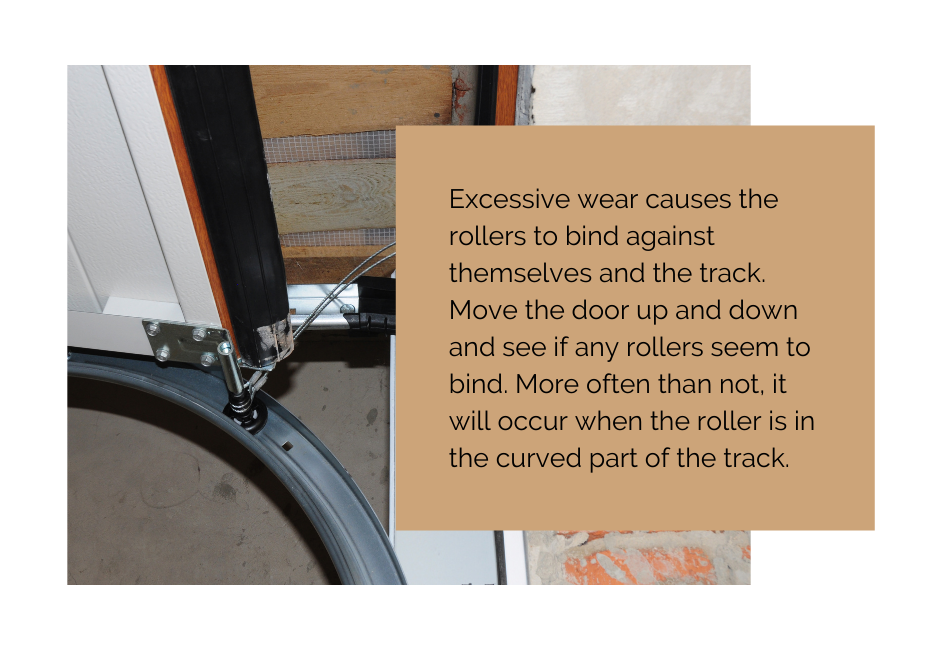
- Wear and Tear: Over time, the constant motion can wear down the wheels, creating flat spots or uneven surfaces. This irregular surface struggles to roll smoothly in the track, leading to a jerky or binding motion. Steel rollers are more prone to wear than nylon ones, especially if the tracks are not kept clean.
- Damage: Rollers can crack, chip, or even break entirely, especially if subjected to impact or if the door is repeatedly forced against an obstruction. A damaged roller will not only bind itself but can also damage the track it’s supposed to be running in.
- Improper Seating: Sometimes, a roller might become dislodged from its bracket or the track itself. This misalignment will cause immediate binding and can put undue stress on the track and the door panel.
- Lack of Lubrication: As with many moving parts, rollers require lubrication to minimize friction. Without it, they can seize up or grind against the track, causing binding. You can learn more about how to lube garage door rollers for smooth, quiet operation.
Example: A homeowner notices their garage door starts to bind significantly about halfway up. Upon inspection, they find that several nylon rollers on one side are cracked and chipped, preventing them from rotating freely within the track.
Bent Or Misaligned Tracks
The tracks are the guide rails for the rollers, dictating the path the garage door takes as it opens and closes. If these tracks are not perfectly straight and aligned, they will inevitably cause the rollers to snag, bind, or even derail.
- Impact Damage: Tracks can become bent from accidental impacts, such as a car backing into the door or a heavy object falling against them. Even a slight bend can create a point of resistance.
- Improper Installation: If the tracks were not installed with precise alignment, or if the mounting hardware has loosened over time, the tracks can shift out of position. This misalignment creates angles that impede the smooth travel of the rollers.
- Obstructions within Tracks: Debris, small stones, or even hardened grease can accumulate inside the tracks, acting as physical blockages that cause the rollers to stop or bind. Regular cleaning is vital.
- Vertical vs. Horizontal Alignment: Both the vertical and horizontal sections of the track must be perfectly aligned with each other and with the garage door’s movement. Any deviation can lead to binding.
Pro Tip: When inspecting tracks, use a long level to check for straightness and ensure they are parallel to each other. Look for any signs of denting or warping.
Issues With The Spring System
The torsion or extension springs are critical components that counterbalance the weight of the garage door. They make the door feel lighter to lift and help the opener do its job efficiently. Problems with these springs can directly lead to binding.
- Broken Springs: A broken spring will cause the door to become unbalanced. One side might sag, or the door might become extremely heavy to lift manually. This imbalance puts immense strain on the opener and can cause it to bind or struggle as it tries to compensate.
- Worn-Out Springs: Springs have a finite lifespan. As they weaken over time, they lose their ability to provide adequate counter-balance. This can result in the door feeling sluggish and prone to binding, especially at certain points in its travel.
- Improper Tension: If the springs are not tensioned correctly, they won’t provide the right amount of lift. This can lead to the door dropping too quickly or not lifting smoothly, causing the opener to bind.
Warning: Garage door springs are under extreme tension and can be very dangerous to handle. If you suspect a spring issue, do not attempt to adjust or replace it yourself. Contact a professional garage door technician immediately.
Garage Door Opener Malfunctions
While the door itself has many mechanical parts, the opener system also plays a role in its smooth operation. If the opener is malfunctioning, it can cause the door to bind.
- Chain or Belt Issues: The chain or belt that connects the opener motor to the door can become loose, worn, or damaged. A loose chain can skip, causing jerky movements and binding. A worn belt can slip. Adjusting the chain is a common maintenance task. How to Adjust Chain on Garage Door Opener for Smooth Operation.
- Trolley or Carriage Problems: The trolley (or carriage) is the part that moves along the opener’s rail, pulling or pushing the door via a cable or arm. If the trolley is damaged, sticking, or its connection to the door arm is loose, it can cause binding.
- Limit Setting Issues: Garage door openers have limit settings that tell them when to stop opening or closing. If these limits are set incorrectly, the opener might try to force the door beyond its intended travel, causing it to bind or even damage itself.
- Motor Strain: If the opener motor is struggling due to any of the issues above (e.g., tight tracks, unbalanced door), it might overheat or engage its internal safety mechanisms, leading to a temporary halt or binding. Sometimes, a simple reset of the opener can resolve transient electronic glitches. For LiftMaster, you can learn how to reset Liftmaster garage door opener remote, which can resolve some communication issues. For general opener resets, consult a guide on how to reset garage door opener.
Hinges And Cables
The hinges connect the individual panels of the garage door, allowing them to flex as the door moves along the tracks. The cables, attached to the bottom corners of the door, work in conjunction with the spring system to lift and lower it.
- Stiff or Rusted Hinges: Hinges can become stiff due to lack of lubrication or rust, especially in humid environments. This stiffness creates resistance, making the door harder to move and potentially causing binding.
- Damaged Hinges: Hinges can crack or break, particularly at the points where they attach to the door panels. A damaged hinge can cause the panel to misalign, leading to binding.
- Frayed or Broken Cables: Cables are under significant tension. If a cable frays, snaps, or comes off its pulley, it will severely affect the door’s balance and movement, often resulting in binding and an inability to operate.
- Cable Tension Imbalance: If the cables are not equally tensioned on both sides of the door, it can lead to uneven lifting and binding.

Credit: www.reddit.com
Diagnosing The Binding Point
The first and most critical step in resolving garage door binding is to accurately diagnose *where* and *when* the binding occurs during operation. This targeted approach saves time and effort by focusing troubleshooting on the most likely problem areas.
Binding During Opening
When a garage door binds specifically while opening, it often points to issues that are more pronounced as the door moves upwards and away from its resting position.
- Bottom of Travel: If the binding occurs right at the start of the opening cycle, check for obstructions at the base of the door or in the lower section of the tracks. Also, inspect the bottom rollers and the seal for any damage or wear. A severely unbalanced door might also bind here as the opener first has to overcome the full weight.
- Mid-Travel: Binding in the middle of the opening cycle frequently indicates problems with the tracks being out of alignment, bent sections, or worn rollers that are struggling to navigate a specific point in the track. It can also be a sign of a weakened spring system that can’t provide consistent counter-balance throughout the entire lift.
- Top of Travel: If the door binds as it nears the fully open position, it might be hitting an obstruction at the top of the track, or the opener’s travel limits might be set too high, causing it to push against the header. The spring system might also be over-extending or losing tension at this point.
Binding During Closing
Binding during closing can sometimes reveal different issues than those apparent during opening, as gravity plays a more significant role.
- Top of Travel: As the door starts its descent, binding might indicate that the tracks are too narrow at the top, or that the rollers are sticking at the highest point. A door that is not properly balanced can also slam down unevenly, causing binding.
- Mid-Travel: Similar to opening, mid-travel binding during closing can point to track issues, roller problems, or obstructions. The increased force of gravity can sometimes exacerbate existing roller or track friction.
- Bottom of Travel: If the door binds as it approaches the floor, check for obstructions on the ground or in the tracks. The bottom seal might be catching, or the track might be bent near the floor. Sometimes, the opener’s down-limit setting is too low, causing it to try and force the door further than it should.
Binding During Both Opening And Closing
If the binding occurs consistently throughout the entire operation, whether opening or closing, it suggests a more pervasive problem.
- Track Misalignment: This is a prime suspect. If the tracks are not parallel or have significant bends, they will impede roller movement in both directions.
- Worn Rollers: Heavily worn or damaged rollers will cause friction regardless of the direction of travel.
- Lack of Lubrication: Insufficient lubrication throughout the system (tracks, rollers, hinges) will lead to general stiffness and binding.
- Door Imbalance: An improperly balanced door, often due to spring issues, will be difficult to move smoothly in either direction, straining the opener and causing binding.
Example: A homeowner observes their garage door binds significantly when opening, but closes smoothly. This observation leads them to focus their inspection on the upper portion of the tracks and the rollers that engage those sections first, suspecting a localized issue in the opening path.
Credit: agaragedoorandgatestore.com
Maintenance And Lubrication: The First Line Of Defense
Regular maintenance is the most effective way to prevent garage door binding and prolong the life of its components. Lubrication is a cornerstone of this maintenance, reducing friction and ensuring smooth operation.
What To Lubricate
Not all parts of a garage door need lubrication, and using the wrong type of lubricant can do more harm than good. Focus on the following:
- Rollers: The wheels of the rollers, especially where they meet the stem and the bearings, benefit from lubrication. This reduces friction as they rotate in the track.
- Hinges: The pivot points of the hinges, where the sections of the door connect, require lubrication to prevent stiffness and rust.
- Tracks: While you don’t lubricate the *entire* track, a light application of lubricant on the inner surface where the rollers make contact can be beneficial. However, be cautious not to over-apply, as this can attract dirt and debris.
- Springs: Torsion springs (mounted above the door) and extension springs (running along the horizontal tracks) should be lightly lubricated. This helps prevent rust and keeps them operating smoothly.
- Opener Chain/Belt: The opener’s drive mechanism, whether a chain or a belt, needs lubrication. Use a garage door lubricant spray specifically designed for this purpose. Avoid using WD-40 on chains, as it can attract dust.
Best Lubricants To Use
The type of lubricant matters. For most garage door components, a silicone-based spray lubricant or a white lithium grease is recommended.
- Silicone Spray: Excellent for rollers, hinges, and tracks. It doesn’t attract as much dirt as oil-based lubricants and provides good water resistance. It’s also safe for most garage door materials, including nylon rollers.
- White Lithium Grease: A thicker lubricant that offers longer-lasting protection, particularly good for metal-on-metal contact points like hinges and opener chains. It provides excellent rust prevention.
- Garage Door Specific Lubricants: Many brands offer lubricants specifically formulated for garage doors, combining the benefits of silicone or lithium grease with additives for optimal performance and protection.
What NOT to Lubricate:
- Opener Rail: Do not lubricate the opener rail itself, as the trolley slides on this. Lubrication here can attract excessive dirt.
- Garage Door Opener Motor: The motor unit typically has sealed bearings and does not require lubrication.
- Weather Seals: Lubricating rubber seals can degrade the material and attract dirt.
Lubrication Frequency
The frequency of lubrication depends on your climate and how often you use your garage door.
- General Recommendation: Lubricate all moving parts at least twice a year, typically in the spring and fall.
- Harsh Climates: In areas with high humidity, salt air, or extreme temperatures, you may need to lubricate more frequently, perhaps quarterly.
- Signs of Dryness: If you hear squeaking or notice increased stiffness, it’s time for lubrication, regardless of the schedule.
Other Essential Maintenance Tasks
Beyond lubrication, several other maintenance tasks are crucial:
- Inspect Rollers and Hinges: Check for wear, cracks, or damage. Replace any faulty components.
- Clean Tracks: Regularly remove dirt, debris, and old grease from the tracks.
- Check Cables and Pulleys: Ensure cables are taut, not frayed, and properly seated on pulleys.
- Test Door Balance: With the opener disengaged, try to lift the door manually. It should stay open about halfway without assistance and move smoothly. If it slams down or is too heavy, the springs need attention.
- Inspect Opener Chain/Belt: Look for wear, sagging, or damage. Adjust tension as needed.
- Tighten Hardware: Periodically check and tighten bolts and screws on tracks, hinges, and the opener mounting.
By implementing a consistent maintenance schedule, including thorough lubrication, you can significantly reduce the likelihood of your garage door binding and ensure its reliable operation for years to come. For more detailed guidance, consult resources on how to lubricate garage door rollers for smooth operation.
Addressing Track And Roller Issues
Issues with the garage door tracks and rollers are among the most common reasons for binding. They are directly responsible for guiding the door’s movement, and any problem here will manifest as friction and sticking.
Cleaning And Inspecting Tracks
The first step is always a thorough cleaning.
- Clear Obstructions: Remove any visible debris, rocks, or foreign objects from the tracks.
- Wipe Down: Use a clean rag to wipe down the inside surfaces of both vertical and horizontal tracks. For stubborn grime or old grease, a degreaser might be necessary, followed by a thorough wipe-down.
- Inspect for Damage: Carefully examine the tracks for any signs of damage:
- Dents and Bends: Look for any areas where the track is not perfectly straight. These can be caused by impact or stress.
- Cracks: Check for any cracks in the metal.
- Loose Mountings: Ensure the brackets holding the tracks to the wall are secure and that the tracks themselves are firmly attached.
Repairing Or Adjusting Tracks
Minor bends or dents might be repairable, but often replacement is the safer and more effective solution.
- Minor Bends: For very slight bends, you might be able to carefully tap them back into shape with a rubber mallet. However, this is difficult to do perfectly, and any remaining imperfection can cause future binding.
- Misalignment: If the tracks are out of alignment with each other or with the door’s movement, the mounting brackets may need to be adjusted. This often involves loosening the bolts, repositioning the track, and re-tightening. This is a task best left to professionals if you’re not experienced, as precise alignment is critical.
- Replacement: If tracks are significantly bent, cracked, or heavily damaged, they should be replaced. This is a more involved repair that usually requires professional expertise.
Roller Maintenance And Replacement
Rollers are wear-and-tear items and will eventually need attention or replacement.
- Inspection:
- Spin Test: With the door open and disengaged from the opener, try to spin each roller wheel. It should rotate smoothly and freely. If it’s stiff, noisy, or doesn’t spin at all, it needs attention.
- Visual Check: Look for cracks, chips, flat spots, or excessive wear on the wheel. Check the stem and bearing for rust or damage.
- Seating: Ensure each roller is securely seated in its bracket and that the bracket is firmly attached to the door panel.
- Lubrication: If rollers are stiff but otherwise intact, try lubricating the stem and bearing with a silicone spray or white lithium grease. Work the lubricant in by spinning the wheel.
- Replacement: If rollers are cracked, broken, excessively worn, or the bearings are shot, they must be replaced.
- Safety First: Disengage the opener and ensure the door is safely supported (e.g., with blocks or clamps) before attempting roller replacement.
- Process: Typically, you’ll remove the roller bracket from the door panel, then remove the old roller. Install the new roller and reattach the bracket. Repeat for all rollers as needed. It’s often recommended to replace all rollers on a door at the same time, as they tend to wear out concurrently.
- Type of Roller: Ensure you purchase the correct type of roller (nylon vs. steel, wheel diameter, stem length) to match your existing setup.
Case Study: A homeowner experienced intermittent binding on their garage door. After cleaning the tracks, they discovered that one of the bottom rollers had developed a flat spot from years of use. Replacing this single roller immediately resolved the binding issue, demonstrating how a small component can cause significant operational problems.
Dealing With Opener And Drive System Issues
The garage door opener is a complex electromechanical system. When it malfunctions, it can directly cause the door to bind or move erratically.
Checking The Opener’s Drive Mechanism
The chain, belt, or screw drive that connects the motor to the door is crucial.
- Chain Drives: Inspect the chain for wear, rust, or damage. Check the tension; it should be snug but not overly tight. A loose chain can skip teeth on the sprocket, causing jerky movement and binding. Refer to guides on how to adjust the chain on a garage door opener if