
Opening your garage door manually might seem simple, but when the power goes out or the opener malfunctions, even a small mistake can cause trouble or damage. Many homeowners never think about manual operation until they’re stuck outside in the rain or have their car trapped inside.
Understanding how to open your garage door manually is not just about convenience—it’s also about safety and protecting your property. This guide gives you clear, step-by-step advice, practical tips, and troubleshooting strategies to handle almost any garage door situation. By the end, you’ll know exactly what to do, and, just as important, what to avoid.
Why You Might Need To Open Your Garage Door Manually
Most people use their automatic garage door opener every day and barely think about it. But certain situations make manual operation necessary. Here are the main reasons:
- Power outage – When electricity is gone, the opener will not work.
- Opener malfunction – If the opener breaks or the remote stops working, you need another way in or out.
- Broken remote or keypad – Sometimes, the issue is with the remote, not the door itself.
- Safety issues – In emergencies, like a fire or earthquake, quick manual operation might be the fastest way to escape.
- Scheduled maintenance – Technicians often disconnect the opener to work safely.
Many people are surprised to learn that a garage door can be heavy—single doors often weigh 130–170 pounds, and double doors can be over 350 pounds. Lifting the door incorrectly can cause injury or damage, so learning the correct method matters.
Safety Precautions Before You Start
Working with garage doors involves risks. Springs are under high tension, and a falling door can be dangerous. Before you touch anything, take these steps to keep yourself and your property safe:
- Clear the area. Make sure pets, children, and obstacles are out of the way.
- Wear gloves and sturdy shoes to avoid cuts or crushed toes.
- Do not force the door if it feels stuck or extremely heavy. This could mean a spring is broken.
- Disconnect power to the opener to avoid sudden movement.
- Use a flashlight if the garage is dark.
If the door is off its tracks, do not attempt to open it manually. Call a professional instead.
Understanding Your Garage Door System
Before you open your garage door by hand, it’s helpful to know how the system works. Here are the main parts:
- Opener unit: The motorized box on the ceiling.
- Trolley and rail: The bar and carriage the opener moves along.
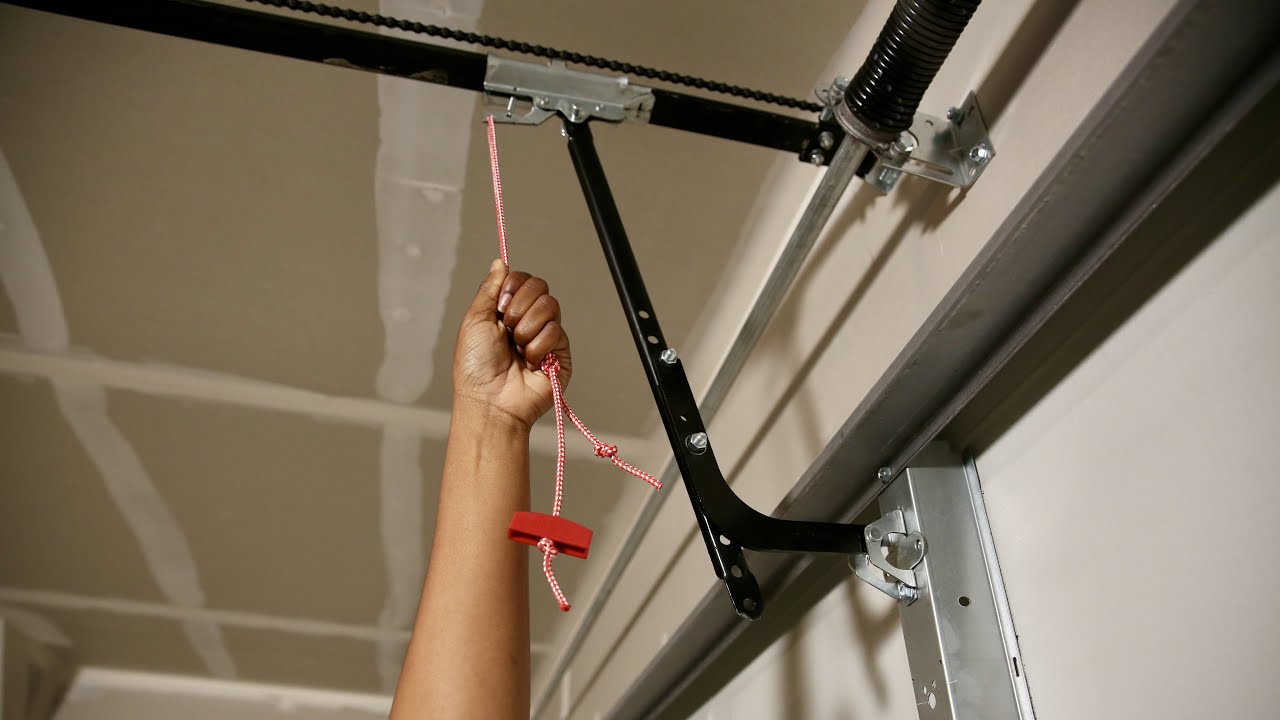
- Emergency release cord: Usually a red cord or handle, hanging from the trolley.
- Springs: Torsion or extension springs that help balance the weight.
- Tracks: Metal rails guiding the door up and down.
- Manual lock (optional): Some doors have a separate lock you may need to open first.
Understanding these parts will help you recognize problems and work more safely.
How To Manually Open Your Garage Door: Step-by-step Guide
Opening your garage door by hand is not complicated, but each step must be done in the right order to avoid accidents.
1. Make Sure The Door Is Fully Closed (if Possible)
Before disconnecting the opener, check if the door is in the down position. If not, slowly and carefully close it using the opener if you can. Disconnecting the opener while the door is open can cause it to slam shut, especially if the springs are weak or broken.
2. Disconnect The Garage Door Opener
Locate the emergency release cord. This is usually a red cord with a handle hanging from the opener rail.
- Pull the cord straight down. This action disengages the trolley from the opener carriage.
- You may hear a click as the mechanism releases.
- Some doors require you to pull the cord down and then back toward the door.
Now, the door is disconnected from the motor and can be moved by hand.
3. Lift The Garage Door Carefully
Stand with your feet shoulder-width apart. Place both hands on the bottom handle or the edge of the door.
- Lift slowly and steadily. If the springs are working, the door should move smoothly and feel lighter than expected.
- Do not let go until the door is fully open and resting in place.
- If the door feels extremely heavy or is hard to lift, stop and check for broken springs or other damage.
4. Secure The Door In The Open Position
Most garage doors will stay open on their own if the springs are intact. But for extra safety:
- Prop the door open with a sturdy object, like a heavy-duty stick or locking clamp.
- Never trust the door to stay up by itself if you see broken springs, cables, or bent tracks.
5. Close The Door Manually
To close the door:
- Grasp the handle or bottom edge.
- Lower the door slowly, keeping control until it is fully closed.
- Do not let it drop—this could damage the door or cause injury.
6. Reconnect The Opener
After you are ready to return to normal use:
- Pull the emergency release cord toward the opener motor (usually away from the door).
- Use the remote or wall button to operate the opener. The trolley should reconnect automatically with a click.
If the opener does not reconnect, consult your user manual. Some openers require you to manually slide the trolley into place.
Opening The Garage Door From The Outside
Being locked out is stressful, especially if you have no house key. Some garage doors have a manual release lock on the outside. Here’s how to use it:
- Locate the small keyhole in the center of the door panel (usually near the top).
- Insert the garage door key and turn it to unlock the access panel.
- Pull the emergency release cable through the hole. This disconnects the opener.
- Lift the door by hand as described above.
If your door does not have this feature, consider having a professional install an external manual release kit for emergencies.
Special Cases: Tilt-up, Sectional, And Roll-up Doors
Not all garage doors are the same. Here’s how to handle the most common types:
Sectional Garage Doors
These are the most popular in the US. They are made of panels that roll up along tracks.
- Process: Use the steps above.
- Watch out for: Broken springs or cables. These can make the door dangerously heavy.
Tilt-up Garage Doors
These are single-piece doors that tilt outward and up.
- Process: Release the opener, then lift the door by grasping the bottom edge.
- Watch out for: Sudden swinging motion. Stand back as you open.
Roll-up Garage Doors
Often found in commercial settings.
- Process: After disconnecting the opener, lift using the handle or bottom bar.
- Watch out for: Sharp edges and heavy weight.
Troubleshooting Common Problems
Manual operation does not always go smoothly. Here are solutions to common issues:
Door Feels Extremely Heavy
This usually means a broken spring. Do not attempt to open the door. Contact a professional—springs are dangerous to replace without training.
Door Is Stuck Or Off Track
If the door will not move or looks crooked, the rollers may be off the track.
- Do not force the door. This can cause more damage.
- Inspect the tracks for obstructions.
- Call a technician if you see bent tracks or loose cables.
Emergency Release Cord Won’t Budge
Sometimes the cord gets jammed:
- Apply gentle, steady pressure—do not yank.
- Spray a little lubricant on the mechanism if it’s dirty or rusty.
- If it still will not move, call for service. Forcing it can break the release.
Opener Does Not Reconnect
If the opener motor runs but the door does not move:
- Ensure the trolley is lined up with the carriage.
- Manually push the door until you hear a click.
- Press the remote or wall button again.
Many openers have a reset procedure—check your user manual.
Preventing Damage During Manual Operation
Opening a garage door by hand can cause issues if done incorrectly. Here’s how to avoid the most common mistakes:
- Never force a stuck door. This can bend the tracks or break the springs.
- Do not let the door drop. Always control its movement.
- Use the correct release procedure. Each opener brand may have slight differences.
- Lock the door for security if you leave it disconnected for a long time.
Many break-ins happen because homeowners forget to secure the door after disconnecting the opener.
Manual Vs. Automatic: Performance Comparison
Here is a quick comparison of manual and automatic garage door operation:
| Feature | Manual Operation | Automatic Operation |
|---|---|---|
| Ease of Use | Requires physical effort | One-button convenience |
| Operation During Power Outage | Always possible | Not possible without backup |
| Security | Requires separate lock | Usually integrated security features |
| Maintenance | Rarely breaks | Needs periodic checks |
| Speed | Slower, manual pace | Fast, consistent |
Essential Tools And Accessories For Manual Operation
Having a few simple tools can make manual garage door operation safer and easier. Here are the most useful items:
- Work gloves: Protect your hands from sharp edges.
- Flashlight or headlamp: For power outages or dark garages.
- Sturdy stick or clamp: To prop the door open safely.
- Lubricant spray: Helps with stuck parts.
- Garage door key: For external manual release.
Some homeowners also keep a printed emergency manual in the garage.
How To Add An External Manual Release Kit
If your garage does not have a way to disconnect the opener from outside, you can add a kit. This is especially important if your garage is not connected to your house.
Steps:
- Buy a universal garage door emergency release kit.
- Drill a hole in the top section of the door.
- Install the lock cylinder and cable according to the kit instructions.
- Test the system to make sure it works.
If you are not comfortable with tools, hire a professional installer.
Garage Door Spring Systems: What You Need To Know
The springs are what make lifting your door possible. There are two main types:
| Spring Type | Location | Common Lifespan | Replacement Safety |
|---|---|---|---|
| Torsion Spring | Above door opening | 10,000–15,000 cycles | Professional only |
| Extension Spring | Along side tracks | 7,000–10,000 cycles | Professional only |
A broken spring makes the door extremely heavy—often 200 pounds or more. Never try to replace a garage door spring yourself unless you are trained.
Practical Tips For Easy And Safe Manual Garage Door Operation
Here are practical strategies that most people miss:
- Test the emergency release every six months. This ensures the mechanism works smoothly in an emergency.
- Clean and lubricate tracks and rollers at least twice a year.
- Keep the garage door balanced. If it drifts up or down when halfway open, call for adjustment.
- Teach family members how to operate the door manually.
- Install a battery backup if your area has frequent outages.
Most injuries happen because the emergency release has not been used or maintained in years.
What To Do If You’re Locked Out Without A Key
If you are outside and cannot get in:
- Check all entry doors. Sometimes another door or window is unlocked.
- Look for the external release lock on the garage door.
- If you have no release kit, do not attempt to force the door with tools—this can cause expensive damage.
- Call a professional locksmith or garage door technician.
Trying to “fish” the emergency release with a wire through the top of the door is possible but can break the lock or damage the mechanism.

When To Call A Professional
Some garage door issues are too risky for DIY fixes. Call a professional if:
- The door is crooked or jammed.
- You see a broken spring or cable.
- The door falls suddenly or will not stay up.
- You have no emergency release cord.
Professional technicians have the tools and training to work safely.
Real-world Examples: Mistakes To Avoid
Many homeowners have learned the hard way. Here are two common mistakes:
- Forcing a stuck door: A homeowner tried to force a door that was off its track and ended up bending the panels, costing over $600 in repairs.
- Letting the door drop: Someone opened their door during a power outage, lost grip, and the door slammed shut—breaking a window and causing injury.
Always move slowly and call for help if you are unsure.
Maintenance Checklist For Reliable Manual Operation
Regular care keeps your garage door ready for emergencies. Use this checklist:
- Check the emergency release cord for wear.
- Lubricate hinges, rollers, and tracks.
- Test manual lifting for smooth operation.
- Inspect springs and cables for rust or damage.
- Remove obstructions from tracks.
Most people forget these simple steps, but they can prevent bigger problems.
Latest Innovations: Smart Openers And Battery Backups
Modern garage door openers have features to make manual operation less necessary:
- Battery backup units: Allow the door to operate even during power outages.
- Smartphone control: Lets you open the door remotely, even if the remote is lost.
- Automatic locking systems: Add another layer of security when the power is out.
According to a 2023 industry survey, about 24% of new garage door openers sold in the US include built-in battery backup. This is especially useful in areas with frequent storms or outages. For more details on backup systems, see the resources at the International Door Association.
Frequently Asked Questions
What Should I Do If The Emergency Release Cord Breaks?
If the emergency release cord breaks, do not try to open the door by hand. The mechanism will not disengage, and forcing the door can cause damage or injury. Contact a professional technician to replace the cord safely.
Can I Manually Open My Garage Door If The Spring Is Broken?
It is possible, but it is not safe. A broken spring means you have to lift the full weight of the door, which can be 200 pounds or more. This is dangerous, especially if the door is heavy. Wait for a trained professional to repair the spring before attempting to open the door.
How Often Should I Test The Manual Release Mechanism?
Testing the manual release twice a year is a good rule. This ensures it works smoothly in an emergency. Lubricate the mechanism and check that the cord is not frayed or tangled.
Is It Safe To Leave The Opener Disconnected For A Long Time?
Leaving the opener disconnected for a short time is okay, but for longer periods, you should lock the door manually for security. Most garage doors can be locked using a slide bolt or padlock. This prevents intruders from opening the door from outside.
What Should I Do If My Garage Door Won’t Stay Open When Lifted Manually?
If the garage door will not stay open, the springs may be worn or out of balance. Do not try to prop the door open with makeshift objects, as it can fall suddenly. Call a professional to inspect and adjust the springs.
Opening your garage door manually is a useful skill every homeowner should have. With the right knowledge and regular maintenance, you can avoid common problems and keep your home safe. Stay prepared, and your garage door will never trap you inside or out—no matter what happens.