
If your garage door does not open or close smoothly, it can make life difficult. A poorly adjusted garage door can also be dangerous, causing injuries or damaging your car. Knowing how to adjust a garage door is an essential home skill, yet many people find it confusing.
This guide will show you step by step how to adjust your garage door safely and effectively, whether you have a manual or automatic system. You will also learn how to identify common problems, choose the right tools, and avoid mistakes that can cost you time and money.
Understanding Your Garage Door System
Before making any adjustments, it’s important to know what kind of garage door system you have. Most residential garage doors use either a torsion spring or extension spring system. Torsion springs are mounted above the door, while extension springs run along the sides. Automatic garage doors also have an opener with settings that control how far and how quickly the door moves.
Knowing your system will help you follow the right steps and buy the correct replacement parts if needed. Check your garage door’s manual or look for labels on the door and springs. If you’re unsure, search for the model number online or ask a professional.
Safety First: Preparing For Adjustment
Adjusting a garage door can be risky. Springs are under high tension and can cause serious injury if handled wrong. Before starting, always:
- Unplug the garage door opener to prevent accidental activation.
- Wear safety glasses and gloves to protect your eyes and hands.
- Use sturdy ladders to reach high parts safely.
- Work with a helper if possible, especially for heavy doors.
Do not try to adjust a broken spring if you are not sure what to do. If you hear loud bangs, see gaps in the spring, or the door feels extra heavy, call a trained technician.

Essential Tools And Materials
Having the right tools makes the job much safer and easier. Here is a list of common tools used for garage door adjustment:
- Winding bars (for torsion springs)
- Adjustable wrench
- Socket set
- Screwdriver (flathead and Phillips)
- Tape measure
- Stepladder
- Lubricant (silicone spray or garage door lube)
- C-clamps or locking pliers
- Level
- Pencil or marker
For some repairs, you may also need replacement rollers, cables, or hinges. Always check your garage door parts for wear before you start.
Common Problems That Need Adjustment
Understanding what can go wrong with a garage door helps you target the right fix. The most common adjustment issues include:
- Door does not open or close fully
- Door is crooked or uneven
- Door makes loud noises
- Door moves too fast or too slow
- Door reverses before closing
Each problem has its own causes and solutions. Some need only small tweaks, while others require bigger adjustments. Let’s break down how to fix each one.
How To Adjust Garage Door Balance
A well-balanced garage door feels light, moves smoothly, and stays in place when opened halfway. If your door is out of balance, the opener works harder and parts wear out faster.
Test Door Balance
- Disconnect the opener: Pull the release handle (usually a red cord) to switch to manual mode.
- Lift the door halfway: Move it up by hand until it’s about waist-high.
- Let go gently: The door should stay in place. If it falls or rises, it’s out of balance.
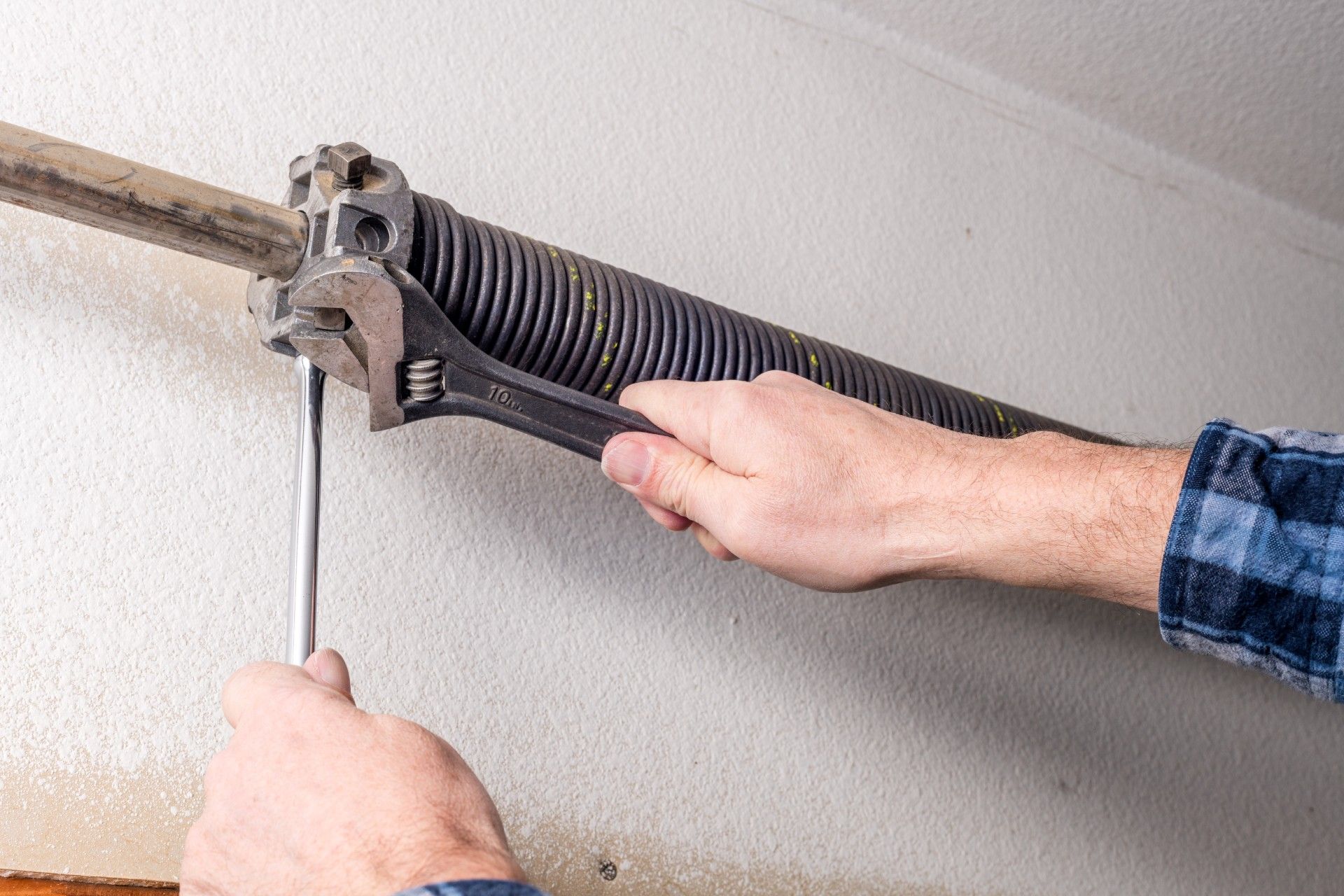
Adjust Torsion Spring Balance
Torsion springs are above the door. Adjusting them is dangerous because of the high tension. If you feel unsure, hire a pro. If you proceed:
- Clamp the door open: Use C-clamps below the bottom roller on both sides.
- Insert winding bars: Only use proper winding bars in the winding cone holes.
- Loosen set screws: Carefully loosen the screws on the spring cone with a wrench.
- Adjust tension: Add or remove 1/4 turns using the winding bars. Do not over-tighten.
- Tighten set screws: Make sure everything is secure before removing tools.
A small change (1/4 turn) can make a big difference. Test the balance again after each adjustment.
Adjust Extension Spring Balance
Extension springs run along the sides. They are easier to adjust but still under tension.
- Open the door fully and clamp it in place.
- Move the S-hook: The spring connects to a track hole with an S-hook. Move the hook to a different hole to increase or decrease tension.
- Test the door after every change.
If you need more tension, use a hole closer to the door. Less tension, use a hole farther away.
Pro Tips
- Never adjust both sides at once. Fix one side, test, then do the other if needed.
- Check cables and pulleys for wear while working. Replace frayed or kinked cables immediately.
Adjusting Garage Door Tracks
If your garage door is crooked or rubs against the frame, the tracks may be out of alignment. Properly aligned tracks help the door move smoothly and quietly.
Check Track Alignment
- Stand inside the garage with the door closed.
- Look for gaps between the door and the track. Both sides should be even.
- Use a level to check if the tracks are vertical and parallel.
Realign Tracks
- Loosen the mounting bolts: Use a wrench to loosen (not remove) the bolts holding the track to the wall or ceiling.
- Tap the track: Move it gently using a rubber mallet until it is straight and parallel to the door.
- Tighten bolts: Secure the track and check alignment again.
Table: Common Track Problems And Solutions
| Problem | Possible Cause | Solution |
|---|---|---|
| Door rubs track | Track bent or shifted | Straighten or realign track |
| Door does not close fully | Track not level | Adjust track angle |
| Door noisy on movement | Dirty or misaligned tracks | Clean and align tracks |
Extra Insights
- Tighten all bolts evenly. If one side is tighter, the track may bend.
- Do not over-tighten. This can crush the track and cause more problems.
Adjusting Garage Door Opener Settings
Automatic garage doors have settings that control how far the door travels, how much force is used, and the speed. If your opener is not adjusted, the door may not close all the way or may reverse unexpectedly.
Find The Adjustment Controls
Most openers have plastic dials or screws labeled as:
- Up travel (how far door opens)
- Down travel (how far door closes)
- Force adjustment (pressure needed to move door)
These are usually on the back or side of the opener motor.
Adjust Travel Limits
- Locate travel dials: Usually marked with arrows or “up/down.”
- Turn the dial slightly: Clockwise usually increases travel, counterclockwise reduces it.
- Test the door after each adjustment. Do not turn more than 1/4 turn at a time.
If the door does not close fully, increase the down travel. If it bangs into the floor, decrease it.
Adjust Force Settings
Force controls how hard the opener pushes or pulls. Too much force is dangerous; too little and the door may not move.
- Find the force dial: Usually near the travel dials.
- Turn slightly to increase or decrease.
- Test by closing the door: It should stop and reverse if you block it with a board.
Table: Opener Settings And Effects
| Setting | Too Low | Too High |
|---|---|---|
| Up travel | Door does not open fully | Door hits opener stops |
| Down travel | Door does not close fully | Door slams floor |
| Force | Door does not move | Door does not stop for obstacles |
Non-obvious Insights
- Sunlight can affect sensors. If your door reverses during sunny afternoons, shade or reposition the sensors.
- Cold weather may stiffen grease. If your opener struggles in winter, try a silicone-based lubricant on rollers and tracks.
Adjusting Garage Door Springs
Springs do most of the heavy lifting. If your door is very heavy or slams shut, the springs may need adjustment.
Torsion Spring Adjustment
Follow the earlier instructions for balance. Remember:
- Use two winding bars for safety.
- Never use screwdrivers—they can slip and cause injury.
- Mark the shaft before starting, so you know how much you have turned.
Extension Spring Adjustment
Move the S-hook as described before. Make sure both sides are even, or the door will tilt.
When To Replace, Not Adjust
If the spring is rusted, stretched, or has a gap, replace it. Springs have a lifespan of about 10,000 cycles (one open/close = one cycle). If your door is old, new springs may be a better investment.
Adjusting Garage Door Cables
Cables connect the springs to the door. If one cable is loose, the door may become crooked or jam.
Steps To Adjust Cables
- Open the door fully and clamp it in place.
- Check cable tension: Both sides should feel tight.
- Adjust drum bolts: Loosen the set screw on the cable drum (at the top corner).
- Tighten or loosen cable as needed.
- Retighten the set screw and test door movement.
If cables are frayed, replace them. Do not try to fix damaged cables with tape or knots.
Lubricating And Maintaining Garage Door Parts
A well-lubricated door moves quietly and lasts longer. Adjustment is often only part of the solution; regular maintenance prevents future problems.
Where To Lubricate
- Springs
- Rollers
- Hinges
- Tracks (inside edge only)
Use a silicone-based lubricant, not WD-40. WD-40 is a cleaner, not a lubricant, and can actually attract dirt.
How Often
- Lubricate every 6 months or more often in dusty or humid areas.
- Check all moving parts during each lubrication.
Cleaning Tracks
Dirt and debris can cause alignment issues. Clean tracks with a damp cloth and mild detergent. Avoid using grease inside tracks.
Adjusting Garage Door Sensors
If your automatic garage door won’t close or reverses suddenly, the safety sensors may be misaligned. These sensors are near the floor, one on each side of the door.
How To Align Sensors
- Check sensor lights: Both should be on (usually green).
- Loosen the bracket and move the sensor until both lights stay on.
- Tighten the bracket and test the door.
- Wipe the lenses clean. Dust or cobwebs can block the signal.
Sensors should be 4-6 inches off the ground. If your children play near the garage, check sensor alignment regularly for safety.
Adjusting Garage Door Rollers And Hinges
Worn or misaligned rollers and hinges can make your door noisy and rough. Replacing or adjusting these parts helps the door move smoothly.
How To Check And Adjust
- Inspect for wear: Flat spots or wobbly rollers need replacement.
- Tighten hinge screws: Use a screwdriver to make sure all are snug.
- Replace damaged parts: Always use parts that match your door’s size and type.
Table: Roller And Hinge Maintenance Tips
| Part | Signs of Wear | What to Do |
|---|---|---|
| Rollers | Noisy, rough movement | Lubricate or replace |
| Hinges | Loose, door shakes | Tighten screws or replace |

Setting Garage Door Opener Remote Range
If your remote only works close to the door, you may need to adjust the opener’s antenna or check for signal interference.
- Extend the antenna fully on the opener unit.
- Change remote batteries if the range is low.
- Move wireless routers or other electronics away from the opener if you notice interference.
If the remote still has issues, consider buying a replacement from your opener’s manufacturer.
Weatherstripping And Bottom Seal Adjustment
A garage door should seal tightly against the floor and sides to keep out wind, rain, and pests. Over time, the weatherstripping and bottom seal can wear out.
How To Replace Or Adjust
- Close the door and inspect for gaps.
- Peel off old weatherstripping (on sides and top) and clean the area.
- Cut new stripping to size and press or nail it in place.
- Slide out the bottom seal (if cracked or stiff) and slide in a new one.
This not only keeps your garage clean but also improves energy efficiency.
Resetting Garage Door Opener After Adjustment
After making adjustments, you may need to reset your opener to recognize the new door position.
- Plug in the opener and reconnect the door to the opener carriage.
- Test all functions (open, close, stop).
- Reprogram the remote, if necessary, following your opener’s manual.
Check that the safety reverse works by placing a board under the door. It should reverse when it touches the board.
When To Call A Professional
Some adjustments are best left to experts, especially if:
- You see a broken spring or cable
- The door is off its tracks
- The opener motor makes noise but the door doesn’t move
- You feel unsure about any step
Professional technicians have tools and training to handle dangerous repairs. Investing in expert help can save you from injury and bigger repairs later.
Cost Of Garage Door Adjustments
DIY adjustments are usually free or cost only for lubricant or small parts. Hiring a professional may cost:
- Spring adjustment: $75–$150
- Track alignment: $100–$200
- Full tune-up: $150–$300
Prices vary by location and door type. Remember, regular maintenance keeps costs low over time.
Real-life Example
John, a homeowner in Ohio, noticed his garage door was closing unevenly and making a loud bang. He tested the balance and found the door dropped quickly when released. After reading his door’s manual, he used winding bars to add a quarter turn to the torsion spring and realigned one track.
The door became quiet and smooth. He spent only $10 on lubricant and saved over $100 in service calls.
Garage Door Adjustment Myths
- Myth: WD-40 is good for lubrication.
Fact: It’s a cleaner, not a long-term lubricant for garage doors.
- Myth: All springs are the same.
Fact: Doors have different spring types and sizes—using the wrong one can be dangerous.
- Myth: You need to replace the door if it’s noisy.
Fact: Most noise problems are fixed with lubrication or small adjustments.
Hidden Risks And Safety Reminders
- Never remove a spring unless it is completely unwound.
- Keep children and pets away during repairs.
- Check emergency release function monthly.
A small mistake with springs or cables can lead to serious injury. If you feel unsure, it is always best to hire a professional.
Maintenance Schedule For Garage Doors
Sticking to a maintenance routine can make adjustments easier and your door last longer.
- Every month: Check balance, test safety sensors, inspect for wear.
- Every 6 months: Lubricate all moving parts, clean tracks.
- Every year: Tighten bolts, check weatherstripping, inspect springs.
Set reminders on your phone so you don’t forget.
Upgrading Instead Of Adjusting
If your door is more than 15 years old, consider upgrading to a newer, safer model. Modern garage doors have better insulation, quieter openers, and improved safety features. According to the Remodeling 2023 Cost vs. Value Report, a new garage door can recover over 100% of its cost in home value increase.
Frequently Asked Questions
What Is The Safest Way To Adjust Garage Door Springs?
Only adjust springs with the proper tools, such as winding bars for torsion springs. Always unplug the opener and clamp the door in place. If you see a broken spring or feel uncomfortable, call a licensed technician instead of risking injury.
How Do I Know If My Garage Door Is Out Of Balance?
Disconnect the opener and lift the door halfway by hand. If the door falls or rises on its own, it is out of balance and the springs may need adjustment.
Why Does My Garage Door Make Noise After Adjustment?
Noise is usually caused by dry rollers, loose hardware, or misaligned tracks. Lubricate moving parts and check all bolts and screws after any adjustment.
Can I Adjust The Garage Door Myself?
You can handle small adjustments, like lubricating or aligning sensors, if you follow safety steps. For spring or cable adjustments, experience and the right tools are needed. If in doubt, hire a pro.
How Often Should I Adjust Or Maintain My Garage Door?
Test balance and safety features every month. Lubricate all moving parts every 6 months. Full professional tune-ups are recommended yearly for best performance.
Adjusting a garage door may seem complex at first, but with careful steps and the right tools, most homeowners can handle basic adjustments. Regular care not only improves safety and performance but also extends the life of your garage door.
If you encounter a problem you cannot solve or feel unsure, professional help is always the safest choice. With this guide, you’re now ready to keep your garage door working smoothly, safely, and quietly for years to come.