Now Reading: How To Program A Genie Silentmax 1000 Garage Door Opener: Guide
- 01
How To Program A Genie Silentmax 1000 Garage Door Opener: Guide

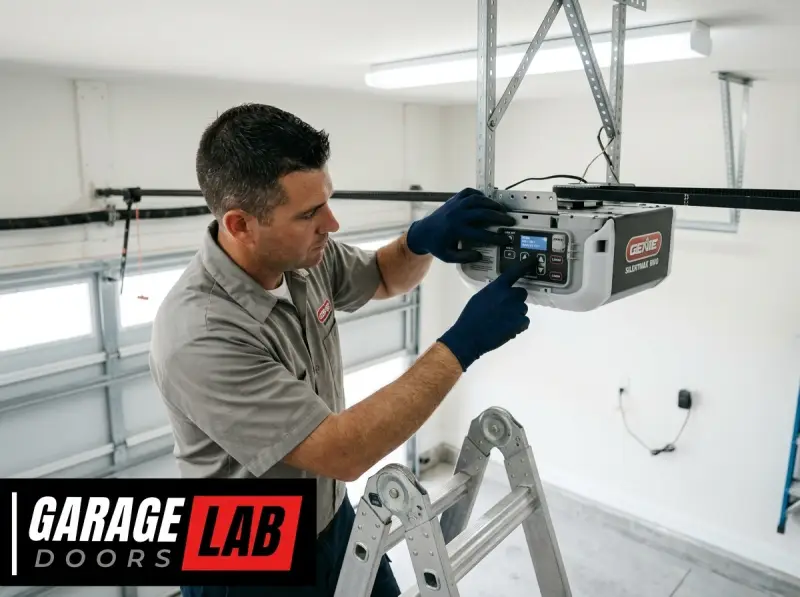
Programming your Genie SilentMax 1000 garage door opener can seem like a complex task, but with the right guidance, it’s a straightforward process that can enhance your home’s security and convenience. This system, known for its quiet operation, relies on precise programming to ensure it functions optimally with your remotes, keypads, and even smart home devices.
Whether you’re setting up a new opener, adding a new remote, or troubleshooting an existing connection, understanding the programming steps is essential for harnessing the full capabilities of your Genie SilentMax 1000.
This guide will walk you through the entire programming process, from initial setup to advanced features, ensuring you can confidently manage your garage door opener. We’ll cover everything from syncing your remote control to understanding the safety features that protect your home and family.
By the end of this article, you’ll have a comprehensive understanding of how to program your Genie SilentMax 1000, making it work seamlessly for your needs.
Key Takeaways
- Remote Programming: The Genie SilentMax 1000 uses a smart learn button for programming remotes and keypads, typically involving pressing the button and then activating the desired remote.
- Safety Features: Always ensure the garage door path is clear and understand the opener’s safety sensors for secure operation.
- Troubleshooting: Common issues like unresponsiveness can often be resolved by reprogramming or checking power connections.
- Compatibility: Verify that any new accessories are compatible with the Genie SilentMax 1000 model.
- Manual Operation: Know how to disengage the opener for manual door operation in emergencies or power outages.
- Maintenance: Regular lubrication and checks, like those for garage door rollers, contribute to the opener’s longevity and smooth performance.
Understanding Your Genie Silentmax 1000 Opener
Before diving into the programming steps, it’s crucial to familiarize yourself with the key components and indicators on your Genie SilentMax 1000 garage door opener. Understanding these elements will make the programming process much smoother. The opener unit, typically mounted on the garage ceiling, houses the motor, the control board, and the learning system. On this unit, you’ll find the smart learn button and often an indicator light. This button is the central hub for most programming tasks, and the indicator light provides visual feedback on the opener’s status.
The Genie SilentMax 1000 is designed for user-friendly operation, but knowing the specifics of your model is always beneficial. It utilizes a rolling code technology, which enhances security by changing the access code each time the opener is used. This means your garage door is less vulnerable to unauthorized access. You’ll also want to be aware of the safety sensors, usually located near the bottom of the garage door tracks. These sensors are critical for preventing the door from closing on an obstruction and are a vital part of the opener’s safety system. Understanding these components ensures you can correctly identify them when following the programming instructions.
Locating The Smart Learn Button
The smart learn button is the most critical component for programming your Genie SilentMax 1000. Its location can vary slightly depending on the exact model year, but it’s almost always found on the back or side panel of the motor unit mounted on your ceiling. Often, it’s a colored button (frequently red, orange, or yellow) and is usually accompanied by an LED indicator light.
When you press this button, the indicator light will typically illuminate or blink, signaling that the opener is in “learn mode” and ready to receive a new signal from a remote or keypad. The duration you hold the button can sometimes matter, so paying attention to the indicator light’s response is key.
For instance, holding it for a second or two might activate learn mode, while holding it longer could erase existing programming.
Identifying The Indicator Light
The indicator light on your Genie SilentMax 1000 opener serves as a crucial visual cue throughout the programming process. It’s typically located near the smart learn button. This light will illuminate, flash, or change color to confirm that the opener has recognized a command, entered learn mode, or is experiencing an issue.
For example, when you press the smart learn button, the indicator light might turn solid. Then, when you press a button on your remote, the opener’s motor unit might click, and the indicator light might flash a certain number of times to confirm that the remote has been successfully programmed.
If the light blinks rapidly or shows a specific error pattern, it can indicate a problem that needs troubleshooting. Always refer to your Genie SilentMax 1000 manual for the specific meaning of the indicator light’s behavior.
Programming A Genie Remote Control
Programming a Genie remote control to your SilentMax 1000 opener is perhaps the most common programming task. This process allows you to operate your garage door from the convenience of your vehicle or from inside your home without needing to manually open the door.
The system is designed to be intuitive, utilizing the smart learn button on the opener unit.
Step-by-step Remote Programming
Follow these steps carefully to program your Genie remote control:
- Locate the Smart Learn Button: As discussed, find the smart learn button on your Genie SilentMax 1000 motor unit. It’s usually a colored button with an LED indicator light nearby.
- Press and Release the Learn Button: Press and immediately release the smart learn button. The LED indicator light next to it should illuminate, indicating the opener is in learn mode. You typically have about 30 seconds to complete the next step before the opener exits learn mode.
- Press and Hold the Remote Button: Take your Genie remote control and press and hold the button you wish to program for the garage door.
- Observe the Opener: While holding the remote button, watch the indicator light on the opener unit. The opener will likely click or the light will blink to confirm it has received and learned the remote’s signal.
- Release the Remote Button: Once you observe the confirmation (click or blinking light), release the button on your remote.
- Test the Remote: Step away from the opener unit and press the programmed button on your remote. The garage door should now operate. If it doesn’t, repeat the process, ensuring you complete the steps within the time limit and observe the indicator light for confirmation.
If you’re having trouble, it might be time to reset your garage door remote or check the remote’s battery. For older Genie models or specific programming methods, consulting the official Genie manual can provide model-specific details.
Troubleshooting Remote Programming Issues
If your Genie remote isn’t programming correctly, several common issues could be at play. First, ensure you are using a compatible Genie remote. Not all Genie remotes work with every Genie opener model, especially if you have an older system. Check your opener’s manual or Genie’s website for compatibility charts.
Second, verify the battery in your remote is fresh. A weak battery can prevent the remote from transmitting a strong enough signal for the opener to recognize.
Third, pay close attention to the timing and indicator lights. If you don’t press the learn button and then the remote button within the allotted time (usually 30 seconds), the opener will exit learn mode. Make sure the indicator light confirms learning. If it doesn’t, try again, perhaps holding the remote button slightly longer after the opener’s light confirms it’s in learn mode.
Finally, consider if previous remotes were erased. If you’ve had issues with multiple remotes, it might be necessary to reset the entire opener system to clear all previous programming and start fresh. This is often done by pressing and holding the smart learn button for a longer period (e.g., 10-15 seconds) until the indicator light turns off.
Programming A Genie Wireless Keypad
Genie wireless keypads offer a convenient way to access your garage without a remote, using a personal PIN code. Programming a keypad to your SilentMax 1000 opener follows a similar logic to remote programming, using the smart learn button, but with a few additional steps to input your chosen code.
Step-by-step Keypad Programming
Here’s how to program a Genie wireless keypad:
- Locate the Smart Learn Button: Find the smart learn button and its indicator light on your Genie SilentMax 1000 motor unit.
- Press and Release the Learn Button: Press and immediately release the smart learn button. The LED indicator light should illuminate, signifying the opener is in learn mode.
- Enter Your PIN on the Keypad: On the Genie wireless keypad, enter your desired 4-digit Personal Identification Number (PIN).
- Press the Enter/Program Button: Immediately after entering your PIN, press and hold the “ENTER” or “PROGRAM” button on the keypad (the exact button may vary by keypad model).
- Observe the Opener: While holding the keypad’s Enter/Program button, watch the indicator light on the opener unit. Similar to remote programming, the opener should click or the indicator light should blink to confirm it has learned the keypad’s code.
- Release the Enter/Program Button: Once you see the confirmation, release the Enter/Program button on the keypad.
- Test the Keypad: Exit learn mode by pressing the learn button on the opener one more time if needed, or wait for it to time out. Then, enter your newly programmed PIN on the keypad and press the Enter/Program button. The garage door should operate.
Remember, the PIN you choose should be something memorable for you but difficult for others to guess. If you’re reprogramming a keypad, you might need to follow a specific reset procedure for the keypad itself before programming it to the opener. You can find detailed instructions on how to reprogram Genie garage door keypads on our site.
Keypad Pin Management
Managing your keypad PIN is important for security. The Genie SilentMax 1000 allows you to set and change your PIN as needed. If you ever suspect your PIN has been compromised, or if you simply want to update it for enhanced security, you can reprogram the keypad.
The process is identical to the initial programming, but you will use a new PIN during steps 3 and 4.
It’s also worth noting that some Genie keypads have a feature to program multiple PINs or to temporarily disable a specific PIN. Always refer to your specific keypad model’s manual for advanced features. If you’re looking to program a keypad for a different brand, the process might differ significantly; for instance, reprogramming a Chamberlain garage door keypad involves a different sequence.

Credit: community.smartthings.com
Programming Other Accessories (e.g., External Receivers)
While the SilentMax 1000 primarily uses its built-in smart learn button for programming accessories, you might encounter situations where you need to connect an external receiver, perhaps for integration with a smart home system or older accessory. The process for these devices is usually dictated by the external receiver’s manufacturer, but it will generally involve linking it to the opener’s signal.
Connecting External Receivers
If you are installing an external receiver, it will typically have its own set of programming instructions. These usually involve:
- Powering the Receiver: Ensuring the external receiver is correctly wired and powered.
- Initiating Learn Mode on the Receiver: This might involve pressing a button on the receiver itself.
- Initiating Learn Mode on the Opener: You’ll then need to put the Genie SilentMax 1000 into learn mode by pressing its smart learn button.
- Transmitting the Signal: You’ll then press a button on the remote or keypad you want to associate with the external receiver. The receiver will learn this signal, and in turn, communicate it to the opener.
It is crucial to consult the manual provided with your specific external receiver. These devices are not made by Genie and will have their own unique programming sequences. Ensure the external receiver is compatible with the Genie SilentMax 1000’s frequency and technology (e.
g. , 315 MHz or 390 MHz, and rolling code).
Smart Home Integration
For those looking to integrate their Genie SilentMax 1000 with smart home systems like Alexa, Google Assistant, or Apple HomeKit, you’ll typically need a smart garage door opener controller or a compatible smart hub. These devices act as an intermediary, translating commands from your smart home platform into signals the garage door opener can understand.
The programming process usually involves:
- Installing the Smart Controller: Following the manufacturer’s instructions to install and connect the smart controller to your Wi-Fi network.
- Pairing with the Opener: This often involves using the opener’s remote control. You may need to program a specific remote to the opener, then “teach” the smart controller to mimic that remote’s signal by holding the remote near the controller during its setup. Alternatively, some smart controllers may have direct integration capabilities or require a direct wiring connection to the opener’s logic board (this is less common for Genie openers and requires advanced technical skill).
- Linking to Your Smart Home App: Connecting the smart controller to your chosen smart home app (e.g., Amazon Alexa app, Google Home app) and following the app’s prompts to add the garage door opener as a device.
Always ensure the smart controller you choose is explicitly compatible with Genie openers and the SilentMax 1000 model.
Understanding Safety Features And Maintenance
Programming your Genie SilentMax 1000 isn’t just about convenience; it’s also about safety. Modern garage door openers come equipped with essential safety mechanisms designed to protect people and property. Understanding and maintaining these features is as important as the programming itself.
Safety Sensors
The safety sensors are a critical component of your garage door opener system. Located near the bottom of the garage door tracks, these sensors project an invisible beam across the opening. If this beam is broken by an object (like a person, pet, or vehicle) while the door is closing, the opener will immediately stop and reverse the door’s direction.
- Alignment: These sensors must be properly aligned to function correctly. If the sensors are out of alignment, the opener may refuse to close the door at all, or worse, fail to detect an obstruction.
- Obstructions: Keep the area around the safety sensors clear. Dust, cobwebs, or physical obstructions can interfere with the beam.
- Indicator Lights: Most safety sensor sets have indicator lights on each sensor unit. Typically, one will be solid (indicating power) and the other will blink when the beam is active. If both lights are solid, the beam is likely aligned. If the “beam active” light is not illuminated or is blinking erratically, alignment is needed.
Regularly check these sensors for dirt and ensure they are securely mounted. If you notice the door refusing to close, check the alignment and cleanliness of the safety sensors first. Proper maintenance of these sensors can prevent accidents and ensure reliable operation. For more in-depth maintenance, consider learning how to lubricate garage door rollers to ensure smooth movement.
Force Settings And Travel Limits
Your Genie SilentMax 1000 has adjustable force settings and travel limits. The force setting determines how much power the opener uses to open and close the door. If the opener encounters too much resistance, it will stop or reverse. The travel limits dictate how far the door opens and closes.
- Force Adjustment: If your door is not opening or closing fully, or if it reverses unexpectedly, the force settings might need adjustment. Be cautious, as setting the force too high can be dangerous. The opener should reverse if it meets moderate resistance.
- Travel Limit Adjustment: If the door stops short of fully open or closes too far (hitting the floor forcefully), the travel limits need to be set correctly. These are typically adjusted via screws or buttons on the motor unit.
Consult your Genie SilentMax 1000 manual for the specific procedure for adjusting force and travel limits. Incorrect adjustments can lead to the door not operating properly or posing a safety hazard.
Manual Operation
In the event of a power outage or a malfunction, you need to know how to operate your garage door manually. Your Genie SilentMax 1000 has a manual release cord, usually a red rope hanging from the opener’s trolley mechanism.
- Pulling the Cord: To disengage the opener, pull the red cord downwards. This will detach the trolley from the drive mechanism, allowing you to lift or lower the door by hand.
- Re-engaging the Opener: To re-engage the opener, you will typically need to pull the red cord again, or in some models, run the opener until the trolley reconnects. Ensure the door is in the closed position or partially open before attempting to re-engage, as described in the manual.
Knowing how to open your garage door manually is a critical safety skill.
Common Programming Scenarios And Solutions
Beyond initial setup, you might encounter specific situations requiring reprogramming or troubleshooting. Understanding these common scenarios can save you time and frustration.
Erasing All Codes
If you need to erase all programmed remotes and keypads, perhaps due to security concerns or a system malfunction, there’s a method for this. On the Genie SilentMax 1000, this usually involves pressing and holding the smart learn button for an extended period.
- Locate the Smart Learn Button: Find the smart learn button on the motor unit.
- Press and Hold: Press and hold the smart learn button continuously for approximately 10-15 seconds.
- Observe the Indicator Light: Watch the LED indicator light next to the learn button. It will typically illuminate and then turn off, signifying that all previously learned codes have been erased.
- Release the Button: Release the smart learn button once the light turns off.
After this, all remotes and keypads will no longer operate the opener, and you will need to reprogram them individually using the steps outlined earlier. This is a good security measure if you sell your home or suspect unauthorized access. For other brands, like LiftMaster, the process to reset Liftmaster garage door opener remotes is similar but may involve different button combinations.
Reprogramming After Power Outage
Generally, the Genie SilentMax 1000 does not lose its programming after a power outage. The unit has internal memory that retains the learned codes for remotes and keypads. However, if you experience unusual behavior after a power surge or outage, it’s worth checking that the opener is receiving power correctly and that the travel limits haven’t been inadvertently reset.
If issues persist, a full reprogramming sequence might be necessary, starting with clearing all codes.
Opener Not Responding To Remotes/keypads
If your opener suddenly stops responding to programmed remotes or keypads, first check the simple things:
- Battery: Is the battery in the remote or keypad fresh?
- Range: Are you within the normal operating range?
- Obstructions: Is there anything physically blocking the path of the opener’s sensor or the door itself?
- Safety Sensors: Are the safety sensors aligned and unobstructed?
If these are all fine, the most likely solution is to reprogram the affected remotes or keypads. If multiple devices stop working simultaneously, consider erasing all codes and reprogramming everything from scratch. This can often resolve complex connectivity issues.
Adjusting Chain Tension
While not directly a programming issue, improper chain tension can affect opener performance and lead to operational problems that might be mistaken for programming errors. If your Genie SilentMax 1000 (which uses a chain drive system) is making unusual noises or the door is not moving smoothly, the chain tension might need adjustment. This typically involves loosening locking nuts on the motor unit and adjusting the chain tensioner, then re-tightening the nuts. For detailed instructions, refer to guides on adjusting the chain on a garage door opener.