
The smooth, silent operation of your garage door is something most homeowners take for granted. It’s a convenience that becomes acutely apparent only when it stops working as expected. A malfunctioning garage door opener can be more than just an annoyance; it can compromise your home’s security, pose a safety hazard, and disrupt your daily routine.
Understanding the common signs that your garage door opener is on its last legs is crucial for proactive maintenance and timely replacement, saving you from unexpected breakdowns and potential damage.
Key Takeaways
- Sudden Slowdowns or Hesitations: A garage door opener that starts moving slowly, stops mid-way, or requires multiple attempts to open or close is a strong indicator of internal wear or motor strain.
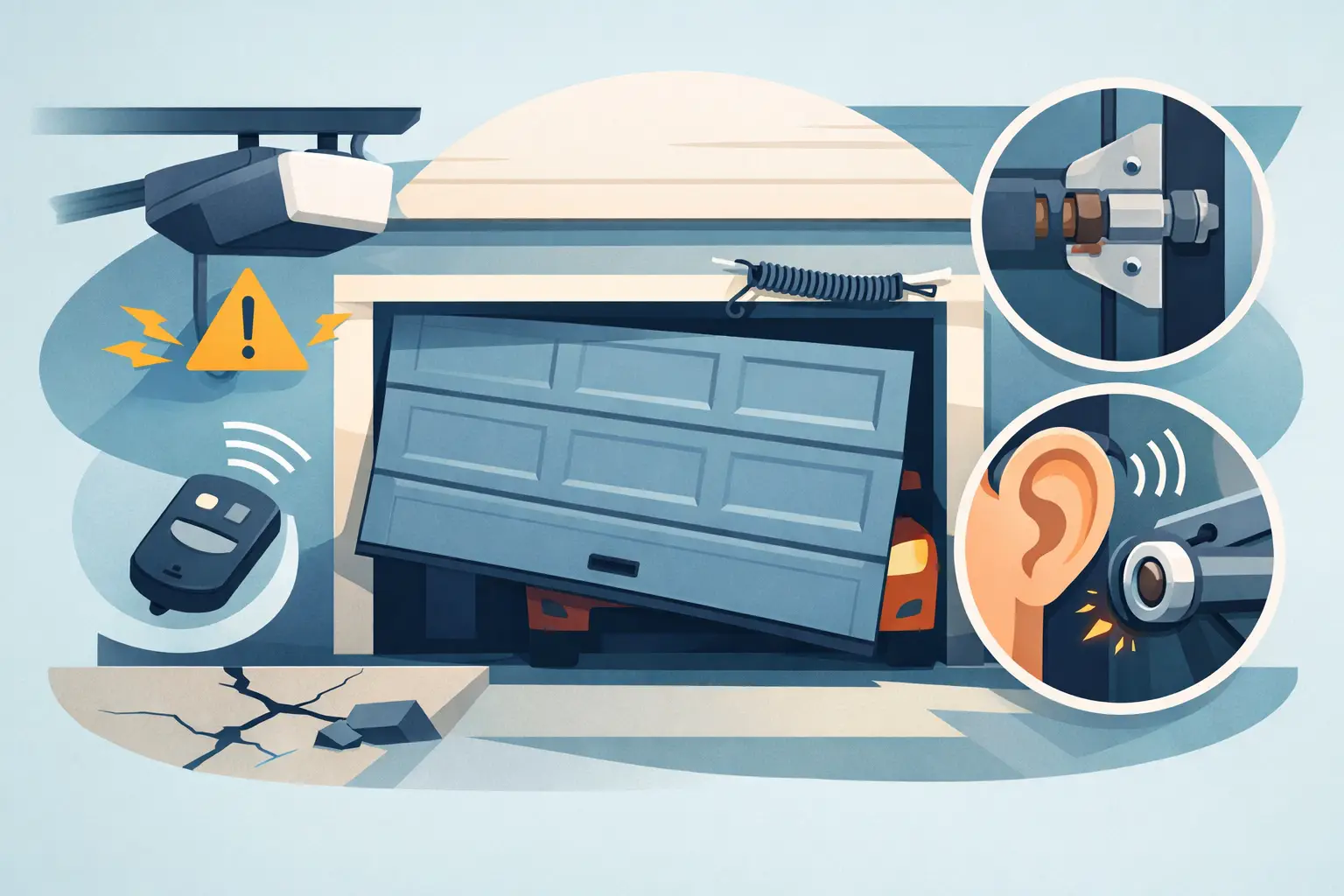
- Unusual Noises: Grinding, squealing, clicking, or banging sounds during operation often point to worn-out gears, a strained motor, or misaligned components within the opener system.
- Remote Control Issues: While sometimes a simple battery or programming problem, persistent unresponsiveness of your remote or wall button can signal a failing transmitter or receiver in the opener unit.
- Visible Damage or Wear: Inspecting the opener’s motor unit, chain or belt, and trolley can reveal signs of physical damage, rust, or excessive wear that compromise its function.
- Safety Feature Malfunctions: If the opener’s safety sensors are constantly being tripped, or if the auto-reverse function fails, it’s a critical sign of an underlying issue that needs immediate attention.
- Age of the Opener: Most garage door openers have a lifespan of 10-15 years, and older units are naturally more prone to developing problems due to wear and tear on their internal components.

Credit: unwindoor.com
Understanding Garage Door Opener Mechanics
A modern garage door opener is a sophisticated electromechanical device designed to lift and lower a heavy garage door with ease. At its core, it comprises several key components that work in concert to achieve this task. The motor is the powerhouse, typically an AC or DC motor, which drives the system. This motor is connected to a gear system (often a worm gear or a series of spur gears) that reduces speed and increases torque. This rotational force is then transferred to a trolley that moves along a rail (either a chain drive, belt drive, or screw drive system). The trolley is attached to a drawbar or arm that connects to the garage door, pulling it open or pushing it closed. Power is supplied through an electrical connection, and control signals come from a remote transmitter, a wall-mounted button, and often a keypad. Safety is paramount, with photoelectric sensors at the bottom of the door track and an auto-reverse mechanism built into the trolley system to prevent accidents. The lifespan and performance of the opener are heavily dependent on the integrity and functionality of each of these parts. Regular maintenance, such as lubricating moving parts and ensuring the safety sensors are aligned, can significantly extend the life of the opener, but even the best systems will eventually show signs of wear. Understanding these components helps in diagnosing when a problem arises.
Credit: www.streamline-garage-doors.com
Common Signs Of A Failing Garage Door Opener
When your garage door opener begins to falter, it rarely happens all at once. Instead, you’ll typically notice a series of escalating symptoms. Recognizing these early warning signs can save you considerable hassle and expense.
Slowed Or Hesitant Operation
One of the most common initial indicators that your garage door opener is struggling is a noticeable decrease in speed or hesitation during its movement. If the door used to glide open and close smoothly and now moves at a snail’s pace, or if it stops momentarily mid-travel before continuing, it suggests that the motor is working harder than it should. This could be due to several factors:
- Motor Strain: The motor itself might be aging, with its windings degrading or its internal components experiencing increased friction. This reduces its power output, making it struggle to move the heavy door quickly.
- Drive System Issues: The chain, belt, or screw drive mechanism could be experiencing increased friction. This might be due to a lack of lubrication, a worn-out chain or belt, or a damaged screw drive. A worn chain can sag, affecting its engagement with the sprocket, while a frayed belt can slip. A dirty or damaged screw drive can cause significant resistance.
- Obstructions or Misalignment: While less common as a primary cause of consistent slowness, minor obstructions or slight misalignments in the door tracks or the opener’s rail can add resistance, forcing the motor to work harder. You might notice the door is particularly slow or jerky in specific spots.
- Power Supply Issues: Although less frequent, a fluctuating or insufficient power supply to the opener unit can also cause it to operate sluggishly.
If you observe your garage door moving significantly slower than usual, it’s a clear signal that something is amiss within the opener’s system. This isn’t just an aesthetic issue; it indicates that components are under strain, potentially leading to a complete breakdown if left unaddressed.
Unusual Noises During Operation
The sound your garage door makes is often a direct reflection of its internal health. A well-maintained opener should operate with a relatively quiet hum, perhaps with a slight whirring from the motor and the gentle sound of the chain or belt. However, if you start hearing new, disturbing noises, it’s a strong indicator of trouble.
- Grinding or Scraping: This often points to issues with the gear system inside the motor unit. Gears are made of metal or durable plastic, and when they start grinding, it usually means teeth are worn down, chipped, or misaligned. This can happen due to age, lack of lubrication, or overloading. A grinding sound is a serious warning, as it can quickly lead to complete gear failure, rendering the opener inoperable.
- Squealing or Shrieking: High-pitched squealing can originate from a few sources. It might be the motor bearings wearing out, causing friction. It could also be the drive mechanism (chain, belt, or screw) needing lubrication or being strained. If it’s a belt drive, a squeal might indicate the belt is slipping on the pulley.
- Clicking Sounds: Intermittent clicking can be less alarming than grinding, but it still warrants attention. It might be a relay inside the motor unit engaging or disengaging, which is normal. However, if the clicking is loud, frequent, or occurs during unusual moments (like when the door is stationary), it could indicate a problem with the limit settings or a struggling motor trying to engage. In some cases, it might be a sign of a failing capacitor in the motor.
- Banging or Clunking: Loud bangs or clunks are often associated with the trolley mechanism or the travel limits. The trolley might be hitting the end of its travel with excessive force, or a component within it could be loose or broken. This can also happen if the drawbar connecting the trolley to the door is loose or damaged.
Pay close attention to the *type* of noise and *when* it occurs. A persistent grinding or banging is far more indicative of a failing opener than a brief squeak that might be resolved with lubrication.
Remote Control And Wall Button Issues
Your garage door opener relies on signals from your remote and wall button to function. When these communication pathways break down, it can be frustrating and, in some cases, point to a deeper problem with the opener’s receiver.
- Remote Unresponsiveness: If your remote suddenly stops working, the first things to check are the batteries. Replace them with fresh ones. If that doesn’t work, the issue might be with the remote itself losing its programming or failing internally. However, if multiple remotes fail simultaneously, or if a new remote doesn’t work either, the problem likely lies with the receiver logic board inside the garage door opener unit. This board might be damaged, corroded, or simply worn out.
- Wall Button Malfunctions: Similar to remotes, if your wired wall button becomes unresponsive, it could be a loose wire connection, a faulty button, or a problem with the wiring itself. However, if the wall button works intermittently, or if it requires multiple presses to activate the opener, it could also indicate a failing control board within the opener.
- Intermittent Operation: This is perhaps the most confusing issue. Sometimes the opener works perfectly, and other times it doesn’t respond at all. This can be caused by loose wiring connections that make and break contact, or by a failing logic board that is experiencing intermittent faults. This type of unpredictable behavior is a strong sign of an impending failure.
When troubleshooting remote issues, it’s important to differentiate between a simple fix (like changing batteries or reprogramming) and a sign of a failing opener. For instance, if you’ve tried reprogramming your Liftmaster remote and it still doesn’t work, the opener’s receiver is a prime suspect. Similarly, if resetting your Craftsman remote yields no results, the opener unit itself might be the issue.
Visible Damage Or Wear And Tear
A visual inspection of the garage door opener unit can often reveal tell-tale signs of wear and potential failure. Don’t ignore what you can see.
- Motor Unit: Look for any physical damage, such as cracks in the casing, rust buildup, or discoloration around vents, which could indicate overheating. Check if the unit feels excessively hot to the touch after operation (beyond normal warmth). Excessive dust and grime accumulation can also impede ventilation and cause overheating.
- Chain or Belt: For chain-driven openers, inspect the chain for signs of rust, stretching, or missing/damaged links. For belt-driven openers, check the belt for fraying, cracks, or excessive looseness. A belt that appears worn or is sagging significantly will not engage properly with the pulleys, leading to operational issues. You can often adjust a slightly loose chain, but a severely worn one needs replacement.
- Rail and Trolley: Examine the rail for any signs of bending or damage. The trolley, which moves along the rail, should slide smoothly. Check if it appears warped, bent, or if its wheels are visibly worn down. Listen for any scraping or rubbing sounds as the trolley moves, which could indicate it’s not tracking correctly.
- Wiring: Inspect all visible wiring connected to the opener unit and the wall button. Look for any frayed wires, exposed copper, or loose connections. Damaged wiring can lead to intermittent operation or complete failure and can also pose a safety hazard.
In my experience, homeowners often overlook visible signs of wear until a complete failure occurs. A proactive inspection can highlight minor issues before they escalate. For example, a small amount of rust on a chain might be addressed with cleaning and lubrication, but if the chain is significantly corroded and stiff, it’s a sign of deeper problems.
Safety Feature Malfunctions
Garage door openers are equipped with crucial safety features designed to prevent accidents. When these features begin to fail, it’s not just an inconvenience; it’s a serious safety concern that indicates a potential malfunction in the opener’s control system or sensors.
- Photoelectric Sensor Issues: The photoelectric safety sensors are located near the bottom of the garage door tracks. They emit an invisible beam of light, and if this beam is broken while the door is closing, the door is supposed to immediately reverse. If your door repeatedly stops and reverses for no apparent reason (no obstruction), or if it fails to reverse when the beam is clearly broken (e.g., you wave your hand through it), the sensors may be misaligned, dirty, or failing. This can be due to dirty lenses, bent sensor brackets, or internal failure of the sensors or the opener’s logic board interpreting their signal.
- Auto-Reverse Mechanism Failure: Beyond the photoelectric sensors, the opener has an obstruction detection system that typically relies on resistance. If the door encounters an object (or significant resistance) while closing, it should automatically reverse. If your door continues to close even when encountering resistance, or if it stops and doesn’t reverse, this is a critical failure of the auto-reverse mechanism. This could be due to a malfunctioning motor, a faulty logic board, or incorrect force/travel limit settings that are no longer sensitive enough.
- Door Not Stopping at the Top or Bottom: The opener has travel limit settings that tell it when to stop opening or closing. If the door runs past its intended endpoint, hitting the ceiling or the floor with force, or if it stops too soon, preventing full opening or closing, the limit settings are off. While these can sometimes be adjusted, if they repeatedly lose their setting or the opener fails to respond to them, it points to a problem with the logic board or the internal mechanism that monitors the door’s position.
A failure in safety features is a critical warning sign. It suggests that the internal electronics or sensors of the opener are compromised. It’s essential to address these issues immediately, as they directly impact the safety of anyone using the garage.
Age Of The Opener Unit
Like any electromechanical device, garage door openers have a finite lifespan. While robust, their internal components are subject to wear and tear over time.
- Typical Lifespan: Most residential garage door openers are designed to last between 10 to 15 years. Some higher-quality models might last longer with diligent maintenance, while cheaper units may fail sooner.
- Component Degradation: Over years of use, motors can lose power, capacitors can weaken, gears can wear down, and circuit boards can develop faults due to heat cycles and electrical stress. Even plastic components can become brittle with age.
- Obsolescence: Older openers might lack modern safety features or connectivity options. Furthermore, replacement parts for very old models can become scarce, making repairs more difficult and expensive. If your opener is approaching or has passed the 15-year mark, it’s entering the danger zone for potential failures, and you should be more vigilant for the other signs mentioned.
When an opener reaches this age, even if it’s currently working, the likelihood of a breakdown increases significantly. It’s often wise to start budgeting for a replacement. The cost of a new garage door opener can range from $200 to $700 or more, depending on the type and features, plus installation costs. Understanding how much a garage door opener costs can help in planning for this eventual expense.

Credit: primosgaragedoors.com
Common Failure Points And Diagnoses
Delving deeper into the mechanics, certain components are more prone to failure than others. Identifying these specific points can aid in diagnosis.
Motor And Gearbox Issues
The motor and gearbox assembly is the heart of the garage door opener. It’s responsible for translating electrical energy into the mechanical force needed to move the door.
- Worn Motor: Over time, the motor’s windings can degrade, leading to reduced power and overheating. You might notice the motor smelling burnt or becoming unusually hot. The start capacitor, a component that helps the motor get going, can also fail, preventing the motor from starting altogether or causing it to hum without turning.
- Stripped Gears: The gearbox contains a series of gears that reduce the motor’s high speed to a usable torque. The most common failure here is a stripped gear, particularly the large gear that meshes with the drive sprocket. This often results in a loud grinding noise and the opener’s drive mechanism (chain or belt) spinning freely without moving the door. In many cases, this is a non-repairable issue for DIYers, requiring replacement of the entire opener unit or at least the gearbox assembly.
- Lubrication Failure: Lack of proper lubrication can accelerate wear on both the motor and the gears, leading to premature failure.
Diagnosis: Listen for grinding, humming without movement, or a lack of any sound when attempting to operate. Check for burnt smells. If the trolley moves freely when manually disengaged, but the opener’s drive mechanism spins without moving it, suspect stripped gears.
Drive System Problems (chain, Belt, Screw)
The drive system transmits the power from the gearbox to the trolley. Each type has its own failure modes.
- Chain Drive: The chain can stretch over time, causing it to slip on the sprocket or become noisy. Links can also break, though this is less common. The sprocket on the motor unit can also wear down.
- Belt Drive: Belts can fray, snap, or lose tension. A loose belt will slip, causing inefficient operation and noise. A snapped belt means the opener won’t move the door at all. Like chains, the pulleys can also wear.
- Screw Drive: The screw itself can become bent or damaged, causing the trolley to bind. The plastic nut on the trolley that engages with the screw can also wear out or crack. Lubrication is critical for screw drives; lack of it causes excessive friction and wear.
Diagnosis: Visually inspect the chain/belt for damage or looseness. For screw drives, observe the trolley’s movement for binding or jerky motion. Listen for slipping or grinding sounds specific to the drive system.
Logic Board And Electronic Failures
The logic board is the “brain” of the garage door opener. It interprets signals from remotes, keypads, and wall buttons, and controls the motor and safety features.
- Power Surges: Electronic components on the logic board are susceptible to damage from power surges, lightning strikes, or brownouts. This can cause intermittent or complete failure of the opener’s functions.
- Component Degradation: Over time, capacitors, relays, and other electronic components on the board can degrade, leading to erratic behavior or failure.
- Receiver Issues: The radio receiver integrated into the logic board can fail, preventing it from picking up signals from remotes. This is often indicated when remotes work intermittently or not at all, even after troubleshooting the remotes themselves.
Diagnosis: Erratic behavior, failure to respond to any commands, or specific functions (like safety reversal) not working are often indicative of logic board issues. If multiple remotes and the wall button fail to operate the opener, the logic board is a strong suspect. Sometimes, a fuse on the logic board may blow, which is a simpler fix than a completely failed board.
Sensor And Limit Switch Problems
These components dictate the safe and correct operation of the door.
- Photoelectric Sensors: As mentioned, these can fail due to misalignment, dirt, damage, or internal malfunction. The indicator lights on the sensors can often tell you if they are receiving a signal from each other.
- Limit Switches: These are small mechanical or electronic switches that signal the opener when the door has reached its fully open or closed position. If they fail, the door may stop too soon, too late, or not at all.
Diagnosis: For safety sensors, check indicator lights and ensure they are clean and aligned. For limit switches, observe where the door stops. If it consistently stops at the wrong position, the limit switch or its adjustment mechanism may be faulty.
When To Repair Vs. Replace
Deciding whether to repair a failing garage door opener or replace it entirely is a common dilemma. Several factors come into play.
Cost Of Repair Vs. Replacement
- Minor Repairs: Simple fixes like replacing a safety sensor, adjusting limit settings, or even replacing a remote control are relatively inexpensive and often worth the cost.
- Major Repairs: Replacing a logic board, gearbox, or motor can be costly. The price of these parts, combined with labor, can sometimes approach or even exceed the cost of a new, basic opener. For example, a new logic board might cost $100-$250 plus installation, while a new opener unit can be found for $200-$400.
- Age Factor: If your opener is more than 10-12 years old, even a successful repair might be a temporary solution. Older units have multiple components nearing the end of their lifespan, making subsequent failures more likely.
Availability Of Parts
For very old or obscure opener models, finding replacement parts can be difficult or impossible. This often makes replacement the only viable option. Manufacturers typically provide parts for a limited time after a model is discontinued.
Frequency Of Breakdowns
If your garage door opener has been breaking down frequently, even after repairs, it’s a strong sign that the entire unit is on its way out. Investing in repeated repairs is often throwing good money after bad. A new opener offers peace of mind and renewed reliability.
Technological Advancements
Newer garage door openers offer improved features such as quieter operation (especially DC motors), battery backup, smartphone control, enhanced security encryption, and more energy-efficient designs. If your current opener is old, upgrading can bring significant improvements to convenience and security.
Pro Tip: Before committing to a repair, get a detailed quote from a qualified technician. Compare this