
When your garage door won’t open smoothly, there’s a good chance the garage door spring needs attention. Many homeowners and DIYers face this problem. But before you replace or buy a new spring, you must know how to measure it correctly. Measuring a garage door spring is not as simple as it looks. The size, length, and other factors are critical for safety and performance. Choosing the wrong spring can make your door dangerous or useless.
This guide will show you every detail you need to measure a garage door spring with confidence. We’ll cover types of springs, tools required, step-by-step instructions, safety tips, and common mistakes. You’ll also learn how to interpret markings and compare your measurements for best results.
If you want to avoid expensive repairs and keep your garage door running smoothly, read on.
Why Measuring Garage Door Springs Matters
Most garage doors weigh over 100 pounds, and the spring does most of the lifting. The right spring makes opening the door almost effortless, whether by hand or with an opener. If you pick the wrong size, your door may:
- Not open or close properly
- Wear out the opener quickly
- Become unbalanced and dangerous
- Snap or break, causing injury
A spring that is too strong or too weak creates problems. That’s why accurate measurement is key. Also, manufacturers use different numbering systems, so trusting your eyes or guessing is risky.
Understanding Garage Door Springs
Before you measure, you need to know what kind of spring you have. There are two main types:
Torsion Springs
Torsion springs are mounted above the garage door opening, parallel to the door. They twist to store energy. When the door opens, the spring unwinds, helping lift the door. Torsion springs are common in modern garage doors.
Extension Springs
Extension springs are found above the upper tracks on both sides of the door. They stretch to store energy. When the door opens, they contract. Extension springs are often used in older or lighter doors.
Key Differences
- Torsion springs last longer and are safer but need precise measurement.
- Extension springs are easier to install but can be more dangerous if they break.
Knowing your spring type is the first step because the measurement process is different for each.
Safety First: Precautions Before Measuring
Measuring garage door springs can be dangerous. The springs are under high tension and can cause serious injury. Here are safety steps you should never skip:
- Disconnect the opener: Unplug or disconnect the automatic opener.
- Secure the door: Lower the door fully and use clamps or locking pliers on the track to prevent movement.
- Wear safety gear: Use gloves and eye protection to guard against sudden release.
- Never remove a loaded spring: Only measure a spring when the tension is released.
If you feel unsure, it’s best to call a professional. Working with garage door springs is not a beginner project.
Tools And Supplies Needed
To measure a garage door spring accurately, gather these items:
- Tape measure (at least 36 inches)
- Caliper or ruler (for inside diameter)
- Pen and paper
- Safety gloves and goggles
- Camera or phone (to take photos as reference)
- Flashlight (if your garage is dark)
Having everything ready makes the process smoother and safer.
How To Measure A Torsion Garage Door Spring
Torsion springs require several measurements. Each one is important for ordering the correct replacement. Here’s the step-by-step process:
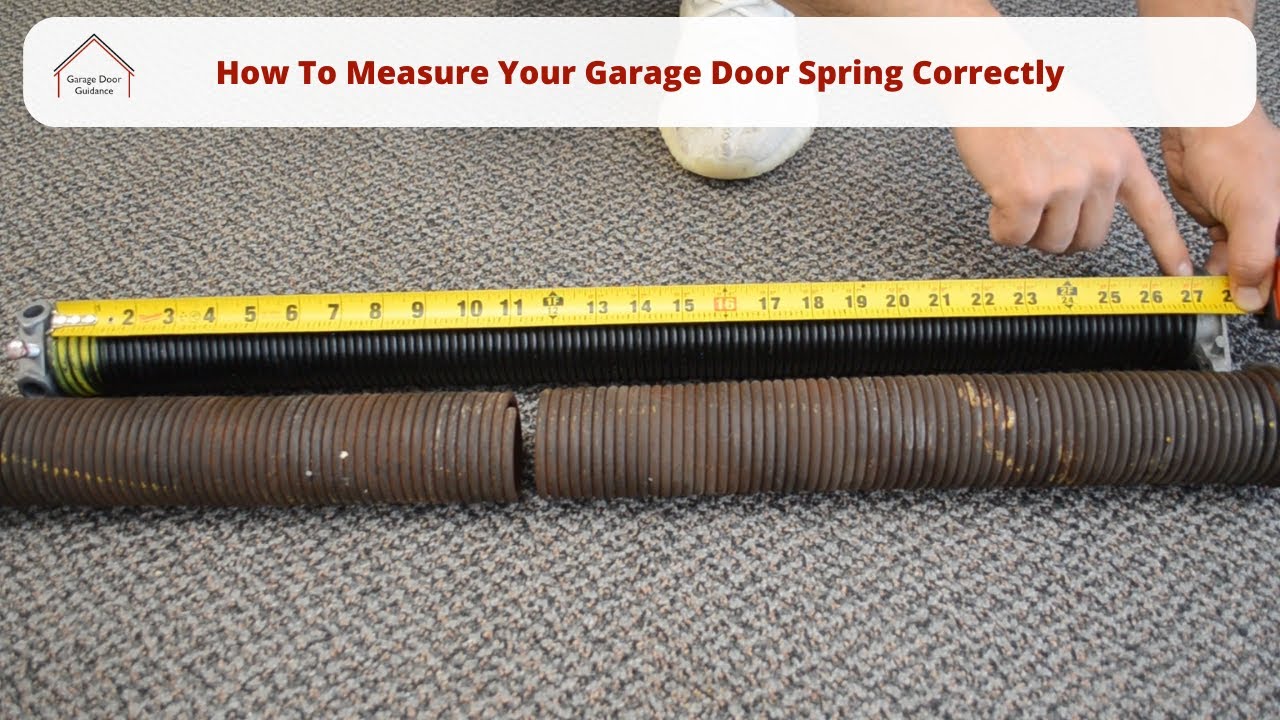
1. Measure The Length Of The Spring
- Remove the spring from the shaft if possible and lay it flat.
- Use a tape measure to measure the coil length from one end to the other, not including the end cones.
- Measure to the nearest 1/16 inch for best accuracy.
- If you cannot remove the spring, measure as much as possible and add the remaining coils.
Tip: Springs expand over time. If the coils are stretched, measure the compressed (tightest) area.
2. Measure The Inside Diameter
- Use a caliper or ruler to measure the inside diameter of the spring.
- Place the tool inside the coil and measure across.
- Common diameters are 1.75″, 2″, or 2.25″.
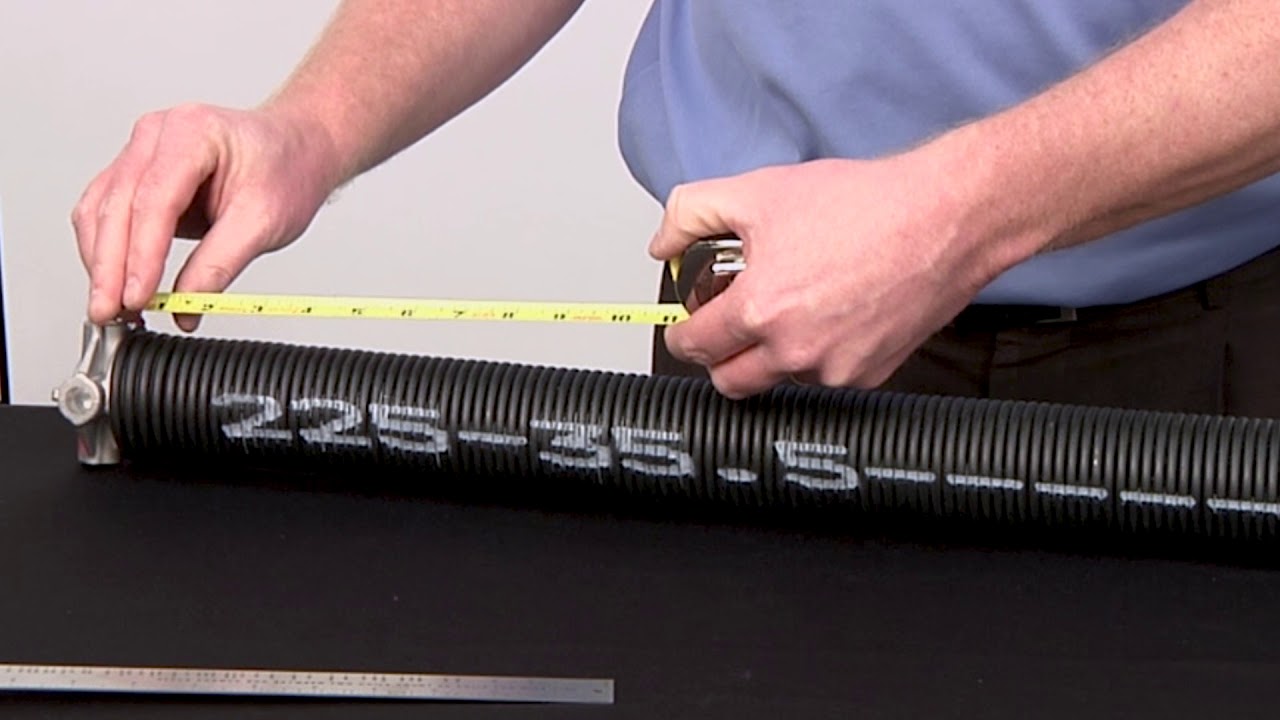
Non-obvious insight: Many springs are marked with the diameter on the cone. Look for numbers like “175” (1.75 inches).
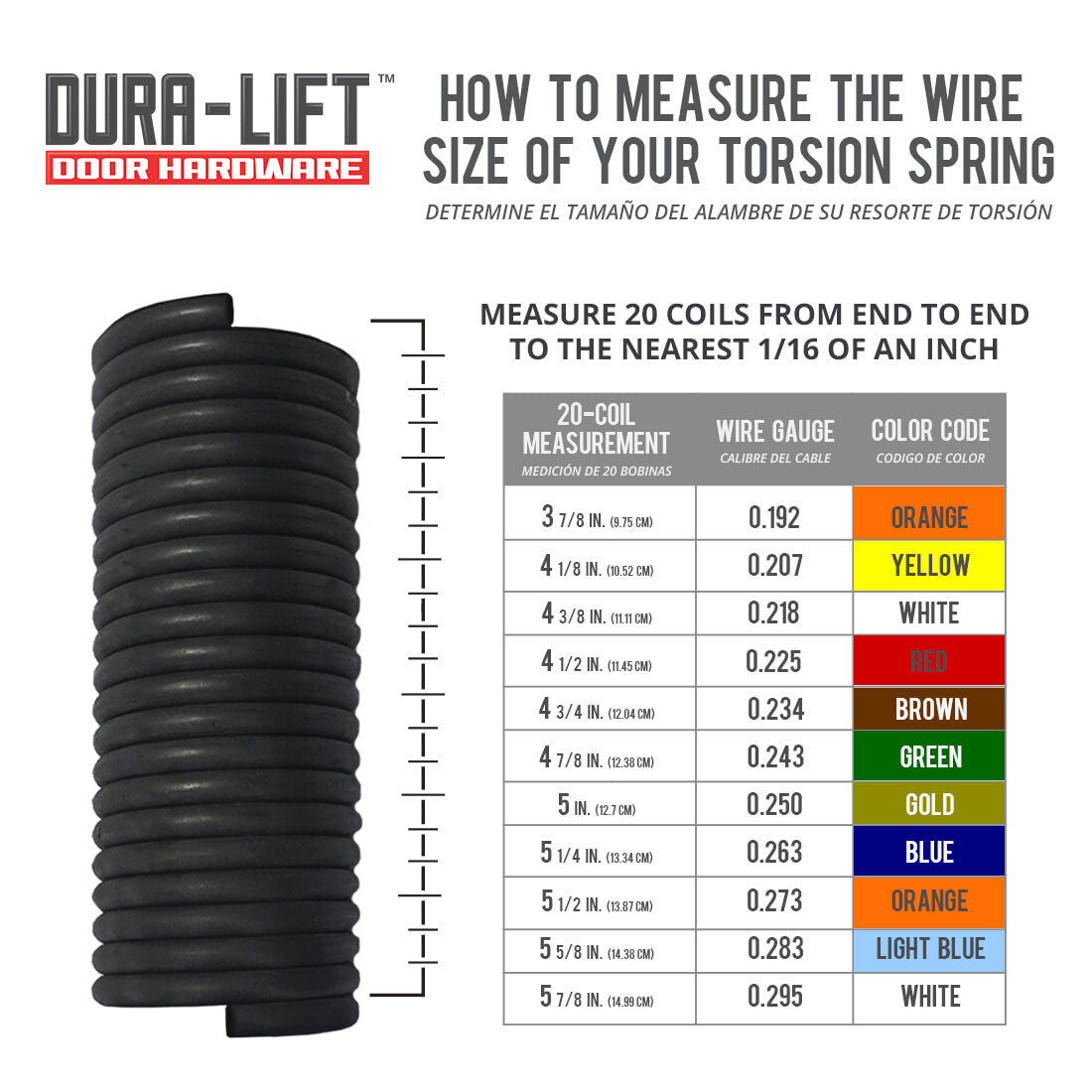
3. Count The Wire Size (wire Gauge)
- Take a 10-coil measurement: Place the end of the tape measure at the beginning of one coil and count 10 coils along the spring.
- Measure the total length across these 10 coils.
- Divide by 10 to find the wire size. For example, if 10 coils measure 2.5″, the wire size is 0.25″.
Common mistake: Don’t measure the outside wire; measure along the coils themselves.
Example Of Wire Size Calculation
If 20 coils measure 5 inches:
5 inches ÷ 20 = 0. 25 inch wire size.
4. Determine Wind Direction
Torsion springs are either left-wound or right-wound. This is critical for correct installation.
- Left-wound springs are for the right side of the door (from inside looking out).
- Right-wound springs are for the left side.
How to check: Hold the spring vertically. If the coil rises to the right, it’s right-wound; if it rises to the left, it’s left-wound.
5. Count The Number Of Springs
Some doors use one spring, others use two. Always measure each spring. They may be different sizes if replaced at different times.
6. Look For Markings
Many torsion springs have color-coded paint or stamped numbers on the cones. These can confirm your measurements.
Torsion Spring Measurement Example
You measure:
- Length: 28 inches
- Inside diameter: 2 inches
- 20 coils = 5 inches (0.25″ wire size)
- Right-wound
You would order: 28″x2″x0.25″ right-wound torsion spring.
How To Measure An Extension Garage Door Spring
Extension springs are less complex but still require careful measurement.
1. Measure The Overall Length
- Remove the spring (with tension released).
- Measure from one end of the hook to the other, including the hooks or loops.
- Record the length to the nearest 1/16 inch.
Non-obvious insight: Never measure a stretched or broken spring. Only measure when it is fully relaxed.
2. Measure The Outside Diameter
- Use a tape measure or caliper to measure the outside diameter of the coil, not including the hooks.
3. Determine Wire Gauge
- Similar to torsion springs, measure 10 or 20 coils and divide by the number of coils.
4. Identify The End Type
Extension springs can have different ends:
- Open hooks
- Closed loops
- Double looped
- Clip ends
Note the end type, as it affects compatibility and safety.
5. Check For Color Coding
Extension springs often have paint stripes to indicate weight capacity. Look for colored bands and match them with the manufacturer’s chart.
Extension Spring Measurement Example
You measure:
- Length: 36 inches (including hooks)
- Outside diameter: 1.5 inches
- 10 coils = 2.0 inches (0.2″ wire size)
- Double loop ends
Order: 36″x1.5″x0.2″ double loop extension spring.
How To Read Garage Door Spring Markings
Manufacturers may use different markings to show size, type, and weight rating. Understanding these codes can save time and prevent errors.
- Torsion springs: Numbers like “250×2.0x28″ mean 0.250″ wire, 2″ diameter, 28” length.
- Extension springs: Color bands on the spring match weight charts (e.g., yellow, green, blue).
Always compare your measurements to the markings for confirmation.
Comparing Common Garage Door Spring Sizes
Different door sizes and weights require different springs. Here’s a comparison of typical torsion spring sizes for residential garage doors:
| Door Width | Spring Length | Inside Diameter | Wire Size | Common Uses |
|---|---|---|---|---|
| 8 ft | 25-30 in | 1.75 in | 0.207-0.250 in | Single car, lightweight |
| 12 ft | 28-36 in | 2.0 in | 0.225-0.262 in | Double car, medium weight |
| 16 ft | 32-42 in | 2.0 in | 0.243-0.273 in | Double car, heavy |
Practical tip: Never rely only on door width. Measure your spring for the exact fit.
Matching Spring Strength To Door Weight
Garage doors come in different materials and weights. The spring must be matched to the door’s total weight for smooth operation.
| Door Material | Typical Weight (8×7 ft) | Spring Strength Needed |
|---|---|---|
| Aluminum | 70-90 lbs | Light |
| Wood | 120-180 lbs | Heavy |
| Steel (Insulated) | 90-140 lbs | Medium |
Non-obvious insight: Adding windows or insulation increases weight—always weigh your door if possible.
Step-by-step: Weighing Your Garage Door
If you do not know the door weight, you can weigh it:
- Disconnect the opener.
- With the springs removed or fully relaxed, carefully lift the door by hand.
- Place a bathroom scale under the center edge of the door.
- Record the weight when the door is just off the ground.
Tip: This is a two-person job for safety.
Common Mistakes When Measuring Garage Door Springs
Avoid these costly errors:
- Measuring old, stretched springs: Always measure the spring in its relaxed state, not when stretched or worn.
- Ignoring wire size: Many people guess the wire size. Even a small error affects door balance.
- Swapping left and right-wound: Installing the wrong wind direction can cause rapid failure.
- Forgetting end types: Especially with extension springs, the wrong ends won’t fit.
- Not measuring both springs: Twin springs can be different sizes if replaced at different times.
- Ordering by outside diameter (torsion): Torsion springs use inside diameter, not outside.
Pro tip: Double-check all measurements and compare with manufacturer charts.
When To Replace Both Springs
If your door has two springs and one breaks, always replace both. Springs wear out together. Installing only one new spring creates uneven lifting and extra stress.
How To Record And Order The Correct Spring
Write down these details before ordering:
- Spring type (torsion or extension)
- Length
- (Inside) diameter
- Wire size
- End type (extension)
- Wind direction (torsion)
- Number of springs
- Color codes or markings
Give all information to the supplier. If possible, bring the old spring to the store for an exact match.
Using Manufacturer Charts And Resources
Most spring suppliers offer sizing charts to help match your measurements. These charts show the correct spring for your door weight, size, and type.
Example: A chart may show that a 9×7 ft steel door with 0.243″ wire and 2″ inside diameter uses a 32″ torsion spring.
For further details, see the Wikipedia: Garage Door Opener page for industry standards and safety information.
Diy Vs. Professional Replacement
Measuring is only part of the job. Installing garage door springs is dangerous due to high tension. If you have any doubts, hire a professional installer. They have special tools and experience to prevent injury.
Pro insight: The cost of a mistake is higher than the price of professional service.
Maintenance Tips After Measuring And Replacing Springs
Once you have the right springs installed:
- Lubricate springs with garage door lubricant twice a year.
- Test the balance of your door regularly.
- Check for rust and wear.
- Listen for squeaks or uneven movement.
Regular maintenance extends the life of your springs and keeps your garage safe.
How To Troubleshoot Garage Door Spring Problems
If your door is not working smoothly after measuring and replacing springs:
- Check that springs match your measurements.
- Make sure the wind direction is correct.
- Inspect end types and mounting.
- Confirm both springs are the same type and strength.
- Look for loose hardware or misaligned tracks.
If problems continue, call a qualified technician.
Measuring For Special Or Unusual Doors
Some garage doors have custom or oversized springs:
- Commercial doors may require heavy-duty springs.
- Low-headroom doors need special spring setups.
- Custom wood or carriage doors often use unique sizes.
For these cases, consult the door manufacturer or a specialist. Never guess on unusual doors.
Practical Examples And Case Studies
Example 1: Sarah, a homeowner, measured her torsion spring as 30″ long, 2″ inside diameter, and 0.250″ wire size. She ordered based on outside diameter and received a spring that didn’t fit. She learned that inside diameter is always the standard.
Example 2: Tom replaced one broken extension spring but ignored the color coding. His door opened unevenly. Both springs must match in length, diameter, and color code.
Example 3: A DIYer used a regular tape measure to guess wire size. The new spring was slightly off, causing the opener to struggle and the door to slam shut. Using the 10-coil method would have prevented this.
How To Extend Garage Door Spring Life
- Use the correct size and type for your door.
- Lubricate regularly.
- Avoid slamming the door.
- Check and adjust door balance annually.
- Replace both springs at the same time.
These simple steps can double the life of your springs.
Summary: The Key Steps To Accurate Measurement
To measure a garage door spring:
- Identify the spring type (torsion or extension).
- Release all tension and remove the spring safely.
- Measure length, diameter, and wire size as described.
- Record end types and wind direction.
- Use charts and markings for confirmation.
- Order matching springs and install with care.
Accuracy and safety are the two most important factors.
Frequently Asked Questions
What Happens If I Choose The Wrong Garage Door Spring Size?
Using the wrong spring size can cause your door to be unbalanced. It may not open or close properly, can damage the opener, and creates safety risks. Always measure carefully and double-check your results.
Can I Measure The Spring Without Removing It?
You can measure some features, like length and diameter, while the spring is on the door. But for the most accurate results, it’s best to remove the spring and ensure all tension is released.
How Do I Know If My Spring Is Left-wound Or Right-wound?
Hold the spring vertically. If the coil rises to the right, it’s right-wound. If it rises to the left, it’s left-wound. This is important for ordering and installation.
How Long Do Garage Door Springs Usually Last?
Most residential garage door springs last between 7,000 and 10,000 cycles (one cycle = one open and close). With regular maintenance, they can last 7-12 years depending on usage.
Should I Replace Both Springs If Only One Is Broken?
Yes. Springs wear out at the same rate. Replacing only one can lead to uneven lifting and faster failure of the remaining spring.
Measuring a garage door spring can seem complex, but with the right steps, tools, and care, you can do it safely and accurately. Take your time, double-check every measurement, and when in doubt, ask a professional. This way, your garage door will stay reliable and safe for years to come.