
Garage doors are more than just entry points for vehicles and storage; they are crucial for home safety and daily convenience. A key part of any garage door system is the garage door spring. These springs lift and lower heavy doors, making the process smooth and effortless. But just like any mechanical part, garage door springs do not last forever. Many homeowners wonder, “How long should garage door springs last?” This question matters because a broken spring can cause inconvenience, expensive repairs, or even safety risks.
Understanding the typical lifespan of garage door springs, what affects their durability, and how to spot signs of wear can help you avoid sudden failures. If you know what to expect, you can plan for maintenance or replacement before serious problems occur.
Whether you’re a new homeowner or someone with years of experience, this guide will provide deep insights into garage door springs, their expected life, and how to maximize their performance.
What Are Garage Door Springs?
Garage door springs are essential hardware components designed to counterbalance the weight of the garage door. When you open or close the door—whether by hand or with an automatic opener—the springs do most of the heavy lifting. There are two main types of springs used:
- Torsion springs – Mounted horizontally above the door opening. They twist (torque) to provide lifting force.
- Extension springs – Located above the upper tracks on both sides. They stretch and contract to help raise and lower the door.
Both types serve the same purpose, but their design, performance, and lifespan can differ significantly.
How Garage Door Springs Work
When the garage door is closed, the springs are under tension. As you open the door, the tension releases, helping to lift the door. This means you—or your garage door opener—don’t have to carry the full weight. For example, a typical single-car garage door may weigh 130-150 pounds, but a well-functioning spring makes it feel much lighter.
Understanding this mechanism is important because when the springs fail, the full weight of the door is no longer supported. This can cause the door to slam shut suddenly or become impossible to lift.
Average Lifespan Of Garage Door Springs
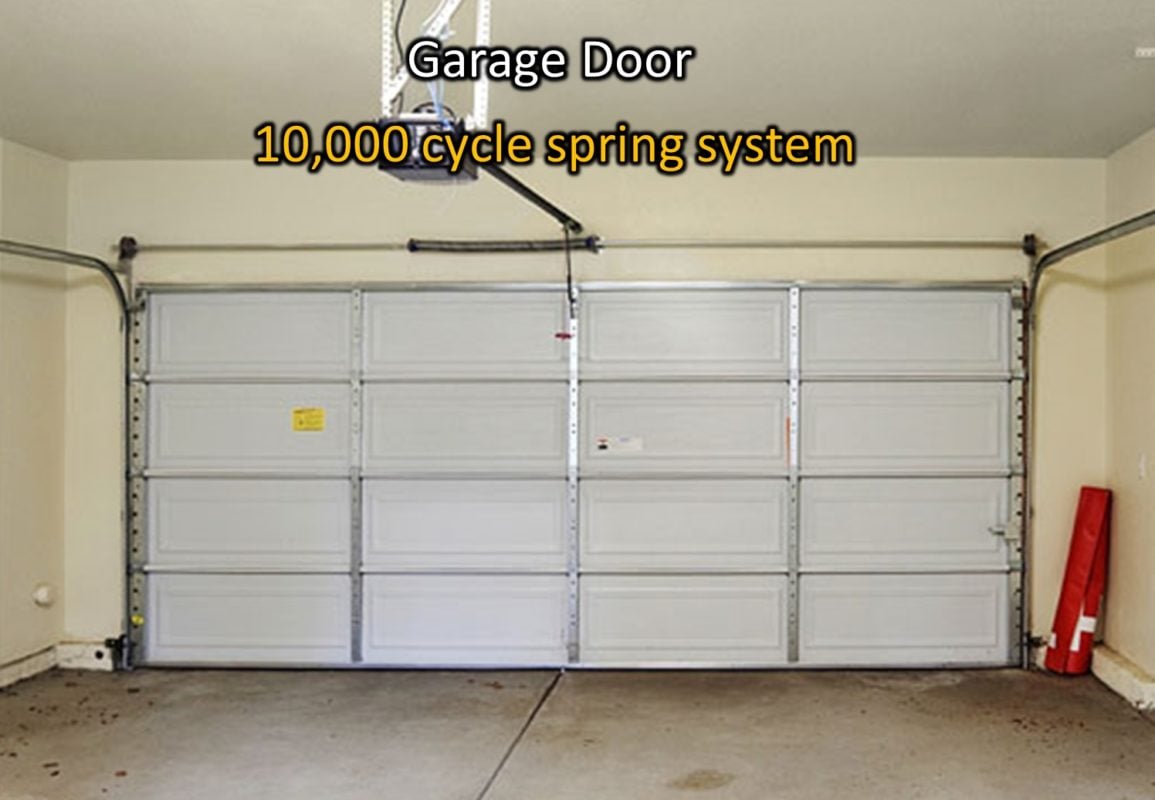
Most garage door springs are rated by “cycles.” A cycle is one complete opening and closing of the garage door. The average garage door spring is built to last 10,000 cycles. But how many years does that mean in real life? Let’s break down the numbers.
Torsion Springs
- Standard torsion springs: 10,000 cycles (about 7–10 years with average use)
- High-cycle torsion springs: 20,000–50,000 cycles (can last 15–25 years)
Extension Springs
- Standard extension springs: 10,000 cycles (about 7–10 years)
- Heavy-duty extension springs: Up to 20,000 cycles (12–15 years)
Real-world Example
If you open and close your garage door four times daily (two departures and two returns), that’s about 1,460 cycles per year. A 10,000-cycle spring would last just under 7 years with this usage. If your family uses the garage more often, the lifespan drops.
Table: Garage Door Spring Lifespan Comparison
| Spring Type | Cycle Rating | Estimated Lifespan (Years) | Usage Scenario |
|---|---|---|---|
| Torsion (Standard) | 10,000 | 7–10 | Average Family (4 cycles/day) |
| Torsion (High-Cycle) | 20,000–50,000 | 15–25 | High Usage (6–8 cycles/day) |
| Extension (Standard) | 10,000 | 7–10 | Average Family |
| Extension (Heavy-Duty) | 20,000 | 12–15 | Frequent Usage |
Factors That Affect Garage Door Spring Lifespan
The “10,000 cycles” estimate is a guideline, not a guarantee. Several factors can shorten or lengthen the life of your garage door springs.
1. Frequency Of Use
The more you use your garage door, the faster the springs wear out. Some people use the garage as their main entrance, adding extra cycles each day.
2. Spring Quality
Not all springs are created equal. High-quality, oil-tempered steel springs last longer than cheaper, low-grade options. Investing in quality can add years to the lifespan.
3. Garage Door Weight And Size
Heavier or oversized doors require more effort from the springs, which can lead to quicker fatigue. Make sure your springs are correctly matched to your door.
4. Maintenance Routine
Regular lubrication and inspection can help prevent rust and spot early signs of wear. Neglecting maintenance can make springs break down sooner.
5. Environmental Conditions
Springs exposed to moisture, road salt, or extreme temperatures are more likely to corrode. Humid climates or coastal areas can be especially tough on metal springs.
6. Installation Quality
Improper installation, such as using the wrong size or failing to balance the door, places extra stress on springs. Always use a professional for installation.
7. Door Balance
A poorly balanced door forces the springs to work harder, causing early failure. You can test balance by disconnecting the opener and lifting the door halfway—if it stays in place, the balance is good.
Signs Your Garage Door Springs Are Wearing Out
Knowing when your springs are nearing the end of their life can save you from sudden breakdowns. Here are clear warning signs:
- Door closes too quickly or slams shut
- Door feels unusually heavy when lifting manually
- Visible gaps in the spring coil (especially with torsion springs)
- Squeaking or grinding noises
- Cables or pulleys look loose or out of place
- Door jerks or moves unevenly
If you notice any of these, it’s time to call a professional. Trying to adjust or replace springs yourself can be dangerous.
Types Of Garage Door Springs And Their Durability
Let’s look closer at the two main types and how their design impacts life and performance.
Torsion Springs
Torsion springs are considered more modern and durable. They are mounted above the door and twist to store energy. Torsion springs:
- Offer smoother, quieter operation
- Provide more controlled movement
- Tend to last longer and break less violently
- Are more easily adjusted for balance
Torsion springs are available in different lengths and wire sizes, allowing for customization based on the door’s weight. Upgrading to a high-cycle torsion spring can double or triple your spring lifespan.
Extension Springs
Extension springs stretch and contract alongside the tracks. They are more common in older doors and are usually less expensive. Extension springs:
- Are easier to install in tight spaces
- Are more likely to snap suddenly
- Can wear out faster if not properly maintained
- Require safety cables to prevent injury if they break
While extension springs are still widely used, many homeowners upgrade to torsion systems for safety and longevity.
Table: Key Differences Between Torsion And Extension Springs
| Feature | Torsion Spring | Extension Spring |
|---|---|---|
| Location | Above door opening | Above upper tracks |
| Operation | Twisting torque | Stretch and contract |
| Cycle Lifespan | 10,000–50,000 | 10,000–20,000 |
| Safety | Breaks less violently | Needs safety cables |
| Cost | Higher | Lower |
How To Maximize The Life Of Garage Door Springs
With good habits and simple maintenance, you can extend the life of your garage door springs. Here’s how:
1. Lubricate Regularly
Apply a garage door lubricant (not WD-40) to the springs every 6–12 months. This reduces friction, prevents rust, and keeps the springs moving smoothly.
2. Schedule Professional Inspections
Have a qualified technician inspect your garage door system once a year. They can spot and fix small problems before they become big ones.
3. Test Door Balance
At least twice a year, disconnect the automatic opener and lift the door halfway. If the door moves up or down on its own, the springs may need adjustment.
4. Replace Both Springs Together
If one spring breaks, replace both—even if the other seems fine. Springs wear at the same rate, so the second one will likely fail soon.
5. Avoid Unnecessary Cycles
Don’t use your garage door as a front door unless necessary. Reducing daily cycles can add years to spring life.
6. Use Quality Parts
When replacing springs, invest in high-cycle or oil-tempered options. The upfront cost is higher, but you’ll get more years out of them.
7. Keep The Garage Dry
If possible, keep moisture out of the garage. Install weather seals and ensure proper drainage to prevent rust.
Practical Tip
Many homeowners do not realize that a poorly insulated garage allows for more humidity, which can silently corrode springs over time. Installing a simple dehumidifier or improving ventilation can help preserve your springs.
The Real Cost Of Ignoring Worn Springs
Delaying spring replacement can lead to much bigger problems. Here’s why:
- Sudden door failure can trap your car inside or out.
- A snapping spring can cause property damage or severe injury.
- Your garage door opener might burn out from lifting a heavy, unsupported door.
- Emergency repairs are more expensive than planned maintenance.
Replacing springs before they break is always safer and cheaper in the long run.
Diy Vs. Professional Replacement
Many homeowners are tempted to save money by replacing garage door springs themselves. This is risky. Springs are under extreme tension—improper handling can cause severe injuries.
When To Call A Professional
- If you see a broken spring
- If the door is out of balance
- If you are unsure what type or size of spring you need
Professionals have the right tools and experience to do the job safely. They can also check for other issues, like worn cables or rollers, during the service.
Table: Diy Vs. Professional Spring Replacement
| Factor | DIY | Professional |
|---|---|---|
| Safety | High risk of injury | Safe and insured |
| Warranty | Usually none | Parts and labor covered |
| Cost | Lower upfront | Higher, but with service |
| Quality | May choose wrong part | Correct sizing guaranteed |
| Time | Several hours or more | Usually 1 hour or less |
Choosing The Right Replacement Spring
Selecting the right spring is not as simple as picking one off the shelf. You must know:
- The weight and height of your door
- The spring length and wire diameter
- The inside diameter of the spring (for torsion types)
- The cycle rating you want
Professionals use precise tools to measure these factors. Choosing the wrong spring can cause the door to operate unsafely or damage other parts.
Common Mistake
A frequent mistake is installing a spring that is too strong or too weak for the door. An overly strong spring can make the door fly upward, while a weak one won’t lift it at all. Always check the manufacturer’s specifications or consult a professional.
Cost Of Garage Door Spring Replacement
The price of garage door spring replacement depends on several factors:
- Type of spring (torsion is more expensive than extension)
- Cycle rating (high-cycle springs cost more)
- Labor charges in your area
On average, you can expect:
- Torsion spring replacement: $150–$350 (parts and labor)
- Extension spring replacement: $120–$250
High-cycle or custom springs can increase the cost. Getting quotes from several local companies ensures you don’t overpay.
Upgrading To High-cycle Springs: Is It Worth It?
Many modern garage doors offer the option to upgrade to high-cycle springs. These last two to five times longer than standard models.
When To Upgrade
- If your garage door is the main entrance for your family
- If you own a multi-car household with frequent use
- If you want fewer repairs over the next 10–20 years
The extra cost is usually modest compared to the labor savings and peace of mind.
Non-obvious Insight
High-cycle springs are not just for busy families. If you plan to stay in your home for many years, the investment means you may never have to replace your springs again.
Warranties And What To Expect
Most garage door springs come with warranties ranging from 1 to 5 years. High-cycle springs or professional installations often have longer warranties.
- Read the fine print: Some warranties are void if you install springs yourself.
- Keep receipts and service records: If there’s a problem, proof of maintenance can help with claims.

What Happens When Springs Fail?
A broken spring is obvious: you may hear a loud “bang” from the garage, and the door becomes very heavy or won’t move at all. Do not force the door open—this can damage the opener and risk injury.
Safety Tip
Never try to repair or replace garage door springs yourself unless you are trained. The tension in these springs can cause severe injuries.
How To Tell Which Spring You Have
If you’re unsure which type of spring your door uses:
- Torsion springs: Located above the door opening, mounted on a metal shaft.
- Extension springs: Found parallel to the door tracks, stretching as the door closes.
Knowing your spring type helps when calling for service or ordering parts.
The Role Of Other Garage Door Parts
Springs are only one part of the system. Rollers, cables, hinges, and openers all play a role. A failing spring can put extra stress on these parts, leading to more repairs if not fixed quickly.
Example
A worn spring can cause cables to fray or come off the drum. Regular checks can save you from a cascade of failures.
Is There A “stronger” Or “better” Spring?
The “best” spring is the one correctly matched to your door’s size and weight. While high-cycle springs last longer, using a spring that is too strong or not rated for your door can cause more problems. Always match the spring to the door for safe, smooth operation.
Garage Door Spring Safety Tips
- Never stand directly under a garage door with worn or suspect springs.
- Do not attempt makeshift repairs with clamps or ropes.
- If you hear unusual noises, call a technician immediately.
- Teach children to stay clear of moving garage doors.
How To Track Your Spring’s Age
Many homeowners forget when their springs were installed. Attach a small sticker with the installation date on the spring or nearby. This simple step helps you plan ahead for replacement.
Environmental Effects On Spring Life
If you live in a coastal area, use springs with protective coatings to resist salt air. In cold climates, check for ice buildup that can stress the springs.
The Value Of Preventive Maintenance
A little attention now can prevent big problems later. Spending 10 minutes twice a year on lubrication and checks can save hundreds in emergency repairs.
When To Replace The Entire Garage Door
If your garage door is over 20 years old, or if multiple parts are failing, consider replacing the whole system. Modern doors are more energy-efficient, safer, and quieter. New doors often come with high-cycle springs as standard.
Reliable Information Sources
For more technical details about garage door springs, check resources like the Wikipedia Garage Door Opener page, which covers the mechanics and types in depth.
Frequently Asked Questions
How Do I Know If My Garage Door Spring Is Broken?
You may hear a loud bang, and the door will suddenly become very heavy or won’t open at all. Sometimes, you’ll see a gap in the spring or notice the door hanging unevenly.
Can I Replace Garage Door Springs Myself?
It’s not recommended unless you have experience. Garage door springs are under high tension and can cause serious injury. Always call a trained professional.
How Much Does It Cost To Replace Garage Door Springs?
On average, replacement costs range from $120 to $350, depending on the spring type and your location. High-cycle springs or custom doors may cost more.
How Can I Make My Garage Door Springs Last Longer?
Lubricate them regularly, avoid unnecessary cycles, keep the garage dry, and schedule annual inspections. High-quality springs also last longer.
Are High-cycle Springs Worth The Extra Money?
Yes, especially if you use your garage door often or plan to stay in your home for many years. High-cycle springs provide better value and fewer headaches over time.
Garage door springs are the hidden heroes of your garage system. Understanding their lifespan, recognizing warning signs, and practicing simple maintenance can keep your door working smoothly for years. By staying proactive, you’ll avoid sudden breakdowns and keep your home safe and convenient.