
If you’re thinking about upgrading your garage or dealing with a broken garage door opener, you might be wondering: How much is a garage door opener? The answer is not simple, because the price depends on many factors. The type of opener, features, brand, and installation costs can all change the final price. But understanding these details will help you make a smart decision, avoid surprises, and get the most value for your money.
Let’s break down everything you need to know about garage door opener costs—from basic price ranges to what affects the price, and even mistakes buyers often make. By the end, you’ll feel confident about your choices, whether you’re replacing an old unit or buying your first one.
What Is A Garage Door Opener And Why Does It Matter?
A garage door opener is an electric device that opens and closes your garage door with the push of a button, remote, or even a smartphone app. Most openers use a motor and a mechanism (like a chain, belt, or screw) to lift and lower the door safely.
Why does the opener matter? A reliable opener makes daily life easier, keeps your home secure, and even adds value to your property. But not all openers are the same—some are quiet, some are strong, and some come with high-tech features.
These differences affect the price.
Basic Price Range: What Should You Expect To Pay?
The cost of a garage door opener can range from $120 to over $600 for the unit alone. When you add professional installation, the total price usually falls between $250 and $900. Some smart or heavy-duty models can go even higher.
Here’s a quick look:
- Basic openers: $120 – $200 (unit only)
- Mid-range openers: $200 – $350
- High-end or smart openers: $350 – $600+
- Professional installation: $130 – $300 extra
But these are just averages. The real cost depends on the type, power, brand, and features you choose.
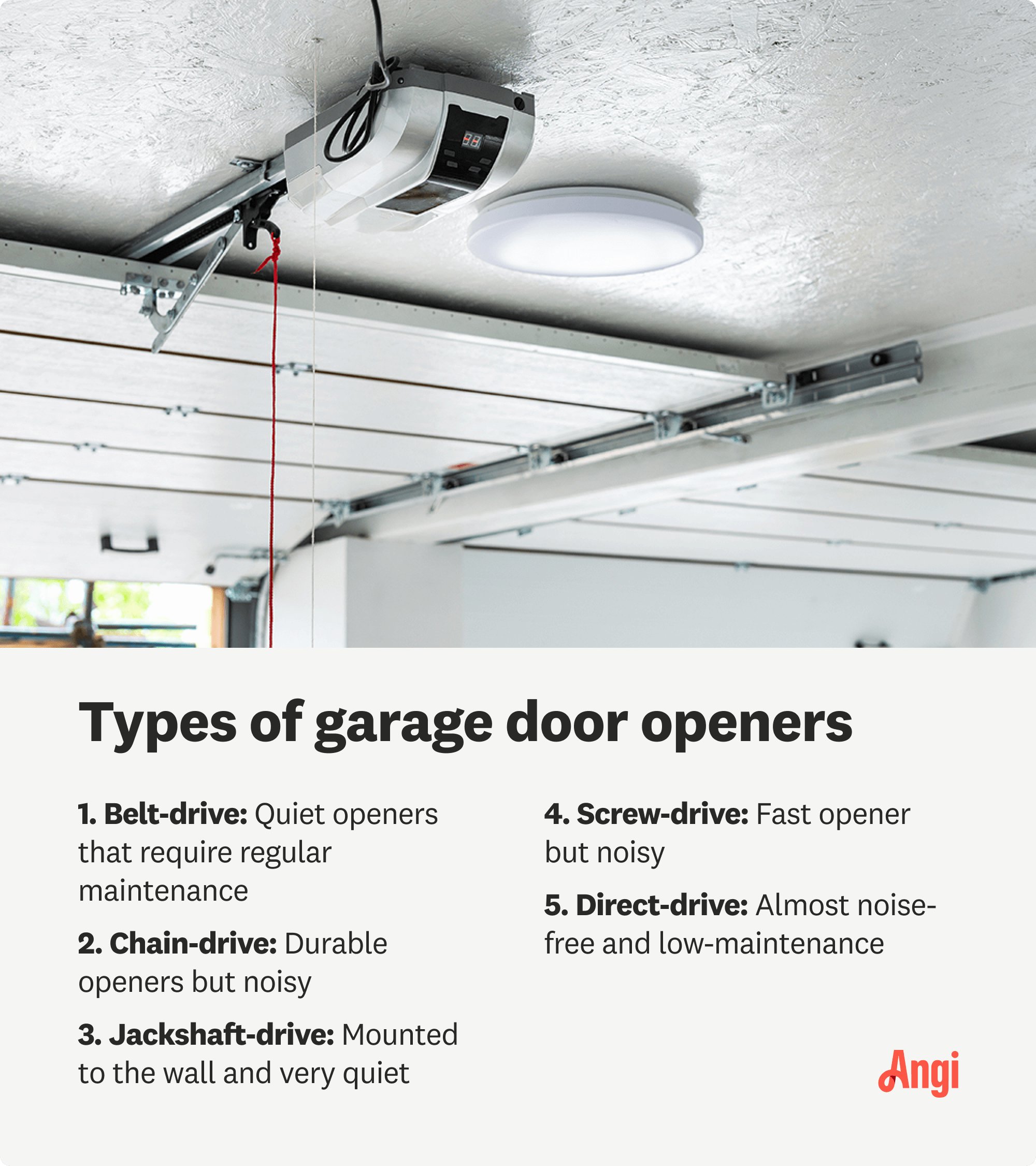
Main Types Of Garage Door Openers And Their Costs
Choosing the right type is the biggest factor in price. Let’s look at the most common options and what you can expect to pay.
Chain Drive Garage Door Openers
Chain drive openers are the most popular and usually the cheapest. They use a metal chain to move the door. They’re reliable but can be noisy, which matters if your garage is under a bedroom or near living space.
- Price: $120 – $250 (unit only)
- Pros: Affordable, strong, easy to find
- Cons: Noisy, needs regular maintenance
Example: The Chamberlain C203 is a basic chain drive opener selling for around $140.
Belt Drive Garage Door Openers
Belt drive openers use a reinforced rubber belt instead of a chain, making them much quieter. They cost more, but if you want less noise, they’re a good choice.
- Price: $180 – $350
- Pros: Quiet, smooth operation, low maintenance
- Cons: More expensive than chain drives
Example: The Genie QuietLift 3053 usually sells for $210–$250.
Screw Drive Garage Door Openers
Screw drive openers use a threaded steel rod to move the door. They’re less common now, but they offer fast lifting and fewer moving parts.
- Price: $200 – $350
- Pros: Faster, fewer parts to break
- Cons: Noisier than belt, sensitive to temperature changes
Example: The Genie MachForce Connect costs around $250.
Direct Drive Garage Door Openers
Direct drive openers have only one moving part—the motor travels along a rail to open or close the door. These are extremely quiet and durable.
- Price: $270 – $500
- Pros: Super quiet, long-lasting, smooth
- Cons: Higher price, less available
Example: The Sommer Direct Drive 1042V001 sells for about $300–$350.
Jackshaft (wall-mount) Garage Door Openers
Jackshaft openers mount on the wall beside the garage door, not on the ceiling. They’re ideal for garages with low or unusual ceilings.
- Price: $350 – $700
- Pros: Saves ceiling space, quiet, good for high-lift doors
- Cons: Expensive, not for all doors
Example: The LiftMaster 8500W often costs $500–$600.
Comparing Garage Door Opener Types And Prices
To make things clearer, here’s a comparison of the main types and their general price ranges:
| Type | Unit Cost (USD) | Noise Level | Main Advantage |
|---|---|---|---|
| Chain Drive | $120–$250 | High | Low price |
| Belt Drive | $180–$350 | Low | Quiet operation |
| Screw Drive | $200–$350 | Medium | Speed |
| Direct Drive | $270–$500 | Very low | Durability |
| Jackshaft | $350–$700 | Very low | Space saving |

What Features Change The Cost?
The type of opener is just the start. Features can add $20 to $200+ to the price. Here’s what you might pay more for:
- Horsepower (HP): Most openers have 1/2 HP, enough for standard single or double doors. Heavy wooden or insulated doors may need 3/4 HP or 1 HP, which costs more.
- Battery Backup: Lets you open the door during a power outage. Adds $40–$80.
- Smartphone Control: Wi-Fi and app features for opening/closing from anywhere. Adds $40–$100.
- Security Features: Rolling code, auto-lock, motion sensing lights, and alerts can add $20–$100.
- Lighting: Extra or LED lighting for better visibility, adds $20–$50.
- Keypads and Remotes: Extra remotes or keyless pads are $20–$60 each.
Example: A basic Chamberlain chain drive may cost $140, but a Wi-Fi enabled version with battery backup and keypad can reach $250.
Installation: Diy Vs Professional
Some homeowners install openers themselves. DIY can save money, but it’s not for everyone.
- DIY Cost: Just the opener ($120–$700)
- Professional Installation: $130–$300 extra, depending on opener type, local labor rates, and complexity
What affects installation cost?
- Removing old opener (add $25–$50)
- Extra hardware or wiring
- High or heavy doors needing extra work
Non-obvious insight: Some brands require professional installation for warranty, so check before buying.
Price Examples: Common Setups
Here are a few real-world scenarios to help you estimate the total cost.
- Budget Option: Basic chain drive opener + DIY install = $130–$180
- Mid-Range: Belt drive opener with Wi-Fi + professional install = $350–$450
- High-End: Jackshaft opener with smart features + pro install = $700–$900
Most American homeowners spend $300–$500 for a quality opener and installation.
Top Brands And Their Price Ranges
Brand matters for quality, warranty, and price. Here are some of the most popular brands and their typical ranges:
| Brand | Low-End Model | High-End Model | Warranty |
|---|---|---|---|
| Chamberlain | $130 | $500 | 1–5 years |
| Genie | $120 | $450 | 1–15 years |
| LiftMaster | $200 | $700 | Lifetime motor |
| Sommer | $300 | $600 | Lifetime motor |
| Craftsman | $150 | $400 | 1–10 years |
Non-obvious insight: Warranties can save you money in the long run, especially with brands like LiftMaster and Sommer offering lifetime coverage on motors.
Extra Costs To Consider
Sometimes the opener itself is not the only thing you need to pay for. Here are common extra costs:
- New garage door: If your door is old or damaged, replacing both together can save on labor.
- Electrical work: If you don’t have an outlet near the opener, adding one can cost $100–$200.
- Reinforcement: Heavy doors need extra bracing or hardware, adding $30–$80.
- Disposal: Removing and hauling away your old opener can add $20–$50.
- Travel/labor fees: Some installers charge more for remote areas or after-hours work.
How To Choose The Right Garage Door Opener For Your Needs
Price matters, but so does fit. Here’s what to consider before you buy:
- Noise sensitivity: If the garage is near bedrooms, a belt or direct drive is better.
- Door weight and size: Heavier or double doors need more power.
- Tech needs: Do you want Wi-Fi, smart home integration, or just a button?
- Space: Low ceilings may require a wall-mounted opener.
- Backup power: In areas with outages, battery backup is worth the extra cost.
- Budget: Don’t forget installation and any extras.
Example: A single, lightweight metal door in a detached garage can use a basic chain drive. A heavy wooden door under a bedroom may need a quiet, high-power belt drive.
Common Mistakes When Buying A Garage Door Opener
Many buyers focus only on price or features and miss important details. Here are mistakes to avoid:
- Ignoring door weight: Underpowered openers wear out fast or break.
- Skipping the warranty: Cheap units often have short or no coverage.
- Overlooking noise: Chain drives can be annoying in attached garages.
- Not checking compatibility: Some doors need special openers.
- Forgetting about installation: DIY can be harder than expected; poor install leads to problems.
- Missing smart features: If you want app control later, choose a Wi-Fi-ready model.
- Choosing the wrong size: Double doors need more power than singles.
- Not budgeting for extras: Keypads, remotes, and batteries all add up.
- Assuming all installers are equal: Poor installation can void the warranty.
- Failing to plan for power outages: Battery backup is a must in some areas.
Do You Need To Replace The Opener Or Just Repair It?
Sometimes, you don’t need a new unit. Common repairs include:
- Replacing remotes or keypads ($20–$60)
- Changing the motor ($100–$200)
- Fixing sensors or wiring ($50–$100)
If the opener is over 10 years old, makes strange noises, or lacks safety features, replacement is usually smarter.
Real-world Example: Cost Breakdown
Here’s a typical cost breakdown for a new garage door opener setup:
- Belt drive opener with Wi-Fi: $240
- Professional installation: $180
- Battery backup: $60
- Extra keypad: $40
Total: $520
This setup is quiet, reliable, and can be controlled from your phone. It’s a mid-range solution for most American homes.
How To Save Money On A Garage Door Opener
You can save money with these tips:
- Shop sales: Watch for discounts at hardware stores or online.
- Buy a bundle: Some kits include remotes, keypads, or even installation.
- DIY installation: Only if you’re handy and have the right tools.
- Use coupons or rebates: Check manufacturer or big box store websites.
- Upgrade both door and opener together: Some installers offer package discounts.
- Check local incentives: Some areas have energy efficiency rebates for smart openers.
When To Hire A Professional Installer
While DIY is possible, professional installation is best if:
- You’re not comfortable with wiring or heavy lifting
- Your garage has unique needs (old door, high ceiling)
- You want a warranty on both parts and labor
- Your opener brand requires pro installation
Experience-based guide tip: A pro can spot door problems, set up safety features, and make sure everything works for years.
How Garage Door Opener Prices Changed Over Time
Garage door openers have become more affordable in the last 10 years, even as technology improved. In the early 2000s, smart openers were rare and cost over $400. Today, you can get Wi-Fi and battery backup for under $250.
Fun fact: According to HomeAdvisor, the average homeowner spent $350–$500 on openers and installation in 2023, which is less (adjusted for inflation) than in 2010.
Should You Buy Online Or In-store?
Both options have pros and cons.
- Online: More choices, better prices, easy to compare, reviews help. Shipping can add cost, and returns may be a hassle.
- In-store: See the product, ask questions, pick up parts right away. Prices are sometimes higher, and selection can be limited.
Pro tip: Buy online for the best price, but if you need help with installation or want to see the unit first, visit a local store.
Environmental Impact And Energy Efficiency
Modern openers use less power than older models. Many have standby modes that use less than 1 watt. LED lighting is standard in higher-end models, saving energy and lasting longer.
Some states and cities now require openers with battery backup for new installations, especially in fire-prone areas.
Warranty And Maintenance: What To Expect
Most openers come with at least a 1-year warranty on parts. Motors often have longer warranties, sometimes even lifetime. Check the details—some brands cover only the motor, not the belt or chain.
Maintenance tips:
- Lubricate chains or screws every 6–12 months
- Check safety sensors and auto-reverse
- Change remote batteries yearly
Regular care extends the life of your opener and keeps it safe.
Understanding Smart Garage Door Openers
Smart openers connect to your Wi-Fi and let you control the door from your phone, get alerts, and even set schedules. Top brands like Chamberlain and Genie offer models with built-in smart features.
- Extra cost: $40–$100
- Benefits: Remote control, delivery access, security alerts
Non-obvious insight: Some smart features need a monthly subscription for advanced alerts or camera access. Read the fine print before you buy.
Best Practices For Buying A Garage Door Opener
- Measure your door and check its weight
- Decide which features you need (noise, smart, backup)
- Compare top brands for price and warranty
- Include installation and extras in your budget
- Read reviews and check for complaints
- Ask about maintenance and support
External authority: For more on garage door openers and safety, visit the Consumer Reports Garage Door Opener Buying Guide.
Frequently Asked Questions
How Long Does A Garage Door Opener Last?
Most openers last 10–15 years with regular maintenance. Heavy use, poor installation, or lack of care can shorten the lifespan. Quality brands often last longer.
Is It Cheaper To Repair Or Replace A Garage Door Opener?
If your opener is less than 10 years old and the problem is minor (like a remote or sensor), repair is usually cheaper. For old, noisy, or unsafe units, replacement is smarter and often not much more expensive.
Can I Install A Garage Door Opener Myself?
Yes, if you’re handy and comfortable with electrical work. However, professional installation is safer and may be required for warranty. Some brands also need pro install for smart features.
What Horsepower Garage Door Opener Do I Need?
- 1/2 HP: Best for single, lightweight doors
- 3/4 HP: Good for heavy wooden or double doors
- 1 HP: Needed for oversized or extra-heavy doors
Always check your door’s weight and size before choosing.
Are Smart Garage Door Openers Worth The Extra Cost?
For many people, yes. Smart openers add convenience, security, and peace of mind. If you want to control your garage from anywhere or get alerts, the extra $40–$100 is a good investment.
Garage door openers come in many styles and price points. The right choice balances price, features, and your home’s needs. By understanding the factors above, you’ll avoid overpaying or picking the wrong type. Whether you want a basic opener or the latest smart model, taking the time to compare options will help you get the best value—and a safer, more convenient garage for years to come.