
If your garage door stops working, life quickly becomes more complicated. You might be late for work, stuck in bad weather, or worried about the security of your home. One question comes up fast: how much to fix a garage door? The answer is not simple. Many factors affect the cost, from the type of repair to the kind of door you have. Knowing what to expect can help you make smart decisions, avoid overpaying, and keep your garage secure and safe.
This article will give you a clear, complete guide to garage door repair costs. You will learn about common problems, what affects the price, how to decide between repair and replacement, and how to save money. Whether you have a noisy opener, a snapped spring, or a bent panel, you’ll find answers here.
Let’s break down what really matters when it comes to fixing your garage door.
Why Garage Door Repair Costs Vary
No two garage door fixes are exactly alike. A simple adjustment might cost less than $100, but a serious repair can run into the hundreds. The price depends on several key points:
- Type of problem (broken spring, cable, opener, sensor, etc.)
- Parts needed (brand, size, material)
- Labor costs in your area
- Emergency or same-day service
- Garage door size and style
- Service call or inspection fees
For example, a typical single garage door is cheaper to fix than a large double door. A basic steel door costs less than a custom wood door. Knowing what drives up the price helps you understand what you’re paying for—and when a quote is too high.
Average Cost To Fix A Garage Door
Let’s look at real numbers. Across the US, homeowners usually pay between $130 and $400 for garage door repairs. Most common jobs fall in this range. However, some repairs are much cheaper or more expensive. Here’s a quick look at typical price ranges:
| Type of Repair | Average Cost |
|---|---|
| Spring replacement | $150–$350 |
| Cable repair/replacement | $90–$200 |
| Track adjustment | $125–$250 |
| Opener repair | $100–$300 |
| Panel replacement | $250–$800 |
| Roller replacement | $100–$180 |
| Sensor repair/replacement | $85–$150 |
| Remote/keypad repair | $40–$100 |
These are average prices. If you live in a big city, expect to pay 10–20% more. In rural areas, prices can be lower.
Common Garage Door Problems And Repair Costs
Some garage door issues happen more often than others. Here’s what usually goes wrong, what it takes to fix, and what you might pay.
1. Broken Garage Door Springs
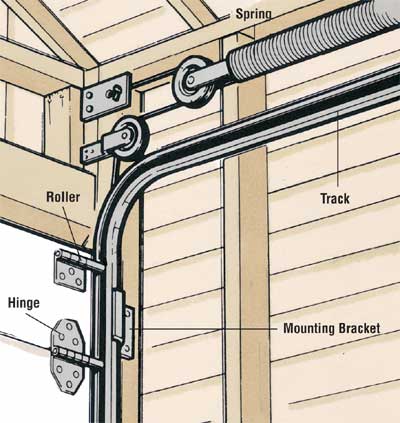
Garage door springs do most of the heavy lifting. When they snap, your door might not open at all, or it might slam down dangerously. Springs are under high tension, so replacing them is not a safe DIY job.
- Typical cost: $150–$350 for one spring, $200–$400 for both
- What’s included: New springs, labor, and sometimes a safety check
Pro tip: Springs usually last 7–9 years with regular use. If one breaks, replace both, as the other is likely to fail soon.
2. Damaged Or Broken Cables
Cables help lift and lower the door smoothly. If a cable snaps or comes off the drum, the door may hang unevenly or jam.
- Cost: $90–$200
- What’s included: New cables, labor, and realignment
Cables often fail after years of wear or if springs break.
3. Bent Or Misaligned Tracks
If your garage door comes off its tracks or the tracks are bent, the door may get stuck or move unevenly.
- Cost: $125–$250 for adjustment, $150–$350 for replacement
- What’s included: Labor, track repair, or new tracks
Minor track dents can often be fixed. Severe bends may need new parts.
4. Garage Door Opener Issues
Openers are the motorized units that lift and lower the door. Problems range from wiring issues to worn gears.
- Repair cost: $100–$300
- New opener installation: $300–$600 (if replacement needed)
Sometimes, opener fixes are simple (battery or sensor issues). Other times, the whole unit must be replaced.
5. Broken Or Worn Rollers
Rollers help the door move up and down smoothly. If they wear out or break, the door can be noisy or hard to open.
- Cost: $100–$180
- What’s included: New rollers, labor, lubrication
Upgrading to nylon rollers can make your door much quieter.
6. Damaged Or Dented Panels
If a car bumps the door or a storm causes damage, you may have a bent or cracked panel.
- Cost: $250–$800 per panel
- What’s included: New panel, labor, paint matching (sometimes extra)
Custom or wood panels are more expensive. Sometimes, replacing the whole door is better.
7. Malfunctioning Sensors
Safety sensors prevent the door from closing if something is in the way. If they fail, the door may not close at all.
- Cost: $85–$150
- What’s included: Sensor repair or replacement, alignment
Cleaning sensors might solve the problem if the issue is dirt or misalignment.
8. Remote Or Keypad Problems
Lost or broken remotes and keypads are easy to fix.
- Cost: $40–$100
- What’s included: New remote or keypad, programming
Some brands cost more, especially for smart-home features.
9. Weather Seal Replacement
A worn weather seal lets in cold, rain, or pests.
- Cost: $80–$150
- What’s included: New seal, labor
This small repair can help cut energy bills and protect your garage contents.
What Affects Garage Door Repair Costs Most
Understanding the main factors behind the price can help you plan and budget.
1. Type Of Garage Door
- Steel doors are usually cheapest to fix.
- Wood doors cost more to repair (heavier, custom parts).
- Glass or insulated doors can be expensive if panels crack or parts are rare.
2. Size And Weight
Double garage doors or oversized doors cost more to fix due to extra materials and labor. Heavy doors wear out parts faster.
3. Age And Brand
Older doors may need rare parts that are harder to find (and more expensive). Popular brands often have cheaper, widely available parts.
4. Complexity Of The Repair
Simple fixes (like lubricating rollers or adjusting sensors) cost less. Major repairs (like spring or panel replacement) are more complex and pricey.
5. Emergency Service
Need your door fixed on a weekend or holiday? Expect to pay 20–30% more for emergency or same-day service.
6. Local Labor Rates
Labor costs vary by region. Urban areas are more expensive than small towns.
7. Travel Or Service Call Fees
Many companies charge $50–$100 just to come to your home. This may be included in the repair cost or listed as a separate fee.
Repair Vs. Replacement: Which Is Cheaper?
Sometimes, fixing your garage door makes sense. Other times, buying a new one saves money in the long run. Here’s a comparison:
| Situation | Repair | Replace |
|---|---|---|
| Minor part failure (spring, cable, roller) | Usually cheaper | Not needed |
| One damaged panel | If panels available | If panels are rare |
| Severe structural damage | Rarely cost-effective | Recommended |
| Older door, frequent repairs | Short-term fix | Long-term value |
| Desire for new look/features | Not possible | Best option |
Insight: If your door is over 15 years old and needs major work, replacement often makes more sense. New doors offer better insulation, security, and curb appeal.
Diy Vs. Professional Garage Door Repair
You might wonder if you can save money by fixing your garage door yourself. For some small jobs, this is possible. For others, it’s risky—and can even be dangerous.
When Diy Makes Sense
- Lubricating rollers and tracks
- Cleaning and adjusting sensors
- Replacing remote batteries
- Installing weather stripping
These tasks are simple, need basic tools, and carry little risk.
When To Call A Pro
- Spring or cable replacement: High tension, serious injury risk
- Track repair: Heavy door, precision required
- Panel replacement: Door alignment, custom fitting
Professional repair is safer and often comes with a warranty. Also, mistakes can make the problem worse and increase costs later.
Non-obvious insight: Some garage door warranties become void if you try a DIY repair and damage the system. Always check your warranty before starting.
How To Choose A Garage Door Repair Company
Not all garage door services are equal. Some charge high prices or upsell unnecessary work. Here’s how to find a reliable company:
- Check reviews on Google, Yelp, and the Better Business Bureau.
- Ask for quotes from at least two companies.
- Verify license and insurance to avoid liability.
- Request a written estimate before work begins.
- Ask about warranties on parts and labor.
Red flag: Avoid companies that offer a low “service call fee” but won’t give a clear price for the full repair.
How To Save Money On Garage Door Repairs
You don’t have to overpay for quality service. Here are smart ways to cut costs:
- Do regular maintenance: Lubricate moving parts twice a year.
- Fix small problems early: Don’t wait for minor issues to turn major.
- Ask about used or generic parts: Sometimes, these work as well as new.
- Bundle repairs: If several parts need fixing, ask for a package discount.
- Check for warranties: Some parts may still be covered.
Pro tip: Many companies offer seasonal discounts during slow months (late fall or winter).
Hidden Costs To Watch Out For
Not all repair quotes are clear. Here’s what can add to your final bill:
- Disposal fees for old panels or parts
- Extra charges for after-hours work
- Travel fees if you live far from the service center
- Customization fees for rare brands or custom colors
Insight: Always ask for a “no surprises” quote that includes all expected costs.
Real-world Examples Of Garage Door Repair Costs
Let’s look at a few practical cases so you know what to expect.
Example 1: Basic Spring Replacement
- Issue: One spring snapped on a standard steel door
- Location: Suburban area
- Cost: $200 (includes two new springs and labor)
- Time: About 1 hour
Example 2: Damaged Panel On A Wooden Door
- Issue: Lower panel cracked by car bumper
- Location: Large city
- Cost: $600 (panel, paint matching, labor)
- Time: 2–3 hours, plus wait time for parts
Example 3: Opener Sensor Realignment
- Issue: Door won’t close; sensors dirty and out of alignment
- Location: Small town
- Cost: $90 (service call and fix)
- Time: 30 minutes
These examples show why it’s smart to get a clear diagnosis before agreeing to repairs.
How To Tell If Your Garage Door Needs Repair
Sometimes, problems are obvious—your door won’t open, or a spring is visibly broken. Other signs are more subtle:
- Door closes unevenly or makes grinding noises
- Opener motor runs but door doesn’t move
- Remote or keypad is slow to respond
- Door shakes or jerks as it moves
- Light comes on but nothing happens
Ignoring small issues often leads to bigger, more expensive repairs later.
Garage Door Maintenance: Preventing Future Repairs
The best way to avoid costly repairs is simple: regular maintenance. Here’s what you can do:
- Lubricate springs, rollers, and hinges every 6 months
- Check and tighten hardware (bolts, screws)
- Test the door balance (disconnect opener, lift door halfway—it should stay put)
- Clean the tracks of dirt and debris
- Inspect weather seals for cracks or gaps
Professional tune-ups cost $80–$150 and can extend your door’s life by years.
Non-obvious tip: If you live near the ocean or in areas with lots of road salt, wash your door and hardware twice a year to prevent rust.

Insurance And Garage Door Repairs
Most home insurance policies do not cover normal wear and tear or mechanical failures. However, damage from storms, fire, or break-ins might be covered.
- Tip: If your door is damaged by a covered event (like a fallen tree), contact your insurer before calling for repairs.
- Deductibles often apply, so weigh the cost before making a claim.
For more details on home insurance and garage doors, check the Insurance Information Institute.
The True Value Of A Working Garage Door
A well-functioning garage door does more than just open and close. It:
- Protects your car and belongings
- Adds curb appeal to your home
- Improves energy efficiency
- Increases home security
Investing in timely repairs pays off in the long run. Don’t wait until a small problem becomes a big expense.

Frequently Asked Questions
How Much Does It Cost To Replace A Garage Door Spring?
Most homeowners pay between $150 and $350 to replace a garage door spring. The price depends on the type of spring, the size of the door, and your location. Torsion springs are more expensive than extension springs. Always replace both springs if one fails.
Can I Fix My Garage Door Myself?
You can handle simple tasks like lubricating parts or replacing remote batteries. However, repairs involving springs, cables, or openers are best left to professionals. These parts are under tension and can cause serious injury if handled incorrectly.
How Long Do Garage Door Repairs Take?
Most repairs take 1–2 hours. Simple jobs (like sensor alignment) may be done in 30 minutes. Major repairs (panel replacement or complex opener issues) could take several hours or require a second visit for special parts.
Will My Homeowner’s Insurance Cover Garage Door Repairs?
Most policies do not cover regular wear and tear. Insurance may pay for repairs if the door is damaged by fire, storms, or theft. Always check with your insurance provider before filing a claim.
Is It Better To Repair Or Replace A Garage Door?
If your door is less than 10 years old and the problem is minor, repair is usually the best option. If the door is old, has frequent issues, or has major structural damage, replacing it can save money over time and boost home value.
A broken garage door is never convenient, but knowing what to expect helps you get it fixed quickly and affordably. Whether you need a quick repair or a full replacement, being informed puts you in control—and makes sure your garage door keeps working smoothly for years to come.