
Now Reading: How to Reprogram Craftsman Garage Door Keypad in Minutes
- 01
How to Reprogram Craftsman Garage Door Keypad in Minutes

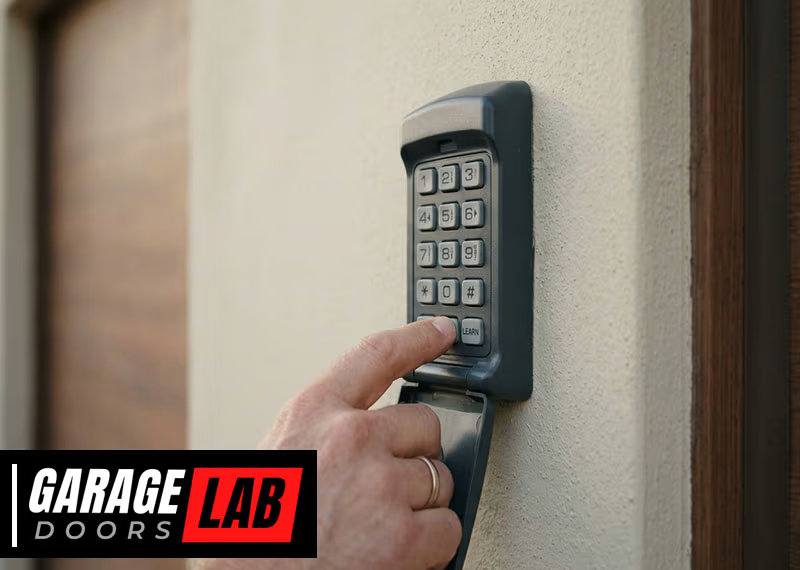
Reprogramming your Craftsman garage door keypad can feel confusing, especially if you’ve never done it before. Maybe you’ve lost a remote, moved into a new home, or simply want to update your security settings. No matter the reason, learning to reprogram your keypad is both empowering and practical. With the right steps and clear guidance, you can control who enters your garage—without waiting for a professional or spending extra money.
This guide is written for everyday people, including those whose first language isn’t English. You’ll find every step explained simply, with tips and insights that are easy to follow. Whether you have an older Craftsman keypad or the latest model, you’ll learn what you need to know.
By the end, you’ll feel confident in handling your keypad and keeping your garage safe.
Why Reprogram Your Craftsman Garage Door Keypad?
Many homeowners don’t think about their garage door keypad until something goes wrong. But there are good reasons to reprogram it even if it’s working fine. The most common reasons include:
- Lost or stolen remote: If someone finds your remote, they could access your garage. Reprogramming the keypad blocks old codes.
- New home: When you move into a house, you may not know who else has the access code.
- Changing PIN regularly: Like changing other passwords, this keeps your home safer.
- Keypad not responding: Sometimes the keypad just stops working with the old code.
One thing many people miss: After a power outage or battery change, the keypad might lose its programming. If your keypad stops working unexpectedly, try reprogramming before assuming it’s broken.
Understanding Your Craftsman Garage Door Keypad
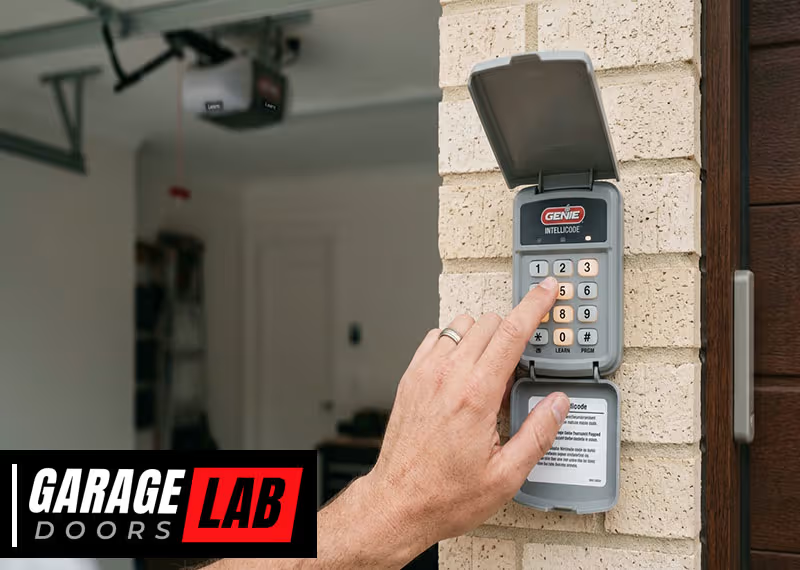
Before you start, it helps to know the basics of how your Craftsman keypad works. There are several models, but they all use a PIN (Personal Identification Number) that you enter to open or close the garage door.
Key facts about Craftsman keypads:
- Wireless keypads send a code to the garage door opener inside your garage.
- Most keypads use a 4-digit PIN.
- Craftsman openers use a “Learn” button to connect with remotes and keypads.
- The location and color of the “Learn” button can vary by model and year.
If you can’t find the manual for your keypad, don’t worry. The steps below work for most Craftsman models made in the last 20 years.
Tools And Preparation
You won’t need many tools, but a little preparation saves time:
- A ladder: Most garage door openers are installed high up.
- Your keypad: Make sure it’s working, and check the battery if needed.
- A flashlight: Garages can be dim.
- Pen and paper: To write down your new PIN before you forget.
Pro tip: Take a photo of the “Learn” button and keypad. This can help if you need to ask for help or look up your model.
Step-by-step Guide: How To Reprogram Craftsman Garage Door Keypad
This section gives you the complete steps. If your model is different, look for similar terms on your opener.
1. Locate The Learn Button
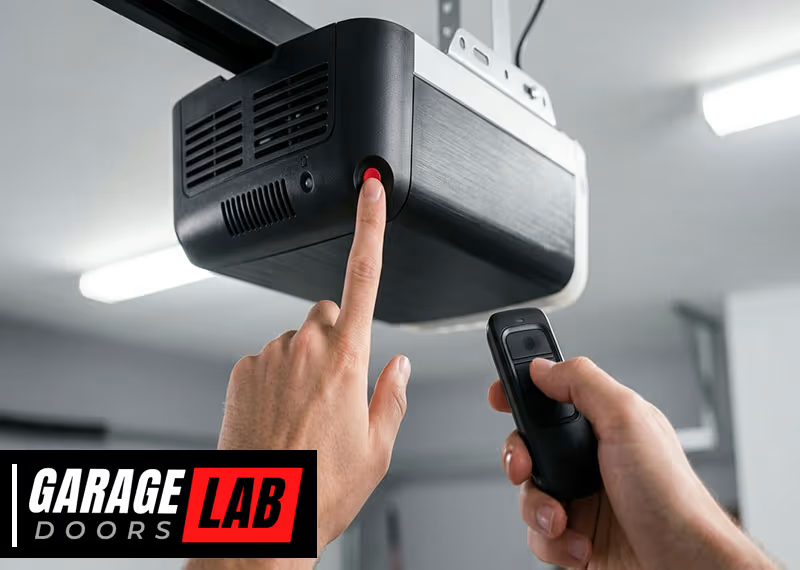
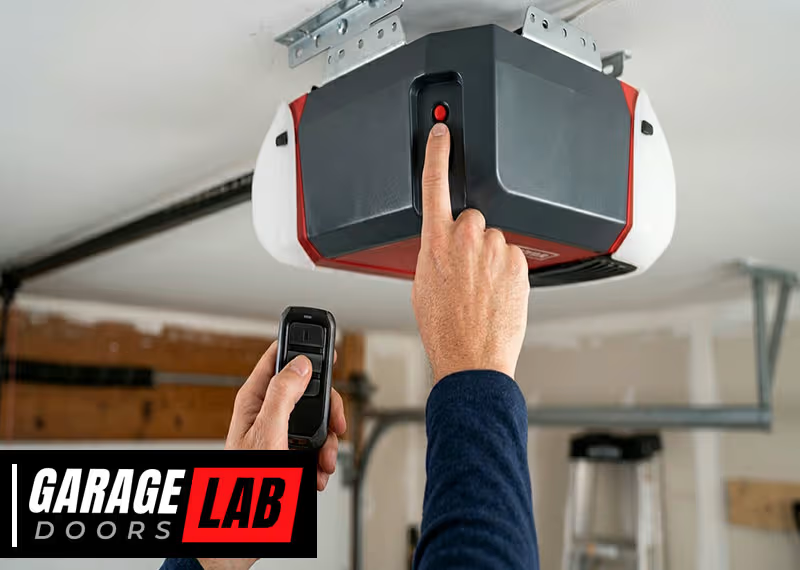
The Learn button is the heart of reprogramming. It’s usually on the back or side of your garage door opener, near the antenna wire. Common colors for the button are yellow, red, orange, or purple.
- Unplug the garage door opener for safety if you wish, but it’s usually not required.
- If you can’t see the button, remove the light cover on the opener unit.
Insight: The color of the Learn button sometimes tells you the frequency or how many remotes you can pair. If your keypad doesn’t work after programming, check the button color and match instructions to it.
2. Clear Old Keypad Codes (if Needed)
If you’ve just moved in or lost a remote, you may want to erase all old codes:
- Press and hold the Learn button for about 6-10 seconds.
- The LED light next to the button will go off (or start blinking), meaning codes are erased.
After this, none of the old remotes or keypads will work. You’ll need to reprogram them all.
3. Enter Programming Mode
Now, you’re ready to program your keypad:
- Press and release the Learn button on the opener. A small LED will light up and stay on for about 30 seconds.
- Go to your keypad quickly.
Note: You have a limited time (usually 30 seconds) to enter the code on the keypad after pressing the Learn button.
4. Set Your New Pin
On the keypad:
- Enter your desired 4-digit PIN. Choose something easy for you but not obvious like 1234.
- Press and hold the Enter button until you hear a click or the opener light blinks (usually about 5 seconds).
- Release the button.
If done correctly, your keypad is now programmed.
Common mistake: People often press the Learn button too long or too short, or wait too long before entering the PIN. If it doesn’t work, repeat the steps slowly.
5. Test The Keypad
After programming, test the keypad:
- Enter your new PIN.
- Press Enter.
- The garage door should open or close.
If nothing happens, try the steps again. Make sure the opener’s Learn light was on before you entered the PIN.
6. Set Temporary Or Guest Pin (optional)
Some Craftsman keypads let you set a temporary PIN for visitors or service people:
- Enter your main PIN and press #.
- Enter a new 4-digit temporary code.
- Press Enter.
This code usually works for a set number of uses or a limited time. Always check your model’s manual for details.
7. Change The Keypad Battery (if Needed)
If your keypad is not responding or only works sometimes, the battery may be low:
- Slide off the keypad cover.
- Remove the old battery (usually a 9V or AAA).
- Insert a new battery and test the keypad.
Insight: Many people replace the keypad when only the battery is dead. Try a new battery first!
Special Cases: Different Craftsman Keypad Models
Not all Craftsman keypads use the exact same steps. Here’s how some popular models differ:
Craftsman 315 Mhz Vs 390 Mhz Keypads
Older Craftsman openers use 390 MHz, while newer ones use 315 MHz or both. The process is almost the same, but the Learn button color may change:
- Purple: 315 MHz
- Red/Orange/Yellow: 390 MHz
If your keypad doesn’t work after programming, check the frequency and make sure your keypad supports it.
Keypad With “program” Button
Some wall-mounted keypads have a separate Program button:
- Press and hold Program until the light blinks.
- Enter your PIN.
- Press Enter.
Then press the Learn button on the opener, and finish as above.
Keypads With “star” Or “” Buttons
If your keypad has a “*” or “#” button, follow the manual’s instructions. Usually, you’ll press your PIN, then “#” or “*,” then Enter.
Example: 1234, #, Enter.
Troubleshooting: When Reprogramming Doesn’t Work
Sometimes, even after following all the steps, the keypad won’t reprogram. Here’s what to check:
- Dead keypad battery: Replace it and try again.
- Wrong Learn button color: Match your instructions to the actual color.
- Keypad too far from opener: Try moving closer if it’s wireless.
- Other remotes not working: You may have erased all codes. Reprogram them.
- Interference: LED light bulbs, Wi-Fi routers, or other electronics can interfere. Try unplugging these devices while programming.
- Keypad worn out: If buttons stick or don’t light up, the keypad may need replacing.
Non-obvious tip: If you have multiple Craftsman openers (for example, two garage doors), be sure you’re pressing the Learn button on the right opener for the keypad you want to program.

Security Tips For Your Craftsman Garage Keypad
Your garage is often a main entry to your home, so keypad security matters.
- Change your PIN regularly (every 6-12 months).
- Don’t use house numbers, birthdays, or 1234 as your PIN.
- Cover the keypad: Don’t let neighbors or delivery people see what you enter.
- Erase all codes when you move into a new home.
- Don’t share your code widely. Use guest codes for visitors.
A surprising fact: Many burglaries happen because thieves guess common codes or use lost remotes. Taking a minute to create a unique code adds real safety.
How Craftsman Keypads Compare To Other Brands
You might wonder if Craftsman keypads are different from Genie, Chamberlain, or LiftMaster. Here’s a quick comparison:
| Brand | Typical PIN Length | Programming Method | Guest Code Feature | Battery Type |
|---|---|---|---|---|
| Craftsman | 4 digits | Learn button + keypad | Some models | 9V or AAA |
| Chamberlain/LiftMaster | 4 digits | Learn button + keypad | Yes | 9V or AAA |
| Genie | 3-4 digits | Program button or switches | Some models | 9V |
Most keypads work similarly, but some Genie models use a different setup with dip switches. If you switch brands, check compatibility before buying.

Common Mistakes To Avoid
Learning from others’ errors can save you time and frustration:
- Forgetting to erase old codes: If you buy a home, always clear out previous codes before setting your own.
- Not writing down your new PIN: It’s easy to forget, especially if you rarely use the keypad.
- Pressing the Learn button too many times: This can erase all remotes and keypads.
- Using weak PINs: Simple codes are easy to guess.
- Not testing after programming: Always check that the keypad works before putting your ladder away.
A less-known mistake: On some models, if you press the Learn button for too long (over 10 seconds), you erase everything—including remote controls. This means you’ll need to reprogram every remote, not just the keypad.
When To Replace, Not Reprogram, Your Keypad
Reprogramming solves most problems, but sometimes a keypad just needs replacing. Signs include:
- Buttons don’t respond even with a new battery.
- Keypad is cracked or water-damaged.
- Random code entries: If the keypad sends codes without being pressed, it may be faulty.
Replacing a keypad isn’t hard. Most new Craftsman keypads are backward compatible, but check your opener’s year and frequency first.
Compatibility Guide: Which Keypads Fit Your Opener?
Not every Craftsman keypad works with every opener. Here’s a simple guide:
| Opener Year | Learn Button Color | Compatible Keypads |
|---|---|---|
| 1997-2005 | Red/Orange | 315/390 MHz keypads |
| 2005-2011 | Purple | 315 MHz keypads |
| 2011-present | Yellow | Security+ 2.0 keypads |
If you’re unsure, check your opener’s model number and search for compatible keypads online or in your manual.
Real-life Example: Reprogramming After Moving In
Let’s say you’ve just moved into a house with a Craftsman garage door opener. The old owner didn’t leave the PIN, and you want to make sure nobody else can use the keypad.
- Erase all codes by holding the Learn button for 10 seconds.
- Press and release the Learn button.
- On the keypad, enter a new 4-digit PIN and press Enter.
- Test your new PIN to make sure it works.
In less than 5 minutes, you’ve secured your garage—no tools or professional needed.
How To Maintain Your Craftsman Garage Keypad
A little care keeps your keypad working for years:
- Replace the battery yearly, even if it still works.
- Clean the keypad with a dry cloth to avoid dirt buildup.
- Check for cracks or moisture, especially after storms.
- Lubricate the garage door regularly for smooth operation (not the keypad, but the opener).
Expert tip: If you live in a cold area, sometimes the keypad buttons can freeze. Shield the keypad from rain or snow with a small cover.
Advanced Tips: Smart Home Integration
Some newer Craftsman openers can connect to smart home systems:
- Check if your opener supports MyQ or similar apps.
- With smart integration, you can control your garage door from your phone.
- Always set a strong PIN on your keypad, even if you use smart features.
Smart features are handy, but never rely only on your phone. Keep your keypad and remotes in working order as a backup.
Safety And Privacy Considerations
- Change codes after contractors or guests use your keypad.
- Teach children not to share the garage code.
- Watch for keypad tampering: If you notice scratches or keypad lights on at odd times, change your PIN.
Non-obvious insight: If you see your keypad light stuck on, it can mean someone tried to guess your code too many times. Change your PIN and check your garage security.
How To Reprogram Additional Remotes
If you erased all codes, you’ll need to reprogram remotes, too:
- Press and release the Learn button.
- Within 30 seconds, press the button on your remote.
- The opener light will blink, confirming programming.
Do this for each remote. If you miss the 30-second window, start over.
Environmental Factors That Affect Keypad Performance
Most people don’t realize that weather and electronics can affect keypad function:
- Extreme cold can make buttons stiff or slow.
- Direct sunlight can fade numbers, making them hard to see.
- Nearby Wi-Fi routers can sometimes interfere with wireless signals.
Try to place your keypad where it’s easy to see and protected from weather for best results.
Quick Reference: Steps To Reprogram Craftsman Keypad
For those who want a condensed version, here’s the step-by-step:
- Find the Learn button on the opener.
- Press and release the Learn button (LED comes on).
- Go to the keypad and enter your new 4-digit PIN.
- Press and hold Enter until the opener clicks or light blinks.
- Test the keypad.
This basic process works for most Craftsman models.

Where To Find More Help
If you’re still having trouble, check these resources:
- The user manual for your opener (often available online).
- Craftsman’s official website or customer support.
- YouTube videos for visual step-by-step guides.
- Garage door forums for troubleshooting advice.
For more technical information about garage door openers, visit the Wikipedia page on garage door openers.
Frequently Asked Questions
How Do I Reset My Craftsman Garage Door Keypad If I Forgot The Pin?
You don’t need to know the old PIN to reset the keypad. Just press and hold the Learn button on your garage door opener for about 6-10 seconds to erase all codes. Then follow the steps to program a new PIN.
How Often Should I Change My Craftsman Keypad Pin?
It’s best to change your keypad PIN every 6 to 12 months, or anytime you give out your code to guests or contractors. This helps keep your home secure.
What Do I Do If My Keypad Still Doesn’t Work After Reprogramming?
First, replace the battery. Double-check that you followed the steps for your opener’s Learn button color. If it still doesn’t work, the keypad may be faulty or not compatible with your opener.
Can I Program More Than One Keypad To The Same Craftsman Opener?
Yes, most Craftsman openers let you program multiple keypads and remotes. Just repeat the programming steps with each device.
Is It Safe To Use The Same Pin For My Keypad And Other Passwords?
No. Always use a unique PIN for your garage keypad. Don’t reuse ATM or phone PINs, as this increases security risk.
Reprogramming your Craftsman garage door keypad gives you control and peace of mind. With clear steps and a little patience, you can keep your garage secure—and avoid the hassle and cost of hiring a technician. Whether you’re updating after a move, replacing an old keypad, or just improving your home’s safety, you now have all the knowledge you need.