
A garage door is more than just a way to close off your garage. It’s a big, moving part of your home that keeps your car and belongings safe. But what happens when your garage door breaks? Many people worry about the cost to fix it. Some fear it will be expensive, while others wonder if they can repair it themselves. The truth is, garage door repair costs can change a lot depending on the problem, the type of door, and who does the work.
If you’re facing a broken garage door, you probably have many questions. What does a typical repair cost? Which repairs are most expensive? Should you call a professional or try to fix it yourself? This guide will give you clear answers, help you understand what drives repair costs, and offer tips to save money without cutting corners.
By the end, you’ll know what to expect, how to prepare, and how to make smart choices about your garage door repair.
What Affects Garage Door Repair Costs?
Several key factors shape how much you’ll pay to fix a garage door. Knowing these will help you guess the price before you call for help.
Type Of Garage Door
The kind of door you have matters. Single-panel doors are usually cheaper to fix than sectional doors or custom wood doors. Aluminum and steel doors cost less to repair than heavy wood or insulated doors.
Type Of Problem
Not all repairs are equal. Replacing a broken spring costs more than fixing a squeak. Some repairs need special parts or tools, which add to the price.
Parts And Materials
The cost of replacement parts can vary a lot. A simple roller or hinge is cheap. A motor for an opener or a new panel is more expensive.
Labor And Service Fees
Professional repair services charge for labor. This usually includes a service call fee (just for coming to your house) and an hourly rate. If you need emergency service at night or on weekends, it can cost more.
Location And Accessibility
If your garage is hard to reach or you live in a city with high living costs, you’ll likely pay more. Remote areas might have extra travel fees.
Door Size And Weight
Double doors or very heavy doors need more work and often cost more to fix than small, single doors.
Warranty And Quality
If your door is under warranty, some repairs might be free or cheaper. High-quality parts and long-lasting repairs cost more upfront, but can save money over time.
Average Garage Door Repair Costs In 2024
Understanding the average prices helps you plan your budget. Here’s what most homeowners pay today in the United States.
- National average cost: $150 to $400 per repair
- Low end: About $75 for very simple fixes
- High end: Up to $1,200 for major repairs or replacements
But these numbers are only a starting point. Let’s break down the costs for different types of repairs.
| Type of Repair | Typical Cost Range | Notes |
|---|---|---|
| Broken spring | $120 – $350 | One of the most common repairs |
| Cable replacement | $90 – $200 | Often replaced with springs |
| Track repair | $125 – $300 | Bent or misaligned tracks |
| Sensor replacement | $85 – $150 | For opener safety sensors |
| Panel replacement | $250 – $800 | Depends on material and size |
| Opener repair | $100 – $300 | Motor, chain, or electronics |
| Roller or hinge replacement | $75 – $200 | Usually quick and easy |
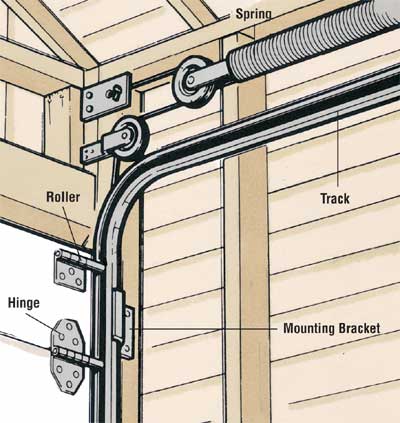
Common Garage Door Repairs And What They Cost
Let’s look closer at the most common repairs, what they include, and what makes them expensive or affordable.
1. Broken Spring Replacement
A garage door spring helps lift and lower your door. Most doors have either torsion springs (mounted above the door) or extension springs (mounted along the sides). When a spring breaks, the door becomes very heavy and sometimes won’t move at all.
- Cost: $120 – $350 for one spring, $180 – $500 for both
- Why the range? Heavier doors need stronger springs. Some spring types are more costly. Replacing both springs at once is safer and often recommended.
- Labor: Most of the cost is labor, as springs are dangerous to replace without training.
Insight: Some companies offer a “lifetime spring,” but only if you buy their regular tune-up service. Always ask if the spring comes with a warranty.
2. Cable Replacement
Cables help the springs lift the door smoothly. If they snap, the door may hang crooked or get stuck.
- Cost: $90 – $200
- Labor: Cables are cheaper than springs, but since they often break together, you may pay for both repairs at once.
Non-obvious tip: If your cable frays, it can cut fingers—never touch broken cables with bare hands.
3. Track Repair Or Replacement
The track guides the garage door as it opens and closes. If it gets bent or misaligned, the door can jam or fall off.
- Cost: $125 – $300 for repair; up to $400 for full replacement
- Labor: Simple adjustments are cheaper. Full replacements cost more due to extra labor and parts.
Key insight: If your door hits the same spot every time, the track may be bent. Fixing it early can stop bigger problems.
4. Opener Repair
Your garage door opener is the motorized unit that lets you open the door by pressing a button. Repairs may include fixing the remote, sensors, gears, or circuit board.
- Cost: $100 – $300
- High-end: Replacing the opener unit can cost $300 – $600.
Example: If your opener hums but doesn’t move the door, the motor or gear may be broken.
5. Panel Replacement
If a section of your garage door gets dented or rots (for wood doors), you may need to replace a panel.
- Cost: $250 – $800 per panel, sometimes more for wood or custom doors
- Labor: Panels must match the door’s color and design, which adds to the price.
Hidden cost: If your door is old, finding a matching panel can be hard, and you may end up replacing the whole door.
6. Roller Or Hinge Replacement
Rollers keep the door moving smoothly along the track. Hinges connect the door’s sections. Worn parts make the door noisy or shaky.
- Cost: $75 – $200 for several rollers and hinges
- Labor: Easy and quick for a pro.
7. Sensor Repair Or Replacement
Modern garage doors have safety sensors that stop the door if something is in the way. If they fail, the door might not close.
- Cost: $85 – $150
- Tip: Often, sensors just need cleaning or realignment, not full replacement.
8. Weatherstripping Replacement
Weatherstripping seals the gap under your door, blocking water and drafts.
- Cost: $60 – $150
- Savings tip: Many people can replace weatherstripping themselves with a kit from a hardware store.
9. Remote Or Keypad Issues
Lost or broken remotes and keypads are easy to fix.
- Cost: $40 – $100 for a new remote or keypad
- Programming: Most remotes are simple to program if you follow the instructions.
Diy Vs. Professional Garage Door Repair
When your garage door breaks, you may wonder if you can repair it yourself and save money. Here’s what you need to know before you try.
When Diy Makes Sense
Some simple repairs are safe for handy homeowners:
- Replacing weatherstripping
- Tightening loose bolts or screws
- Cleaning and lubricating rollers or tracks
- Replacing a remote battery
These small jobs usually cost only the price of parts—often $10 to $50.
When To Call A Professional
Some repairs are risky or require special tools:
- Spring replacement – Springs are under heavy tension and can cause serious injury.
- Cable replacement – Cables are tied to springs and can snap.
- Track repair – A falling door is dangerous.
- Opener motor or circuit work – Electrical parts need knowledge and care.
Insight: Even if you’re handy, repairing springs or cables is not worth the risk. Pros know how to do it safely.
Diy Mistakes To Avoid
- Using the wrong size parts (like springs)
- Not balancing the door after repair
- Forgetting to reconnect safety sensors
A bad repair can make the door worse and cost more in the end.
Cost Comparison: Diy Vs. Professional
Here’s how costs compare for common repairs.
| Repair Type | DIY Cost (Parts Only) | Pro Cost (Parts + Labor) | Risk Level |
|---|---|---|---|
| Spring replacement | $40 – $80 | $120 – $350 | High |
| Weatherstripping | $15 – $30 | $60 – $150 | Low |
| Sensor replacement | $20 – $50 | $85 – $150 | Medium |
| Rollers/Hinges | $10 – $40 | $75 – $200 | Low |
Non-obvious insight: Some repairs need a second person to hold the door in place. Trying to do it alone can be dangerous and more expensive if you make a mistake.
Signs You Need Immediate Garage Door Repair
Some problems can wait, but others need quick action. Knowing the difference can prevent injury or expensive damage.
Urgent Signs
- Door won’t open or close all the way
- Door is off its track or hanging unevenly
- Loud banging, grinding, or snapping sounds
- Broken springs or cables are visible
- Opener motor runs, but door doesn’t move
If you see these, call a pro right away.
Less Urgent (but Still Important)
- Door is noisy or jerky, but still works
- Weatherstripping is worn out
- Remote control is slow or unreliable
Fixing these soon can avoid bigger repairs later.
How To Get An Accurate Garage Door Repair Quote
Prices can vary even in the same city. Here’s how to get the best deal and avoid surprises.
1. Describe The Problem Clearly
When you call for a quote, explain:
- What’s wrong (e.g., “door won’t close”)
- What kind of door you have (single, double, material)
- If you see broken parts (springs, cables)
- Any unusual sounds or movements
2. Ask For A Written Estimate
A good company will give a clear estimate that includes:
- Parts and labor costs
- Service call fee
- Any extra charges (travel, emergency, etc.)
3. Compare Multiple Providers
Call at least two or three companies. Don’t just pick the cheapest—check reviews and ask about warranties.
4. Watch For Red Flags
Avoid companies that:
- Refuse to give a price range over the phone
- Pressure you for urgent repairs without inspection
- Insist on replacing the whole door for a small problem
Pro tip: Some repairs (like springs) have a standard price, but others can vary. Always ask what’s included.
How To Save Money On Garage Door Repairs
Garage door repairs don’t have to break the bank. Here are smart ways to keep costs down.
1. Regular Maintenance
- Lubricate moving parts twice a year
- Tighten loose screws and bolts
- Clean debris from tracks
- Check weatherstripping
Spending a little time can prevent big problems.
2. Fix Problems Early
Don’t ignore small issues. A noisy hinge or slow opener can become a bigger, costlier problem if left alone.
3. Know Your Warranty
Check if your door or opener is still under warranty. Some parts (like springs or openers) might be covered for several years.
4. Group Repairs
If you have more than one small issue (like worn rollers and weatherstripping), fix them all in one visit. This saves on service call fees.
5. Shop For Parts
For simple repairs, you can buy parts online or at hardware stores. Just make sure you get the right type for your door.
6. Use A Local Company
Local repair companies often charge less for travel and service calls than national chains.
Choosing The Right Garage Door Repair Service
Not all repair companies are the same. Picking the right one can mean better repairs and lower costs.
What To Look For
- Licensed and insured technicians
- Good reviews on trusted sites
- Clear pricing and written estimates
- Warranties on parts and labor
- Experience with your type of door
Common Buyer Mistakes
- Picking the cheapest service without checking reviews
- Not asking about extra fees (after-hours, travel)
- Forgetting to ask about warranty
- Trusting door-to-door salespeople
Non-obvious tip: Some companies charge less for the first repair but use lower-quality parts that break sooner. Ask about the quality of the parts before you agree.
When Is It Better To Replace The Whole Garage Door?
Sometimes, repair isn’t the best answer. Here’s when a new door makes sense.
Signs It’s Time To Replace
- More than one panel is damaged or rotted
- Door is over 20 years old and repairs are frequent
- Safety features are outdated or missing
- New parts are hard to find for your model
Cost To Replace A Garage Door
- Standard steel door: $800 – $2,500 (including installation)
- Custom wood or insulated door: $1,500 – $5,000+
Replacing the door is a bigger investment, but can boost your home’s value and security.
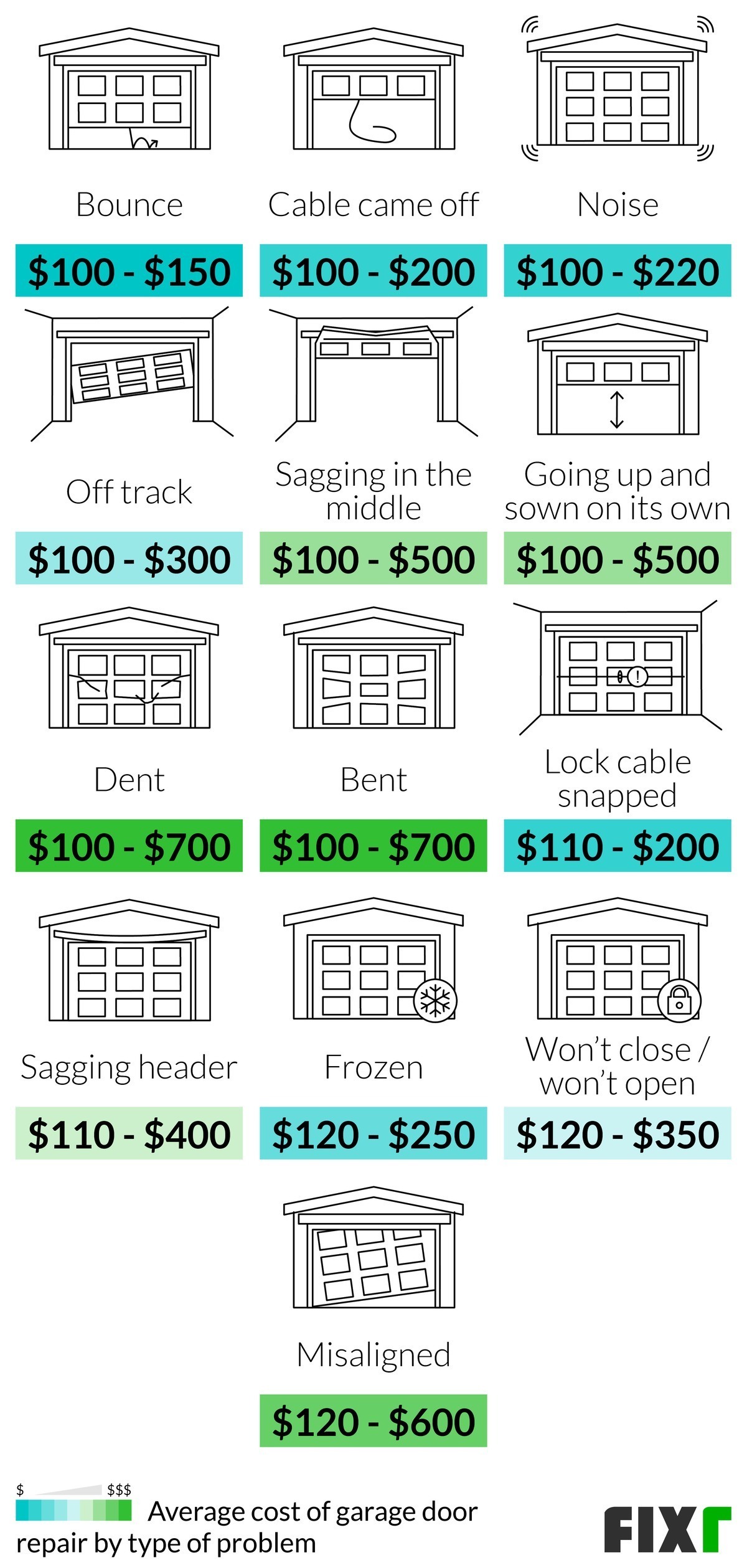
Real-world Examples Of Garage Door Repair Costs
Let’s see how costs play out for real homeowners.
Example 1: Broken Torsion Spring
- Location: Suburban Ohio
- Door: Single, steel
- Service call + labor + parts: $220
- Time: 45 minutes
Example 2: Opener Sensor Failure
- Location: Dallas, Texas
- Service call + new sensors: $110
- DIY option: Sensors online for $35
Example 3: Wood Panel Replacement
- Location: San Francisco, CA
- New custom panel + paint + labor: $790
- Wait time: 2 weeks for matching panel
Example 4: Weatherstripping And Roller Tune-up
- Location: Atlanta, GA
- All parts + labor (grouped): $180
- Savings: $60 compared to separate visits
Garage Door Repair Cost By Region
Prices can change depending on where you live. Big cities and coastal areas usually cost more.
| Region | Average Cost Range | Notes |
|---|---|---|
| West Coast | $200 – $400 | Higher labor costs |
| Midwest | $120 – $300 | Usually lower prices |
| East Coast | $180 – $380 | Urban areas more expensive |
| South | $130 – $320 | Lower cost of living |
Tip: Always get a local quote, as prices can change even within the same state.
Is Garage Door Repair A Good Investment?
Fixing your garage door keeps your home safe, quiet, and looking good. A working door also adds value if you sell your house. Most repairs cost much less than replacement, and regular upkeep can make your door last many years.
Non-obvious insight: A well-maintained garage door can lower your heating and cooling bills by blocking drafts and keeping your garage insulated.
Where To Learn More
If you want to read more about garage door safety and maintenance, check out the official page from the Federal Trade Commission.

Frequently Asked Questions
How Much Does It Cost To Fix A Broken Garage Door Spring?
Most homeowners pay between $120 and $350 to replace one spring, including labor. If both springs are replaced, the cost may be as high as $500. The price depends on the size and type of the spring.
Can I Fix My Garage Door Myself?
You can do small jobs like replacing weatherstripping or lubricating rollers. But repairs involving springs, cables, or tracks are dangerous and should be done by a professional.
How Do I Know If I Need To Replace My Garage Door Opener?
If your opener is noisy, unreliable, or older than 15 years, it may be time to replace it. If repairs cost more than half the price of a new opener, replacement is usually smarter.
Will My Homeowner’s Insurance Cover Garage Door Repairs?
Insurance sometimes covers repairs after a break-in or storm damage, but not for normal wear and tear. Always check your policy or ask your agent.
How Long Does A Typical Garage Door Repair Take?
Most repairs take one to two hours. Complex jobs (like panel replacement or full opener installation) may take a half day or longer.
A working garage door is important for safety and convenience. Now that you know what to expect for repair costs, you can make smart choices and keep your home in good shape.