
Every year, thousands of home break-ins happen through the garage, a weak spot many homeowners overlook. A garage is not just a place to store your car—it often holds valuable tools, bikes, and sometimes even a door to your house.
Yet, locking the garage door is often an afterthought. Securing it can make a real difference in protecting your family and property.
If you’re wondering how to lock your garage door properly, you’re not alone. Many people are unsure which methods work best, or how to add extra layers of security without spending too much. This guide will cover everything you need to know.
You’ll learn about different types of garage doors, locking mechanisms, step-by-step instructions, and even some clever tips most beginners miss.
Whether you have a manual or automatic garage door, there’s a way to make it much more secure. Let’s look at every angle—so you can sleep soundly, knowing your garage is locked tight.
Understanding Your Garage Door
Before you can lock your garage door, you need to know what type you have. Not all locks work with all doors, and each type has its own weak points and best practices.
Main Types Of Garage Doors
- Sectional garage doors: The most common in the US. Made of panels that bend as the door opens.
- Roll-up doors: Made of many small horizontal slats that roll up above the opening.
- Side-hinged doors: Open outwards like regular doors.
- Tilt-up doors: Move as a single piece, tilting up and sliding into the garage ceiling.
Key Features To Identify
- Is your door manual or automatic?
- Does it have windows (which can be broken for entry)?
- Is there a door from the garage into your house?
Knowing these details will help you pick the right lock and security method.
Why Locking Your Garage Door Matters
Many burglars see the garage as an easy entry point. According to the FBI, about 9% of all home break-ins start in the garage. Tools stored there can help thieves break into the rest of your home. Insurance companies may even reduce payouts if you didn’t secure your garage.
Locking your garage door is about more than just theft. It can also keep out animals, prevent accidents with children, and lower your insurance risk.
Types Of Garage Door Locks
Not all locks are created equal. Here are the most common options for securing your garage.
1. Slide Bolt Locks
These are simple bars that slide into a hole in the track or the wall. They’re easy to install and very effective for manual doors.
Pros: Cheap, easy to use, hard to force open.
Cons: Must be operated from inside the garage.
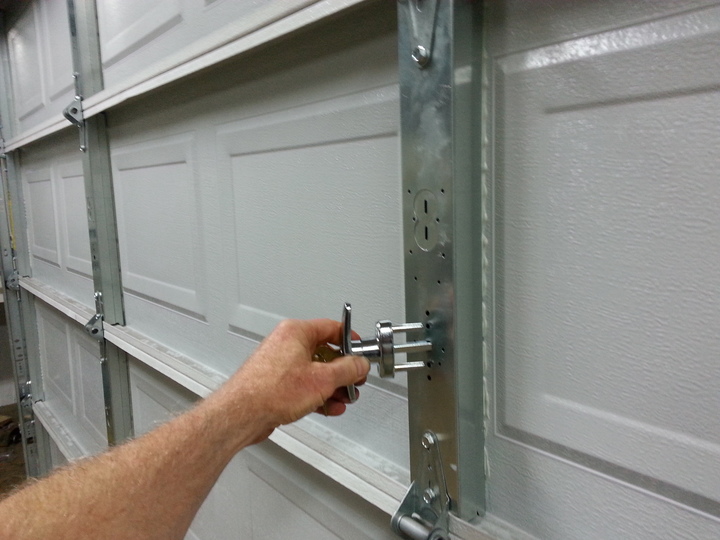
2. T-handle Locks
Common on older and side-hinged garage doors, these handles turn to move a locking bar inside the door.
Pros: Can be locked and unlocked from outside.
Cons: Susceptible to picking if low-quality.
3. Deadbolt Locks
Similar to front door locks, these are installed into the garage door or side entry door.
Pros: Very secure when installed properly.
Cons: Requires drilling and careful placement.
4. Electronic Keypad Locks
These use a code instead of a key, and are often paired with automatic openers.
Pros: No key needed, can change code easily.
Cons: Needs batteries or wiring; some can be hacked if not high quality.
5. Padlocks And Hasps
A hasp is attached to the door and frame, and a padlock secures it.
Pros: Good for side-hinged or shed-style garage doors.
Cons: Not as tidy, and padlocks can be cut if not strong enough.
6. Smart Locks
These connect to your phone or smart home system.
Pros: Can lock/unlock remotely, get alerts, integrate with security cameras.
Cons: Expensive and needs Wi-Fi or Bluetooth.
7. Automatic Opener Security Locks
Some openers have a feature that locks the door automatically when closed.
Pros: Convenient and effective if maintained.
Cons: Useless if the opener is unplugged or loses power.
Below is a quick comparison of these lock types:
| Lock Type | Best for Door | Pros | Cons |
|---|---|---|---|
| Slide Bolt Lock | Manual Sectional, Roll-up | Simple, Cheap | Inside-only access |
| T-Handle Lock | Side-hinged, Tilt-up | Outside access | Pickable if cheap |
| Deadbolt | Side Door, Some Garage Doors | Very secure | Harder to install |
| Keypad | Automatic | No key needed | Needs power |
| Padlock & Hasp | Side-hinged, Shed | Visible deterrent | Can be cut |
| Smart Lock | Automatic | Remote access | Expensive |
| Opener Auto Lock | Automatic | Convenient | Needs power |
How To Lock A Manual Garage Door
Most manual garage doors do not have built-in security. You will need to add a lock or improve the one you have. Here are steps for the most common methods.
Using A Slide Bolt Lock
- Choose the right lock. Buy a heavy-duty slide bolt, not a flimsy one.
- Mark the position. Place the lock near the edge of the door where the metal frame is strongest.
- Drill holes. Use a drill to make holes for the bolts.
- Attach the lock. Screw the lock into the frame and the door.
- Test the slide. Make sure it moves smoothly and locks into place.
- Add a padlock (optional). For extra security, use a padlock on the slide.
Tip: Install two locks—one on each side of the door—for even better protection.
Using A T-handle Or Deadbolt Lock
- Buy a quality lock. Cheap locks are easy to pick.
- Drill a hole in the door. Follow the template that comes with the lock.
- Install the cylinder. Insert the outer handle and inner mechanism.
- Attach the rods or deadbolt. Secure them so they slide into the frame or track.
- Test with the key. Make sure it locks smoothly from outside.
Common Mistake: Forgetting to reinforce the area around the lock. If the door is thin, add a metal plate behind the lock to prevent prying.
Padlock And Hasp
- Position the hasp. Place it where the door and frame meet.
- Mark and drill holes. Use heavy-duty screws or bolts.
- Attach the hasp. Make sure it can’t be unscrewed easily.
- Lock with a strong padlock. Hardened steel is best.
Non-obvious Insight: Always use carriage bolts (not just screws) on the outside so thieves can’t unscrew your hasp.
How To Lock An Automatic Garage Door
Automatic doors are more convenient but can also be more vulnerable, especially if thieves know how to “fish” the emergency release from outside.
Using The Built-in Lock
Many automatic openers have a vacation lock feature—a switch inside the garage that disables the remote. Always use this when you’re away for more than a day.
Adding A Manual Lock
If your door has no manual lock, install a slide bolt or deadbolt, as described above. You must remember to unlock it before using the opener, or you could damage the motor.
Smart Locks And Keypads
- Buy a compatible lock. Not all smart locks work with every opener.
- Install according to instructions. Usually, this involves mounting a keypad and connecting wires or syncing Bluetooth.
- Set your codes. Use codes that are not easy to guess.
- Test remote locking. Try locking and unlocking from your phone or keypad.
Practical Tip: Change your access code every 6-12 months, especially if you’ve shared it with guests or contractors.
Securing The Emergency Release
The emergency release lets you open the door if the power fails, but burglars can hook it with a coat hanger. Here’s how to protect it:
- Zip-tie the release cord so it can’t be pulled from outside (but can be cut in an emergency).
- Install a shield over the opener’s release lever. Many hardware stores sell these.
- Never leave the cord hanging low where it’s visible through garage windows.
Extra Insight: Cover garage door windows with film or shades so no one can see inside and target the release.
How To Lock Your Garage Door From The Inside
Sometimes, you want to secure your garage while you’re home or away for a long period. Here are the most reliable ways:
- Slide bolts: Install one on each side of the door.
- Bar locks: A steel bar placed across the inside of the door is nearly impossible to force open.
- Remove the opener cord: If you’re on vacation, unplug the automatic opener and use a manual lock as backup.
- Door brace: Some products wedge under the handle or against the floor.
Non-obvious Insight: For roll-up doors, a floor anchor lock gives extra strength. Thieves can’t lift the door from below if a steel bar is anchored into the concrete.
How To Lock Your Garage Door From The Outside
If you don’t have access to the inside, or you want visitors to be able to lock up, you need an exterior lock.
Best Options
- T-handle lock: Install with a key that works from outside.
- Padlock and hasp: Good for side-hinged or tilt-up doors.
- Smart keypad: Lets you set a code for guests.
Warning: Never use a slide bolt or manual lock from outside on an automatic door unless you have a safety system to prevent damage if someone tries to open it by remote.
Secondary Garage Door Security Tips
Locking your garage door is the main step, but there are other ways to make your garage even more secure.
Reinforce The Entry Door
Most garages have a side door leading into the house. Make sure this door has:
- Solid core construction
- Deadbolt lock
- Strike plate reinforced with 3-inch screws
Fact: In more than 30% of garage break-ins, thieves enter through the side or connecting door.
Secure The Garage Windows
- Use frosted film or shades so no one can see inside.
- Install window locks or even bars if break-ins are common in your area.
Install Motion Sensor Lights
Bright lights outside your garage scare off most burglars. Choose LED lights with motion sensors and place them near all entrances.
Add Security Cameras
Small cameras are cheap and easy to install. Some connect to your phone and send alerts if they detect movement.
Consider An Alarm System
Many home alarms include sensors for garage doors and windows. Some even alert you if the door is left open.
How To Lock A Garage Door Without A Lock
Maybe your door doesn’t have any lock at all. Here are temporary fixes you can use until you get a proper lock installed.
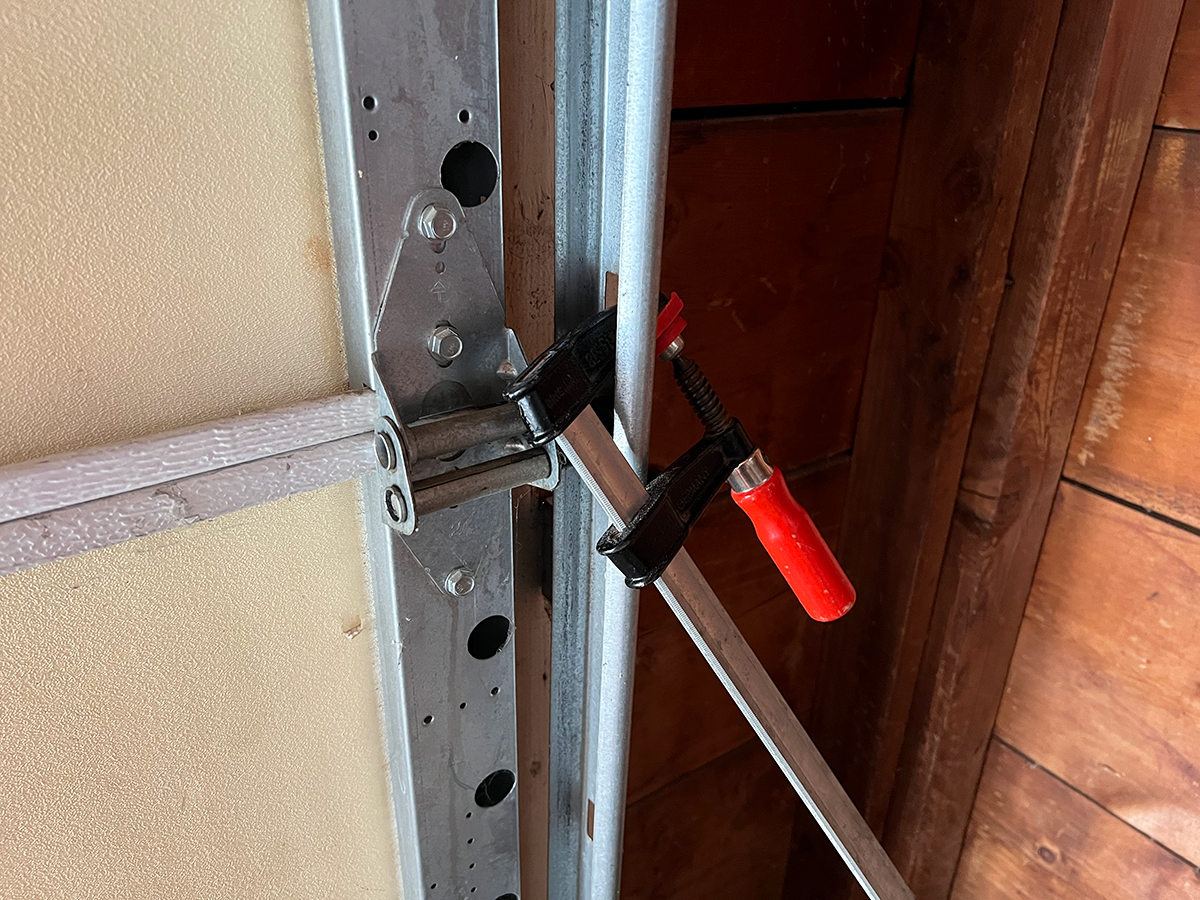
- C-clamp on the tracks: Place a C-clamp above one of the rollers to prevent the door from moving.
- Garage door defender bar: Wedges under the door from inside.
- Rope and knot: Tie the emergency release cord to the opener arm so it can’t be pulled from outside. Not a long-term fix, but better than nothing.
Note: These methods are not as secure as a real lock but are better than leaving the door open.
Comparing Garage Door Locking Methods
To help you choose the best method for your situation, here’s a comparison of cost, security, and convenience:
| Method | Cost | Security | Convenience |
|---|---|---|---|
| Slide Bolt Lock | Low ($10-$30) | High | Manual, inside only |
| T-Handle | Medium ($20-$50) | Medium-High | Outside access |
| Deadbolt | Medium ($40-$80) | Very High | Manual |
| Smart Lock | High ($100+) | High | Remote control |
| Keypad | Medium-High ($60-$120) | High | Very convenient |
| Padlock & Hasp | Low ($10-$30) | Medium | Manual |
| C-clamp (temporary) | Very low ($5) | Low | Awkward |
Common Mistakes When Locking Garage Doors
Even with the best lock, mistakes can happen. Here’s what to avoid:
- Forgetting to lock: Many people close the door but don’t engage the lock, especially if they’re in a hurry.
- Using cheap locks: Thieves can pick or break low-quality locks in seconds.
- Leaving the remote in your car: If someone breaks into your car parked outside, they can access your garage with the remote.
- Not reinforcing windows: Windows are a weak point. Always add film or bars if possible.
- Ignoring the side door: If the interior door to your house is weak, your efforts are wasted.
How To Choose The Best Garage Door Lock For You
Picking the right lock depends on your door type, budget, and how you use your garage.
- If you rarely use the garage: A heavy-duty slide bolt or deadbolt is best.
- If you use it daily: Consider a smart lock or keypad for convenience.
- If you have an attached garage: Make sure both the main door and the connecting door are secure.
- If you rent: Use locks that can be removed without damage, like a padlock or C-clamp.
Expert Advice: Don’t just look at price. A $20 lock is worthless if it breaks or can be picked easily. Spend a little more for a lock with good reviews and solid construction.

Professional Installation Vs. Diy
You can install most garage locks yourself with basic tools. Here’s when to call a professional:
- If you need to drill into a steel or reinforced door
- If you want to install a smart lock with wiring
- If your garage door is very old or custom-made
A professional can usually install a lock in under an hour and ensure it’s done right. The peace of mind is often worth the cost.
Maintenance And Regular Checks
A lock is only as good as its condition. Make sure to:
- Oil moving parts twice a year
- Check screws and bolts for looseness
- Replace batteries in smart locks or keypads regularly
- Test the lock every month to ensure it works smoothly
Tip: Keep a spare key or code written down somewhere safe—locked out of your garage is never fun!
Extra Steps For Maximum Security
If break-ins are common in your area, or you just want to be extra safe, consider:
- Security bar systems: These can withstand heavy force.
- Double-layered doors: Harder to break than single-layer or hollow doors.
- Alarm stickers or fake cameras: Sometimes, just the appearance of security is enough to scare off thieves.
Non-obvious Insight: If your garage connects to your home’s electrical system, consider a battery backup for your opener and alarm. This way, thieves can’t just cut the power to defeat your security.
Frequently Asked Questions
How Do I Lock My Garage Door When I Go On Vacation?
Use both a manual lock (slide bolt, bar lock, or padlock) and the automatic opener’s vacation mode. Unplug the opener and secure windows. For long trips, ask a neighbor to check your garage regularly.
Can I Add A Lock To My Garage Door Myself?
Yes, most locks (slide bolts, hasps, deadbolts) can be installed with basic tools. Smart locks and some automatic opener locks may need professional help, especially if wiring is involved.
What Is The Most Secure Type Of Garage Door Lock?
A combination of a slide bolt or deadbolt (for manual locking) and a smart lock or keypad (for convenience) is usually most secure. Also, reinforce windows and the interior door to the house.
Is It Safe To Use A C-clamp Or Similar Device?
A C-clamp can stop the door from opening in an emergency, but it’s not a long-term solution. It’s better than nothing if you have no lock, but install a proper lock as soon as possible.
Should I Cover My Garage Door Windows?
Yes. Covering windows stops thieves from seeing inside and targeting valuable items or the emergency release. Use frosted film, shades, or blackout curtains.
Locking your garage door is one of the simplest ways to make your home safer. With a bit of effort, the right lock, and a few extra security steps, you can protect your garage from both opportunistic thieves and serious break-ins. Don’t wait for a problem—secure your garage today, and enjoy the peace of mind that comes with smart protection. For more about security standards and ideas, you can check the resources at Wikipedia Home Security.