
If you’ve ever pulled into your driveway, pressed your garage remote, and heard a loud bang—or worse, nothing but silence—there’s a good chance your garage door spring snapped. It’s a common problem, but few homeowners know what to do next. Suddenly, your reliable garage door feels like a huge, unmovable wall. The car, bikes, tools, or even your only way into the house can be trapped inside. You might be tempted to force the door open, but that’s risky. This guide will show you, step by step, how to handle a snapped garage door spring, how to open the door safely, and what you must avoid to prevent injury or damage.
You’ll learn why springs break, how to spot the signs, and the safe options to get your garage open again. Most important, you’ll understand what not to do—and when to call a professional. With real-life examples, practical tips, and answers to common questions, you’ll feel prepared and confident to deal with this garage emergency.
Why Garage Door Springs Snap
The most common reason for a garage door spring to snap is simple: wear and tear. Most standard torsion springs are rated for about 10,000 cycles. A cycle is one full open and close of the door. If you use your garage door four times a day, that’s 1,460 cycles per year—meaning your spring could fail in less than 7 years. However, several factors can cause springs to break even sooner:
- Rust and Corrosion – Moisture in your garage can cause springs to rust, making them weaker.
- Improper Maintenance – Springs need regular lubrication to reduce friction and strain.
- Temperature Changes – Extreme cold or heat can cause metal fatigue.
- Poor Installation – If the spring is the wrong size or installed incorrectly, it will fail faster.
- Heavy Door or Added Weight – If you add insulation or hardware to your door, the extra weight strains the spring.
Understanding these causes helps you prevent future problems. For example, spraying a little garage door lubricant every few months can add years to a spring’s life. If your area has harsh winters or humid summers, maintenance is even more important.
Types Of Garage Door Springs
Before you try to open your garage door, it’s helpful to know what kind of spring you have. There are two main types:
Torsion Springs
These are mounted horizontally above the door opening. When the door closes, the springs wind up and store energy. When you open the door, the springs unwind and help lift the heavy door.
Features:
- Usually last longer (10,000–20,000 cycles)
- Safer in case of breakage, as they’re on a shaft
- More expensive and complicated to replace
Extension Springs
These run parallel to the horizontal tracks on both sides of the door. They stretch to provide lifting force.
Features:
- More common in older or cheaper doors
- Less expensive, but have more exposed parts
- Can be more dangerous if they break without safety cables
Both types can snap with age or stress, but torsion springs are more typical in modern homes. If you’re not sure which you have, look above your garage door—if you see a long metal coil, it’s a torsion spring; if you see long springs by the tracks, those are extension springs.
Signs Your Garage Door Spring Snapped
A broken spring is hard to miss, but sometimes the signs aren’t obvious. Here’s what you might notice:
- Loud bang or snap: The spring breaking releases energy with a sharp sound.
- Door won’t open: The opener motor runs but the door doesn’t lift (or only lifts a few inches).
- Door is crooked or jerky: If only one spring breaks on a double-spring system, the door lifts unevenly.
- Gap in the spring: For torsion springs, check above the door—look for a clear separation in the coil.
- Cables are loose or dangling: These can come off their drums when the spring fails.
- Heavy door: The door suddenly feels impossible to lift by hand.
These symptoms mean your spring is broken or about to break. Never ignore these signs—using the door with a bad spring is dangerous.
Is It Safe To Open A Garage Door With A Broken Spring?
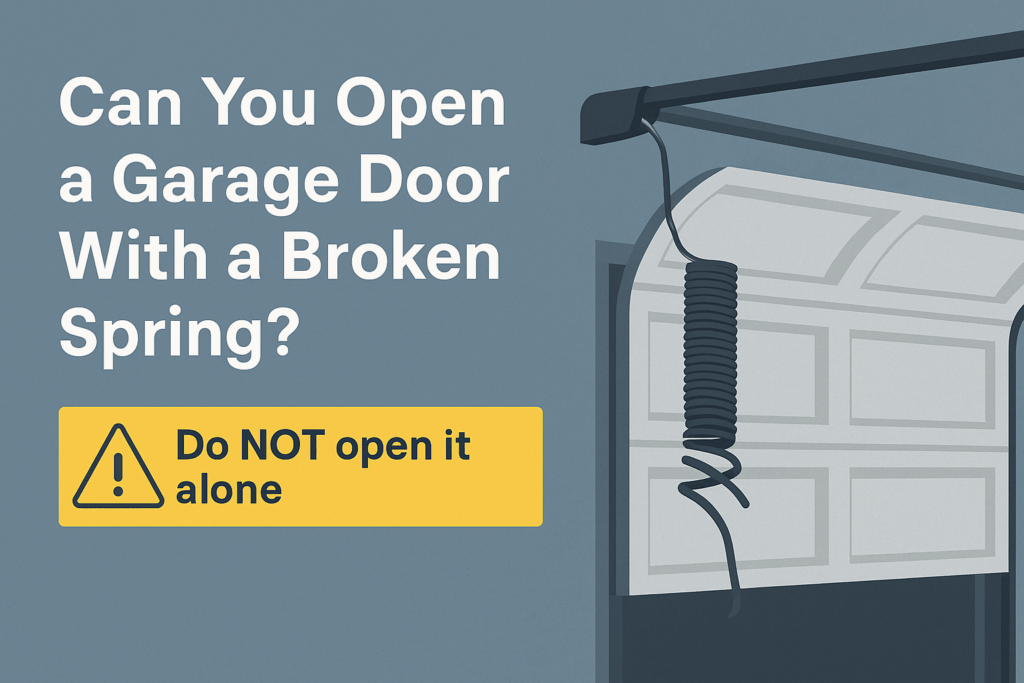
The short answer: No, it’s not safe—unless you follow very careful steps. The garage door can weigh between 150 and 400 pounds. The spring does most of the lifting. Without it, you’re left to lift all that weight yourself. If the door slips, it can cause serious injury or property damage. Automatic openers are not designed to lift the full weight of the door, and forcing them to try can burn out the motor or snap the chain.
Important: If you have any doubt or the door seems stuck, it’s always best to call a professional. However, if you must open the door (for example, your car is trapped and you need to get to work), you can do it with caution. The following steps explain how.

How To Open A Garage Door With A Snapped Spring
If you need to open your garage door after a spring has snapped, follow these steps carefully. You’ll need at least one other adult to help. Never try to do this alone.
What You’ll Need
- Two or more strong adults
- Sturdy step ladder
- Vice grips or locking pliers
- Work gloves
- Flathead screwdriver
Step-by-step Guide
1. Disconnect The Garage Door Opener
Pull the emergency release cord (usually a red handle hanging from the opener rail). This disconnects the opener from the door so you can move it by hand.
2. Check The Door’s Balance
Try lifting the door a few inches. If it’s too heavy to budge, do not force it. If it moves, proceed carefully.
3. Position Helpers
Have one person on each side of the door. Each person should have a good grip, both hands, and wear gloves.
4. Lift The Door Together
On the count of three, lift the door slowly and evenly. Do not rush. If the door feels too heavy, stop. You may need a third person for heavier doors.
5. Secure The Door Open
Once the door is open high enough for a car to pass (about 4–5 feet), place vice grips or locking pliers on the track just below the bottom roller. This keeps the door from sliding down.
For extra safety, put a sturdy object (like a ladder or wooden block) under the door.
6. Do Not Let Go
Never trust the door to stay up on its own. The spring is no longer holding the weight. If you need to keep the door open for any length of time, use more than one safety stop.
7. Lower The Door With Control
When you’re ready to close it, remove the vice grips and lower the door together, slowly and evenly. Keep hands and feet clear of the edges.
Special Cases
- Double Garage Doors: Weigh much more. Four adults are often needed.
- If Door Is Jammed: Do not force it. Call a professional. Forcing a jammed door can bend tracks or break glass.
- No Emergency Release Cord: Check your opener model’s manual. Most have a cord, but if missing, do not use the opener.
Alternative: Open Just Enough For Ventilation
If you only need a small gap for airflow, lift the door a few inches and secure with vice grips. Never leave the door unattended.
Caution
Never use the electric opener to try and lift the door with a broken spring. This can destroy the opener and may cause the door to fall suddenly.
What Not To Do When Your Garage Door Spring Snaps
Many accidents happen when homeowners try to “make do” with a broken spring. Avoid these common mistakes:
1. Don’t Use The Garage Door Opener
The opener is not made to lift the entire weight. You can burn out the motor or break the chain/belt.
2. Don’t Try To Replace The Spring Yourself
Garage door springs are under extreme tension. DIY replacement is very dangerous, even with instructions. Trained professionals have the right tools and experience.
3. Don’t Ignore The Broken Spring
Operating the door with a broken spring stresses all parts—cables, rollers, and opener.
4. Don’t Prop The Door Open With Weak Objects
The door is very heavy. Never use a broom, chair, or small block to hold it up.
5. Don’t Let Children Or Pets Near The Door
Keep the area clear while the door is open or being moved by hand.
By knowing what to avoid, you reduce the risk of injury or damage.

When To Call A Professional
While it’s possible to open a door with a broken spring in an emergency, you should never use the door like this for more than a day or two. The risks are simply too high. Call a garage door repair professional for:
- Spring replacement (never DIY)
- Door stuck or off tracks
- Cables loose or snapped
- Strange noises or jerky movement
A professional has tools, knowledge, and insurance. The repair usually takes 1–2 hours and costs between $150 and $350 per spring (in the US, 2024 data). Some companies offer same-day emergency service.
What To Expect During Professional Repair
Understanding the repair process helps you feel confident and avoid scams. Here’s what happens:
- Inspection: The technician checks the door, type of spring, and any other damage.
- Quote: You get a price before work begins.
- Spring Replacement: The tech releases tension, removes the broken spring, installs a new one (or both), and winds it to the correct tension.
- Safety Check: They test the door balance, inspect cables, and lube moving parts.
- Cleanup: Old springs are removed and the area is cleaned up.
Most reputable repair companies offer a warranty on parts and labor (often 1–3 years).
How To Choose A Good Garage Door Repair Company
Not all garage door companies are equal. Here’s how to pick a reliable one:
- Check reviews: Look at Google, Yelp, or BBB ratings.
- Ask about insurance: They should carry liability insurance.
- Get a written quote: Avoid companies that won’t give you a firm price.
- Ask about warranty: Good companies back their work.
- Look for experience: Choose a company with at least 3–5 years in business.
Be wary of very low prices. Quality springs and skilled labor cost money.
Cost Comparison: Repair Vs Replacement
How much should you expect to pay? Here’s a comparison of common repairs:
| Service | Typical Cost (USD) | Time to Complete | Warranty |
|---|---|---|---|
| Replace single spring | $150–$250 | 1 hour | 1–3 years |
| Replace both springs | $200–$350 | 1–2 hours | 1–3 years |
| Full door replacement | $800–$2,500 | 4–8 hours | 5–10 years |
| DIY parts only | $50–$120 | Varies | None |
Replacing both springs, even if only one broke, is often recommended—this prevents the other (older) spring from breaking soon after.
Preventing Future Spring Breaks
Prevention is always cheaper and safer than emergency repair. Here’s how you can extend the life of your garage door springs:
- Regular lubrication: Apply garage door lubricant to the springs every 3–6 months.
- Check balance: Every few months, disconnect the opener and lift the door by hand. It should stay at waist height. If it falls, call a pro.
- Inspect for rust: If you see orange or brown spots, wipe them off and apply lubricant.
- Schedule professional tune-ups: Once a year, have a technician check the entire system.
Spring Life Expectancy Table
Here’s how long you can expect different springs to last, based on cycles:
| Spring Type | Cycle Rating | Opens/Day | Expected Years |
|---|---|---|---|
| Standard torsion | 10,000 | 4 | 7 |
| High-cycle torsion | 25,000 | 4 | 17 |
| Standard extension | 10,000 | 4 | 7 |
| High-cycle extension | 25,000 | 4 | 17 |
If you have a large family or use your garage as the main entrance, ask for high-cycle springs when you next replace them.
Real-world Example: What Happens When You Try To Lift Alone
Imagine you come home and find your door won’t open. You pull the emergency release and try to lift the door. It barely moves an inch. You push harder, and suddenly, the door falls back down—narrowly missing your foot.
This happens because the garage door, without the spring, is dangerously heavy. Many people underestimate the weight. If you try to prop the door with a broom, it will snap, and the door could fall. That’s why you need at least two people and solid support under the door.
Two Key Insights Most People Miss
- Even a “light” garage door is very heavy without the spring. What feels easy for the opener is only possible because the spring does most of the work. The door’s weight is real and dangerous.
- Both springs wear out at the same rate. If you replace only one, the older spring is likely to break soon. Pro repair companies usually recommend replacing both to save you a second repair bill.
Emergency Access: Getting Into The Garage When Locked Out
If your car is locked inside and you’re locked out, here’s a little-known trick: Most garage doors have a small emergency release lock near the top. With the right key, you can unlock it, pull the cable, and open the door manually (if you have help). If your door doesn’t have this, talk to a pro about installing one for future emergencies.
Upgrading Springs For Longer Life
When replacing springs, ask about high-cycle springs. These cost a bit more but last two or three times as long as standard springs. For homes with frequent use, this upgrade pays off.
Safety Upgrades To Consider
If you have extension springs and your system is older, ask about safety cables. These run through the center of the spring and prevent it from flying across the garage if it breaks. Many local codes now require safety cables on all extension spring systems.
Environmental Factors: Why Some Springs Fail Faster
If you live in a coastal area or a place with lots of road salt, your springs can rust much faster. In humid climates, springs may break in as little as 3–5 years. In those cases, stainless steel or powder-coated springs are worth considering, even though they cost more.
What To Do After The Repair
Once your new springs are installed:
- Test the door balance (should stay halfway open by hand)
- Listen for quiet, smooth operation
- Check the opener force setting—sometimes it needs adjustment after spring replacement
- Review warranty paperwork and save the company’s contact info
Should You Try Diy Spring Replacement?
Some websites show how to replace springs yourself. The truth is, this job is dangerous. Springs are under huge tension. A mistake can lead to serious injury. Even experienced DIYers often call professionals for this task. The small cost savings are not worth the risk.
For safe and reliable information about garage door springs, you can check this Wikipedia page.
Frequently Asked Questions
What Causes Garage Door Springs To Break?
The main causes are normal wear and tear, rust, and lack of maintenance. Every time you open and close your door, the spring uses up a cycle. After enough cycles, it will break.
Can I Open My Garage Door With A Broken Spring Using The Opener?
No, you should not. The opener is not designed to lift the full weight. Trying this can destroy the motor or chain, and may cause the door to fall.
How Much Does It Cost To Replace A Garage Door Spring?
In the US, the average cost is $150–$350 for one or both springs, including labor. Prices vary by location and door size.
How Long Do Garage Door Springs Last?
Standard springs last about 7–9 years with regular use. High-cycle springs can last 15–20 years, depending on daily cycles.
Is It Safe To Replace Garage Door Springs Myself?
No. Garage door springs are under high tension. DIY replacement is dangerous and can cause serious injury. Always hire a trained professional.
When a garage door spring snaps, it can feel stressful and urgent. But with the right steps and a little patience, you can get your door open safely and set up for a reliable repair. Remember, safety comes first—never risk injury for speed. Regular maintenance and smart upgrades will help you avoid this problem for years to come.