
Now Reading: Garage Door Remote Opener Not Working? Easy Fixes and Tips
- 01
Garage Door Remote Opener Not Working? Easy Fixes and Tips

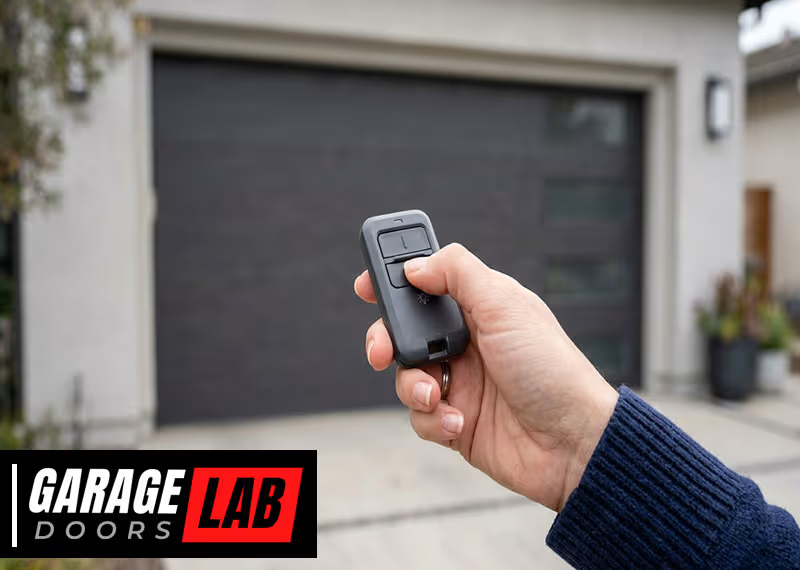
A garage door remote opener is a small device that offers big convenience. With just a click, you can open or close your garage door from your car or inside your home. But what happens when your garage door remote opener stops working? Suddenly, a simple task turns frustrating. You may worry about being locked out, late for work, or unable to secure your garage. The good news is, most problems with garage door remotes can be fixed without calling a professional. Whether you’re dealing with a dead remote, a door that won’t budge, or something in between, understanding what causes these issues will help you get back to smooth operation quickly.
This guide will walk you through all the main reasons a garage door remote opener fails. You’ll learn practical steps for troubleshooting, discover mistakes people often make, and see when it’s time to get help. If you want to save time, money, and stress, keep reading.
We’ll cover everything you need to know to get your garage door remote working again.
Common Reasons Your Garage Door Remote Opener Stops Working
Many factors can cause a garage door remote opener to fail. Let’s look at the most frequent causes, so you know what to check first.
1. Dead Or Weak Batteries
Most garage door remotes use small coin or AAA batteries. Over time, these batteries run out of power. When this happens, the remote may stop working or only work sometimes. Replacing the batteries is often the easiest fix and should be your first step.
Tip: Even if the indicator light on your remote still turns on, the battery might not have enough power to send a strong signal to the opener.
2. Remote Needs Reprogramming
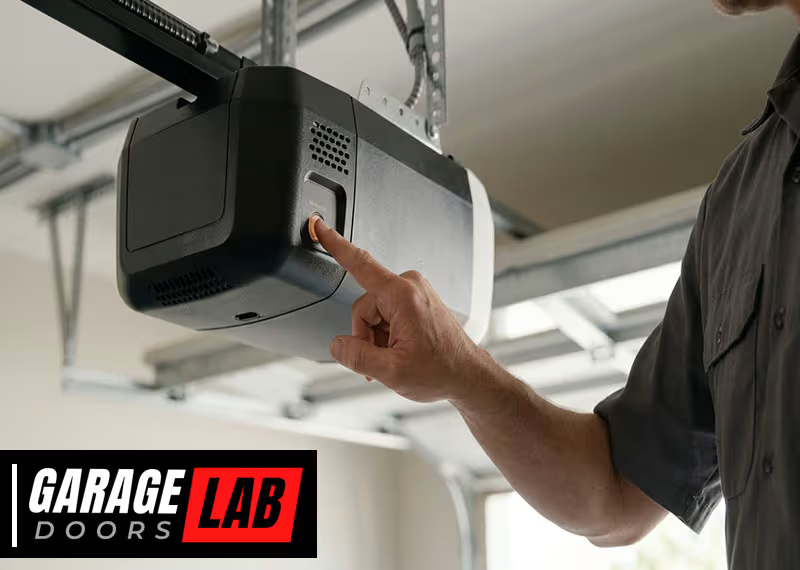
Sometimes, a remote can lose its connection with the garage door opener. This can happen after a power outage, electrical surge, or simply over time. Each brand has a special way to reprogram remotes, usually by pressing a “learn” button on the opener.
Non-obvious insight: Some remotes get knocked out of sync if you press buttons too quickly or hold them down too long during programming.
3. Signal Interference
Garage door remotes use radio waves, usually at 315 MHz or 390 MHz, to communicate with the opener. Devices like wireless routers, LED lights, baby monitors, and even nearby airports can cause interference.
Example: If your remote only works when you’re very close to the door, signal interference might be the cause.
4. Faulty Remote
Like any electronic device, remotes can break. Buttons may wear out, internal contacts can fail, or the circuit board can get damaged. If you’ve tried new batteries and reprogramming, but the remote still doesn’t work, it might be time for a replacement.
5. Locked Garage Door Opener
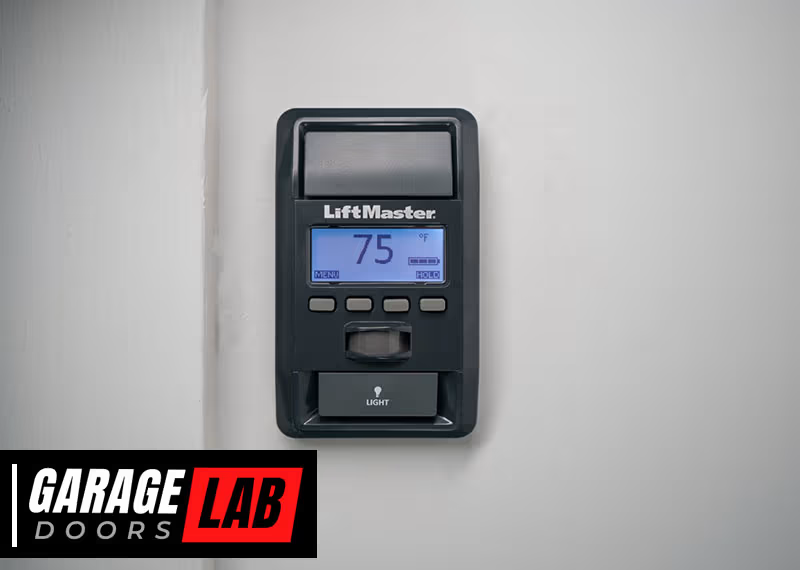
Many modern garage door openers have a “lock” button on the wall control panel inside your garage. If this is pressed, the opener won’t respond to remote signals but may still work with the wall button.
Common mistake: Homeowners sometimes press this button by accident, thinking it’s a light switch.
6. Out Of Range
Garage door remotes have a limited range—usually 50 to 100 feet. If you try to use the remote too far from the garage, it won’t work. Walls, cars, and other objects can also block the signal.
7. Damaged Antenna
The opener unit in your garage has a small wire antenna that receives signals from the remote. If this antenna is broken, bent, or covered in dust, the remote’s range will drop or it may not work at all.
8. Problems With The Wall Button Or Keypad
If your wall button or wireless keypad is also not working, the problem might be with the garage door opener itself. In this case, the issue is likely with the opener’s power supply or circuit board, not the remote.
9. Power Issues
A power outage, tripped breaker, or unplugged opener will stop both the remote and wall button from working. Double-check that your garage door opener is getting power.
10. Worn Out Motor Or Opener Unit
If your opener is more than 10–15 years old, the motor or electronics could be failing. Sometimes, the unit will work only with the wall button, not the remote.
How To Troubleshoot Your Garage Door Remote Opener
Now that you know the common causes, let’s walk through how to diagnose and fix your garage door remote opener.
Step 1: Check The Batteries
Start simple. Open your remote and replace the batteries with fresh ones of the correct type. Make sure they are installed in the right direction.
- Test the remote after changing the batteries.
- If it works, you’ve found the problem.
- If not, move to the next step.
Step 2: Test The Wall Button
Try opening the garage with the wall button inside your garage.
- If the wall button works but the remote does not, the problem is with the remote.
- If neither works, check the opener’s power supply.
Step 3: Inspect The Opener’s Power Source
Make sure the opener is plugged in and the outlet is working. Check your circuit breaker or fuse box.
- If the opener has a power switch, make sure it’s on.
- If there was a recent power outage, try unplugging the opener for 30 seconds and plugging it back in to reset it.
Step 4: Reprogram The Remote
Check your garage door opener manual for reprogramming steps. Usually, you’ll:
- Press and release the “learn” button on the opener (often on the back or side).
- Within 30 seconds, press and hold the button on your remote.
- Wait for the opener’s light to blink or click, showing it has learned the remote.
Tip: If you have more than one remote, reprogram each one.
Step 5: Check For Signal Interference
Look for new electronics or lights near the opener. Try turning off nearby devices to see if the remote works better.
- Move your car or other large metal objects away from the opener’s antenna.
- If you recently installed LED bulbs, try swapping them for regular bulbs.
Step 6: Inspect The Antenna
Find the thin wire antenna hanging from your garage door opener. Make sure it’s straight, clean, and not broken.
- Gently wipe off dust.
- Straighten any bends.
Step 7: Test The Remote’s Range
Stand close to the opener and try the remote. If it works only nearby, but not farther away, the problem is likely the antenna or interference.
Step 8: Try A Different Remote
If you have a second remote or a wireless keypad, test it. If it works, your main remote is probably faulty.
Step 9: Check The Lock Button
Look at the wall control panel inside your garage. If there’s a button with a padlock icon, press it to unlock the opener.
- The remote should work again if the opener was locked.
Step 10: Inspect For Physical Damage
Look for cracks, water damage, or worn buttons on your remote. If the remote is visibly damaged, you may need a new one.
Advanced Troubleshooting For Persistent Problems
If you’ve tried all the basic steps and your garage door remote opener is still not working, it’s time for more advanced checks.
Check The Remote’s Frequency
Most garage door remotes operate at 315 MHz or 390 MHz. If you live near an airport or other source of strong radio signals, interference can be severe. Some modern openers allow you to change frequencies or use rolling codes to avoid interference.
Non-obvious insight: If your neighbor just installed a new garage door opener and your remote stopped working, you could be sharing the same frequency.
Test The Opener’s Receiver
The receiver is the part of the garage door opener that “listens” for signals from your remote. If this part fails, no remote will work.
- If all remotes and the wireless keypad stop working, but the wall button still works, the receiver may be faulty.
- Receivers can sometimes be replaced separately, but often it’s easier to replace the entire opener if it’s old.
Inspect The Circuit Board
A burned or damaged circuit board can cause the opener to ignore remote signals. Signs include burning smells, melted plastic, or visible scorch marks inside the opener.
- If you’re comfortable, unplug the opener and remove the cover to inspect the board.
- Replacement boards are available for most major brands, but installation requires basic electrical knowledge.
Reset The Opener To Factory Settings
Some garage door openers allow a full reset to erase all remotes and codes. This is useful if you suspect programming problems or interference.
- Follow your opener’s manual for the exact steps.
- After resetting, reprogram all remotes and keypads.
Preventing Future Garage Door Remote Problems
A little maintenance can keep your garage door opener working smoothly.
Regular Battery Changes
Replace remote batteries every 1–2 years even if they seem to work fine. Write the date on the battery with a marker as a reminder.
Keep The Antenna Clean
Dust and cobwebs can block signals. Wipe the opener’s antenna gently with a dry cloth every few months.
Avoid Physical Damage
Don’t drop or crush your remote. Keep it away from water and extreme heat.
Update Old Equipment
If your opener or remote is more than 15 years old, consider upgrading. Newer systems are less prone to interference, more secure, and often work with smartphone apps.
Secure Your Garage
Never leave remotes in unlocked cars. Thieves sometimes break into cars to steal garage door remotes and gain access to homes.
When To Call A Professional
Some garage door remote issues are best handled by experts.
- If you see sparks, burning smells, or obvious wiring damage.
- If your garage door opener is still under warranty.
- If you are uncomfortable working with electronics or ladders.
Example: If the garage door starts to move by itself or won’t close properly, a professional can check safety sensors and wiring.
Practical tip: Always get a written estimate before agreeing to repairs.
Comparing Garage Door Opener Types
The type of opener you have can affect how your remote works. Here’s a quick comparison of the main types:
| Opener Type | Remote Compatibility | Common Issues |
|---|---|---|
| Chain Drive | Most universal remotes | Noisy operation, older units prone to remote sync loss |
| Belt Drive | Most universal remotes | Expensive remotes, sensitive to interference |
| Screw Drive | Brand-specific remotes | Temperature affects remote range |
| Direct Drive | Most universal remotes | Rare, but reliable remotes |
Universal Vs. Brand-specific Remotes
Not all remotes work with all openers. Here’s how they compare:
| Remote Type | Works With | Pros | Cons |
|---|---|---|---|
| Universal | Many brands (if compatible frequency) | Easy to replace, often cheaper | May not support all features, sometimes tricky to program |
| Brand-Specific | One brand or model | Full feature support, easy programming | More expensive, harder to find for old models |
Signs It’s Time To Replace Your Garage Door Remote Opener
If your remote is more than 10 years old or repairs cost more than half the price of a new system, consider replacing it. New openers offer:
- Better security features (rolling codes, encryption)
- Smartphone control
- Quieter operation
- Less frequent interference problems
Example: Modern openers from brands like Chamberlain and LiftMaster can send alerts to your phone if the garage is left open.
Real-world Scenarios
Understanding common situations can help you relate to your own garage door remote issues.
Scenario 1: Remote Works Only Sometimes
You press the button and nothing happens. After a few tries, the door opens. This usually means:
- Weak batteries
- Signal interference (possibly from new electronics in the garage)
- Remote button is wearing out
Scenario 2: Remote And Wall Button Not Working
Neither the remote nor the wall button works. The opener is silent.
- Most likely a power issue
- Check circuit breaker, outlet, and power cord
Scenario 3: Remote Works, Keypad Doesn’t
- Keypad may need new batteries or reprogramming
- Keypad could be damaged by weather
Scenario 4: Door Opens By Itself
Sometimes, remotes stick or neighbors use the same frequency.
- Reprogram all remotes and clear old codes
- Check for stuck buttons
Scenario 5: New Car’s Built-in Remote Won’t Program
Many cars have built-in garage door buttons. Sometimes, these don’t work with older openers.
- Check if your opener uses rolling codes (needed for many built-in remotes)
- You may need a special adapter
Safety Tips For Garage Door Remote Openers
Garage doors are heavy and can be dangerous. Always use caution:
- Keep remotes away from children
- Test your door’s safety reversal system monthly
- Never walk under a moving garage door
- Keep fingers clear of door panels and tracks
Fact: Each year, over 20,000 injuries in the US involve garage doors, often from improper use or faulty systems.
Maintenance Checklist For Garage Door Remotes
Staying ahead of problems is easier than fixing them later. Here’s a simple routine:
- Change remote batteries every 1–2 years
- Clean antenna and remote regularly
- Test remote range monthly
- Reprogram remotes after power outages
- Check for physical damage or wear
Cost Of Fixing Garage Door Remote Problems
Here’s what you might expect to spend:
| Problem | DIY Cost | Professional Cost |
|---|---|---|
| Replace batteries | $2–$10 | $20–$50 (service call) |
| Buy new remote | $15–$45 | $50–$100 (with programming) |
| Reprogram remote | Free | $40–$75 |
| Replace receiver or circuit board | $40–$120 | $100–$250 |
| Install new opener | $180–$400 (DIY kit) | $300–$600 |
Note: Prices vary by location and brand.

Where To Find More Help
If you need more details, check your opener’s official manual or visit the manufacturer’s website. For further reading on garage door opener technology, the Wikipedia article on garage door openers offers a solid overview.
Frequently Asked Questions
What Should I Do If My Garage Door Remote Opener Stops Working Suddenly?
First, check the batteries and replace them if needed. Test the wall button to see if the opener itself is working. If only the remote fails, try reprogramming it. Also, check for any physical damage, signal interference, or a locked opener.
If none of these steps help, you may need to replace the remote or call a professional.
Can I Use A Universal Remote With My Garage Door Opener?
Many garage door openers work with universal remotes, but not all. Check your opener’s model and frequency (often on a label). Universal remotes usually support popular brands and frequencies, but may not work with very old or very new openers.
Programming steps are in the universal remote’s instructions.
Why Does My Garage Door Remote Only Work When I’m Close To The Door?
This usually means there’s signal interference or a problem with the opener’s antenna. Try cleaning and straightening the antenna, and move electronic devices away from the opener. If the problem continues, replace the remote battery or consider upgrading to a newer remote.
How Can I Tell If My Garage Door Opener Is Locked?
Look for a “lock” or padlock icon on your wall control panel. If this feature is active, the opener won’t respond to remote signals but will still work with the wall button. Press the lock button for 3–5 seconds to unlock the system.
Is It Safe To Repair My Garage Door Opener Myself?
Basic tasks like changing batteries, reprogramming remotes, or cleaning antennas are safe for most people. For electrical repairs, circuit board replacement, or fixing heavy parts, it’s best to call a professional to avoid injury or further damage.
A working garage door remote opener makes life easier and more secure. By understanding how these systems work and knowing what to do when problems appear, you can save time, money, and avoid unnecessary frustration. Whether you fix it yourself or call in a pro, you now have the knowledge to handle almost any garage door remote issue with confidence.