
Now Reading: How to Change Garage Door Opener Code: Easy Step-by-Step Guide
- 01
How to Change Garage Door Opener Code: Easy Step-by-Step Guide
How to Change Garage Door Opener Code: Easy Step-by-Step Guide

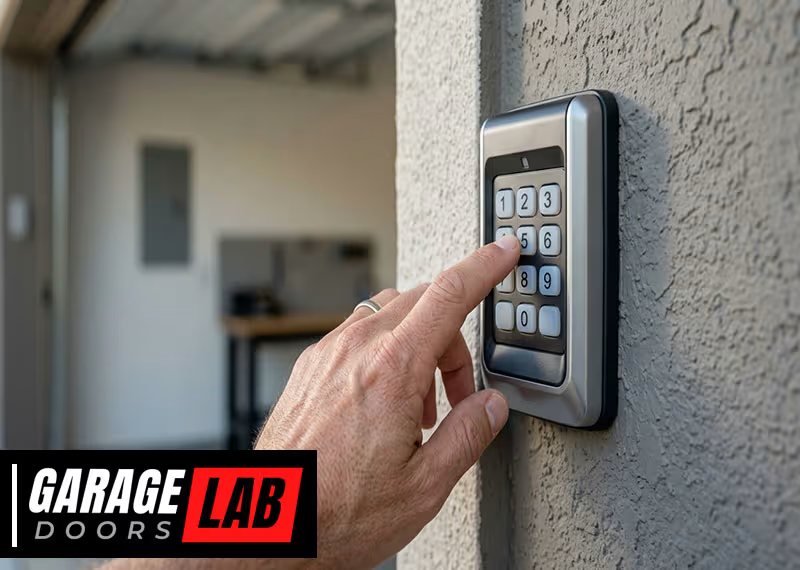
Changing the code on your garage door opener is one of the best ways to protect your home from unauthorized access. People often forget about this simple security step, but it can make a big difference in keeping your family and property safe.
If you just moved into a new house, lost a remote, or want to prevent unwanted entry, updating your garage door opener code is smart. The process may look tricky, but with the right guidance, anyone can do it—even if you have no technical background.
This guide walks you through every detail of how to change a garage door opener code. You will learn how different systems work, what tools you need, and common mistakes to avoid. Whether you have a newer smart system or a classic model, you’ll find clear steps and practical advice.
Let’s make your garage more secure and give you peace of mind.
Why Change Your Garage Door Opener Code?
Most people change their front door locks when they move into a new home, but they forget about the garage door. This is a common mistake. The garage is often a weak spot in home security because many openers use default codes or old codes that previous owners may still know.
Changing your garage door opener code is important for these reasons:
- Increases home security: Prevents old remotes or code-sharing from giving access to strangers.
- Protects valuables: Many people store tools, bikes, and even cars in the garage.
- Prevents break-ins: Thieves often target garages because they’re less protected.
- Peace of mind: Knowing you control who can enter your home.
It’s also good practice to change your code every few years, even if you haven’t had a security issue. Technology changes, and so do hacking methods.
Understanding Garage Door Opener Systems
Before changing your code, you need to know which type of opener system you have. Each system uses a different method for storing and updating codes.
Dip Switch Systems
Older garage door openers (usually before 1993) use dip switches—small toggle switches inside the remote and opener unit. The pattern of these switches creates a unique code.
Key features:
- Usually have 8–12 switches.
- Code must match between remote and opener.
- Easy to set, but less secure than modern systems.
Rolling Code Systems
Modern garage door openers use rolling codes. Every time you press your remote, the code changes automatically. This prevents code-grabbing devices from copying your signal.
Key features:
- Introduced in the early 1990s.
- Much more secure.
- Uses a “learn” or “smart” button to sync remotes.
Keypad Entry Systems
Many homes have an external keypad for keyless entry. These allow you to enter a PIN to open the garage.
Key features:
- PIN can be changed from the keypad.
- Works alongside remotes.
- Good for kids or guests.
Smart Garage Door Openers
Smart systems connect to your Wi-Fi and allow control via smartphone apps. These often have advanced settings for changing codes, managing users, and setting temporary access.
Key features:
- Control from anywhere.
- Change codes through an app.
- Often integrates with smart home platforms.

Tools And Information You Need
Changing your garage door opener code does not require special skills. But you should prepare the following:
- A ladder: Most opener units are mounted on the ceiling.
- The remote(s): All remotes must be reprogrammed.
- The keypad: If you use one.
- Owner’s manual: For model-specific instructions.
- Smartphone: If you have a smart system.
- Screwdriver: For some dip switch covers.
Make sure the area is well-lit and the opener is accessible. If you feel unsure at any step, ask a family member for help.
How To Change Garage Door Opener Code: Step-by-step
Let’s dive into the exact steps for each system. Follow the section that matches your opener type.
For Dip Switch Systems
- Unplug the opener for safety. Wait a few seconds.
- Open the remote control case. Find the dip switches.
- Locate dip switches on the opener unit. Usually under a light cover.
- Choose a new code. Set a random pattern of up/down positions.
- Match the new pattern. Set the same on all remotes and the opener.
- Close covers and plug in the opener.
- Test the system. The door should open and close.
Example: If your opener and remote each have 10 switches, and your old code was “up, down, down, up, up, down, up, down, up, down,” change it to a new, random pattern. Don’t use simple patterns like all up or all down.
Mistake to avoid: Forgetting to match every remote. Each must have the same dip switch pattern.
For Rolling Code Systems
- Find the “learn” or “smart” button. It is usually on the opener unit, often near the antenna wire.
- Press and release the “learn” button. An indicator light will glow.
- Within 30 seconds, press the button on your remote. You may need to hold it for a few seconds.
- Wait for a click or flashing light. This means the remote is synced.
- Repeat for each remote.
- Erase old codes (if needed): Hold the “learn” button for 5–10 seconds until the light goes out. This removes all previous remotes. Then reprogram your current remotes.
Example: On a Chamberlain opener, the “learn” button is usually yellow, red, or purple.
Mistake to avoid: Not clearing old codes. If you bought a home, always erase all previous codes first.
For Keypad Entry Systems
- Press the “learn” button on your opener unit.
- Within 30 seconds, enter your desired PIN on the keypad. Press the “enter” or “send” button.
- Wait for a confirmation blink or beep.
- Test the new PIN. Try opening the garage with the keypad.
Example: If your current PIN is 1234, change to a less obvious code, like 5796.
Mistake to avoid: Using easy-to-guess PINs like 0000 or your birth year.
For Smart Garage Door Openers
- Open your system’s app (e.g., myQ, Nexx, or Aladdin Connect).
- Go to settings or users. Look for code or PIN management.
- Edit or add user codes. Set up permanent or temporary codes as needed.
- Save and test the new code.
- Remove old users or codes not needed.
Example: You can create a temporary code for a delivery person, set to expire after one use.
Mistake to avoid: Forgetting to remove expired codes or users from the app.
Comparing Opener Types And Security
Here’s a simple comparison of the main garage door opener systems and their security levels:
| Opener Type | Security Level | Setup Difficulty | Best For |
|---|---|---|---|
| Dip Switch | Low | Easy | Older homes |
| Rolling Code | High | Moderate | Most homes |
| Keypad Entry | High (if PIN is strong) | Easy | Families, guests |
| Smart Opener | Very High | Varies | Tech-savvy users |
How Often Should You Change Your Code?
Changing your garage door opener code regularly is a good habit. Here are times when you should update your code:
- After moving into a new home.
- If you lose a remote or suspect it was stolen.
- When you give out a temporary code to a guest, cleaner, or delivery.
- If you notice strange activity or the door opens by itself.
- At least once every 1–2 years as a routine update.
Most people forget to update their codes after moving or lending out a remote. Don’t make this mistake—old codes are a common way for thieves to enter homes.

Common Problems And How To Solve Them
Changing your garage door code is usually simple, but sometimes things don’t work as expected. Here are common issues and what to do:
Remote Not Syncing
- Check the battery: Weak batteries can fail to send signals.
- Distance: Stand close to the opener when programming.
- Wrong model: Make sure your remote is compatible.
Keypad Not Accepting New Code
- Delay: Enter the code quickly, within the time limit.
- Sticky keys: Clean the keypad if keys do not respond.
- Low battery: Some keypads need a battery change.
Opener Not Responding
- Power: Make sure the opener is plugged in.
- Light: If the “learn” light does not come on, wait and try again.
- Manual lock: Some garages have a manual lock that must be off.
Old Codes Still Work
- Erase memory: On rolling code openers, hold the “learn” button for 10 seconds to clear all previous codes.
- Reprogram all devices: Remotes and keypads must all be updated.
Smart System Glitches
- App update: Make sure your app is updated to the latest version.
- Wi-Fi signal: Weak signal can cause delays.
- Restart: Power cycle the opener and your router.
Safety Tips When Changing Codes
Security is important, but so is safety. Follow these tips:
- Unplug the opener before working on dip switch systems.
- Use a stable ladder. Never stand on something unstable.
- Keep remotes out of reach of children.
- Choose random codes. Avoid birthdays or repeated numbers.
- Test the system after every change—don’t assume it works.
A less obvious safety tip: Always notify anyone who shares your home when you change the code. Kids, roommates, or partners may be locked out if you forget this step.
Differences Between Major Brands
Different brands have unique steps and buttons. Here’s a quick look at the most popular brands:
| Brand | Learn Button Color | Special Notes |
|---|---|---|
| Chamberlain | Yellow, Purple, Red/Orange | Uses myQ app for smart models |
| LiftMaster | Yellow, Purple, Red/Orange | Same as Chamberlain (same parent company) |
| Genie | Black, Red | Uses Intellicode for rolling codes |
| Craftsman | Yellow, Purple | Often similar to Chamberlain |
| Linear | Varies | Look for “learn” button near terminal |
If you’re ever unsure, check your opener’s manual or look up your model number on the manufacturer’s website.
How To Reset Garage Door Opener If You Lose All Remotes
Losing all remotes can be stressful, but you can still regain control. Here’s what to do:
- Erase all codes: Hold the “learn” button for 10 seconds until the light goes out.
- Buy new remotes: Make sure they’re compatible with your system.
- Program new remotes: Use the “learn” button method.
- Change keypad code: Reset if you have an external keypad.
- Consider upgrading: If your system is old, this is a good time to switch to a rolling code or smart opener.
If you cannot program new remotes or access the opener, call a professional installer.
How To Add Or Remove Users On Smart Openers
Smart openers make it easy to manage who can access your garage.
- Add user: Open the app, select “add user,” and enter their email or phone number. Set permissions (full access, temporary, or scheduled).
- Remove user: Select the user and delete. This instantly removes their access.
- Set guest codes: Create a code for cleaners, dog walkers, or deliveries. Set it to expire after one use or a set date.
Non-obvious insight: Always review your user list every few months. It’s easy to forget about old codes or users you no longer trust.
What To Do If The Opener Still Doesn’t Work
Sometimes, after following every step, your garage door opener still doesn’t respond. Here are less obvious troubleshooting tips:
- Reset the circuit breaker: Sometimes, openers stop working if the breaker trips.
- Check for interference: LED light bulbs or wireless routers nearby can disrupt signals. Try turning them off.
- Inspect the antenna: The antenna wire on the opener must hang down freely. If it’s damaged or tucked away, range will be reduced.
If none of these tips help, contact the manufacturer’s support or a licensed technician. Garage doors are heavy and can be dangerous if not working properly.
Upgrading To A More Secure System
If you have an older dip switch system, consider upgrading to a rolling code or smart opener. Modern systems are much harder to hack and offer more convenience.
- Rolling code openers: Stop code-grabbers and are more reliable.
- Smart openers: Let you monitor and control your garage from anywhere.
- Battery backup: Some new models work even during power outages.
Upgrades usually cost between $150–$400 for most homes. The security benefit is often worth the investment.
Real-life Example: Why Code Changes Matter
In 2022, a homeowner in Texas discovered that a previous resident still had a working garage door remote. The new owner had not changed the code after moving in. One day, the former resident accidentally opened the garage while in the neighborhood, causing confusion and fear.
Luckily, nothing was stolen, but the story shows how easy it is to overlook this step.
Burglars sometimes drive neighborhoods with universal remotes to scan for openers using default or common codes. Changing your code closes this loophole.
When To Call A Professional
Some situations require expert help:
- You can’t identify your opener model.
- The system is very old or broken.
- You want to upgrade to a smart system.
- You’re not comfortable working on a ladder.
Professional installers have the tools and experience to change codes safely, recommend upgrades, and test the system fully.
Cost And Time Needed
Changing a garage door opener code is usually free if you do it yourself. New remotes cost $20–$50 each. Upgrading to a smart system may cost more, but prices are falling as technology improves.
Time needed: Most people can change a code in 10–30 minutes. Upgrading a system may take 1–2 hours.

Security Tips For The Future
Protect your home long-term by following these habits:
- Keep remotes in your bag or pocket, not your car.
- Update codes after service visits or staff changes.
- Check battery levels on remotes and keypads yearly.
- Review smart opener user lists every few months.
These small steps make a big difference in keeping your garage and home safe.
Where To Find More Information
Manufacturers like Chamberlain, LiftMaster, and Genie have detailed guides on their websites. You can also visit this Wikipedia page on garage door openers for more technical details and history.
Frequently Asked Questions
How Do I Know If My Garage Door Opener Uses Rolling Codes?
Most openers made after 1993 use rolling codes. Check for a “learn” or “smart” button on the opener unit. You can also find this information in your owner’s manual or by searching your model number online.
Can Someone Hack My Garage Door Opener?
Older dip switch systems are easier to hack with code grabbers. Rolling code and smart systems are much more secure. Always use a random code and update it regularly for best protection.
What Should I Do If My Remote Is Lost Or Stolen?
Erase all codes from the opener by holding the “learn” button for 10 seconds. Then reprogram your remotes and keypad with new codes. This prevents the lost remote from working.
How Many Codes Can I Program Into My Opener?
Most openers support 2–5 remotes and one keypad. Smart systems may allow dozens of users, with the ability to set temporary or one-time codes for guests.
Is It Safe To Change The Code Myself?
Yes, changing the code is safe for most people. Use a stable ladder, unplug the opener when working inside, and follow your manual’s instructions. If you feel uncomfortable, call a professional for help.
Changing your garage door opener code is a simple but powerful way to boost your home’s security. By following these clear steps and tips, you can protect your family and enjoy greater peace of mind. Take action today—your safety is worth it.