
Opening your garage door manually may sound simple, but when the power goes out or your garage door opener fails, it can quickly become a frustrating challenge. Many homeowners only think about this situation during an emergency, and few actually know the proper steps to open their garage door safely by hand.
Understanding the process is not just about convenience—it’s about keeping your family and property safe, avoiding damage to your door, and preventing unnecessary repair costs.
In this guide, you’ll learn, step by step, how to open your garage door manually. You’ll find out when and why you should do it, safety precautions, and some troubleshooting tips that most people overlook. Whether you have a standard residential door, a heavy-duty double door, or a door with a unique lock system, this article covers all the key details.
You’ll also discover what tools (if any) you need, how to re-engage your opener after manual use, and what to do if something goes wrong. By the end, you’ll have the confidence to handle this situation smoothly, even if you’ve never worked with garage doors before.
Why Would You Need To Open Your Garage Door Manually?
Most garage doors today use electric openers. They are fast, convenient, and secure. But there are times when you simply must know how to lift your door by hand:
- Power outage: Storms, accidents, or utility work can cut power to your home, disabling the opener.
- Opener malfunction: The remote, wall button, or opener motor may fail, leaving you stuck inside or outside.
- Emergency situations: Fires, earthquakes, or other emergencies may require a fast exit.
- Maintenance and repairs: Sometimes you need to disconnect the opener for safe inspection or fixing.
Many people overlook how vital this skill is until they’re stuck—sometimes in a hurry or under stress. Practicing these steps in advance can save time and prevent panic.
Understanding How Garage Door Openers Work
Before you start, it helps to understand how your garage door system functions. Most residential garage doors use a spring-loaded system and an electric opener. The opener connects to the door’s center rail with a trolley or carriage. When the opener pulls or pushes the trolley, it raises or lowers the door.
There are two main types of springs:
- Torsion springs (mounted above the door)
- Extension springs (mounted along the sides)
The springs provide the lifting force, while the opener just guides the movement. This means your door should be relatively easy to lift by hand if the springs are in good shape.
Pro tip: If your door is extremely heavy or hard to move, the springs may be broken—a situation that requires professional repair.
Safety Precautions Before You Begin
Manually opening a garage door is usually safe, but there are risks, especially if something is broken or jammed. Follow these precautions:
- Check for visible damage: Look for broken springs, frayed cables, or bent tracks.
- Clear the area: Make sure children and pets are away from the door.
- Wear gloves: Protect your hands from sharp edges or greasy parts.
- Do not force the door: Forcing a stuck door can cause injury or more damage.
- Stay clear of spring and cable areas: These parts are under tension and can snap.
If you notice anything unusual (loud noises, uneven movement, or the door dropping suddenly), stop and call a garage door professional.
Step-by-step Guide: How To Open Your Garage Door Manually
Let’s get practical. Here’s a straightforward process for opening nearly any standard garage door by hand.
1. Unlock The Door
Some garage doors have a built-in lock or use an external handle. Make sure it is unlocked before you try to lift the door. For doors with an exterior key lock, use your key to open it first.
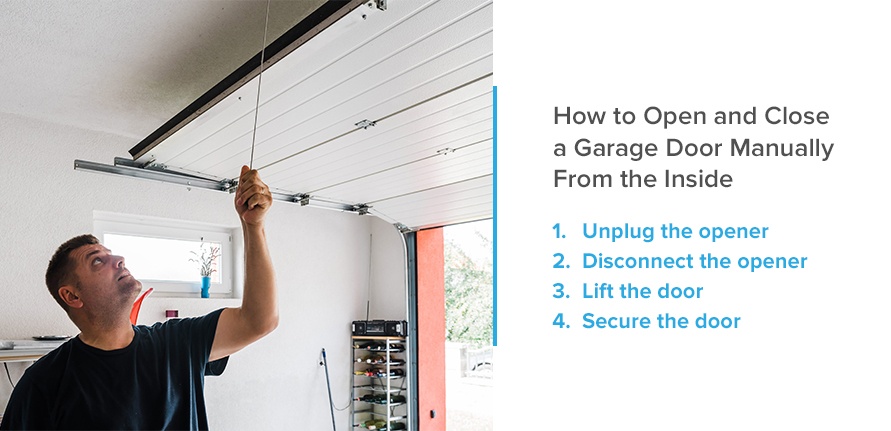
2. Disconnect The Opener
Most openers have a red emergency release cord hanging from the trolley. This cord disconnects the opener from the door, allowing manual movement.
How to use it:
- Stand inside the garage.
- Locate the red cord, usually in the center, hanging from the opener rail.
- Pull the cord straight down, then back toward the motor (the direction the door closes). You should hear a click, and the trolley will disengage from the opener.
Note: On some doors, you may need to use a stepladder if the cord is out of reach.
3. Lift The Door
With the opener disengaged:
- Stand with your feet shoulder-width apart.
- Grip the door handle or bottom edge.
- Use your legs and arms to lift the door smoothly. It should move up with moderate force.
- Raise the door until it stops moving or is fully open.
If it feels extremely heavy, do not force it—the springs may be broken.
4. Secure The Door Open
For safety, especially if you’ll be working in the garage or moving a vehicle, make sure the door cannot fall.
- If your door doesn’t stay open on its own, use a clamp or locking pliers on the track just below the roller to keep it open.
- Never leave a manually opened door unattended if it won’t stay up.
5. Close The Door Manually
When you need to close the door:
- Hold the handle or bottom edge firmly.
- Lower the door slowly and steadily.
- Make sure nothing (or no one) is in the door’s path.
- Gently lower the door all the way down.
Once closed, lock the door if you have an external lock, especially if you’re leaving the garage.
6. Re-engage The Opener
When the power returns or the opener is fixed:
- Pull the emergency release cord toward the door (away from the motor) until you hear it click back into place.
- Use your remote or wall button to operate the door. The trolley should reconnect automatically.
If it doesn’t, manually move the door until you hear the click, or check your opener’s manual for specific instructions.
Different Types Of Garage Doors And Manual Opening
Not all garage doors are the same. Here’s how manual operation varies by type:
| Door Type | Manual Opening Difficulty | Special Considerations |
|---|---|---|
| Single Panel | Easy | Usually lightweight; lift from bottom |
| Sectional (most common) | Moderate | Check track alignment and springs |
| Roll-up | Easy to moderate | May need extra space above door |
| Heavy-duty/Double | Hard | Often needs two people for safety |
Non-obvious insight: If your door is unusually heavy or hard to lift, the problem is usually with your springs, not the door itself. Forcing a heavy door is a common cause of injuries.
What To Do If You’re Locked Out
Sometimes you’re outside and need to open the garage. Here’s what you can do:
- Emergency release lock: Some doors have a small lock near the top center. This lock hides a cable that, when pulled, releases the opener from outside.
- Call for help: If you don’t have an emergency release, you may need to call a locksmith or garage door technician.
- Check all entry points: Sometimes a side door or back door can give you access.
Tip: If you travel often, consider installing an exterior emergency release kit. This can be a lifesaver in a blackout.
Common Mistakes To Avoid
Opening your garage door manually is usually simple, but some mistakes can turn a small problem into a big one:
- Forcing a stuck or heavy door: If the door won’t move, don’t force it. You could break the springs or injure yourself.
- Not securing the door open: If your door doesn’t stay up, it could fall suddenly, damaging your car or hurting someone.
- Forgetting to lock the door: Manual operation bypasses the automatic lock; always secure your door before leaving.
- Ignoring unusual noises or movement: Grinding, jerking, or uneven movement can signal a bigger problem. Address it before using the door again.
Practical example: One homeowner ignored a loud pop and continued using the door manually. The next day, the spring snapped, causing the door to slam down unexpectedly.
How To Tell If Your Garage Door Springs Are Broken
Springs are the most important part of your door’s balance system. Here’s how to check them:
- Visual inspection: Look for gaps in the coil, hanging pieces, or stretched-out springs.
- Test the weight: If the door is suddenly too heavy to lift, the springs are likely broken.
- Listen for sounds: A loud bang or snap often means a spring has failed.
If you suspect a broken spring, do not try to open the door by hand. Springs are under high tension and can be dangerous. Call a professional.
Tools And Supplies You Might Need
Usually, you won’t need special tools to open your garage door manually. However, these items can make the process safer and easier:
- Gloves: For grip and protection
- Stepladder: If the release cord is out of reach
- Flashlight: For working in a power outage
- Locking pliers or clamps: To secure the door if it won’t stay up
Uncommon tip: If you have a tall door or high ceiling, keep a small emergency kit with these items in your garage.
Manual Operation In An Emergency
If there’s a fire, earthquake, or other emergency, opening your garage door quickly is critical. Here’s what you need to remember:
- Stay calm: Panic leads to mistakes.
- Pull the emergency release cord: This is the fastest way to disengage the opener.
- Lift with your legs: Protect your back by using proper lifting technique.
- Help others: If the door is too heavy, ask for help.
Example: During a power outage caused by a storm, a family was able to evacuate safely because they practiced opening their garage door manually in advance.
Troubleshooting: If The Door Won’t Open
Sometimes, even after following all the steps, the door won’t budge. Here’s how to troubleshoot:
| Problem | Possible Cause | Solution |
|---|---|---|
| Door is stuck | Obstruction in track | Clear debris, check for bent track |
| Door is too heavy | Broken springs | Call a professional for repair |
| Release cord won’t pull | Jammed trolley | Wiggle gently, apply light lubricant |
| Door moves unevenly | Worn rollers or misaligned tracks | Inspect and replace as needed |
If you can’t find or fix the problem, do not keep trying—garage doors are heavy and can cause serious injury.
How To Re-engage Your Garage Door Opener After Manual Use
Many people struggle to get their opener working again after manual operation. Here’s how:
- Make sure the door is closed.
- Pull the emergency release cord toward the door until you hear a “click.”
- Press the wall button or use your remote. The opener should reconnect and move the door.
- If it doesn’t connect, manually move the door until the trolley clicks into place.
Insider tip: Always check your opener’s lights or display for error codes—they can help diagnose problems faster.

How To Maintain Your Garage Door For Easy Manual Use
Regular maintenance keeps your door safe and easy to operate—both manually and automatically.
- Lubricate moving parts: Use a silicone-based spray on springs, rollers, and hinges every 6 months.
- Test the balance: Disconnect the opener and lift the door halfway. It should stay in place. If it moves, the springs may need adjustment.
- Inspect the emergency release: Make sure the cord is accessible and not tangled.
- Check for rust and wear: Address problems early to avoid bigger issues later.
Non-obvious insight: Many manual operation problems are caused by lack of maintenance, not just power outages or mechanical failure.
When To Call A Professional
Manual opening is safe for most situations, but some problems require expert help:
- Broken springs or cables
- Severely off-track doors
- Persistent jams or grinding noises
- Heavy doors that can’t be lifted easily
If you’re unsure, it’s always better to call a professional than risk injury or damage.

Comparing Manual Vs Automatic Garage Door Operation
Here’s a quick comparison of the main differences:
| Feature | Manual Operation | Automatic Operation |
|---|---|---|
| Speed | Slower, depends on user strength | Fast, consistent |
| Convenience | Requires physical effort | Remote control, push-button |
| Safety | Depends on user | Safety sensors, auto reverse |
| Works in power outage? | Yes | No (unless battery backup) |
| Maintenance needs | Basic | More complex |
Tips For Staying Prepared
You never know when you’ll need to open your garage door manually. Here’s how to be ready:
- Practice the steps: Try manual operation every few months so you’re comfortable with the process.
- Keep tools handy: Store gloves, flashlight, and pliers in an easy-to-reach spot.
- Install an emergency release kit: Especially important if you have no other way into the garage.
- Label the emergency cord: Use a tag or tape to make it easy to spot in the dark.
- Show family members: Make sure everyone in your home knows how to operate the door manually.
Frequently Asked Questions
How Do I Find The Emergency Release Cord?
The emergency release cord is usually a red rope hanging from the center rail of your garage door opener. It’s designed to be visible and easy to reach. If you can’t find it, check your opener’s manual or look for a small red handle near the top of the door inside your garage.
Can Opening The Garage Door Manually Damage It?
If you follow the correct steps and your door is well-maintained, manual operation won’t damage your door. However, forcing a stuck or unbalanced door can bend tracks, break springs, or damage panels. Always move the door gently and stop if you feel resistance.
What Should I Do If The Door Is Too Heavy To Lift?
A garage door that is too heavy is a sign of broken springs or a serious mechanical problem. Do not try to force it. Instead, call a qualified garage door technician. Trying to lift a heavy door can cause injury or damage.
Is It Safe To Open The Garage Door Manually During A Power Outage?
Yes, manual operation is safe if your door is in good condition and you follow basic safety steps. Use the emergency release cord, lift carefully, and secure the door if needed. If you notice any damage or unusual movement, stop and call a professional.
Can I Re-engage The Opener Myself After Manual Use?
Yes, you can usually re-engage the opener by moving the emergency release cord back toward the door until you hear a click. Then use your remote or wall button to reconnect the trolley. If it doesn’t work, consult your opener’s manual or call a technician.
Opening your garage door manually is a skill every homeowner should have. With the right steps, a bit of practice, and some basic safety awareness, you can handle most situations confidently and avoid unnecessary stress. For more technical details and safety tips, you can visit the Wikipedia page on garage door openers.
Remember, safety comes first. If something feels wrong, don’t hesitate to call for help. By staying prepared, you’ll always have a way out—no matter what happens.
8 thoughts on “How Can I Open My Garage Door Manually: Step-by-Step Guide”