
Now Reading: How to Open Garage Door If Power is Out: Quick & Safe Steps
- 01
How to Open Garage Door If Power is Out: Quick & Safe Steps

When the power goes out, daily routines become challenging. One task that often causes stress is opening a garage door. Most modern garages use electric openers, so when there’s no electricity, you might feel stuck—especially if you need to leave for work, school, or an emergency. But there’s good news: you can open your garage door manually, and it’s not as hard as you might think. Understanding the process can save time, prevent damage, and keep you safe.
Some people worry about breaking their door or opener when the power is off. Others are unsure if it’s even possible without tools or help. This guide will show you every practical method, explain safety steps, and share tips that even seasoned homeowners sometimes overlook.
You’ll learn how to open your garage door when the power is out, what to do if it’s stuck, and how to prepare for future outages. Let’s get started so you never feel trapped by your garage door again.
Why Garage Doors Won’t Work Without Power
Automatic garage doors rely on electric motors for smooth operation. When you press the remote or wall button, the motor lifts or lowers the heavy door using a system of springs, tracks, and chains. Electricity powers the whole system, so a blackout means the opener won’t respond.
Some newer garage door openers have battery backup systems, but most homes still use basic models that stop working during outages. That’s why understanding manual operation is essential for every homeowner.
Safety First: Precautions Before You Begin
Opening a garage door manually can be safe if you follow a few important steps:
- Disconnect the Door from Power: Always make sure the garage door opener is unplugged before working on it.
- Keep Children and Pets Away: Garage doors are heavy. Make sure the area is clear.
- Check Door Position: If the door is stuck mid-way, it may be under tension. Move carefully and do not force it.
- Inspect for Damage: Look for broken springs, cables, or tracks. If anything looks wrong, call a professional.
A surprising risk is the sudden drop—if the springs are broken, the door can fall quickly when released. Always stand to the side and keep your hands away from pinch points. Wearing gloves can help avoid cuts.
Understanding The Manual Release Mechanism
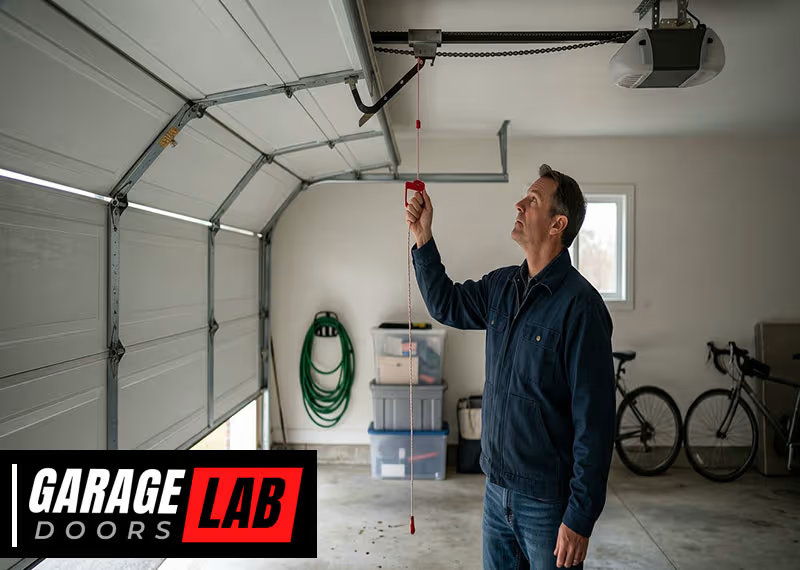
Most garage doors have a manual release cord—usually a red rope or handle hanging from the opener’s track. This cord disconnects the door from the motor, allowing you to lift it by hand.
How The Manual Release Works
- The release cord is attached to a lever on the trolley (the part that connects the door to the opener rail).
- Pulling the cord moves the lever, releasing the trolley from the opener carriage.
- The door can now move freely, independent of the motor.
Many people don’t realize: You must pull straight down on the cord, not at an angle. If you pull sideways, the mechanism might jam or only partially release.
Step-by-step Guide: Opening Your Garage Door Manually
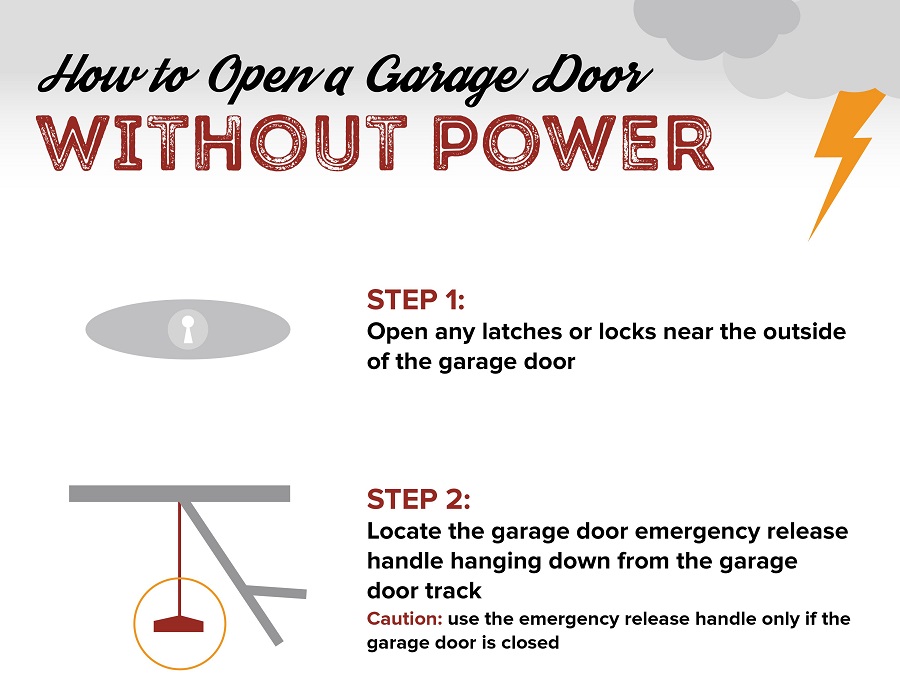
1. Unlock Any Exterior Or Interior Locks
Before you try the manual release, make sure any physical locks on your garage door are unlocked. Trying to force the door with locks engaged can damage the door panels or frame.
2. Locate The Manual Release Cord
Find the red cord or handle hanging from the center rail near the door. It’s usually within reach when the door is closed.
3. Pull The Release Cord Firmly
Grip the cord and pull straight down. You should hear a click. This disconnects the door from the opener. Make sure to use both hands if the cord is stiff.
4. Lift The Door Smoothly
Stand with your feet shoulder-width apart. Bend your knees, grip the door handle (near the bottom), and lift slowly. If the springs are in good condition, the door should move easily and stay up when fully open. If it’s heavy or drops, stop—there may be a broken spring.
5. Secure The Door Open
If you need to keep the door open, place a sturdy object (like a block of wood) under the door to prevent it from closing unexpectedly.
6. Close The Door When Finished
Lower the door slowly, making sure it doesn’t slam. Once closed, you can re-engage the opener when power returns (instructions below).
Pro tip: If the door is too heavy to lift, do not force it. This often means the torsion springs are broken. Forcing it can cause injuries or further damage.
What To Do If Your Garage Door Is Stuck
Sometimes, the door refuses to budge, even after following the steps. Here’s what might be wrong and how to handle it.
Common Reasons For A Stuck Door
- Broken torsion or extension springs: These help balance the door’s weight.
- Bent or blocked tracks: Check for objects or bends in the metal rails.
- Disconnected or tangled cables: Cables running alongside the door may come off their pulleys.
- Frozen seals: In cold weather, rubber seals can stick to the ground.
How To Troubleshoot
- Inspect the tracks: Remove any debris or objects.
- Check the springs: If one side of the door is higher or the springs look stretched, call a technician.
- Look for cable issues: Do not try to fix cables yourself—they are under high tension.
- Gently free frozen seals: Use warm water to melt ice, but never force the door.
If you can’t identify the problem, it’s safest to contact a garage door professional.
Re-engaging The Garage Door Opener After Power Returns
Once electricity is restored, you’ll want your garage door opener to work again automatically.
1. Ensure The Door Is Fully Closed
The opener can only re-engage if the door is down.
2. Pull The Manual Release Cord Toward The Door
On most models, pull the cord toward the opener, not straight down. This resets the mechanism.
3. Activate The Opener
Press the wall button or remote. The opener trolley should reconnect with the carriage, and normal operation resumes.
Non-obvious insight: If the opener does not re-engage, move the door slightly by hand until you hear a click, then try the remote again.
Using The Emergency Key Release From Outside
If you’re locked outside and the power is out, there’s a solution: the emergency key release. Many garage doors have a small lock cylinder above the door.
- Insert the key and turn it.
- Pull out the lock cylinder, which is attached to a cable.
- Pull the cable to engage the manual release inside.
- Lift the door by hand.
Not every door has this feature. If yours does not, consider installing one for future emergencies.
Comparing Battery Backup Vs. Manual Release
Some homeowners wonder if investing in a battery backup opener is worth it. Here’s a quick comparison:
| Feature | Manual Release | Battery Backup |
|---|---|---|
| Works During Outage | Yes (with effort) | Yes (automatically) |
| Physical Effort Needed | Yes | No |
| Installation Cost | None | Medium to High |
| Maintenance | None | Replace battery every 1–2 years |
| Universal Compatibility | Yes | Only newer models |
Pro tip: If you live in an area with frequent outages, battery backups can provide peace of mind.
Common Mistakes To Avoid
Even confident homeowners make errors when trying to open a garage door without power. Here are mistakes to watch for:
- Forcing the Door: If the door is stuck, pushing harder can bend tracks or break springs.
- Ignoring Safety Checks: Skipping a look at springs or cables can lead to injury.
- Not Securing the Door: Leaving the door unblocked could let it fall suddenly.
- Incorrect Re-engagement: Trying to reconnect the opener without the door fully closed can jam the mechanism.
- Losing the Emergency Key: If your door has an external release, keep the key in a safe, accessible spot.
A less obvious mistake: Not practicing the manual release when there’s no emergency. It’s best to try the steps during a calm moment so you’re not learning under stress.
Preparing For Future Power Outages
Being proactive can make garage access much easier when the next blackout hits. Consider these steps:
1. Test The Manual Release Regularly
Pull the release cord every 6 months to ensure it’s not stuck.
2. Lubricate Moving Parts
Apply garage door lubricant to rollers, tracks, and hinges twice a year. This keeps the door moving smoothly.
3. Install An Emergency Key Release
If your garage is not attached to your home or has no side door, this feature is vital.
4. Upgrade To A Battery Backup Opener
These systems operate even during long outages. Some states, like California, now require new installations to include backup batteries.
5. Keep Emergency Supplies Handy
Store a flashlight and gloves near the garage entrance.
6. Inform All Household Members
Make sure everyone knows how to operate the door manually.
Dealing With Garage Door Types
Not all garage doors are the same. Here’s how different designs can affect manual operation:
| Door Type | Manual Opening Difficulty | Notes |
|---|---|---|
| Sectional (most common) | Easy | Standard release cord, balanced by springs |
| One-piece tilt-up | Medium | Heavier; may require more effort |
| Roll-up | Easy to Medium | Release near bottom; check for tension springs |
| Carriage-style (manual) | Easy | No opener; always manual |
Some older tilt-up doors are much heavier than you expect. If lifting feels unsafe, wait for help.
What If You’re Trapped Inside?
If you’re in the garage and the power is out, don’t panic. Most garages have a side or back door. If not, use the manual release method above. If the garage is your only exit and the door is jammed, call for help.
Never try to climb out through small windows—this can lead to injury.
A non-obvious tip: Keep your cell phone charged or store a power bank in your car, so you can call for assistance if needed.
How Weather Affects Manual Operation
Weather can play a big role in manual garage door operation:
- Cold: Seals can freeze, and metal parts contract, making the door harder to lift.
- Heat: Expansion can make tracks tighter.
- Rain: Water can rust metal parts, causing sticking.
Apply lubricant seasonally, and check for weather-related issues after storms or extreme temperatures.
Emergency Situations: When To Call A Professional
While most people can handle manual release, some situations require expert help:
- The door won’t budge after release
- You see broken springs or cables
- The door is off its tracks
- You hear loud snapping or grinding noises
Attempting repairs without training can cause injury. Professional technicians have the right tools and experience.

Garage Door Security During Power Outages
Manual operation makes your garage easier to open—but also more vulnerable to break-ins during outages.
1. Use A Padlock On The Track
Insert a padlock through a hole in the track just above a roller. This stops the door from being lifted.
2. Install A Security Shield
Covers for the emergency release prevent thieves from fishing the cord through the top of the door.
3. Disable The Release Cord Temporarily
If you’re away, tie up the cord to prevent outside access—but remember to untie it when you return.
Pro tip: Consider a smart garage door monitor. These devices alert you if the door opens unexpectedly, even during a power outage.
Tools And Supplies That Can Help
While you don’t need special tools, a few supplies can make manual operation smoother:
- Work gloves: Protect your hands from sharp edges.
- Flashlight: Essential if the garage is dark.
- Step stool: For hard-to-reach emergency releases.
- Lubricant: Reduces friction on tracks and rollers.
- Wood block: Holds the door open safely.
Store these items near the garage entrance for quick access.
Real-world Example: A Power Outage Scenario
Imagine you’re getting ready for work when a thunderstorm knocks out power. Your car is in the garage, and you need to leave soon. Here’s how to respond:
- Check for safety hazards—downed power lines or flooding.
- Unlock any locks on the garage door.
- Find the red manual release cord and pull it straight down.
- Lift the door by hand, using both hands and keeping your back straight.
- Drive your car out, then lower the door slowly.
- Secure the door with a block or padlock until power is restored.
- When electricity returns, re-engage the opener and test the door.
This real-life process shows why practice and preparation matter.
Comparing Manual Release To Other Alternatives
You might wonder if there are alternatives to the manual release. Here’s how manual opening compares to other options:
| Method | Pros | Cons |
|---|---|---|
| Manual Release Cord | Simple, universal, no cost | Requires effort, not possible if springs broken |
| Battery Backup Opener | Automatic, convenient | Higher cost, needs battery maintenance |
| Emergency Key Release (from outside) | Allows access from outside | Requires prior installation, risk if key lost |
| Manual Side Door | Always accessible | Not available in all garages |
Manual release remains the most common and reliable solution.
Final Thoughts
Opening your garage door during a power outage is a skill every homeowner should learn. With the right steps and a little preparation, you can access your garage safely and avoid damage or injury. Remember to check the door for problems before operating it, keep emergency supplies nearby, and practice the release mechanism regularly. Consider upgrades like a battery backup or emergency key release if outages are common in your area.
By following these guidelines, you’ll never be locked in or out of your garage—even when the lights go out. For more details on garage door safety and maintenance, you can visit the official CDC Home Safety Page.

Frequently Asked Questions
How Do I Manually Open My Garage Door From Inside When The Power Is Out?
Locate the manual release cord (usually red) hanging from the opener rail. Pull it straight down to disconnect the door from the opener, then lift the door smoothly with both hands.
Can I Open My Garage Door If The Springs Are Broken?
It’s not safe to try. The springs balance the door’s weight. If they’re broken, the door will be extremely heavy and can fall suddenly. Call a professional for repairs.
How Do I Reset My Garage Door Opener After A Power Outage?
Once power returns, make sure the door is fully closed. Pull the manual release cord toward the opener to re-engage. Press the wall button or remote, and the opener should reconnect and operate normally.
What Should I Do If I’m Locked Outside During A Power Outage?
If your garage has an emergency key release above the door, use the key to pull the release cable. This disconnects the opener, so you can lift the door by hand.
Is It Safe To Leave My Garage Door In Manual Mode?
Short-term, yes, but it’s less secure. Insert a padlock into the track to prevent forced entry. Re-engage the opener as soon as power returns for normal security.