
Now Reading: What Kind Of Motor Are In Craftsman Garage Door Openers
- 01
What Kind Of Motor Are In Craftsman Garage Door Openers

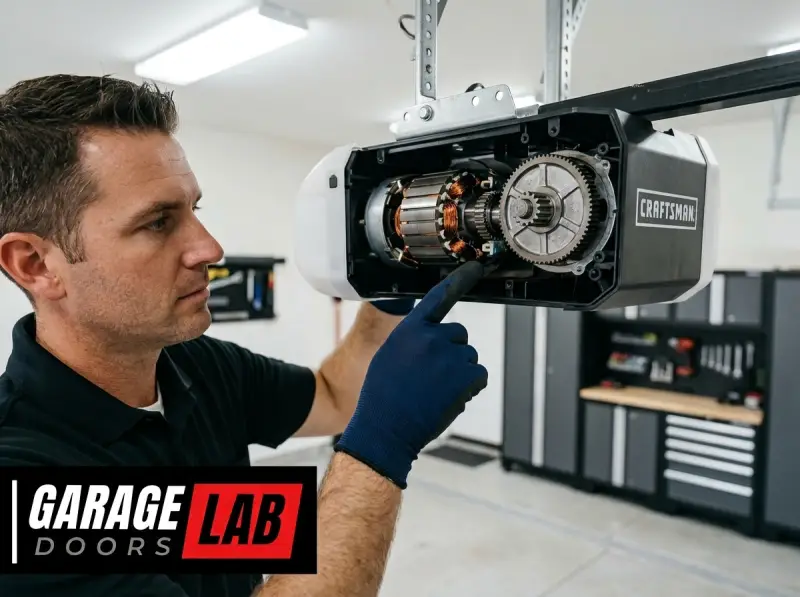
The hum of a garage door opener is a familiar sound for many, a signal that the gateway to home is about to smoothly ascend or descend. Craftsman, a brand long associated with reliable tools and home improvement, offers a range of garage door openers that have become a staple in many households.
Understanding the mechanics behind these devices, particularly the type of motor powering them, is key to appreciating their performance, longevity, and even troubleshooting common issues. While the specific models and their internal components evolve, the core motor technologies employed by Craftsman have remained consistent, primarily revolving around AC and DC power sources.
The choice of motor significantly influences a garage door opener’s characteristics, from its speed and noise level to its energy efficiency and potential for advanced features like battery backup or rolling codes. For homeowners, this translates into practical considerations: how quickly will the door open, how much noise will it make, and what are the long-term operational costs? This article will explore the types of motors found in Craftsman garage door openers, detailing their operational principles, advantages, disadvantages, and how they impact the overall user experience.
Key Takeaways
- Craftsman garage door openers primarily utilize AC (Alternating Current) and DC (Direct Current) motors.
- AC motors are traditionally known for their robust power and affordability, commonly found in older and some current models, but tend to be noisier and less energy-efficient.
- DC motors offer quieter operation, greater energy efficiency, and are often integrated with more advanced features like battery backup and variable speed control.
- The horsepower (HP) rating of a motor is a crucial indicator of its lifting capacity, with 1/2 HP being common for standard residential doors.
- Chain drive, belt drive, and screw drive systems are the mechanisms that transfer motor power to the garage door, each offering different levels of noise and maintenance.
- Understanding your opener’s motor type can help in maintenance, troubleshooting, and making informed purchasing decisions.
Understanding Garage Door Opener Motor Technologies
At the heart of every garage door opener lies a motor. This motor is responsible for providing the rotational force needed to lift and lower the heavy garage door. For Craftsman openers, the primary distinction in motor technology boils down to whether they are powered by Alternating Current (AC) or Direct Current (DC). While both serve the fundamental purpose of driving the opener, their internal workings, performance characteristics, and the features they enable differ significantly. This distinction is crucial for homeowners seeking to understand the capabilities and limitations of their garage door opener system.
Alternating Current (ac) Motors
AC motors have been the workhorse of garage door openers for decades. They are known for their simplicity, durability, and cost-effectiveness. In an AC motor, the direction of the electric current reverses periodically, which in turn causes the magnetic field within the motor to change, creating rotation. This design is robust and has proven reliable over many years of service.
- How they work: AC motors operate by using the alternating nature of the power supply to create a rotating magnetic field. This field interacts with the rotor, causing it to spin. The speed of rotation is directly tied to the frequency of the AC power supply (e.g., 60 Hz in North America).
- Advantages:
- Cost-Effective: AC openers are generally less expensive to manufacture, translating into lower purchase prices for consumers.
- Power and Durability: They are known for their raw power and ability to withstand demanding use.
- Simplicity: The design is relatively straightforward, which can sometimes mean fewer complex parts to fail.
- Disadvantages:
- Noise: AC motors tend to be louder than their DC counterparts due to the nature of their operation and often the associated drive mechanisms (like chain drives).
- Energy Consumption: They can consume more energy, especially when idling, compared to DC motors.
- Limited Advanced Features: Integrating advanced features like battery backup or soft start/stop functions can be more complex and costly with AC motors.
- Speed: Typically operate at a fixed speed, offering less customization in terms of door opening and closing rates.
Many older Craftsman models, and even some current budget-friendly options, feature AC motors. They are a solid choice for garages where noise is not a primary concern and where basic, reliable operation is prioritized.
Direct Current (dc) Motors
DC motors represent a more modern approach to garage door opener technology. Unlike AC motors, DC motors run on Direct Current, where the electric charge flows in only one direction. This fundamental difference allows for more precise control and quieter operation. Modern DC motors often incorporate advanced electronics for speed control, energy management, and integration with smart home features.
- How they work: DC motors create a magnetic field that is either constant or controlled electronically. The rotor then follows this field, generating motion. Modern DC openers often use a transformer to convert the home’s AC power to DC power for the motor.
- Advantages:
- Quiet Operation: DC motors are significantly quieter, making them ideal for attached garages or homes where noise is a concern.
- Energy Efficiency: They consume less power, particularly when idle, and can be more efficient during operation.
- Advanced Features: DC motors are better suited for features like:
- Soft Start/Stop: Gradually increases speed at the start and decreases at the end of travel, reducing wear and tear and noise.
- Battery Backup: Easier to integrate, providing power during outages.
- Variable Speed Control: Allows for faster opening and slower, quieter closing.
- Smart Home Integration: Many DC openers come with Wi-Fi connectivity and app control.
- Compact Size: DC motors can often be smaller and lighter than comparable AC motors.
- Disadvantages:
- Higher Cost: DC-powered openers are generally more expensive upfront due to the more complex technology involved.
- Complexity: While offering more features, the electronic control systems can be more complex to diagnose if issues arise.
Craftsman has increasingly incorporated DC motors into their mid-range and premium opener models, recognizing the demand for quieter, more feature-rich solutions.
Horsepower And Lifting Capacity
When discussing motors, horsepower (HP) is a common metric, especially for appliances and tools. In garage door openers, HP is a key indicator of the motor’s lifting capacity, its ability to move the garage door. However, it’s important to understand that HP ratings for garage door openers aren’t always directly comparable to those for other machinery. The actual force applied to the door is also dependent on the opener’s gear ratio and the drive mechanism (chain, belt, or screw).
For most standard residential garage doors, a motor with 1/2 HP is typically sufficient. This rating generally applies to doors weighing up to 350 pounds. For heavier or double garage doors, or those in areas prone to high winds that require reinforced doors, a 3/4 HP or even a 1 HP motor might be necessary.
Craftsman offers openers across a spectrum of HP ratings, catering to different needs:
- 1/3 HP: Often found in lighter-duty or older models, suitable for very light doors.
- 1/2 HP: The most common rating for standard single and double residential garage doors.
- 3/4 HP: Recommended for heavier doors, double doors, or doors with significant weight.
- 1 HP: For the heaviest doors or situations requiring maximum lifting power.
It’s crucial to match the opener’s HP to the weight and size of your garage door. Overpowering a lighter door won’t necessarily improve performance and could even cause undue stress. Conversely, an underpowered opener will struggle, leading to premature wear and potential failure.
Consulting the garage door manufacturer’s specifications or consulting a professional can help determine the appropriate HP.

Credit: www.garagedoorscolumbiasc.com
Drive Mechanisms: The Link Between Motor And Door
The motor generates the power, but it’s the drive mechanism that translates that power into the movement of the garage door. Craftsman openers, like most others on the market, utilize one of three primary drive systems: chain drive, belt drive, and screw drive. The choice of drive mechanism significantly impacts the opener’s noise level, maintenance requirements, and cost.
Chain Drive Openers
Chain drive openers are one of the oldest and most common types. They operate much like a bicycle chain, using a steel chain to move a trolley that is attached to the garage door’s opener arm.
- How they work: The motor turns a gear, which in turn moves the chain. The trolley, connected to the chain, travels along a rail mounted above the garage door, pulling or pushing the door open or closed.
- Advantages:
- Durability: Chains are strong and can withstand heavy use.
- Cost-Effective: Generally among the most affordable opener types.
- Reliability: A proven technology with a long track record.
- Disadvantages:
- Noise: The metal-on-metal action of the chain and the motor often results in a louder operation compared to belt or screw drives. This is particularly noticeable with AC motors.
- Maintenance: Chains require periodic lubrication to ensure smooth operation and prevent wear. They can also stretch over time and may need adjustment. You can learn more about maintenance in our guide on how to lube garage door rollers.
- Craftsman Models: Many Craftsman chain drive openers are paired with AC motors, contributing to their robust, albeit noisier, performance.
Belt Drive Openers
Belt drive openers offer a quieter alternative to chain drives. Instead of a metal chain, they use a rubber belt that runs along the same type of rail system.
- How they work: Similar to chain drives, the motor turns a gear, but this gear engages with a reinforced rubber belt. The trolley is attached to the belt and moves along the rail.
- Advantages:
- Quiet Operation: The rubber belt significantly dampens noise, making belt drive openers much quieter than chain drives. This is often a primary reason for choosing this type.
- Low Maintenance: Belts typically do not require lubrication and are less prone to stretching than chains.
- Smooth Operation: The belt provides a smoother, more consistent movement.
- Disadvantages:
- Cost: Belt drive openers are generally more expensive than chain drive models.
- Durability Concerns (Historically): While modern belts are very durable, some older models might have had concerns about belt lifespan under extremely heavy use. However, for typical residential use, they are very reliable.
- Craftsman Models: Belt drive Craftsman openers are often paired with DC motors, further enhancing their quiet and smooth performance.
Screw Drive Openers
Screw drive openers are known for their speed and simplicity, using a rotating steel rod (lead screw) with threaded grooves.
- How they work: The motor turns a long steel rod. A nut travels along this rod as it rotates. The trolley is attached to this nut, causing it to move linearly along the rail and operate the door.
- Advantages:
- Speed: Screw drives are often the fastest type of opener, quickly moving the door.
- Fewer Parts: They have a relatively simple design with fewer moving parts compared to chain or belt drives, potentially leading to less maintenance.
- Quiet Operation (when maintained): While the screwing action can create some noise, well-maintained screw drives can be quieter than chain drives, especially when paired with DC motors.
- Disadvantages:
- Sensitivity to Temperature: The metal rod can expand and contract with extreme temperature fluctuations, potentially affecting performance or requiring adjustments.
- Maintenance: The threaded rod requires lubrication to prevent rust and ensure smooth movement.
- Noise: Can be noisier than belt drives, especially in very cold temperatures or if not properly lubricated.
- Craftsman Models: Craftsman has offered screw drive models, often favored for their speed. These are typically paired with AC motors, though DC versions exist in the broader market.
Motor Types In Specific Craftsman Series
Craftsman has historically offered a wide range of garage door openers, often sold through different retail channels (e. g. , Sears, Lowe’s, Amazon) and sometimes rebranded or co-branded with other manufacturers like Chamberlain. This can lead to variations in motor technology across different model numbers and series.
However, we can generalize the types of motors found in common Craftsman product lines.
Craftsman Assurelink™ And Smart Control Openers
Many of Craftsman’s more recent and advanced openers, particularly those featuring AssureLink™ technology or smart control capabilities (like Wi-Fi connectivity and app control), are powered by DC motors. This is because DC motors are better suited for the precise control required for features such as:
- Soft start and stop: Essential for smooth, quiet operation and reducing wear.
- Variable speed: Allows for faster opening and slower, quieter closing.
- Battery backup integration: A common feature in modern openers, powered by DC.
- Rolling Code Technology: While not directly motor-dependent, the advanced electronics often associated with DC openers facilitate sophisticated security features.
These openers often utilize belt drive or sometimes screw drive mechanisms to complement their quiet and efficient DC motors.
Craftsman Standard And Value Series Openers
Craftsman’s more traditional or value-oriented series openers are more likely to feature AC motors. These openers are designed for reliable, basic functionality and are often more budget-friendly.
- Chain Drive AC Openers: This is a very common configuration for Craftsman openers that prioritize durability and a lower price point. They offer robust lifting power but come with the characteristic noise associated with chain drives and AC motors.
- Screw Drive AC Openers: Some Craftsman models might use AC motors with a screw drive. These would typically offer faster operation than chain drives but might be noisier and more sensitive to temperature than belt drives.
When looking at specific Craftsman models (e. g. , those with model numbers like 549xx, 549xx, 71xx, etc. ), it’s always best to check the product specifications to confirm the motor type and drive system.
Identifying Your Craftsman Opener’s Motor Type
Knowing the type of motor in your Craftsman garage door opener can be helpful for maintenance, troubleshooting, or when considering an upgrade. Here are a few ways to identify it:
Check The Owner’s Manual Or Product Packaging
The most reliable way to determine the motor type is to consult the owner’s manual that came with your opener. Product packaging or online listings for your specific model number will also usually detail the motor technology and drive system.
Examine The Opener Unit
Look for labels or stickers on the motor unit itself. Manufacturers often clearly label the motor type (AC/DC) and horsepower. The drive system (chain, belt, or screw) is usually visible from the rail assembly.
- Chain Drive: You’ll see a metal chain running along the rail.
- Belt Drive: You’ll see a large rubber or composite belt running along the rail.
- Screw Drive: You’ll see a long, threaded steel rod running along the rail.
Listen To The Sound
While not a definitive method, the sound your opener makes can offer clues.
- Loud, clanking, or rattling noises are more characteristic of AC motors, especially when paired with chain drives.
- Quieter, smoother humming or whirring sounds are more typical of DC motors, particularly with belt drives.
Observe Operational Features
- Soft Start/Stop: If your opener starts and stops very gradually and quietly, it’s highly likely to be a DC motor. AC motors usually start and stop abruptly.
- Battery Backup: Openers with integrated battery backup systems are almost always DC-powered, as batteries provide DC power.
- Variable Speed: If your opener offers different speed settings or noticeably changes speed during operation, it’s almost certainly a DC motor.
If you’re unsure, checking the model number and searching online for its specifications is often the easiest way to get accurate information. For example, if you need to reset your remote, you might find instructions on how to reset a Craftsman garage door remote, which often links to specific model guides.
Motor Maintenance And Longevity
The motor is the powerhouse of your garage door opener, and its longevity depends on both the inherent quality of the unit and proper maintenance. While the motor itself often requires little direct user intervention, ensuring the entire system functions optimally will indirectly protect the motor.
Lubrication And Cleaning
- Drive Mechanism: Regular lubrication of the chain (if applicable) or the screw drive rod is crucial. Use a garage door lubricant specifically designed for these applications. Avoid using general-purpose oils or greases, which can attract dust and grime. For belt drives, lubrication is generally not required. You can find detailed steps in guides like how to lubricate garage door rollers, which also covers other essential lubrication points.
- Motor Housing: Keep the exterior of the motor unit clean and free of dust and debris. Ensure ventilation openings are clear to prevent overheating.
Electrical Connections And Power Supply
- Check Connections: Periodically inspect the power cord and any visible electrical connections for signs of wear, damage, or loose fittings.
- Power Surges: Consider using a surge protector designed for garage door openers to protect the motor and electronic components from power fluctuations.
Drive System Adjustments
- Tension: Over time, chains can stretch, and belts can sag. If your opener seems sluggish or makes unusual noises, the drive mechanism might need adjustment. For chain drives, refer to guides on how to adjust the chain.
- Alignment: Ensure the rail and drive mechanism are properly aligned. Misalignment can put extra strain on the motor and other components.
Professional Servicing
For AC motors, which are often simpler, longevity is usually high. DC motors, with their more complex electronics, also tend to be durable, but their sophisticated features might require professional diagnosis if issues arise. It’s advisable to have your garage door opener system inspected by a professional every few years to ensure all components, including the motor, are in good working order.
This can help catch potential problems before they lead to costly repairs or motor failure.
Comparing Ac Vs. Dc Motors In Craftsman Openers
To summarize the key differences and help you decide which type might be best for your needs, here’s a comparison table focusing on the motor technologies commonly found in Craftsman openers.
| Feature | AC Motor (Common in Value/Standard Series) | DC Motor (Common in Smart/Premium Series) |
|---|---|---|
| Operation Noise | Generally louder, especially with chain drives. | Significantly quieter, ideal for attached garages. |
| Energy Efficiency | Less efficient; higher standby power consumption. | More efficient; lower standby power consumption. |
| Speed Control | Typically fixed speed. | Variable speed, soft start/stop capabilities. |
| Advanced Features | Limited integration (e.g., battery backup more complex). | Easily integrates battery backup, Wi-Fi, app control, rolling codes. |
| Cost | More affordable upfront. | Higher upfront cost. |
| Durability | Proven robust design, often very long-lasting. | Durable, with advanced electronics potentially requiring professional service. |
| Common Drive Systems | Chain drive, Screw drive. | Belt drive, sometimes Screw drive. |
Example: A Craftsman 1/2 HP AC chain drive opener might be a good choice if budget is the primary concern and noise isn’t an issue. Conversely, a Craftsman DC belt drive opener with smart features would be preferable for a quieter home and enhanced convenience, despite the higher initial investment.
Troubleshooting Common Motor-related Issues
While Craftsman garage door openers are generally reliable, like any mechanical and electrical device, they can encounter issues. Many problems can be traced back to the motor or its interaction with the drive system.
Opener Won’t Move Or Lacks Power
- Check Power: Ensure the opener is plugged in and the circuit breaker hasn’t tripped.
- Manual Operation: Try to open the door manually by disengaging the emergency release cord. If the