
Greasing your garage door may sound like a simple task, but doing it right can extend the life of your door and keep it running smoothly. Many homeowners ignore this essential maintenance, leading to squeaks, jams, and even expensive repairs.
If your garage door is starting to make noise or feels heavy, it may be time for some attention. This guide will walk you through how to grease a garage door, why it matters, what products to use, and how to do the job safely.
You’ll learn practical tips and find out what most beginners get wrong. Let’s make your garage door glide like new.
Why Greasing A Garage Door Matters
Most people use their garage door every day, but few realize the amount of wear it endures. Each opening and closing session causes friction between metal parts. Over time, this friction wears down the components, causing noise and even damage. Proper lubrication reduces friction and protects these parts.
A well-greased garage door will:
- Operate quietly with less vibration
- Last longer, saving you money on repairs and replacements
- Work more efficiently, putting less strain on the opener and motor
- Prevent rust and corrosion from moisture
A study from the International Door Association shows that regular maintenance, including greasing, can extend the life of a garage door system by 30% or more. Ignoring this step means your door could need major repairs years sooner.
Tools And Materials You’ll Need
Before you start, gather all the necessary tools and materials. Using the right products and tools is critical—wrong choices can cause more harm than good.
| Item | Why It’s Needed |
|---|---|
| Garage Door Lubricant (Lithium or Silicone-based) | Reduces friction, doesn’t attract dirt |
| Clean Cloths or Rags | Wipe off old grease and dirt |
| Step Ladder | Reach upper parts safely |
| Protective Gloves | Keep hands clean and safe |
| Screwdriver (if needed) | Remove covers or access tight spots |
| Vacuum or Brush | Clean debris from tracks and parts |
Non-obvious insight: Avoid using WD-40 as your main lubricant. Despite being common, it is a cleaner, not a long-term lubricant, and can cause parts to dry out faster.
Choosing The Right Garage Door Grease
Not all lubricants are made equal. The wrong grease can attract dust and grit, making your door noisy and stiff. The best choices for garage doors are:
- Lithium-based grease: Provides long-lasting lubrication without attracting much dirt.
- Silicone-based spray: Good for plastic parts and cold climates, as it doesn’t get thick in low temperatures.
Avoid using engine oil, standard household grease, or anything that dries out quickly. If you’re unsure, check your garage door manufacturer’s manual or ask a professional.
Comparison Of Common Garage Door Lubricants
| Type | Pros | Cons | Best For |
|---|---|---|---|
| Lithium Grease | Long-lasting, does not attract dirt easily | Can be messy if overapplied | Metal parts, hinges, rollers |
| Silicone Spray | Works in cold, good for plastic/nylon parts | May wear off faster in hot climates | Tracks, plastic hinges |
| WD-40 | Cleans rust, removes sticky residue | Not a true lubricant, dries out fast | Cleaning, not lubricating |
Preparing For The Task
Preparation is more than just grabbing a can of grease. A little planning makes the job safer and more effective.
- Disconnect the garage door opener: Pull the emergency release cord to disconnect the door from the automatic opener. This ensures the door doesn’t move unexpectedly.
- Close the garage door fully: This gives easy access to all moving parts.
- Wear gloves and old clothes: Lubricant can stain, and parts may have sharp edges.
- Ventilate the area: Some lubricants have strong smells. Open windows or doors if possible.
- Gather all tools in one place: Having everything ready saves time and reduces mistakes.
Insider tip: Place a drop cloth or newspaper under the door to catch drips and protect your garage floor.
Step-by-step Guide: How To Grease A Garage Door
Let’s get into the main process. Each step is important—skipping any can lead to missed spots or mess.
1. Clean The Garage Door Parts
Before adding new grease, remove old grease, dust, and debris. Dirty parts make the new lubricant less effective and can cause grinding noises.
- Use a dry cloth or a small brush to wipe hinges, rollers, tracks, and springs.
- For heavy dirt or sticky buildup, use a little mild detergent and water, then dry completely.
- Vacuum the tracks to remove loose dirt.
Never apply grease over dust or old, blackened grease. It just creates a sticky mess.
2. Lubricate The Hinges
Hinges allow the garage door panels to bend and move as the door opens and closes. Keeping them greased ensures smooth movement.
- Apply a small amount of lithium or silicone grease to each hinge’s moving joint.
- Open and close the door manually several times to work the grease in.
Avoid spraying the flat surfaces—focus on the pivot points.
3. Grease The Rollers
The rollers help the door glide up and down the tracks. Metal rollers with ball bearings need regular grease.
- Apply lubricant to the ball bearings inside each roller.
- Spin the roller by hand to distribute the grease.
- For nylon rollers, avoid the actual wheel—just grease the bearings if exposed.
Important: Never grease plastic or nylon wheels themselves—this can cause them to break down faster.
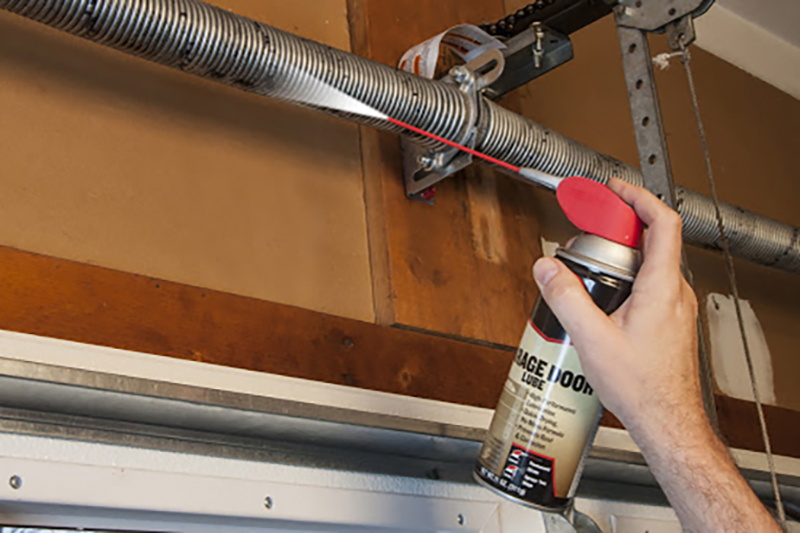
4. Treat The Springs
Garage door springs (torsion or extension) do a lot of heavy lifting. Proper lubrication keeps them strong and quiet.
- Spray a thin layer of lubricant along the length of the spring.
- Wipe off any excess to prevent drips.
- Open and close the door manually to help the grease spread.
Safety note: Do not try to adjust or remove springs—they are under high tension and can cause injury.
5. Lubricate The Bearing Plates
Bearing plates are at the ends of the torsion springs. They allow the springs to twist smoothly as the door moves.
- Apply a small amount of grease where the spring meets the plate.
- Move the door to ensure the grease spreads evenly.
This is a commonly missed spot, but it makes a big difference in noise reduction.
6. Grease The Lock And Arm Bar
The lock mechanism and arm bar are often ignored but benefit from lubrication.
- Spray a little grease into the lock, then insert and turn the key a few times.
- Wipe the arm bar with lubricant to prevent rust.
7. Lubricate The Top Rail
The top rail is where the opener trolley runs. Keeping it greased helps the opener pull and push the door smoothly.
- Apply a thin, even layer of lubricant along the rail.
- Wipe away any excess to avoid drips onto your car or floor.
8. Do Not Grease The Tracks
This is a common beginner mistake. The tracks should be clean but not greased.
- Only clean the tracks with a dry cloth or vacuum.
- Lubricant here attracts dirt and causes rollers to slip or stick.
Quick comparison:
| Part | Lubricate? | Why? |
|---|---|---|
| Rollers (Metal) | Yes | Reduces friction, noise |
| Tracks | No | Lubricant causes dirt buildup |
| Springs | Yes | Prevents corrosion, noise |
| Hinges | Yes | Keeps panels moving smoothly |
9. Test The Door
Once all parts are greased, reconnect the opener and open/close the door several times. Listen for squeaks or grinding—these mean you may have missed a spot.
Check that:
- The door moves smoothly and quietly
- There are no drips of excess grease
- The opener is not straining
If you still hear noise, check the hinges and rollers again.
How Often Should You Grease A Garage Door?
A typical garage door should be lubricated every six months. However, if you live in a humid or coastal area, you may need to do it every three to four months. Doors that see heavy use (more than twice daily) may also need more frequent attention.
Tip: Mark your calendar or set a phone reminder. Consistency is more important than overdoing it.

Signs Your Garage Door Needs Greasing
Don’t wait for major problems. Watch for these signs that it’s time to grease your garage door:
- Squeaking or grinding noises when opening or closing
- Jerky or uneven movement
- Door feels heavy or hard to move
- Rollers or hinges look dry or rusty
- Opener strains or moves slowly
If you notice these issues, lubricate the moving parts as soon as possible.
Common Mistakes To Avoid
Many DIYers make errors that can cause more harm than good. Here are pitfalls to watch for:
- Over-greasing: Applying too much lubricant leads to drips and attracts dirt.
- Using the wrong product: WD-40, motor oil, or household greases are not suitable for garage doors.
- Greasing the tracks: This causes the rollers to slip and tracks to clog.
- Skipping cleaning: Not removing old grease and debris reduces the effectiveness of new lubricant.
- Ignoring plastic parts: Some rollers and hinges are plastic and need less or no grease—always check.
- Forgetting the springs and bearing plates: These parts are essential for quiet, smooth operation.
- Neglecting regular maintenance: Waiting until the door is noisy or stuck can mean bigger repairs later.
Insider tip: Always check your manufacturer’s manual for specific recommendations. Some doors have unique parts that require special care.
Advanced Tips For Longevity
If you want your garage door to last as long as possible, a few extra steps can make a big difference.
- Inspect weather stripping: Clean and lubricate the rubber seal at the bottom of the door with a silicone-based spray. This keeps it soft and flexible.
- Check the opener chain or belt: If your opener uses a chain, apply a small amount of grease—never lubricate a belt drive unless specified by the manufacturer.
- Tighten loose screws: As you grease parts, check for and tighten any loose screws or bolts.
- Look for worn parts: If you see flat spots on rollers or bent hinges, replace them before they fail.
A small investment in time now can prevent a costly repair later.
Professional Maintenance Vs. Diy
Some tasks are best left to professionals, especially when it comes to high-tension springs or major repairs. However, greasing your garage door is safe for most homeowners.
When to call a professional:
- If you notice broken springs or cables
- If the door is off its tracks
- If the opener makes grinding noises after lubrication
- If you are unsure about any part of the process
A professional can also perform a full inspection and tune-up, checking for wear and safety hazards. According to This Old House, professional maintenance once a year is a good idea, especially for older doors.
Environmental And Safety Considerations
Grease and lubricant can be messy and, in rare cases, harmful to pets or children if left out. Proper handling and disposal are part of responsible home care.
- Store lubricants in a cool, dry place out of reach of children.
- Clean up spills immediately to prevent slips.
- Dispose of empty cans or rags according to local hazardous waste guidelines.
Some lubricants are more environmentally friendly than others. Look for products labeled as low-VOC or biodegradable if this is important to you.
Troubleshooting: When Greasing Doesn’t Fix The Issue
If you’ve followed all steps and your garage door still makes noise, struggles, or doesn’t move smoothly, something else may be wrong. Here’s what to check:
- Rollers or hinges may be worn out: If lubrication doesn’t help, they might need replacement.
- Springs could be damaged: Broken springs require a professional repair.
- Opener issues: If the door moves slowly or the motor strains, the opener itself may need service.
Never try to repair high-tension springs or cables yourself. These parts can be dangerous without the right tools and training.
The Cost Of Not Greasing Your Garage Door
Skipping this simple maintenance can lead to expensive repairs. On average, replacing a garage door opener costs between $200 and $500. Replacing springs can cost $150 to $350. In extreme cases, a new garage door can cost over $1,000.
Regular greasing, which costs only a few dollars and about 30 minutes, can prevent these expenses. Over a 10-year period, well-maintained doors cost 30-50% less in repairs than neglected ones.
Quick Recap: How To Grease A Garage Door
If you want a fast summary to refer back to:
- Disconnect the opener and close the door.
- Clean all moving parts.
- Apply lithium or silicone grease to hinges, rollers (bearings only), springs, bearing plates, lock, and arm bar.
- Wipe away excess grease.
- Don’t grease the tracks.
- Open and close the door several times to spread the grease.
- Lubricate every six months, or more often in harsh conditions.

Frequently Asked Questions
How Often Should I Grease My Garage Door?
You should grease your garage door about every six months. If you live in a humid, coastal, or dusty area, consider lubricating every three to four months. High-traffic doors may also need more frequent attention.
Can I Use Wd-40 To Lubricate My Garage Door?
WD-40 is mainly a cleaner and rust remover, not a long-term lubricant. Use lithium-based grease or silicone spray for best results. WD-40 can be used to clean sticky parts before applying the correct lubricant.
What Parts Of The Garage Door Should Not Be Greased?
Do not grease the tracks. Lubricant here attracts dust and causes rollers to slip. Just keep the tracks clean and free of debris. Also, avoid greasing plastic parts unless the manufacturer recommends it.
Is It Safe To Grease Garage Door Springs Myself?
Lubricating springs is safe if you don’t adjust or remove them. Just spray a thin layer and let the door move to distribute the grease. If a spring is damaged or broken, call a professional—springs are under high tension and can be dangerous.
What Type Of Garage Door Lubricant Is Best?
Lithium-based grease is best for most metal parts, while silicone spray is good for plastic or nylon parts and cold climates. Avoid engine oil, standard household grease, or products not made for garage doors.
Keeping your garage door greased is one of the simplest and most cost-effective ways to protect your home investment. With the right tools, products, and a little time every few months, you can keep your door running quietly and smoothly for years to come.
If you ever feel unsure, don’t hesitate to reach out to a professional—your safety and your garage door’s performance are worth it.