
Now Reading: How Wide is a Garage Door? Standard Sizes and Options Explained
- 01
How Wide is a Garage Door? Standard Sizes and Options Explained

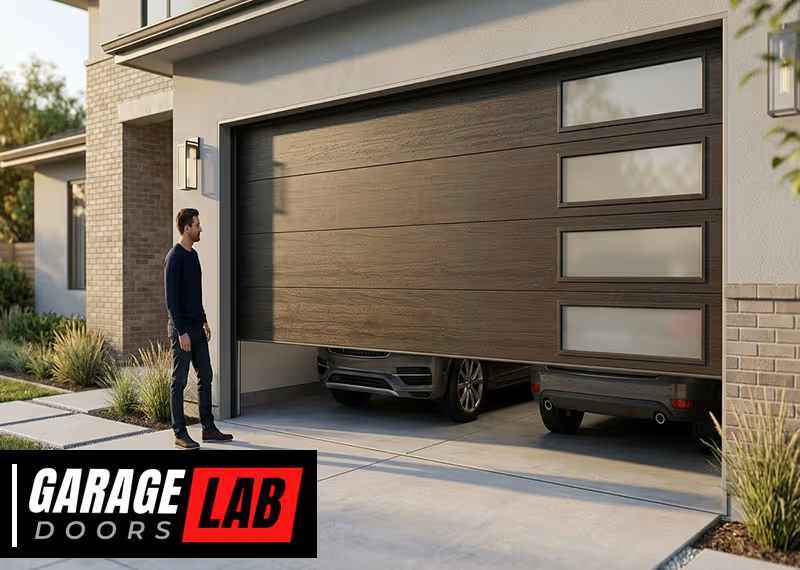
When you plan a new garage or think about changing your old garage door, one question always comes up: How wide is a garage door? It may seem simple, but garage door width affects everything from parking to storage to curb appeal. Picking the right size is not just about fitting your car. It’s about safety, convenience, and even your home’s value. People often overlook how garage door width impacts daily life until it’s too late—like when you can’t open your car door inside the garage or your new SUV barely squeezes through.
In this guide, you’ll learn what garage door widths are common, how to measure, which sizes suit different needs, and what mistakes to avoid. We will dig into single and double garage doors, custom options, special needs, and regional differences.
By the end, you’ll know exactly how to choose the right width for your garage door, backed by real data and practical advice.
Standard Garage Door Widths In The Us
Most homes in the US use standard garage door sizes. These sizes are made to fit common vehicles and garage layouts.
Single Garage Doors
A single garage door is made for one car. Most single doors are:
- 8 feet wide (96 inches)
- 9 feet wide (108 inches)
- Sometimes 10 feet wide (120 inches)
The 8-foot and 9-foot sizes are the most popular, with 9 feet now more common due to larger vehicles.
Why The Size Matters
- 8 feet: Fits most sedans, hatchbacks, and small SUVs. However, space is tight for wider cars or if you want to open doors fully.
- 9 feet: More comfortable for modern SUVs and trucks. Easier to drive in and out without scraping mirrors.
- 10 feet: Allows extra space for wider vehicles or storing bikes and tools.
Most new builds now feature 9-foot doors because car sizes have grown. Older homes often have 8-foot doors, which can feel cramped.
Double Garage Doors
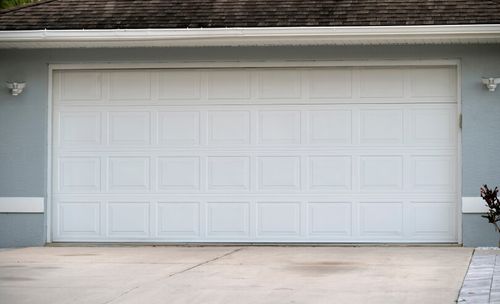
A double garage door fits two cars side by side. Standard double garage door widths are:
- 12 feet wide (144 inches)
- 16 feet wide (192 inches)
- Sometimes 18 feet wide (216 inches)
The 16-foot size dominates new construction for two-car garages. Some older or custom garages use 12 or 18 feet.
Comparing Double Door Sizes
- 12 feet: Tight for two cars. Usually found in older homes or when garage space is limited.
- 16 feet: Comfortable for most cars, SUVs, and trucks parked side by side.
- 18 feet: Extra space for large vehicles or wider garages. Useful if you want room for storage or wider separation.
Less Common Sizes
Garage doors can be made in custom widths. For example, you might find:
- 7 feet wide: For compact cars, very rare.
- 14 feet wide: For slightly larger two-car garages.
- 20 feet wide: For luxury homes, RVs, or workshops.
Custom widths are used when space is unusual, or needs are special—like fitting an RV or multiple motorcycles.
Why Garage Door Widths Are Standardized
Manufacturers make garage doors in standard sizes because:
- Most homes fit similar vehicle sizes
- Easier and cheaper to produce and install
- Fewer mistakes during installation
- Replacement and repairs are simpler
Standard sizes also help when you need a new door years later. If your door is a common width, you can quickly find parts or replacements.
Measuring Garage Door Width Correctly
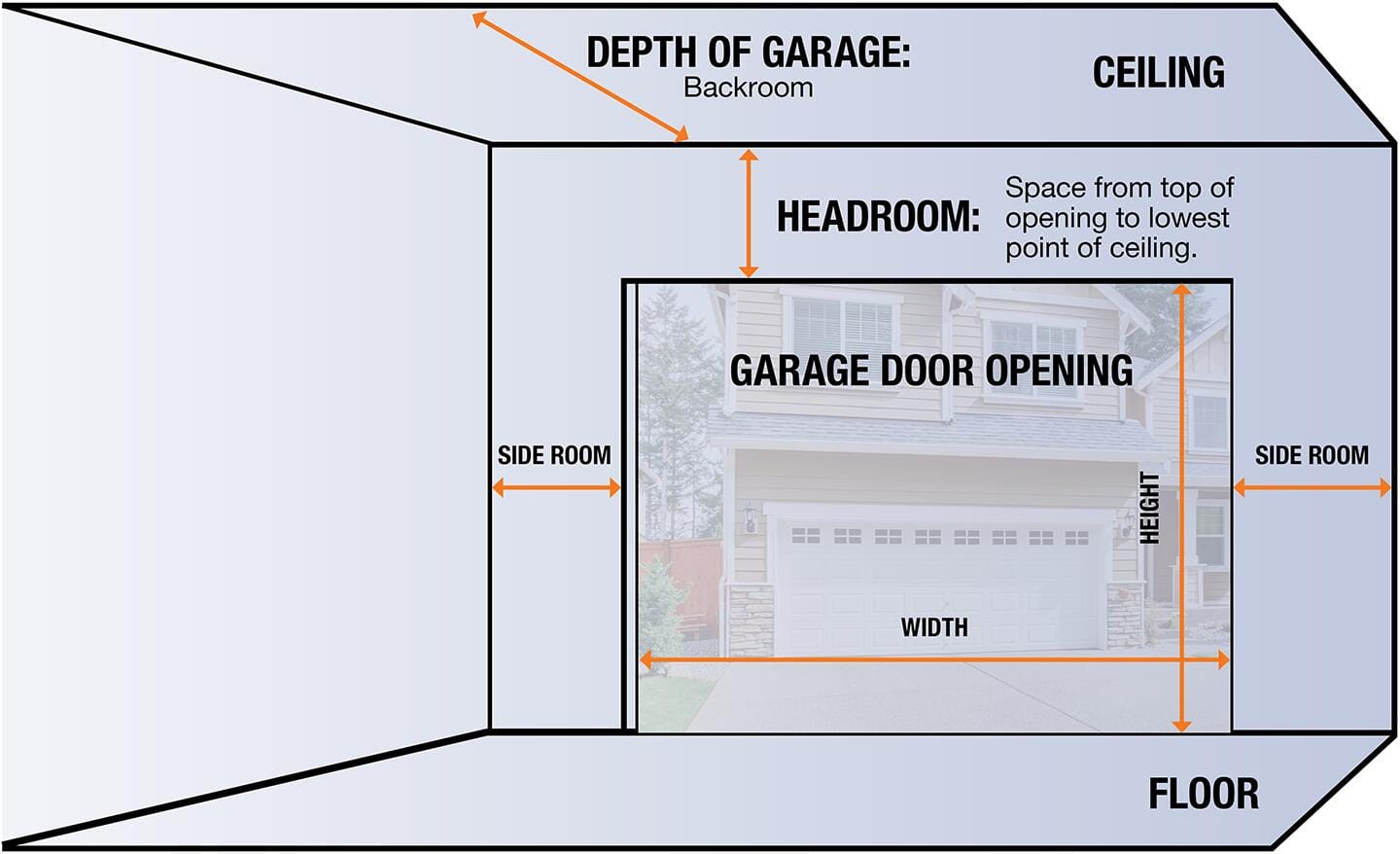
Knowing your garage’s actual space is essential. Many people guess, but mistakes lead to problems later. Here’s how to measure:
- Clear the Area: Remove cars, bikes, or storage items from the opening.
- Use a Tape Measure: Start at the left edge of the opening and measure straight across to the right edge.
- Record the Measurement: Note the width in feet and inches (for example, 16 feet, 3 inches).
- Measure the Height: While width is your focus, also measure the height to avoid surprises.
Pro tip: Always measure the opening—not the old door. The frame may differ from the door size, especially after repairs.
Common Mistakes In Measuring
- Measuring the old door, not the opening
- Forgetting to check for obstructions (pipes, lights)
- Not considering the side space for installation hardware
If unsure, ask a professional installer to measure for you. This prevents expensive errors.
Garage Door Widths For Different Vehicles
The size of your garage door must match your vehicle type. Here’s a guide for common vehicles:
Sedans And Compact Cars
- 8 feet wide is usually enough.
- Small cars fit easily, but don’t expect much extra space for storage.
Suvs And Pickup Trucks
- 9 feet wide is safer.
- Some large trucks may need 10 feet if you want to avoid tight squeezes.
Vans And Large Suvs
- 9-10 feet wide is best.
- If you own two large vans, consider a double door.
Motorcycles, Atvs, And Bicycles
- 7-8 feet wide is fine for single storage.
- If combined with car storage, you may want extra width.
Rvs And Boats
- 12-20 feet wide (custom doors) are needed.
- Always check the manufacturer’s specs for your vehicle and add extra space for mirrors and accessories.
Side-by-side Parking
- 16 feet wide is standard for two cars.
- 18 feet wide is more comfortable, especially for larger cars.
Garage Door Width Vs. Height
Width is only part of the story. Most garage doors are 7 feet high (84 inches), but some are 8 feet high (96 inches) for taller vehicles. Sometimes height can affect how wide a door feels—especially if your vehicle is tall and wide.
A wider door does not always mean easier access for tall vehicles. Make sure to check both dimensions.
Garage Door Widths In Other Countries
Garage door sizes are not the same everywhere. In Europe, for example, doors are often:
- 7 feet wide (2.1 meters)
- 8 feet wide (2.4 meters)
In Australia, common sizes are:
- 8 feet wide
- 9 feet wide
- 16 feet wide
These differences are caused by vehicle sizes, building codes, and climate. If you move internationally or buy a door from another country, check compatibility.

Custom Garage Door Widths
Sometimes, your garage needs a special size. Reasons include:
- Unusual garage shape
- Extra-wide or luxury vehicles
- Workshop or storage needs
- Old homes with non-standard openings
Custom doors cost more but solve unique problems. You can order any width, but most manufacturers limit custom widths to 24 feet for safety.
When To Choose Custom Width
- Two cars plus bikes or tools
- Large trucks or vans
- RVs, boats, or trailers
- Want more space for walking or storage
Custom Garage Door Cost
Custom doors are more expensive. Standard doors cost $700–$1,500 for single, $1,200–$2,500 for double. Custom sizes can run $2,000–$5,000 or more, especially for extra-wide or tall doors.
Garage Door Widths And Building Codes
Local building codes often set minimum and maximum garage door widths. For example:
- Minimum width for single doors: 8 feet
- Maximum width for residential: 20–24 feet
- Minimum clearance for fire safety
Always check city or county codes before buying. Some areas restrict custom sizes to keep neighborhoods uniform.
How Garage Door Width Affects Daily Life
Garage door width impacts:
- Parking comfort: Narrow doors make parking harder.
- Safety: Too-tight doors risk scraping cars or blocking exits.
- Storage: Wider doors make room for bikes, tools, or shelves.
- Home value: Spacious garages boost resale value.
Many homeowners regret choosing a narrow door after buying a larger vehicle. Extra width is rarely wasted.
Comparing Garage Door Widths: Data Table
Here’s a quick reference for common garage door widths and what they fit.
| Door Width | Fits | Comfort Level | Notes |
|---|---|---|---|
| 8 ft | Small cars | Basic | Tight for larger vehicles |
| 9 ft | SUVs, trucks | Good | Most common single size |
| 10 ft | Large SUVs, vans | Excellent | Extra space for storage |
| 12 ft | Two small cars | Basic | Tight side-by-side |
| 16 ft | Two cars | Good | Standard double size |
| 18 ft | Two large cars | Excellent | Extra space for comfort |
| 20+ ft | RV, boat | Special | Custom, expensive |
Garage Door Width: Impact On Home Design
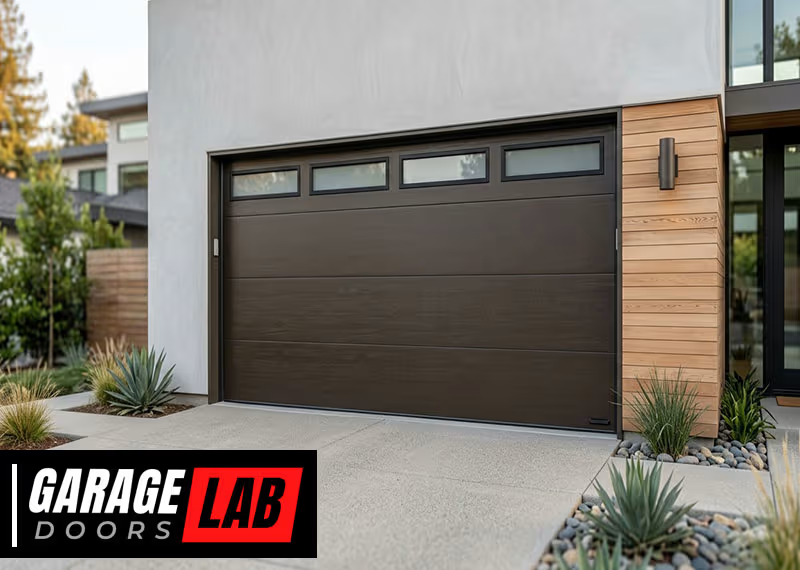
Your garage door is a big part of your home’s look. Wider doors can make a house look modern and open. Narrow doors can make homes look old or crowded. Designers often recommend:
- Double doors for two-car garages (16 feet or more)
- Single wide doors for larger vehicles
- Windows and panels to break up wide doors visually
Wider doors also allow for more natural light and easier access for renovations.
Garage Door Width And Driveway Shape
A wider door works best with a wide driveway. If your driveway is narrow, a wide door won’t solve parking problems. Always consider both when planning.
How Garage Door Width Affects Energy Efficiency
Many people overlook how garage door width affects energy efficiency. Wider doors have more surface area, which can let in more cold or heat. To reduce energy loss:
- Choose insulated doors for wider openings
- Seal edges carefully
- Use weather stripping
This is especially important in cold or hot climates.
Garage Door Width And Security
A wider door means a bigger opening. It can be easier for thieves if security is not strong. Always:
- Install strong locks
- Use reinforced doors for extra-wide openings
- Consider automatic openers with security codes
Wider doors may need more hinges or hardware for stability.
Garage Door Width: Common Mistakes And How To Avoid Them
Many homeowners make mistakes when choosing garage door width. Here are the most frequent:
- Picking the smallest standard size to save money
- You may regret it if you buy a bigger car later.
- Not measuring carefully
- The wrong width can lead to expensive changes.
- Ignoring building codes
- City rules can force you to change your plans.
- Forgetting about storage needs
- Bikes, shelves, and tools need space.
- Not considering driveway width
- If your driveway is narrow, a wide door doesn’t help.
- Overestimating space
- Garage walls and hardware take up room.
- Ignoring resale value
- Narrow doors can make your home less attractive to buyers.
- Missing out on insulation
- Wider doors need more insulation for comfort.
- Neglecting security
- Bigger doors need stronger locks.
- Not thinking about future needs
- Plan for the cars you might own, not just what you have now.
Garage Door Widths: Trends In 2024
Garage doors are getting wider as vehicles grow and people want more space. Surveys show:
- 60% of new homes have 9-foot single doors
- 75% of two-car garages use 16-foot double doors
- Custom and oversized doors are increasing, especially in luxury homes
Manufacturers now offer more options for wider doors, including better insulation and smart technology.
Comparing Garage Door Widths: Pros And Cons Table
To help you choose, here’s a quick comparison.
| Width | Pros | Cons |
|---|---|---|
| 8 ft | Lower cost, fits small cars | Too tight for large vehicles |
| 9 ft | Fits most cars, comfortable | Costs more than 8 ft |
| 10 ft | Spacious, future-proof | Higher price, needs larger garage |
| 16 ft | Fits two cars, standard for doubles | Needs wide driveway |
| 18 ft | Extra comfort, storage | More expensive, less common |
| 20+ ft | Fits RVs, boats | Very expensive, needs custom garage |
Garage Door Width For Special Needs
Some homeowners need wider doors for:
- Wheelchair access
- Workshop space
- Multiple vehicles (motorcycles, bikes)
If you need extra width for accessibility, talk to an installer about ADA (Americans with Disabilities Act) standards. ADA recommends at least 10 feet wide for easy access.
Garage Door Width And Automatic Openers
Wider doors often need stronger openers. Automatic openers must match the width and weight of your door. For doors over 16 feet wide, choose a heavy-duty opener. Otherwise, the opener may fail.
Many modern openers come with smart features, like remote access and safety sensors, which are useful for wider doors.
Garage Door Width: Maintenance And Repairs
Wider doors need more maintenance. The bigger the door, the heavier it is, which means:
- More stress on hinges and springs
- Regular checks for balance
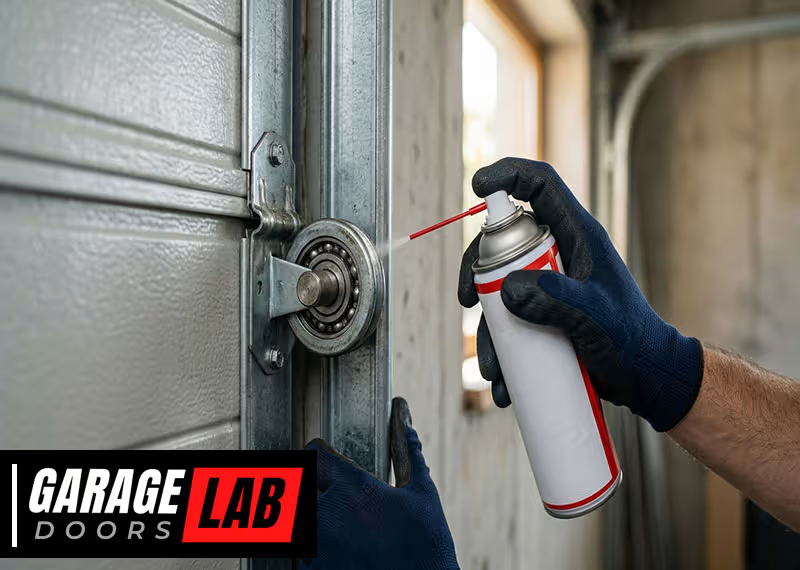
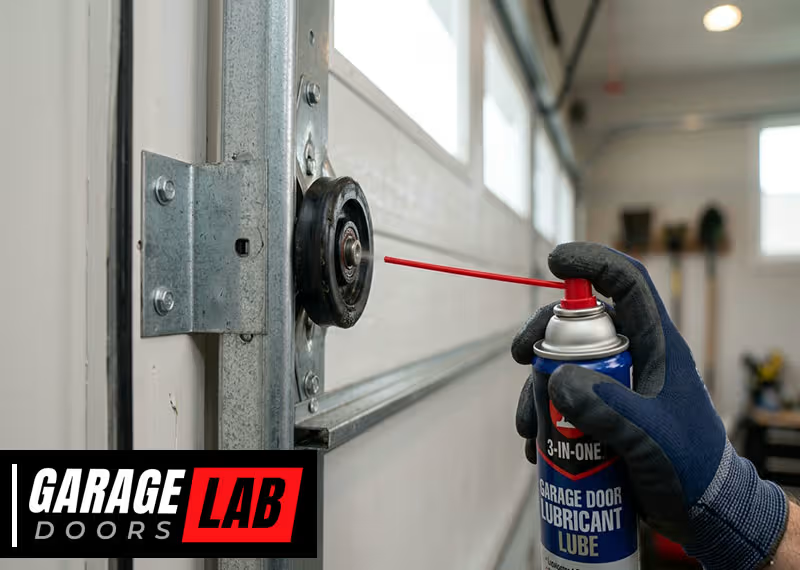
- Extra lubrication for moving parts
Repairs on wide doors cost more, but maintenance prevents big problems. Always check the door’s balance and hardware every six months.
Garage Door Widths: Non-obvious Insights
Here are two tips most beginners miss:
- The opening width is not always the same as the door width. Hardware, tracks, and trim can take up several inches. Always ask your installer how much space you need for installation.
- Garage door width can affect garage lighting. Wider doors let in more natural light when open. If you want a brighter garage, consider a wider door or doors with windows.
Garage Door Width: Examples From Real Homes
Let’s look at real-life examples:
- Suburban home: Single 9-foot door, fits one SUV. Homeowner later upgraded to 10 feet for easier parking.
- Luxury home: 18-foot double door, fits two large SUVs and storage shelves. Owner added insulation for comfort.
- Older home: 8-foot single door, fits compact car only. Owner struggles to park modern SUV.
- Custom workshop: 20-foot door, fits RV, boat, and tools. Owner needed special opener and reinforced hardware.
These show how width makes a big difference in daily life.
Garage Door Width: Upgrading Tips
If your garage door is too narrow, consider these upgrade tips:
- Replace with a wider door: If space allows, upgrade to 9 or 10 feet.
- Convert two single doors to one double: Many homes with two narrow doors switch to one wide double door (16 or 18 feet).
- Expand garage opening: Requires construction, but adds value.
- Add windows: Makes wide doors look better and adds light.
Always consult a contractor before making major changes.
Garage Door Width And Weather
If you live in a snowy or rainy area, wider doors can help. You can park without scraping mirrors on snow banks or avoid puddles near the door edges. But wide doors also need more weatherproofing.
- Use insulated doors for cold climates
- Add weather stripping for rain
- Check seals twice a year
Garage Door Widths: Options For Small Spaces
If your garage is small, standard widths may not fit. Consider:
- Compact doors: 7-8 feet wide for very small garages
- Side-hinged doors: Take up less space inside garage
- Vertical lift doors: Useful when floor space is tight
Small doors are rare, but some manufacturers offer solutions for tight spaces.
Garage Door Widths: Resale Value
When selling your home, garage door width matters. Real estate agents say:
- Wider doors are more attractive to buyers
- Narrow doors can reduce home value by 5–10%
- Upgrading to a wider door is often a good investment
If you want to boost resale value, upgrade to at least 9 feet wide for single and 16 feet wide for double.
Garage Door Widths: Manufacturer Differences
Different brands offer different standard sizes. Some offer more custom options. Popular brands include:
- Clopay: Offers 8, 9, 10, 16, 18 feet standard
- Wayne Dalton: Custom sizes up to 24 feet
- Amarr: Wide range, good for double doors
Always check manufacturer specs before buying.
Garage Door Widths: Installation Tips
When installing a new garage door:
- Choose the widest standard size that fits your space
- Make sure your opener matches the door width
- Leave extra space for tracks and hardware
- Ask about insulation and weatherproofing
- Hire a professional for measurement and installation
Garage Door Widths: Cost Breakdown Table
Here’s a breakdown of average costs for different widths.
| Width | Average Cost (USD) | Installation Included? |
|---|---|---|
| 8 ft | $700–$1,200 | Usually |
| 9 ft | $800–$1,500 | Usually |
| 10 ft | $1,000–$1,800 | Often |
| 16 ft | $1,200–$2,500 | Usually |
| 18 ft | $1,800–$3,000 | Often |
| 20+ ft | $2,500–$5,000+ | Custom |
Prices depend on material, insulation, and location.
Garage Door Widths: Summary Checklist
Here’s a quick summary to help you decide:
- Measure your garage opening carefully
- Check vehicle sizes and parking needs
- Choose the widest standard size that fits
- Consider storage, future cars, and resale value
- Check building codes and manufacturer options
- Ask about insulation, security, and opener strength
For more details, you can visit the International Door Association.
Frequently Asked Questions
What Is The Standard Width For A Single Garage Door?
Most single garage doors are 8 or 9 feet wide. The 9-foot size is now more common because modern vehicles are wider.
How Wide Should A Garage Door Be For Two Cars?
A double garage door is usually 16 feet wide. This fits two cars comfortably. For extra space, you can choose 18 feet wide.
Can I Install A Wider Garage Door In An Older Home?
Yes, but you may need to expand the garage opening. Check building codes and consult a contractor to see if your garage structure supports a wider door.
How Do I Measure My Garage Door Width Correctly?
Use a tape measure to check the width of the opening, not the old door. Measure from the left edge to the right edge. Also, check for obstructions and side space for hardware.
Does Garage Door Width Affect Energy Efficiency?
Yes. Wider doors have more surface area, which can let in more heat or cold. Use insulated doors and weather stripping to reduce energy loss.
Choosing the right garage door width is a big decision. It affects parking, storage, safety, comfort, and your home’s resale value. Take your time, measure carefully, and consider your needs now and in the future. The right width brings convenience and value for years to come.