
Now Reading: How Tall Are Garage Doors? Standard Sizes and Expert Tips
- 01
How Tall Are Garage Doors? Standard Sizes and Expert Tips

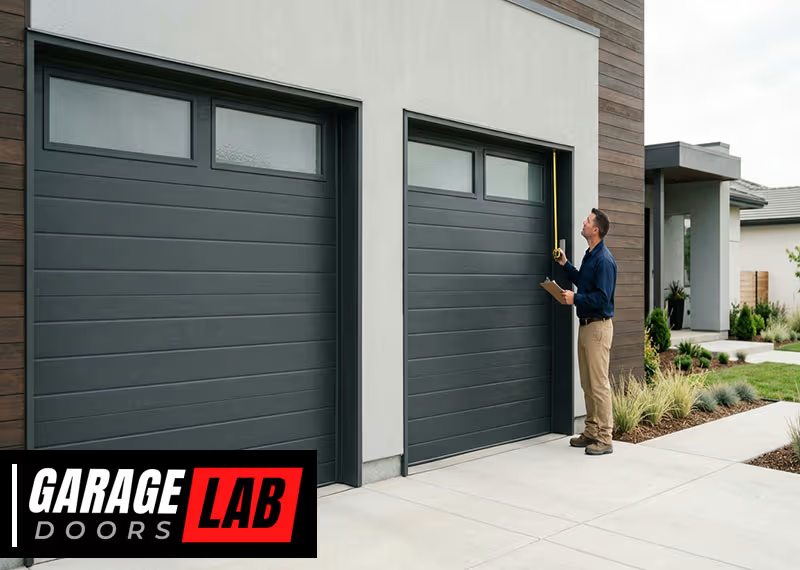
Many people think about the width of garage doors, but the height is just as important. The right garage door height affects more than just the look of your home. It decides what vehicles can fit, how much storage space you have, and even how easy it is to use your garage for hobbies or work.
Whether you’re building a new home, replacing an old door, or simply curious, understanding garage door heights can help you make better decisions.
In this article, you’ll learn about the most common garage door heights, why they matter, and how to choose the right size for your needs. You’ll also discover the differences between residential and commercial doors, how door height affects installation, and what to do if you need a custom size.
Practical tips, real-life examples, and expert advice will help you avoid common mistakes and find the perfect fit for your garage.
Standard Garage Door Heights
Most garages in the United States use standard door heights. These sizes are popular because they fit the majority of vehicles and garage designs. Knowing these standards can make your shopping and planning much easier.
Common Heights For Single-car Garage Doors
The most typical height for a single-car garage door is 7 feet (84 inches). This size fits most cars, small trucks, and SUVs. Another common height is 8 feet (96 inches). This extra foot gives more clearance for larger vehicles, like lifted trucks or vans.
Some single-car garages in older homes may have doors as short as 6 feet 6 inches (78 inches). These are less common today, as modern vehicles are usually taller than in the past.
Common Heights For Double-car Garage Doors
Double-car garage doors are usually 7 feet tall, just like single-car doors. However, 8 feet is also a standard option, especially in newer homes where people want to park large SUVs or pickups side by side.
Why 7 And 8 Feet?
The 7-foot height became the standard after World War II, when most cars were lower. As vehicle sizes increased, the 8-foot option grew in popularity. Today, these two heights cover the needs of most American families.
Less Common Heights
Some garages have unique requirements. Heights like 9 feet or even 10 feet are available for special vehicles, home gyms, or RV storage. These are less common but can be ordered from most major garage door manufacturers.
Example:
If you have a Ford F-250 Super Duty (about 6. 7 feet tall with standard suspension), a 7-foot door will be tight. An 8-foot door gives you more room and reduces the risk of damage.
Garage Door Heights For Special Vehicles
If you own a large vehicle, boat, or recreational vehicle, standard garage door heights may not be enough. Here’s how door height relates to what you want to store or park.
Suvs And Pickup Trucks
Modern SUVs and trucks are taller than ever. For example, a Chevrolet Suburban is about 6.2 feet tall, while some pickups with lifted suspensions can be 7 feet or more. If you plan to drive these vehicles into your garage, consider an 8-foot door, or even higher for modified trucks.
Vans
Many new vans, especially cargo or passenger models, are also tall. The Mercedes-Benz Sprinter, for instance, can be over 9 feet tall. These require a much taller garage door.
Boats And Trailers
Boats on trailers can reach heights of 8 to 10 feet or more. If you store a boat in your garage, measure from the ground to the highest point (often the windshield or bimini top) and allow at least a few extra inches for safe entry.
Rvs And Motorhomes
Standard garage doors are usually too short for most recreational vehicles. An RV garage door is typically 12 to 14 feet tall. This accommodates the height of Class A, B, and C motorhomes, which can range from 10 to 13 feet high.
Comparison Of Vehicle Heights Vs. Garage Door Heights
Here’s a quick look at common vehicle types and the door heights they need:
| Vehicle Type | Average Vehicle Height | Recommended Garage Door Height |
|---|---|---|
| Sedan/Compact Car | 4.5 to 5 feet | 7 feet |
| SUV/Standard Pickup | 6 to 6.5 feet | 7 or 8 feet |
| Large Pickup (Lifted) | 7+ feet | 8 feet or more |
| Van (Cargo/Passenger) | 7 to 9 feet | 9 feet or more |
| Boat on Trailer | 8 to 10 feet | 10 feet or more |
| RV/Motorhome | 10 to 13 feet | 12 to 14 feet |
Non-obvious Insight
Many people forget about accessories on top of vehicles, like roof racks, antennas, or bike racks. These can add several inches, so always include them when measuring.
Residential Garage Door Heights By Type
Garage doors come in different types, and each has its own common height options. Here’s how door type can impact the available heights.
Sectional Garage Doors
Most residential garages use sectional doors. These are the most flexible when it comes to height. Standard options are 7 and 8 feet, but custom heights (even in small increments) are possible with special orders.
Roll-up Garage Doors
Roll-up doors, often used in commercial settings, are also available for homes with special needs. They can be made in heights from 7 to 14 feet or more. They are a good choice for garages with limited overhead space.
Tilt-up And Swing-out Doors
These older styles have more limits. They’re usually made for 7-foot openings but can be built taller if you have enough wall space above the door.
Carriage-style Doors
Carriage-style doors are popular for their looks. They often come in standard heights but can be custom-built to match the opening.
Custom Heights
If your garage opening is not a standard size, nearly all major door makers offer custom heights. These cost more and may take longer to deliver, but they allow you to get the exact fit you need.
Commercial Garage Door Heights
Commercial garage doors are made for different uses than residential ones. They need to fit trucks, vans, and sometimes heavy equipment. Because of this, the standard heights are different.
Typical Heights
Commercial doors often start at 8 feet and go up in one-foot increments: 9, 10, 12, 14, and even 16 feet. The most common size for a delivery bay is 12 feet tall, which fits most box trucks.
Common Uses
- Auto shops: 10–12 feet
- Warehouses: 12–16 feet
- Storage units: 7–9 feet
- Fire stations: 12–14 feet
Example
A typical UPS or FedEx delivery truck is about 11 feet tall. To fit these, a commercial garage door should be at least 12 feet high.
Data Table: Residential Vs. Commercial Garage Door Heights
| Door Type | Common Heights | Typical Uses |
|---|---|---|
| Residential | 7, 8 feet | Cars, SUVs, small trucks |
| Commercial | 8, 10, 12, 14, 16 feet | Vans, trucks, delivery vehicles, heavy equipment |
How To Measure Garage Door Height
Measuring your garage door opening is simple, but getting it wrong can cause big problems. Here’s how to do it right:
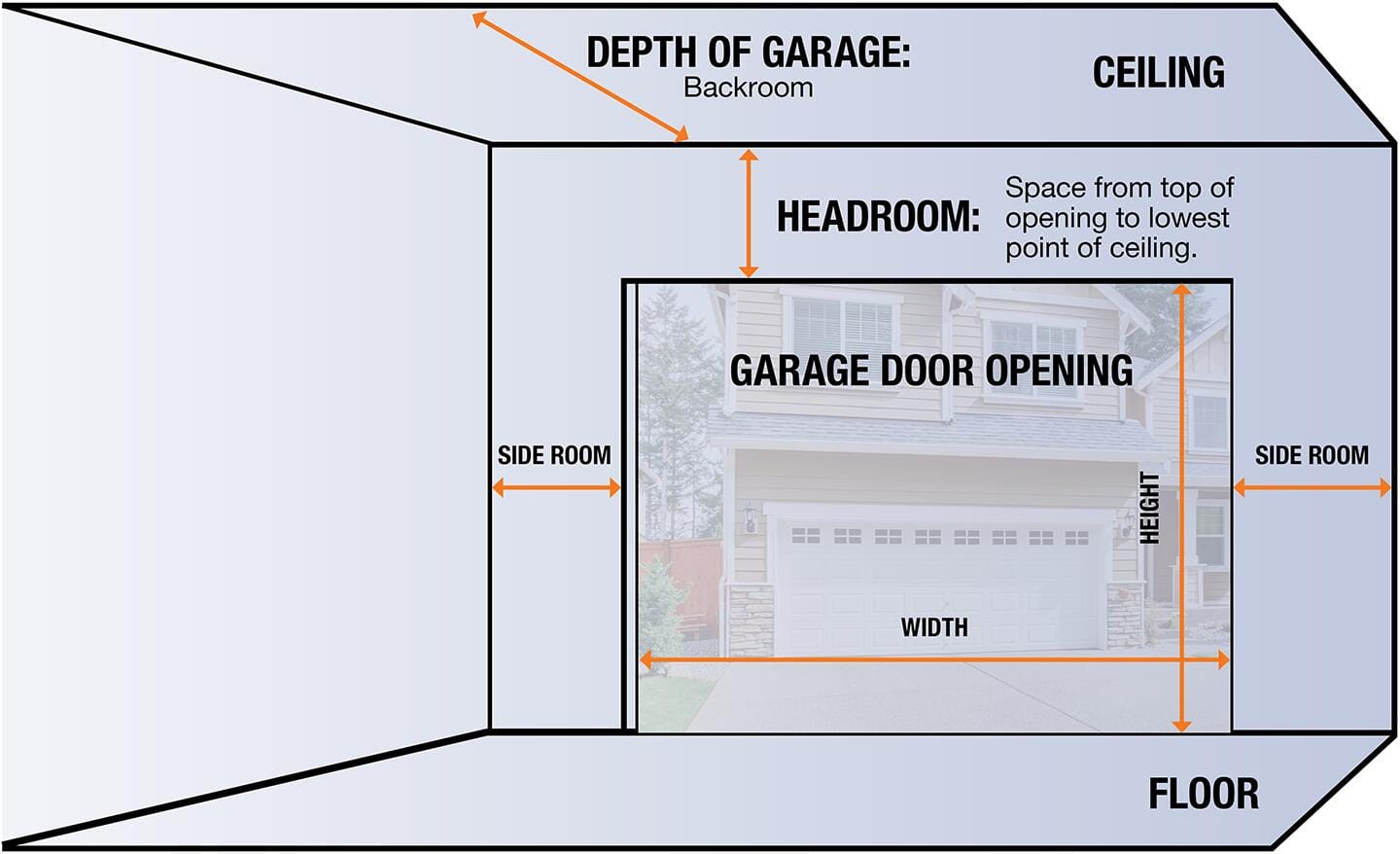
- Use a tape measure to check the height of the opening from the finished floor to the bottom of the header (the top frame piece).
- Measure both sides of the opening. Sometimes the floor isn’t level, and one side may be lower.
- Write down the smallest measurement. The door must fit the shortest side.
- Measure the headroom (space above the opening inside the garage). Most standard doors need at least 12 inches of headroom for the opener and track.
- Measure the backroom (distance from the garage door opening to the back wall). Sectional doors usually need a distance equal to the door’s height plus 18 inches.
Two Key Tips Beginners Miss
- Always measure after all flooring, like concrete or tile, is finished. Adding flooring later can reduce the opening height.
- Don’t forget about weatherstripping or seals at the bottom of the door. These can take up half an inch or more.
Custom Garage Door Heights
Not all garages use standard sizes. Many older homes, unique buildings, or special projects need custom garage door heights. Here’s what you should know.
When You Need A Custom Height
- Your garage is part of a historic home with a non-standard opening.
- You have a tall vehicle, boat, or RV to store.
- You want to use your garage for a workshop, gym, or other activity that needs extra clearance.
Pros And Cons
Pros:
- Perfect fit for your needs
- More options for design
Cons:
- Higher cost (sometimes 30–50% more)
- Longer wait time (custom doors can take 4–8 weeks to manufacture)
- Harder to find replacement parts
Customization Examples
A homeowner with a vintage house built in 1920 may have a garage opening only 6 feet 8 inches high. A custom door is the only way to keep the original look. Another example: a car collector who wants a four-post lift in his garage may need a 10-foot high door to drive vehicles on and off the lift.

How Door Height Affects Garage Function
The height of your garage door does more than just decide what can fit inside. It affects how you use your garage, what you can store, and even the look of your home.
Vehicle Clearance
A door that’s too short means you can’t park tall vehicles, add a roof box, or store bikes on the roof rack. A taller door gives you more options.
Storage Space
If you want to use overhead storage racks, a taller door makes it easier to load and unload bulky items. It also helps if you plan to install a car lift.
Curb Appeal
Taller garage doors can make your home look more modern or “grand,” but they may not fit the style of every house. Make sure the door height matches your home’s design.
Energy Efficiency
Taller doors have more surface area, which can mean more heat loss in winter or heat gain in summer. If you choose a tall door, consider spending more on insulation.
Security
A non-standard door height can make it harder for thieves to use common break-in tools. However, custom doors may also have unique security needs.
Garage Door Height Vs. Width
People often focus only on the width of garage doors, but height and width work together to decide what fits. Here’s why both matter.
- A 7-foot by 8-foot single door fits most cars, but a wide SUV or truck may need both more height and width.
- A 16-foot wide, 7-foot tall double door works for most families, but those with large vehicles may want 8 feet of height.
- Some garages use 9-foot high doors with extra width for easier parking and less risk of door dings.
Real-world Example
A family with two Suburbans and a minivan found their 7-foot high, 16-foot wide door too short for their vehicles with roof boxes. Upgrading to an 8-foot high door solved the problem and made packing for vacations much easier.
Garage Door Opener Compatibility
Garage door openers need enough space above the door to work properly. The higher your door, the more powerful opener you may need.
- Standard openers work for doors up to 7 feet high.
- For 8–10 foot doors, you may need an extension kit.
- Doors over 10 feet usually need commercial-grade openers.
If your garage has limited headroom, a wall-mount opener (also called jackshaft) can be a good choice. These mount on the side of the door and work well with tall or custom doors.
Data Table: Door Height And Opener Needs
| Door Height | Opener Type | Special Requirements |
|---|---|---|
| 7 feet | Standard chain or belt drive | None |
| 8-10 feet | Standard opener + extension kit | Longer rail, stronger motor |
| 10+ feet | Commercial or wall-mount opener | Professional installation |
Building Codes And Hoa Rules
Before you change your garage door height, check your local building codes and any homeowners association (HOA) rules. Some areas limit the size of garage doors for safety, appearance, or neighborhood style.
- Building codes may require special support for tall doors.
- HOAs often set limits on door height or style to keep the neighborhood looking uniform.
Always get approval before making changes, or you may have to remove and replace your new door.
Installation Tips And Mistakes To Avoid
Installing a garage door is not a DIY project for most people, especially with tall or custom doors. Here are some tips to avoid common problems:
- Hire a professional for installation, especially for doors over 8 feet high.
- Double-check all measurements after flooring and framing are finished.
- Plan for enough headroom inside the garage for the opener and tracks.
- If you want windows in your door, make sure they don’t weaken the structure in a tall door.
- For custom doors, order early—lead times can be long.
- Don’t forget about permits if your area requires them.
Non-obvious Insight
If you’re replacing an old garage door, check the structural header above the opening. Taller doors may need a stronger or wider header to handle the extra weight.
Cost Of Different Garage Door Heights
The price of a garage door depends on size, material, and style. Door height has a direct impact on cost.
- Standard 7-foot doors are the most affordable. Prices start around $600 for a basic steel door (not installed).
- 8-foot doors usually cost 10–20% more than 7-foot models.
- Custom heights (9 feet or more) can cost 30–50% more than standard, and prices rise quickly for very tall doors.
- Installation for taller doors is usually more expensive. Expect to pay $200–$400 extra for installation above 8 feet.
- Heavier doors may need a more powerful opener, which adds cost.
Example
A standard 7-foot, double-car steel door might cost $1,200 installed. An 8-foot version could be $1,400–$1,500, and a 10-foot door can reach $2,000 or more.

Energy Efficiency And Insulation
Taller garage doors have more surface area, so they can lose more heat in the winter and gain more in the summer. If you live in a climate with extreme temperatures, choose a door with good insulation.
- Insulated doors cost more but save on heating and cooling.
- Look for a higher R-value (a measure of insulation). R-12 or above is good for most homes.
- Weatherstripping around the door helps seal gaps, especially on taller doors where wind can be a problem.
Non-obvious Insight
Garage doors with windows can lose more heat. If you want windows in a tall door, ask for insulated glass.
Garage Door Height And Home Value
A properly sized garage door can add value to your home. If you choose a door that fits modern vehicles and adds curb appeal, you may get a good return on your investment when you sell.
- Homes with 8-foot or taller garage doors are more attractive to buyers with large vehicles or RVs.
- A garage that can fit a van, SUV, or truck can be a selling point in many markets.
- Tall doors can also make your home look more modern, which appeals to some buyers.
However, an oversized door may look out of place on a small home or in an older neighborhood. Always balance your needs with the style of your house.
Future Trends In Garage Door Heights
As vehicles get larger and more people use garages for more than just parking, demand for taller garage doors is growing. Here are a few trends:
- 8-foot doors are becoming the new standard for upscale homes.
- More builders offer 9 or 10-foot doors as upgrades.
- RV garages and “toy barns” are popular in some areas, with 12–14 foot doors.
- Multi-use garages (for gyms, workshops, or studios) often need taller doors for flexibility.
If you’re building a new home, consider your future needs. Adding height now is easier and cheaper than remodeling later.
Frequently Asked Questions
How Do I Know If My Garage Door Height Is Standard?
Most standard single-car garage doors are 7 feet tall. Double-car doors are usually the same height. If your door is 7 or 8 feet, it’s standard. Measure from the floor to the bottom of the header to confirm.
Can I Make My Garage Door Taller Without Rebuilding The Garage?
It is sometimes possible, but it depends on your garage’s structure. You may need to raise the header and add more framing. This can be expensive and may require building permits. Always consult a professional before making changes.
What Garage Door Height Do I Need For An Rv?
Most RVs need a garage door between 12 and 14 feet tall. Measure your RV from the ground to the highest point and add a few inches for safety. Always check with your local code for height limits.
Is There A Maximum Legal Height For Garage Doors?
Most areas do not set a strict maximum, but your city or homeowners association (HOA) may have rules. Check local building codes and HOA guidelines before installing a very tall door.
Where Can I Find More Information About Garage Door Sizes?
The Door & Access Systems Manufacturers Association (DASMA) offers helpful resources on garage door standards and sizing. You can also visit Wikipedia’s Garage Door page for more details.
The height of your garage door is more than just a number—it’s the key to making your garage fit your life. Whether you drive a compact car, a lifted truck, or a motorhome, understanding garage door heights will help you choose a door that fits your needs now and in the future.
Taking the time to measure carefully, consider future plans, and check local rules will save you money, time, and frustration. When you pick the right garage door height, your garage becomes a more useful, valuable part of your home.