
Now Reading: How Heavy Are Garage Doors? Weight Guide and Safety Tips
- 01
How Heavy Are Garage Doors? Weight Guide and Safety Tips


Garage doors are a common feature in homes and businesses, but most people rarely think about how much they actually weigh. If you’ve ever tried to lift a garage door manually, you know it’s not as light as it looks.
Understanding the weight of garage doors is important for safety, maintenance, choosing the right opener, and planning replacements. In this article, you’ll discover how heavy garage doors are, what affects their weight, and why it matters. We’ll look at different types of garage doors, materials, sizes, and real examples.
Whether you’re a homeowner, DIYer, or just curious, you’ll find clear answers and expert advice here.
Why Garage Door Weight Matters
Many people underestimate the importance of garage door weight. It’s not just about how hard it is to open. The weight affects several key factors:
- Spring strength: The springs must be matched to the door’s weight to ensure smooth operation.
- Garage door opener: Too much weight can damage openers or cause them to fail early.
- Safety: A heavy door can cause injuries if it falls or malfunctions.
- Installation and repairs: Heavier doors need more people or special tools to handle safely.
If you misjudge the weight, you could end up with broken parts, safety risks, and extra costs. Knowing the actual weight helps you make smart decisions for repairs, upgrades, and daily use.
Main Factors That Determine Garage Door Weight
The weight of a garage door is not random. It depends on several main factors:
- Material: Steel, wood, aluminum, fiberglass, and composite doors all have different densities.
- Size: Standard single-car doors are lighter than double-car or oversized doors.
- Insulation: Insulated doors can be much heavier due to extra layers.
- Style and construction: Solid doors weigh more than hollow-core or panel models.
- Windows and hardware: Adding windows or decorative hardware increases weight.
Let’s break down each factor with clear examples and data.
Garage Door Weight By Material
The material is the biggest factor affecting weight. Here’s how common garage door materials compare:
| Material | Weight Range (Single 8×7 ft) | Weight Range (Double 16×7 ft) | Main Features |
|---|---|---|---|
| Steel | 80–150 lbs | 150–250 lbs | Durable, rust-resistant, common |
| Wood | 150–250 lbs | 300–500 lbs | Heavy, classic look, high maintenance |
| Aluminum | 60–90 lbs | 100–180 lbs | Lightweight, rust-proof, dents easily |
| Fiberglass | 80–120 lbs | 140–220 lbs | Resists corrosion, moderate weight |
| Composite | 100–180 lbs | 200–350 lbs | Mix of wood and resin, good insulation |
Steel doors are the most popular because they balance weight and strength. Wooden doors look beautiful but are usually the heaviest. Aluminum doors are very light but not as strong. Fiberglass and composite doors offer a middle ground.
Non-obvious Insight 1
Many people think a bigger door is always much heavier, but the material matters more than size. For example, a double aluminum door can weigh less than a single solid wood door.
Garage Door Weight By Size
Garage doors come in several standard sizes. Here’s how size affects weight, using averages for uninsulated steel doors:
| Garage Door Size | Weight Range | Common Use |
|---|---|---|
| 8×7 ft (Single Car) | 80–150 lbs | Compact cars, small garages |
| 9×7 ft (Single Car) | 90–160 lbs | Modern single car |
| 10×7 ft (Single Car) | 100–180 lbs | Larger vehicles |
| 12×7 ft (Single/Double) | 120–200 lbs | Small SUVs, vans |
| 16×7 ft (Double Car) | 150–250 lbs | Standard for two cars |
| 18×7 ft (Double Car) | 170–300 lbs | Oversized vehicles, trucks |
If you add insulation or choose a heavier material, expect these numbers to go up by 20–100% or more.
Non-obvious Insight 2
It’s not just the width that adds weight—height matters too. A 9×8 ft door is heavier than a 9×7 ft door, even though the width is the same. Always check both dimensions.
How Insulation Affects Garage Door Weight
Many modern garage doors are insulated for better energy savings and noise control. There are two main types of insulation:
- Polystyrene panels: Lightweight, foam board style
- Polyurethane foam: Denser, sprayed-in and bonds with door
Adding insulation increases the weight by 10–50 lbs for single doors, and 20–100 lbs or more for double doors. Heavily insulated steel doors can weigh as much as solid wood doors.
Example:
A basic uninsulated 16×7 ft steel door might weigh 180 lbs. Add double-layer polyurethane insulation, and the weight jumps to 260 lbs or more.
Why does this matter? If you upgrade to an insulated door, your garage door springs and opener may need to be replaced or adjusted.
Styles And Construction Methods
Garage doors come in different styles, each with its own weight profile:
- Sectional doors: Made of several panels that bend as the door opens. Most common in the US.
- One-piece tilt-up doors: Solid slab that swings outward and up. Usually heavier and need more clearance.
- Carriage-house doors: Mimic old barn doors, may be heavier due to decorative hardware and solid construction.
- Roll-up doors: Thin slats that roll into a coil, often lighter but sometimes use heavier steel for durability.
Each style uses different construction methods. For example, a hollow-core sectional door weighs less than a solid wood tilt-up door of the same size.
Real-world Garage Door Weights
Let’s look at some real examples from popular manufacturers:
- Clopay Classic Steel 8×7 ft: ~105 lbs (non-insulated), ~140 lbs (insulated)
- Wayne Dalton 16×7 ft Steel: 160–200 lbs (uninsulated), up to 260 lbs (heavily insulated)
- Amarr Wood Door 16×7 ft: 350–500 lbs depending on wood type and thickness
- CHI Overhead Aluminum 9×7 ft: 70–100 lbs
Remember, these are typical weights. Custom doors can be much heavier, especially with glass inserts or extra-thick panels.
How To Weigh A Garage Door
You might wonder, “How do I know the exact weight of my own garage door?” There are two main ways:
- Check the manufacturer’s documentation: Most new doors come with specs.
- Use a bathroom scale: Disconnect the opener and springs, gently lower the door onto a scale (with help). Be careful—doors are heavy!
If you’re not sure, ask a professional. Guessing the weight can lead to injury or broken equipment.
How Weight Affects Garage Door Springs
Garage doors use torsion or extension springs to counterbalance the weight. If the springs are too weak or strong for the door, problems happen:
- Too weak: Door is hard to lift, may slam shut.
- Too strong: Door may fly up quickly, dangerous if it breaks.
- Correct match: Door feels almost weightless, easy to open by hand.
When you change the door or add insulation, always check if you need new springs. Using the wrong springs is a common mistake that leads to expensive repairs.
Choosing A Garage Door Opener Based On Weight
Not all garage door openers are the same. They’re rated by lifting force, usually in horsepower (HP):
- 1/3 HP: Good for light single doors (up to ~150 lbs)
- 1/2 HP: Suitable for most single and light double doors (up to ~200 lbs)
- 3/4 HP: Needed for heavier double doors or insulated/wooden doors (up to ~350 lbs)
- 1+ HP: For very heavy or oversized doors (above 350 lbs)
If your door is heavier than your opener can handle, you’ll see slow movement, straining, or early failure. When replacing your door, check the opener’s rating before installation.
The Risks Of Underestimating Garage Door Weight
Many injuries and accidents happen because people underestimate how heavy garage doors are. Here’s what can go wrong:
- Attempting DIY repairs without proper support can cause the door to fall suddenly.
- Lifting a door with broken springs is very dangerous—doors can weigh 200–400 lbs or more.
- Using the wrong opener or springs leads to breakdowns and expensive repairs.
Always treat garage doors with respect. If you’re unsure about the weight or handling, call a professional.
Comparing Garage Door Weights By Type
Here’s a quick comparison showing how different types stack up:
| Type | Single Door (8×7 ft) | Double Door (16×7 ft) | Insulated? |
|---|---|---|---|
| Standard Steel | 100–120 lbs | 180–220 lbs | No |
| Insulated Steel | 130–170 lbs | 220–300 lbs | Yes |
| Solid Wood | 180–250 lbs | 350–500 lbs | No |
| Aluminum | 60–90 lbs | 120–180 lbs | Some |
| Fiberglass | 80–120 lbs | 140–220 lbs | Some |
This makes it easy to compare at a glance.
Common Mistakes When Estimating Garage Door Weight
It’s easy to get the weight wrong if you’re not careful. Here are mistakes people often make:
- Assuming all garage doors weigh the same: Even similar-looking doors can have very different weights.
- Forgetting about insulation or windows: These can add significant pounds.
- Ignoring hardware and reinforcements: Decorative handles, struts, and safety features add up.
- Trusting old records: If the door was replaced or modified, the old weight may be wrong.
- Relying on “feel”: Springs can make even heavy doors feel light—don’t trust your muscles.
Always check the specs or measure directly if you need to know for sure.
Examples: How Heavy Is My Garage Door?
Here are example scenarios to show how weight changes:
- Case 1: 8×7 ft steel door, uninsulated, no windows: ~100 lbs
- Case 2: 16×7 ft insulated steel door, with windows: ~260 lbs
- Case 3: 8×7 ft solid wood carriage door: ~220 lbs
- Case 4: 16×8 ft fiberglass door, insulated: ~240 lbs
- Case 5: Custom 18×8 ft wood and glass door: 500 lbs or more
If you’re thinking of replacing or upgrading, use these as a reference but always check your own model.
Special Cases: Heavy-duty And Custom Garage Doors
Some garages need special doors:
- Oversized doors (for RVs, trucks): Can weigh 400–700 lbs or more.
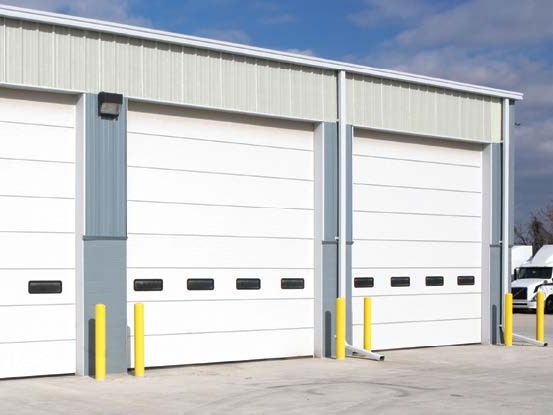
- Commercial roll-up doors: Often use thicker steel, 200–600 lbs depending on size.
- Custom glass doors: Glass is very heavy; a full-glass 16×7 ft door can be 350–600 lbs.
With these, always use commercial-grade openers and springs. Never try to DIY heavy custom doors without expert help.
How To Reduce Garage Door Weight
If you want a lighter door, consider these options:
- Choose aluminum or lightweight steel models.
- Opt for minimal insulation if energy loss isn’t a big issue.
- Use hollow-core panels or skip decorative hardware.
- Remove unnecessary windows or reinforcements.
Lighter doors are easier to lift, put less stress on openers, and are safer for DIY repairs.
How Professionals Handle Heavy Garage Doors
Garage door technicians use special tools and methods:
- Winding bars for adjusting torsion springs safely.
- Lift handles and support stands for installation and removal.
- Teamwork: Large doors are never handled alone.
- Precision measurements: Springs are matched to the exact weight.
If you have a heavy or unusual door, hiring a pro is the safest choice. They have the training and equipment to avoid injury and damage.
Upgrading Garage Door Springs And Openers
When upgrading to a heavier door, always:
- Replace springs: Match new weight for safe, smooth operation.
- Upgrade opener: Make sure it’s rated for the new weight.
- Check tracks and hardware: Heavier doors need stronger tracks, hinges, and rollers.
- Adjust safety sensors: Heavier doors move differently; sensors may need recalibration.
Ignoring these steps can lead to noisy operation, broken parts, and safety risks.
The Link Between Door Weight And Energy Efficiency
Insulated doors are heavier, but they also save energy. If you live in a cold or hot climate, the added weight might be worth it for lower heating and cooling bills. For example, a triple-layer insulated steel door can reduce garage temperature swings by 10–20°F.
For more on garage door insulation and its impact, see this Wikipedia article.
How To Tell If Your Door Is Too Heavy For Your Opener
Here are signs your opener is struggling:
- Door moves slowly or stops halfway.
- Opener makes loud noises or strains.
- Opener light blinks (overload warning).
- You smell burning or see smoke from the opener.
If you notice these, check the weight and opener rating. Upgrading is usually the safest fix.

Environmental And Safety Regulations
Heavier doors must meet stricter safety standards. In the US, all garage doors must have auto-reverse sensors to prevent crushing injuries. Heavier doors need properly adjusted sensors and emergency release handles. Always follow local building codes when installing or replacing a garage door.
Cost Implications Of Door Weight
Heavier doors usually cost more, not just to buy but also to install and maintain:
- Shipping and delivery: Higher costs for heavy materials.
- Installation: More labor, sometimes extra helpers or equipment.
- Springs and openers: Higher-rated parts are more expensive.
- Maintenance: Heavy doors can wear out hardware faster.
If you’re on a budget, a lightweight steel or aluminum door is often the best value.
Maintenance Tips For Heavy Garage Doors
Heavy doors need extra care:
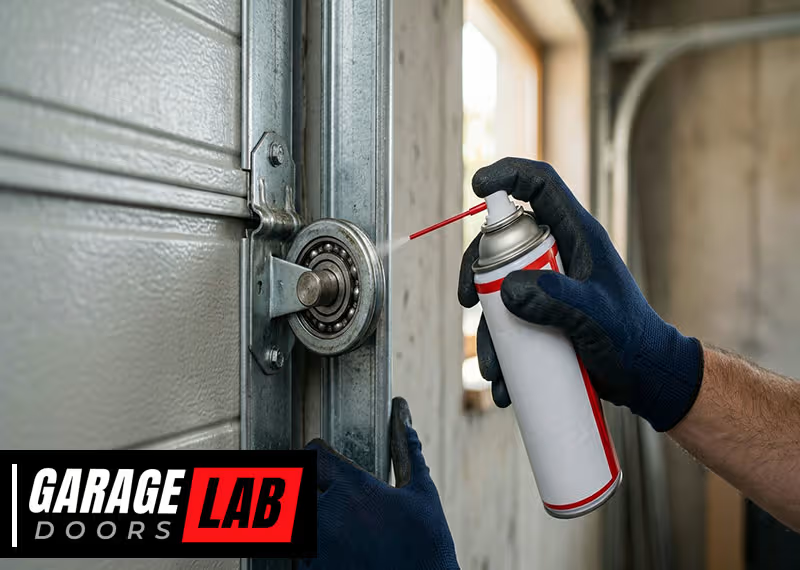
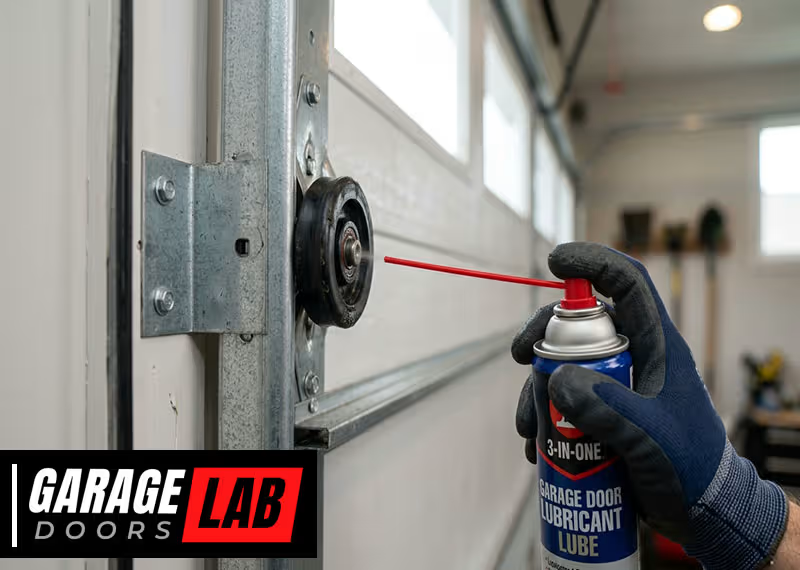
- Lubricate hinges and rollers every 6 months.
- Check spring tension regularly.
- Inspect tracks and fasteners for wear or bending.
- Test auto-reverse sensors monthly.
Don’t ignore small noises or slow movement—fixing problems early prevents bigger issues.
When To Replace A Garage Door Due To Weight
If your door is very old, warped, or too heavy for modern openers, replacement might be safer and more cost-effective. Signs it’s time:
- Door sags, cracks, or warps.
- Hardware shows excessive wear.
- Springs or opener struggle despite recent upgrades.
- You want better insulation or style.
Newer doors are often lighter and more efficient, with improved safety features.
Frequently Asked Questions
How Do I Find Out How Heavy My Garage Door Is?
Check the manufacturer’s label on the door or look up your model online. If that’s not possible, you can weigh the door by disconnecting the opener and springs, then gently lowering it onto a bathroom scale with help. Always use caution, as doors are heavy and can be dangerous without proper support.
Does Insulation Make A Big Difference In Garage Door Weight?
Yes. Adding insulation (especially polyurethane foam) can increase a single door’s weight by 20–50 lbs and a double door by 50–100 lbs or more. This affects which springs and openers you need, so always factor it in when upgrading or replacing a door.
What Is The Heaviest Type Of Garage Door?
Solid wood doors—especially custom or oversized ones—are usually the heaviest. A double wood door (16×7 ft) can weigh 400–500 lbs or more. Glass and steel commercial doors can also be very heavy, especially with added insulation.
Can I Use The Same Opener If I Upgrade To A Heavier Door?
Not always. If your new door is much heavier, your old opener may be underpowered. Check the opener’s horsepower rating and compare it to the new door’s weight. Upgrading the opener and springs is often needed for safe, reliable operation.
Is It Safe To Repair Or Replace A Heavy Garage Door Myself?
It’s risky, especially for doors over 150 lbs. Springs are under high tension and doors are heavy—DIY mistakes can cause injury or damage. For anything beyond basic maintenance, hiring a professional is the safest choice.
A garage door’s weight is more than just a number—it impacts safety, convenience, and cost. By understanding what affects garage door weight and how to handle it, you can choose the right door, opener, and maintenance plan for your home.
Always check the specs, use the right hardware, and ask for expert help when needed. Your garage door will last longer and keep your family safe.