Now Reading: How to Balance a Garage Door: Step-by-Step Guide for Homeowners
- 01
How to Balance a Garage Door: Step-by-Step Guide for Homeowners

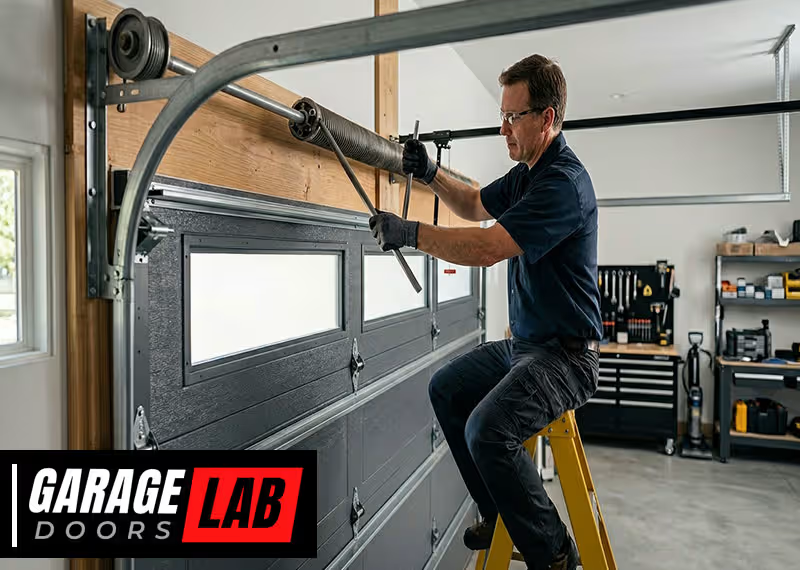
Balancing a garage door is not just about smooth opening and closing. It’s about safety, door longevity, and even saving money. An unbalanced door can stress your opener, risk injury, and lead to expensive repairs. Many homeowners don’t realize that balancing is a regular maintenance task, not just a one-time setup. Understanding this process can empower you to keep your door working safely and efficiently for years.
In this guide, you’ll learn everything you need to know about how to balance a garage door—from the signs of imbalance to step-by-step instructions, practical tips, safety advice, and troubleshooting. Whether you have a torsion spring or extension spring system, you’ll find clear guidance. Let’s break down this process so you can approach it with confidence, even if you have little technical experience.
Why Garage Door Balance Matters
A garage door may look simple, but it’s a heavy moving object—most residential doors weigh between 130 to 400 pounds. Springs do most of the lifting. When correctly balanced, the door feels much lighter and can stay in place at any height.
If not, the opener and tracks face extra strain, and the risk of sudden door drops increases.
Common issues caused by poor balance:
- The opener wears out early
- The door slams shut or shoots open
- Rollers, tracks, and cables get damaged
- Safety sensors may fail
- Higher energy bills if the door doesn’t seal well
Most manufacturers recommend checking balance twice a year, even for new doors.
Understanding Garage Door Systems
Before you start balancing, it’s important to know what kind of spring system your garage door uses. This affects how you approach the job, the tools you need, and the safety risks involved.
Torsion Spring System
This is the most common modern setup. The torsion spring is a tightly wound coil mounted above the door opening, parallel to the door. It stores energy by twisting.
Key points:
- Usually one or two springs
- Provides smoother operation
- Safer and longer-lasting than extension springs
- Adjustment requires winding bars
Extension Spring System
Older doors and some lighter models use this system. Extension springs run along the sides of the upper tracks and stretch as the door moves.
Key points:
- Typically two springs (one on each side)
- Prone to sudden failure if not maintained
- Requires C-clamps or pliers for safety during adjustment
Table: Torsion Vs. Extension Springs
| Feature | Torsion Spring | Extension Spring |
|---|---|---|
| Location | Above door opening | Along upper tracks |
| Lifespan | 15,000–20,000 cycles | 7,000–10,000 cycles |
| Safety | More stable | Prone to snapping |
| Balance Adjustment | Winding bars required | Manual stretch/relax |
Knowing your system is the first step to safe and effective balancing.

Signs Your Garage Door Is Out Of Balance
Not every garage door problem means the balance is off. But certain symptoms almost always point to this issue. Catching these early can prevent bigger problems.
Watch for these signs:
1. Door Won’t Stay Open
If you lift the door halfway and it slides down, the springs aren’t holding enough tension.
2. Door Is Hard To Lift Or Heavy
You should be able to lift the door smoothly with one hand. If it’s very heavy, the springs may be too loose.
3. Door Shoots Up Or Slams Down
If the door moves rapidly on its own, spring tension is wrong—too tight or too loose.
4. Crooked Or Uneven Movement
The door looks tilted or wobbles as it moves. This often means one spring is weaker or a cable is off.
5. Noisy Operation
Creaks, pops, or grinding sounds often signal extra stress on parts due to poor balance.
6. Opener Struggles Or Reverses
The automatic opener stops, reverses, or takes longer than usual to move the door.
Non-obvious insight:
Sometimes, an unbalanced door can cause the weather seal at the bottom to wear out faster. If you see daylight under the door in one corner, check the balance.
Tools And Safety Gear You’ll Need
Balancing a garage door is a hands-on job. Using the right tools is critical—not just for ease, but for your safety.
Essential tools:
- Two sturdy step ladders
- Winding bars (for torsion springs; never use screwdrivers)
- C-clamps or locking pliers (for extension springs or track locking)
- Socket wrench set
- Tape measure
- Marker or chalk
- Work gloves
- Safety goggles
Pro safety advice:
Never work alone. Springs are under high tension and can cause serious injury. If you feel unsure at any step, stop and call a professional.
How To Check Garage Door Balance
Before adjusting anything, you must test the balance. This helps you understand the problem and ensures you’re not fixing the wrong issue.
1. Disconnect The Opener
Pull the red emergency release cord. This allows you to move the door by hand.
2. Lift The Door Halfway
Carefully raise the door to about waist height and let go (stand clear in case it moves).
- Observe the movement
- If the door stays in place, the balance is good.
- If the door falls, the springs are too loose.
- If the door rises, the springs are too tight.
- Check full open and closed positions
The door should stay fully open and closed without drifting.
Table: What The Door’s Movement Means
| Result | What It Means |
|---|---|
| Stays at half-open | Properly balanced |
| Falls/slams shut | Springs too loose |
| Rises on its own | Springs too tight |
| Sticks or binds | Possible track or roller issue |
Testing balance is simple, but it gives you important information before any adjustments.
Step-by-step: How To Balance A Garage Door With Torsion Springs
If your door uses torsion springs, follow these steps. This method is precise but requires extra care due to the high tension.
1. Prepare The Work Area
Clear the area around the garage door. Make sure there are no pets or children nearby. Gather your tools and put on gloves and goggles.
2. Lock The Door In Place
Open the door fully and unplug the opener. Place C-clamps or locking pliers just below the bottom roller on each track to keep the door from moving.
3. Locate The Springs And Set Up Ladders
Position your ladders on each side of the spring bar (shaft). Make sure you have two winding bars that fit the holes in the winding cone.
4. Mark The Current Spring Position
Use a marker to make a reference line on the spring and shaft. This helps you track how much you adjust.
5. Loosen The Set Screws
With one winding bar in place, carefully loosen the set screws on the spring’s winding cone. The bar should be fully inserted and held tightly.
6. Adjust Spring Tension
- To increase tension (if the door falls), add 1/4 turn at a time using the winding bars.
- To decrease tension (if the door rises), remove 1/4 turn at a time.
Never adjust more than one full turn before retesting the balance.
7. Tighten The Set Screws
After adjustment, hold the bar firmly while tightening the set screws back in place.
8. Test Door Movement
Remove the clamps, reconnect the opener, and repeat the balance test (see above). Repeat adjustment if needed, but never over-tighten.
Important:
Never use makeshift tools instead of winding bars. Many accidents happen when a tool slips.
Non-obvious insight:
If your door uses two torsion springs, adjust both evenly. Uneven springs can cause the door to twist and wear out faster.
How To Balance A Garage Door With Extension Springs
Extension spring systems are often found on older doors and require a different method.
1. Disconnect The Opener And Secure The Door
Pull the emergency release. Open the door fully and secure it with C-clamps above the top rollers.
2. Check Cables And Pulleys
Inspect for frayed cables or worn pulleys. Fix these before adjusting the springs.
3. Adjust Spring Tension
- To increase tension (if the door is heavy), move the spring’s hook to a higher hole on the track hanger or add a stretch to the spring.
- To decrease tension (if the door rises), move the hook to a lower hole or reduce the stretch.
Always adjust both sides evenly.
4. Test The Balance
Remove the clamps, lower the door, and check if it stays halfway open. Repeat adjustments in small increments.
5. Reconnect The Opener
Once balanced, reconnect the opener and test automatic operation.
Safety tip:
Extension springs can snap. If your springs don’t have safety cables running through them, have these installed right away.
Special Cases: Balancing Double Garage Doors
Double garage doors (16 feet or wider) are heavier and use stronger springs. The balancing steps are the same, but you may need help lifting the door or handling the springs. Always adjust both springs the same amount, and check both sides for even cable tension.
Fact:
The average double garage door weighs 200–400 pounds. Never attempt balancing if you notice severe wear or rust on springs.
Common Mistakes To Avoid
Balancing seems straightforward, but many homeowners make errors that cause damage or injury.
Avoid these mistakes:
1. Using The Wrong Tools
Winding bars are essential for torsion springs. Never substitute with screwdrivers.
2. Ignoring Worn Parts
Balancing won’t fix frayed cables, cracked springs, or bent tracks. Replace damaged parts first.
3. Over-tightening Springs
Too much tension can cause the door to shoot upward, damaging the opener and risking injury.
4. Adjusting Only One Side
Both springs must be adjusted the same amount, or the door will move unevenly.
5. Skipping The Safety Inspection
Always check for loose bolts, damaged rollers, and missing safety cables before starting.
6. Forgetting To Lock The Door
Not securing the door with clamps can lead to sudden, dangerous movement.
7. Not Testing After Adjustments
Always test after each adjustment; small changes can make a big difference.
Practical tip:
Take photos of your spring setup before starting. If you need to call a professional, this helps them assess the problem quickly.
When To Call A Professional
Some situations are too risky or complex for DIY. Don’t hesitate to call a certified garage door technician if:
- You see broken or severely rusted springs
- The door is very heavy and hard to move
- Cables are off the drum or frayed
- You have a custom or unusual door system
- You lack the right tools or feel unsure at any step
Professionals have special equipment and insurance if something goes wrong. Balancing a spring the wrong way can cause serious injury.
How Regular Maintenance Supports Balance
Balancing is just one part of keeping your garage door safe and reliable. Simple maintenance can prevent imbalance and extend the life of your system.
Best practices:
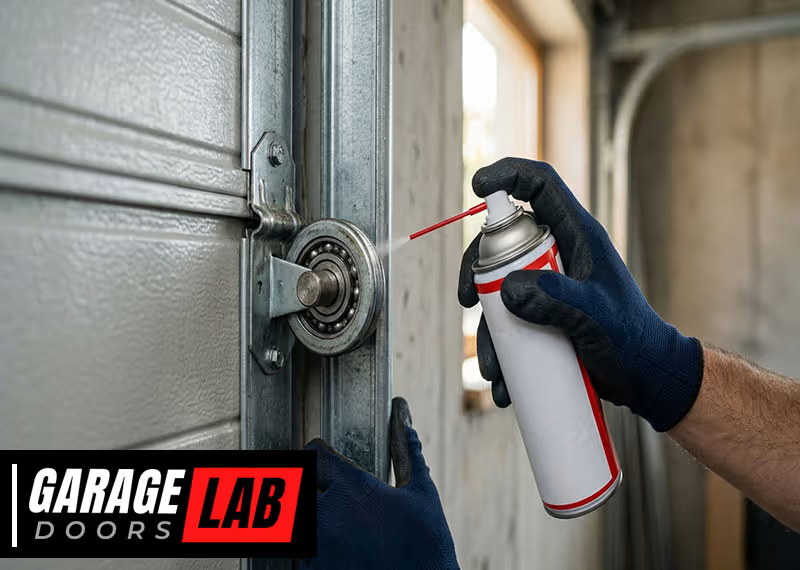
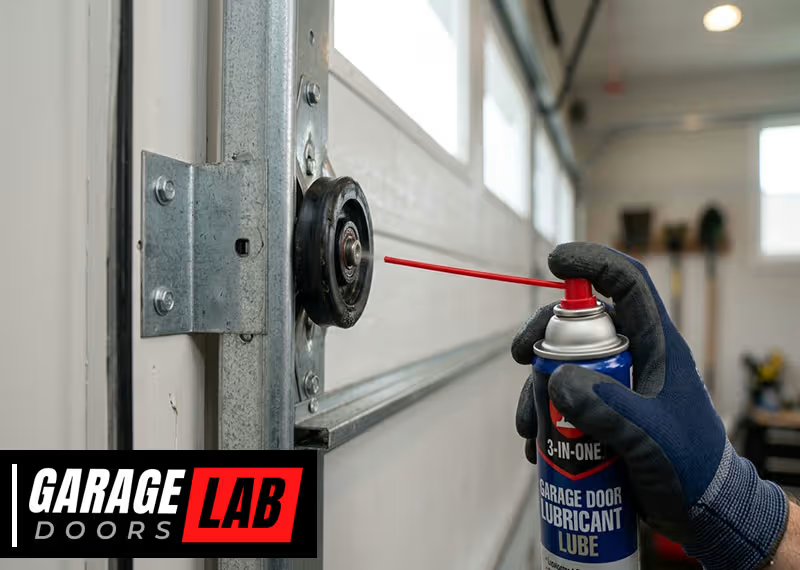
1. Lubricate Springs And Rollers
Use garage door lubricant every 3–6 months for smooth movement.
2. Inspect All Hardware
Tighten loose bolts, check cables, and look for worn pulleys.
3. Clean Tracks
Dirt or debris can make the door bind and create false balance problems.
4. Test Auto-reverse And Sensors
Make sure safety features work every time you test balance.
5. Replace Weather Seal As Needed
An uneven seal may signal a balance issue.
Interesting statistic:
According to the International Door Association, regular maintenance can double the lifespan of your garage door springs.
Table: Diy Vs. Professional Balancing
Wondering whether to do it yourself or call an expert? Here’s a comparison.
| Aspect | DIY | Professional |
|---|---|---|
| Cost | Minimal (tools only) | $150–$300 per service |
| Time | 1–3 hours | 30–60 minutes |
| Risk | High (if inexperienced) | Low (insured and trained) |
| Convenience | Flexible schedule | Hands-off for homeowner |
| Guarantee | No warranty | Work often guaranteed |
If you’re comfortable with basic tools and safety, DIY is possible for standard doors. For anything unusual or if you’re unsure, professional service is a wise investment.
Real-world Examples: What Homeowners Experience
Case 1: The Door That Wouldn’t Stay Open
A homeowner noticed their garage door kept sliding down whenever they tried to leave it open. After disconnecting the opener and testing the balance, they found the springs were too loose. A careful adjustment of 1/2 turn on each torsion spring fixed the issue.
Case 2: Crooked Door and Cable Off Track
After hearing grinding noises, another homeowner found their door was crooked, with one side lower than the other. The problem was a weak extension spring and a loose cable. Both springs were replaced, and the door returned to smooth, balanced movement.
Case 3: Opener Burnout from Poor Balance
One family ignored a heavy-feeling door for months. Eventually, the opener motor burned out. A technician found the torsion springs were too loose, forcing the opener to lift most of the weight. After balancing the springs, a new opener lasted much longer.
Lesson:
Small balance problems can lead to big repair bills if ignored.
Troubleshooting After Balancing
Sometimes, even after you balance the springs, you may notice other issues. Here’s what to check:
1. Door Sticks Or Binds
Tracks may be dirty or bent; clean and realign as needed.
2. Door Still Feels Heavy
Springs might be worn out and need replacement.
3. Loud Noises Remain
Lubricate all moving parts and inspect for damaged rollers.
4. Opener Reverses
The force setting may need adjustment; check your opener’s manual.
5. Gaps Under The Door
Check for uneven spring adjustment or worn weather stripping.
If problems persist, don’t keep adjusting springs—look for other mechanical issues or call a professional.

Safety Reminders And Final Thoughts
Balancing a garage door is not a casual DIY project. Springs are powerful, and mistakes can be dangerous. Always put safety first: use proper tools, never rush, and don’t hesitate to call for help if you feel unsure.
Non-obvious insight:
The cost of a professional balance is often less than the cost of a new opener or door repairs caused by ignoring the problem.
For more on garage door safety and professional standards, see the official Wikipedia: Garage Door entry.
Frequently Asked Questions
How Often Should I Check My Garage Door Balance?
You should check your garage door’s balance at least twice a year. It’s also wise to test after any repairs or if you notice changes in door movement.
Can I Balance A Garage Door Myself, Or Should I Always Call A Professional?
Many homeowners can balance a standard door if they have basic tools, follow safety steps, and their springs are in good condition. However, if you have any doubts, or if the springs are old or damaged, it’s safer to call a professional.
What Are The Dangers Of Balancing Garage Door Springs?
Garage door springs are under high tension. If they snap or are released incorrectly, they can cause serious injuries or property damage. Always use proper tools and safety gear, and never stand directly in front of the springs during adjustment.
Why Does My Door Still Feel Heavy After Balancing?
If your door still feels heavy, the springs might be worn out or the wrong size for your door. Balancing cannot fix damaged springs. In this case, replacement is the only solution.
How Do I Know If My Garage Door Springs Need Replacing?
Signs include visible gaps in torsion springs, rust, fraying cables, loud noises, or if the door can’t be balanced at all. If you suspect a broken spring, stop using the door and call a professional immediately.
Balancing your garage door is an important part of home maintenance. With knowledge, the right tools, and careful attention to safety, you can keep your door working smoothly and prevent costly repairs. If in doubt, a professional is always the best choice.