
Now Reading: Genie Garage Door Will Not Open? Top Fixes You Need to Know
- 01
Genie Garage Door Will Not Open? Top Fixes You Need to Know

A garage door that will not open can create stress and disrupt your day. If you own a Genie garage door opener, you expect reliability. But sometimes, things go wrong. Maybe the remote does not respond, the wall button is dead, or the door starts to move but stops halfway. Don’t worry. With the right knowledge, you can often fix these problems yourself and avoid a costly service call.
This article is your complete guide to understanding why your Genie garage door will not open and what you can do about it. You’ll learn how to check the common causes, make smart repairs, and even recognize when it is time to call a professional. Even if you are not very technical, you will find step-by-step guidance and clear explanations to help you get your garage door working again.
Understanding How A Genie Garage Door Opener Works
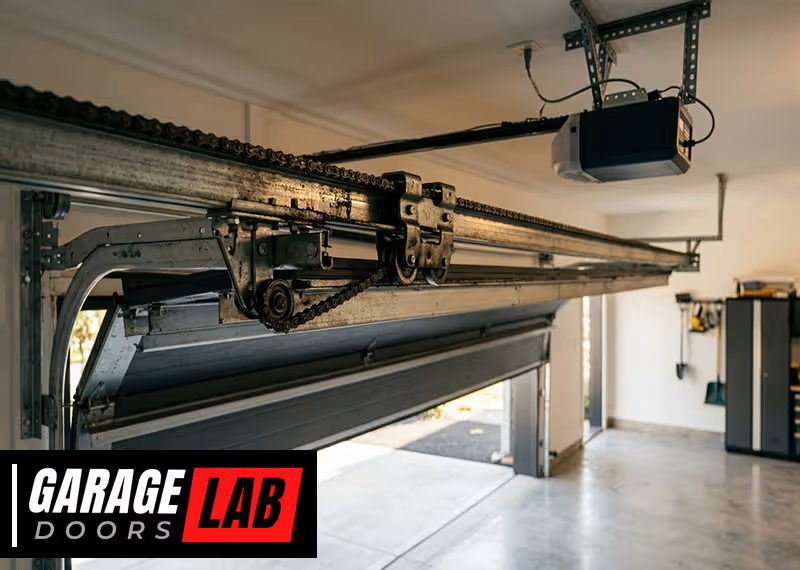
Before you dive into troubleshooting, it helps to know the basics of how your Genie garage door opener functions. Most Genie openers use an electric motor and a drive system (chain, belt, or screw) to lift and lower the garage door. They have safety sensors, limit switches, and a control board that manages the operation.
The opener responds to commands from a remote, wall button, or keypad. When you press a button, the opener’s circuit board receives the signal and powers the motor. The motor turns the drive system, which moves the door. Safety sensors check for obstacles, and limit switches tell the opener when to stop.
Understanding these parts will make it easier to find what’s wrong when your Genie garage door will not open.
Common Reasons Your Genie Garage Door Will Not Open
When your Genie garage door refuses to open, the cause is usually one of a few common issues. These problems can be mechanical, electrical, or related to safety features.
- Power problems – No electricity to the opener.
- Remote control issues – Weak batteries or lost programming.
- Wall button failure – Wiring or button faults.
- Safety sensor misalignment – Sensors blocked or out of line.
- Broken springs or cables – Physical damage.
- Obstructions in the door track – Objects blocking movement.
- Limit switch misadjustment – Door travel settings off.
- Motor or circuit board failure – Worn or damaged parts.
- Lock or manual release engaged – Door disconnected from opener.
- Weather-related problems – Cold, ice, or expansion.
Some issues are easy to spot; others require more attention. Let’s explore each one and how to fix them.
Power Problems: Checking The Basics
If your Genie garage door opener is not opening, always check for power supply issues first. Sometimes, the problem is simple—no electricity reaches the opener.
- Make sure the opener is plugged in. Sometimes, the cord gets loose or unplugged.
- Check the outlet with another device (like a lamp) to confirm it works.
- Look for a blown fuse or tripped breaker in your electrical panel.
- Some Genie openers have a power reset button—press it if needed.
If your opener has no lights or sound, power is likely the issue. Fixing the power supply will often solve the problem right away.
Remote Control Issues
The remote control is the most used part of your garage system. If it stops working, your Genie garage door may not open, even though the opener is fine.
Troubleshooting Remote Problems
- Replace the batteries with new ones. Weak batteries are a common cause.
- Stand closer to the door and try again. Range can decrease as batteries weaken.
- Reprogram the remote if it lost its connection. Refer to your Genie manual for steps.
- Try the wall button. If it works, the problem is only with the remote.
Common Mistakes
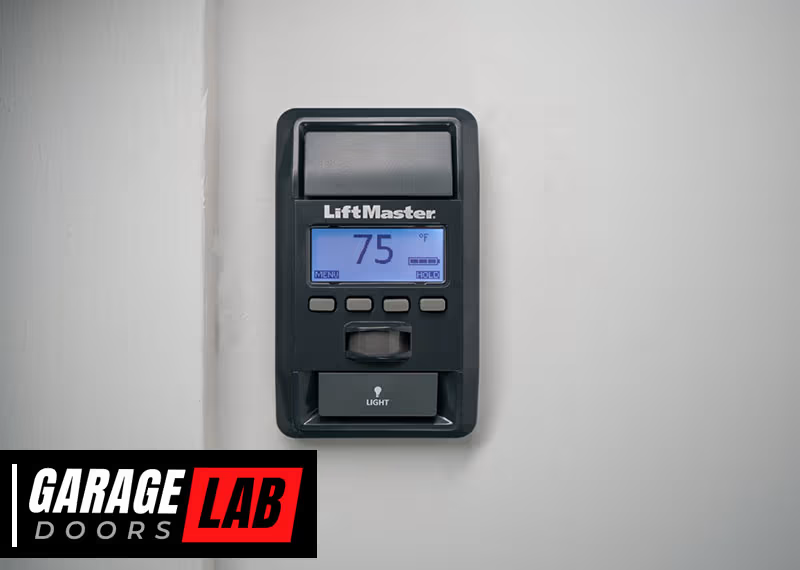
Sometimes, people forget to check the lock feature (vacation lock) on the wall console. If this is on, remotes will not open the door. Always check for this before assuming the remote is broken.
Wall Button And Keypad Failures
The wall button (or wall console) is another control point. If pressing it does nothing, the problem could be in the wiring or the switch itself.
- Remove the wall button and check for loose or damaged wires.
- Try bypassing the switch by touching the wires together (use caution—only if you know how).
- If the door opens this way, replace the wall button.
- For keypads, change the batteries and re-enter the code.
Older Genie openers may have simple push buttons; newer ones have advanced panels with lock and light features. Understanding your model helps you diagnose the fault.
Safety Sensor Misalignment
All Genie openers made since 1993 have safety sensors at the bottom of the door. These sensors stop the door from closing on people or objects. But if they are misaligned or blocked, your Genie garage door may not open, or it might start and stop.
How To Check Sensors
- Find the sensors near the floor on each side of the door.
- Make sure nothing is blocking the beams (like trash, tools, or dirt).
- Clean the sensor lenses with a soft cloth.
- Adjust the sensors so they point directly at each other.
- Look for indicator lights—both should be solid (not blinking).
If the sensors do not have solid lights, adjust them until they do. Loose wiring or broken brackets can also cause issues.
Broken Springs Or Cables
Garage doors are heavy. The torsion springs or extension springs do most of the lifting. If a spring or cable breaks, the opener may not open the door, or the door may move a few inches and stop.
Signs Of Broken Springs
- Loud bang from the garage (spring snapping).
- Door feels extremely heavy to lift by hand.
- Gaps in the spring coils.
- Cables hanging loose on the sides of the door.
Never try to replace springs yourself—these parts are under high tension and can cause injury. Call a professional for repairs.
Obstructions In The Door Track
Sometimes, objects or debris get stuck in the garage door tracks, stopping the door from moving. Even small items can cause the opener to reverse or stop.
How To Check
- Inspect the tracks on both sides from top to bottom.
- Remove any rocks, tools, or buildup.
- Check for bent or damaged tracks.
- Make sure the rollers are inside the tracks and move smoothly.
Lubricate the rollers and tracks with a garage door lubricant (not WD-40) for smooth movement.

Limit Switch Misadjustment
Limit switches control how far the garage door travels. If they are set incorrectly, the Genie opener may not open the door fully or may stop too soon.
Adjusting The Limits
- Find the limit adjustment screws on the opener’s motor unit.
- Turn the “up” or “open” screw in small steps and test the door.
- Do not adjust too much at once—small changes can make a big difference.
Refer to your Genie manual for exact instructions, as the location of these screws can vary.
Motor Or Circuit Board Failure
If everything else looks fine, the problem may be with the motor or the circuit board. These parts can fail after years of use, power surges, or lightning strikes.
Symptoms
- Opener hums but does not move.
- No lights or sounds at all.
- Door moves a few inches and stops.
- Burnt smell from the opener.
Replacing the motor or circuit board can be expensive. If your opener is over 10 years old, consider upgrading to a new Genie model.
Lock Or Manual Release Engaged
All Genie openers have a manual release cord (usually red). If someone pulled this cord, the opener disconnects from the door, so the motor runs but the door does not move.
- Check if the opener’s trolley is engaged.
- If not, slide the trolley back to the motor unit and click it in place.
- Make sure the door is not locked with a manual bar or lock on the side.
This is a common reason for a door not opening after a power outage.
Weather-related Problems
Extreme weather can affect your Genie garage door in surprising ways. Cold temperatures can make the grease thick, while heat can expand metal parts.
- In winter, ice or snow can freeze the door to the ground.
- In summer, metal parts expand and may stick.
- Lubricate moving parts with the right grease for your climate.
If your door is stuck to the ground, gently break the ice seal before trying the opener.
Advanced Troubleshooting: When Basic Fixes Don’t Work
Sometimes, even after you check all the obvious causes, your Genie garage door still will not open. It’s time for more advanced troubleshooting.
Diagnostic Lights And Error Codes
Many Genie openers have diagnostic lights or display error codes. These codes can tell you what is wrong.
- Read the blinking pattern or code on the opener unit.
- Refer to your Genie manual or look up codes online.
- Common codes include issues with sensors, limits, or the motor.
Testing The Door Balance
A door that is out of balance will be hard to open, even with a working opener.
- Pull the manual release cord and lift the door by hand.
- The door should stay halfway open. If it falls or rises on its own, the balance is off.
- Call a professional for spring or cable adjustment.
Checking For Interference
Wireless devices, LED light bulbs, and even nearby Wi-Fi routers can interfere with the remote signals.
- Change the remote batteries and test from different locations.
- Try turning off other wireless devices to see if the door works.
- Move or shield LED bulbs if you notice problems after installing new ones.
Circuit Board Testing
If you have electrical skills, you can test the circuit board with a multimeter.
- Check for voltage at the wall button terminals.
- Test the transformer for power.
- Look for burnt or damaged components.
If the board is dead, replacement is usually the only fix.
Genie Garage Door Opener Models And Unique Issues
Genie has produced many opener models over the years. Some problems are unique to certain types.
Chain Drive Vs Belt Drive Vs Screw Drive
- Chain drive units are strong but noisy.
- Belt drive units are quieter but can slip if the belt is worn.
- Screw drive units require regular lubrication; if dry, the motor may strain.
Check your opener type before lubricating or adjusting.
Intellicode Security Features
Many Genie remotes use Intellicode rolling code technology. If you replace your remote, make sure it is compatible. Reprogram after power outages.
Battery Backup Models
Some Genie openers have battery backup. If the battery is dead, the opener may not work during a power outage. Replace the battery every 1–2 years.
Maintenance Tips To Prevent Future Problems
Regular maintenance keeps your Genie garage door working smoothly and prevents most problems.
- Lubricate moving parts every 6 months.
- Check and tighten hardware (brackets, bolts, tracks).
- Clean safety sensors and test their operation monthly.
- Test door balance twice a year.
- Replace remote batteries yearly, even if they are still working.
- Inspect cables and springs for wear.
Taking time for maintenance can add years to your opener’s life.
When To Call A Professional
While many Genie garage door problems can be fixed by homeowners, some require professional help.
- Broken springs or cables – Very dangerous; high tension.
- Motor or circuit board failure – Needs special tools and parts.
- Major track damage – Can cause the door to fall.
- Electrical wiring problems – Risk of shock or fire.
If you are not sure, it is safer to call a Genie-certified technician.

Cost To Repair A Genie Garage Door That Will Not Open
Repair costs depend on the problem. Here’s a comparison of common issues and average repair prices in the US:
| Problem | DIY Cost | Pro Cost | Time to Fix |
|---|---|---|---|
| Replace Remote Batteries | $3 – $8 | $25 – $50 | 5 minutes |
| Adjust Sensors | $0 | $50 – $100 | 15 minutes |
| Broken Spring | Not safe | $150 – $350 | 1–2 hours |
| Replace Motor | $80 – $180 | $250 – $500 | 2–3 hours |
| Track Obstruction | $0 | $50 – $100 | 10–20 minutes |
Always compare the cost of repair to the price of a new opener if your unit is old or has multiple issues.
Genie Garage Door Opener Troubleshooting: Quick Reference
For easy troubleshooting, here’s a summary table:
| Symptom | Likely Cause | Action |
|---|---|---|
| No response (remote and wall) | Power supply issue | Check outlet, breaker, plug |
| Remote does not work, wall button works | Remote battery or programming | Replace battery, reprogram remote |
| Opener hums, door does not move | Broken spring or motor issue | Check springs, call pro if broken |
| Door starts, then reverses | Sensor misalignment or obstruction | Clean/align sensors, check tracks |
| Lights blink, no movement | Error code or safety feature | Read error code, check manual |
Keep this table handy for future reference.
Non-obvious Insights Most Homeowners Miss
- Sensor wiring can go bad even if the lights are on. Sometimes, wires get pinched or corroded inside the insulation. If you have checked alignment and cleaning, replace the wires.
- LED light bulbs can block remote signals. Many people install new LED bulbs in their garage and then have remote problems. Try switching back to standard bulbs or Genie-approved LED bulbs to fix this.
- Vacation lock can confuse you. If the wall console’s vacation lock is on, remotes will not work but the wall button might. Check the manual for how to turn it off.
These small details can save you hours of frustration.
Upgrading Your Genie Garage Door Opener
If your Genie garage door opener is more than 10–15 years old, you might want to consider an upgrade. Newer models are quieter, safer, and more reliable. Features include:
- Wi-Fi connectivity for remote operation from your phone.
- Battery backup for power outages.
- Improved safety sensors and auto-reverse.
- Smart home integration (works with Alexa, Google Home).
When choosing a new opener, look for Genie’s latest models and check compatibility with your door.

Safety Tips For Diy Repairs
Working on garage doors can be dangerous. Here are safety rules:
- Unplug the opener before working on electrical parts.
- Do not try to repair or replace springs or cables yourself.
- Wear safety glasses and gloves.
- Use a sturdy ladder for overhead work.
- Keep children and pets away from the area during repairs.
If you feel unsure, stop and call a professional.
Where To Find More Help
If you need more information, Genie’s official website has manuals, videos, and troubleshooting guides for every model. You can also contact their support team for advice.
For more technical details about garage door openers in general, see the Wikipedia article on garage door openers.
Frequently Asked Questions
Why Does My Genie Garage Door Only Open A Few Inches And Then Stop?
This usually means broken springs or cables. The opener starts to lift, but the door is too heavy. Stop using the opener and call a professional to replace the springs safely.
How Do I Reprogram My Genie Remote Control?
Find the “Learn” button on your Genie opener unit (usually near the light bulb). Press it until the indicator blinks, then press the remote button. The light will stop blinking to confirm programming.
What Does A Blinking Sensor Light Mean On My Genie Opener?
A blinking sensor light often means the sensors are misaligned or something is blocking the beam. Clean the lenses and adjust the sensors until both lights are solid.
Can Cold Weather Stop My Genie Garage Door From Opening?
Yes, cold weather can cause problems. The door may freeze to the ground, or thick grease can slow the opener. Clear ice from the base of the door and use winter-grade lubricant on moving parts.
How Often Should I Service My Genie Garage Door Opener?
Service your opener at least once a year. Lubricate parts, check sensor alignment, and test the safety features. Replace batteries and look for signs of wear.
A Genie garage door that will not open can feel like a major problem, but most issues are easy to solve with a careful approach. By understanding how your opener works and following the steps in this guide, you can get your door moving again—and keep it running smoothly for years to come.