
Opening a garage door by hand is something most people never think about—until they have to. Maybe the power is out, or your garage door opener suddenly stops working. In these moments, knowing how to manually open your garage door can make a stressful situation much easier.
If you’re unsure where to start or worry you might damage the door, you’re not alone. Many homeowners feel lost when faced with a non-working garage door, but the truth is, with the right steps and a little caution, you can do it safely.
This guide will walk you through everything you need to know about manually opening a garage door. Whether your door is stuck closed, halfway open, or you’re just preparing for emergencies, these steps, tips, and comparisons will give you confidence. Along the way, you’ll learn how garage doors work, what safety features to watch for, and how to avoid common mistakes. Let’s dive in and make sure you’re ready for any garage door emergency.
Understanding How Garage Doors Work
Before you start, it helps to know the basics of how most garage doors operate. Garage doors typically use torsion springs or extension springs to assist with lifting and lowering the door. These springs do most of the heavy lifting, while the electric garage door opener acts as a motorized helper.
When the opener works, you simply push a button and the door moves. But if there’s a power outage or the opener malfunctions, you need to disconnect it so you can move the door by hand. Nearly all modern garage door openers have a manual release mechanism for this reason.
Main Types Of Garage Doors
- Sectional doors: Made of horizontal panels that bend as the door moves up and down.
- One-piece tilt-up doors: A single large panel that tilts outward and up.
- Roll-up doors: Common in commercial settings, these doors roll into a coil above the opening.
Residential garages most often use sectional doors. While the basic process for manual opening is similar for each type, some details can differ. Always check your door’s manual for specific instructions.
Key Safety Features
Modern garage doors have built-in safety systems. Two important ones are:
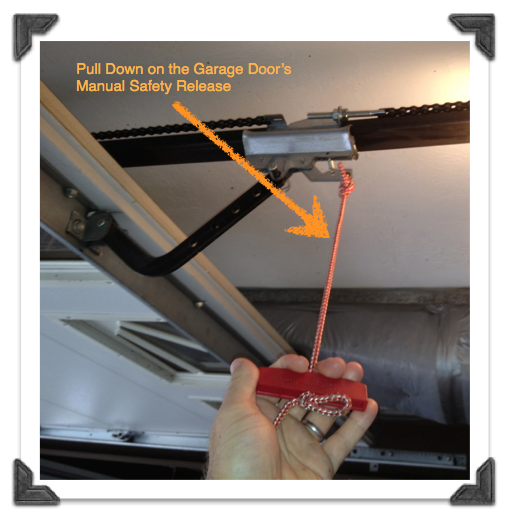
- Emergency release cord: Usually a red cord hanging from the opener track, this disconnects the door from the opener.
- Spring systems: Help balance the weight, making manual lifting possible.
Never try to adjust springs yourself—they can be dangerous if handled incorrectly.
Reasons You May Need To Open A Garage Door Manually
There are several situations where manual opening is necessary:
- Power outage: The opener won’t work without electricity.
- Broken opener: If the motor fails or the remote is lost.
- Malfunctioning sensors: Sometimes, the safety sensors stop the door from moving.
- Jammed door: Something is blocking the door, and you need to move it.
- Emergency exit: You need to get your car out quickly.
Knowing how to handle these cases keeps you safe and saves time.
Tools And Preparation
You don’t need special tools for most manual openings, but a few items can help:
- Flashlight: For dark garages or nighttime emergencies.
- Step stool or ladder: Useful for hard-to-reach emergency cords.
- Work gloves: Protect your hands from sharp edges or dirty parts.
- WD-40 or lubricant: In case the mechanism is stiff.
Always keep your garage area clear and free from clutter. In an emergency, a blocked garage can slow you down or create hazards.
How To Manually Open A Garage Door: Step-by-step
Let’s walk through the manual opening process for a typical sectional garage door. If you have a tilt-up or roll-up style, see the extra notes further below.
1. Ensure Safety First
Before you do anything:
- Disconnect power to the garage door opener. This prevents accidental activation.
- Make sure the door is closed (if possible) before pulling the emergency release cord.
- Keep children and pets away from the door during the process.
If the door is stuck open, be extra cautious—gravity can cause it to slam down.
2. Locate The Emergency Release Cord
Look for a red cord hanging from the center rail of the opener track, near the door. This is the emergency release cord. It’s usually about 6 feet from the ground.
3. Pull The Emergency Release Cord
Firmly grip the cord and pull it straight down (some models require pulling towards the door). This action disconnects the door from the opener’s trolley. You’ll often hear a click.
Non-obvious tip: If the cord is hard to reach, use a broom handle or step stool, but never jump or overreach.
4. Manually Lift The Door
With the opener disengaged, grasp the garage door with both hands. Lift slowly and evenly. If the springs are intact and balanced, the door should move smoothly and feel fairly light.
If the door is stuck or extremely heavy:
- Stop immediately—there may be a broken spring.
- Do not force the door; forcing can cause damage or injury.
5. Secure The Door In The Open Position
If you need to keep the door open:
- Prop it with a sturdy object (like a 2×4), but be careful not to stand under the door.
- Some doors have a locking mechanism or a pin you can insert.
Never leave the garage unattended with the door propped open, as it can fall unexpectedly.
6. Close The Door Manually
To close, gently pull the door down. Keep hands clear of pinch points between panels. Lower the door all the way to the ground.
Non-obvious tip: After closing, manually lock the door if your opener no longer works. Most garage doors have a manual lock on the inside.
7. Reconnect The Opener
When power returns or the problem is fixed:
- Pull the release cord again (or push the door towards the opener track) to re-engage the trolley.
- Operate the opener with the remote to test if it’s working.
- Listen for unusual sounds; if the door struggles, stop and check for problems.
Special Notes For Other Door Types
One-piece Tilt-up Doors
- These are heavier and may require two people.
- The emergency release is often near the bottom or side.
- Lift slowly and be prepared for the whole panel to swing out.
Roll-up Doors
- Common in warehouses; not typical for homes.
- Release mechanism is often a pull chain.
- If in doubt, check the manufacturer’s instructions.
Common Problems And How To Troubleshoot
Sometimes, things don’t go as planned. Here are common issues and what you can do.
The Door Won’t Move After Pulling The Release Cord
- Check for obstructions along the tracks.
- Broken springs may make the door extremely heavy. Do not try to lift—call a professional.
- Frozen weather can make seals stick. Use a hairdryer to warm the area before pulling harder.
The Door Slams Shut
- This usually means the spring system is broken.
- Do not attempt to fix garage door springs yourself—they are under high tension and can be dangerous.
- Secure the door as best as possible and call a technician.
The Release Cord Is Broken Or Missing
- You may need pliers or a screwdriver to manually move the trolley lever.
- If you cannot find the lever, consult your door’s manual or contact a garage door specialist.
The Door Is Only Partially Open
- Support the door with a block of wood or ladder.
- Attempt to close it slowly; do not let it drop suddenly.
The Opener Doesn’t Reconnect
- Move the door until you hear a click, or press the wall button on the opener.
- If the chain or belt is loose, call a professional for adjustment.
Manual Opening In Different Situations
Not all emergencies are the same. Here’s how to handle special cases.
Power Outage
- Complete darkness can make finding the cord difficult—keep a flashlight handy in the garage.
- Solar backup batteries are available for openers but are not standard.
Opener Malfunction
- If the opener motor is stuck or humming, disconnect power at the breaker before starting.
- Never keep pulling the emergency release if it feels jammed.
Car Trapped Inside
- Always check the door’s path for obstructions before lifting.
- Move the car out slowly, making sure the door stays propped if needed.
Comparing Manual Garage Door Release Mechanisms
Different openers use different types of emergency releases. Here’s a quick comparison:
| Release Type | How It Works | Common Brand Examples | Ease of Use |
|---|---|---|---|
| Standard Pull Cord | Pulls straight down to disconnect trolley | Chamberlain, LiftMaster | Very Easy |
| T-Handle Release | Turn handle to unlock opener from outside | Genie, Craftsman | Moderate |
| Keyed Release | Insert key and turn to unlock | Wayne Dalton | Easy (requires key) |
Safety Tips When Opening A Garage Door Manually
Manual garage door operation is usually safe, but mistakes can cause injury or damage. Here are important tips:
- Never stand directly under a suspended or partially open door.
- Wear gloves to avoid cuts from sharp metal edges.
- Use your legs, not your back, when lifting heavier doors.
- Don’t force a stuck door—this can break the mechanism or cause it to fall suddenly.
- Keep children and pets away until the door is secured.
If you feel unsure or the door is damaged, always call a professional.
Table: Manual Vs. Automatic Garage Door Operation
To highlight the main differences, see the table below:
| Feature | Manual Operation | Automatic Operation |
|---|---|---|
| Required Effort | Physical Lifting | Button Press |
| Power Dependency | No power needed | Requires electricity |
| Speed | Slower, depends on user | Consistent, fast |
| Safety Features | Manual locks, balance springs | Auto-reverse, sensors, lights |
| Ease for Elderly/Disabled | More difficult | Very easy |
Preventing Problems: Maintenance And Preparation
You can reduce the chance of needing a manual open by keeping your garage door in good condition.
Regular Maintenance
- Lubricate moving parts (rollers, hinges, tracks) every 6 months.
- Test the balance: Disconnect the opener and lift the door halfway. If it stays, springs are balanced.
- Check for loose hardware: Tighten bolts and brackets.
- Inspect cables and springs: Look for rust or fraying.
Emergency Readiness
- Know where your emergency release cord is.
- Store a flashlight and gloves in an easy-to-access spot.
- Teach family members how to use the emergency release.
When To Call A Professional
- If the door is extremely heavy or won’t move smoothly.
- Broken springs or cables.
- Door is off the tracks or visibly damaged.
Attempting DIY repairs on springs or cables is dangerous and not recommended.

Special Considerations For Different Door Materials
Garage doors come in several materials, each with pros and cons during manual operation.
| Material | Weight | Manual Lifting Difficulty | Durability |
|---|---|---|---|
| Steel | Heavy | Moderate to Hard | Very Durable |
| Aluminum | Light | Easy | Resists Rust |
| Wood | Very Heavy | Hard | Can Warp/Rot |
| Fiberglass | Light | Easy | Moderate |
Non-obvious insight: Heavier doors (wood or old steel) are more likely to need help from a second person, especially if the springs are weak.
What To Do After Manual Operation
Once you’ve manually opened and closed your garage door:
- Double-check that the door is securely locked if you cannot reconnect the opener.
- Inspect the door and opener for damage or wear.
- Schedule a maintenance check if anything seems off.
Leaving the opener disconnected can make your garage less secure, so reconnect as soon as possible.
Upgrading For Easier Emergencies
If you live in an area with frequent storms or power outages, consider these upgrades:
- Battery backup opener: Keeps your opener working during outages.
- Exterior key release kit: Lets you operate the emergency release from outside.
- Smart garage door systems: Send alerts if the door is left open.
For trusted recommendations, check guides from the Consumer Reports.

Frequently Asked Questions
How Do I Open My Garage Door From Outside During A Power Outage?
If your garage has no other entry, install an exterior key release kit. This device lets you unlock the emergency release from outside with a key. Without it, you may need to contact a locksmith or garage door professional.
Is It Dangerous To Pull The Emergency Release Cord?
Pulling the emergency release cord is safe if the door is closed or nearly closed. If the door is stuck open, pulling the release can cause it to crash down—stand clear and use caution.
Why Is My Garage Door So Heavy When I Try To Lift It Manually?
If the door feels very heavy, the torsion or extension springs may be broken or out of adjustment. Never try to repair springs yourself; call a trained technician.
Can I Re-engage The Opener Myself After Manual Operation?
Yes. Usually, you can re-engage the opener by pulling the release cord towards the door and running the opener. You’ll hear a click when it reconnects. If it doesn’t, consult your owner’s manual.
What If The Emergency Release Cord Is Missing Or Broken?
You’ll need to access the opener’s trolley mechanism with a tool to disconnect it. This can be tricky and may require professional help, especially if you cannot reach the mechanism safely.
Opening a garage door by hand might seem difficult, but with some knowledge and preparation, you can do it confidently. Keeping your door maintained and knowing your emergency release system gives you peace of mind, no matter what happens.