
Now Reading: How to Open Garage Door Manually from Outside Without Key Safely
- 01
How to Open Garage Door Manually from Outside Without Key Safely
How to Open Garage Door Manually from Outside Without Key Safely

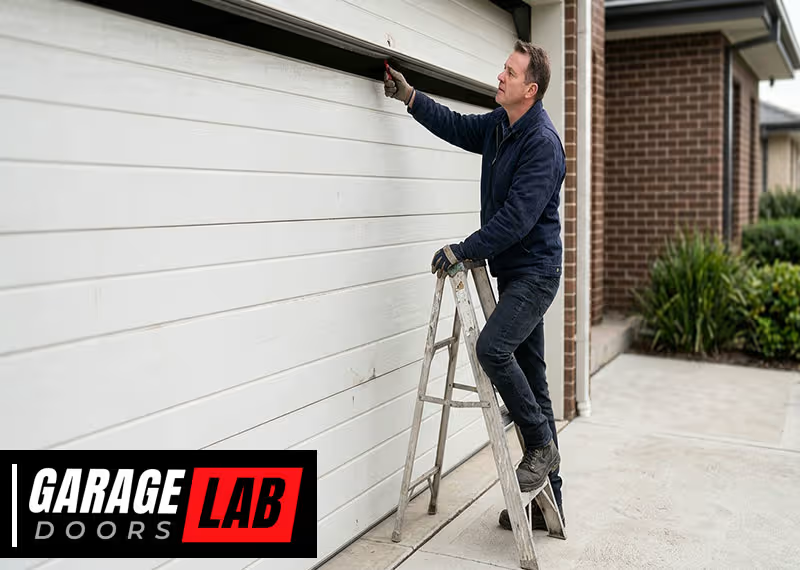
Being locked out of your garage can be stressful, especially if you do not have the key or remote. Maybe the power is out, or you lost your keys, and you need to get inside quickly. Many homeowners face this situation at some point, but few know exactly what to do. Understanding how to open a garage door manually from outside without a key can save you time, money, and unnecessary frustration. It can also help you handle emergencies, like when your car is trapped inside, or you need fast access during a storm.
This guide will walk you through every step, method, and safety tip for opening a garage door manually from the outside, even if you do not have a key. You will learn about the tools you may need, the common types of garage doors, and the important security concerns.
With clear instructions, practical advice, and real examples, you will be well-prepared to handle this challenge safely and confidently.
Understanding Garage Door Locking Mechanisms
Before you try to open a garage door without a key, it helps to know how the most common garage door locking systems work. This knowledge is essential for choosing the right approach and avoiding damage.
Types Of Garage Doors
Most residential garages have one of these three main types:
- Sectional doors – Made of several panels that move up and overhead.
- One-piece tilt-up doors – A single panel that tilts out and up.
- Roll-up doors – Common in commercial garages, these roll up into a coil.
Each type has different locking mechanisms and emergency release systems.
Lock Types And Security Features
The main locking systems you may find include:
- T-handle locks: A T-shaped handle on the outside, operated by a key.
- Slide bolt locks: Slide horizontally into the track, usually inside.
- Automatic openers with emergency release: Most modern doors have a red cord inside that disconnects the door from the opener.
Many new garages rely mostly on the automatic opener for security, but some older garages still use strong manual locks. Knowing what you have helps you pick the safest method.
Why The Emergency Release Is Important
The emergency release feature is designed for safety. It lets you open the garage door by hand if the power goes out or the opener fails. Most homes have a red cord hanging from the opener rail inside the garage. But if you’re outside and locked out, you need to find a way to trigger it from outside.
Safety And Security Considerations
Trying to open your garage manually from outside is not just about technique—it is also about safety. You must protect your property and yourself.
When To Avoid Diy Entry
If you suspect someone tampered with your garage or you see obvious damage, do not force the door. Call a professional. Also, if your garage is connected to your house, consider the risk of break-ins. Some methods that work for you may also work for thieves.
Preventing Damage
Improper methods can damage:
- The door panels
- Tracks and rollers
- The opener system
Repairs can be expensive. Always use the right tools and gentle force.
Legal And Security Risks
Opening a garage without a key can look suspicious. If you rent or do not own the home, always get permission first. Using these methods on another person’s property without permission can be illegal.
Essential Safety Gear
Wear work gloves and eye protection. Garage doors are heavy. Springs and cables can snap. Never put your hands in tracks or near moving parts.
Tools You May Need
Certain methods require simple household tools. Having them ready increases your chances of success.
| Tool | Use |
|---|---|
| Wire hanger | Hooking the emergency release cord |
| Flathead screwdriver | Prying open small access panels |
| Lockout kit | Professional tool for emergency release |
| Flashlight | Seeing inside the garage door gap |
| Work gloves | Protecting hands from sharp edges |
Not all tools are required for every method, but being prepared helps.
Main Ways To Open A Garage Door Manually From Outside (without A Key)
There are several safe and effective methods. The best one depends on your garage door type and security features.
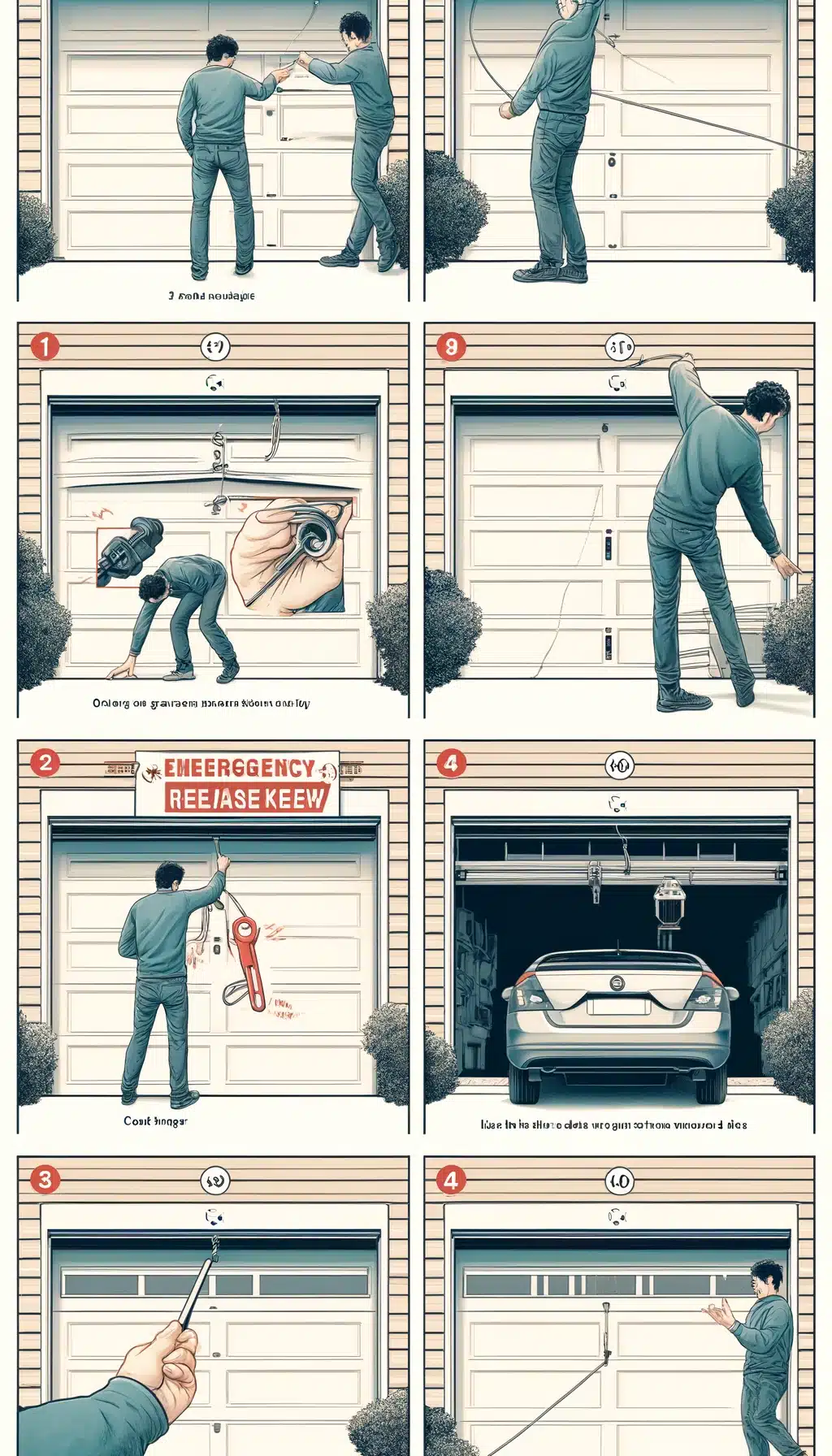
Method 1: Using The Emergency Release Kit (if Installed)
Many modern garage doors have an emergency release kit. This is a small lock (usually in the center near the top panel) with a keyhole. When you insert the key, you can pull out a small cable that triggers the emergency release.
Steps:
- Locate the emergency release kit: Look for a small circular lock above your garage door. It is often labeled.
- Insert and turn the key: If you have the key, turn it to release the cable.
- Pull the release cable: This disconnects the door from the opener.
- Lift the door manually: Grab the handle at the bottom and lift the door.
Note: If you do not have the key, you need another method.
Method 2: Fishing For The Emergency Release With A Wire
If your garage does not have an exterior release kit, you may be able to reach the emergency release cord with a straightened wire hanger.
Steps:
- Straighten a wire hanger: Make a small hook at one end.
- Insert the hanger through the top of the door: There is usually a small gap at the top center.
- Feel for the emergency release cord: Use the hook to grab the red cord.
- Pull the cord: This disconnects the door from the opener.
- Lift the door: Once the door is unlocked, lift it by hand.
Tips:
- Use a flashlight to help you see inside the gap.
- This method works best with sectional doors and openers with center tracks.
- Be patient—it can take several tries to hook the cord.
Method 3: Removing The Top Panel (on Some Doors)
Some older or damaged garage doors have panels that are easy to remove.
Steps:
- Unscrew or gently pry off the top panel: Use a screwdriver if needed.
- Reach inside to pull the emergency release: Pull the red cord.
- Reattach the panel after opening: Secure it to keep your door safe.
Warning: Only use this if the panel is already loose or damaged. Forcing panels can cause permanent damage.
Method 4: Sliding A Shim Or Credit Card To Release The Latch
A few simple garage doors use a latch that you can slide open from the outside.
Steps:
- Insert a plastic shim or old credit card: Slide it between the door and the frame at the latch area.
- Wiggle until the latch retracts: You may hear a click.
- Lift the door: Only possible if there is no secondary lock.
Note: This method works only with basic latch locks, not modern T-handles or deadbolts.
Method 5: Using A Professional Lockout Kit
Locksmiths use special kits to open garage doors safely. These tools are designed to minimize damage.
Steps:
- Insert the lockout tool through the top or side gap
- Hook the emergency release: These kits often have extendable rods and mirrors.
- Pull to disconnect the opener: This unlocks the door for manual lifting.
Tip: If you cannot do this yourself, calling a locksmith with the right kit is the safest approach.
How Each Method Compares
Choosing the right method depends on your garage door and your skills. Here’s a quick comparison of the main methods:
| Method | Difficulty | Risk of Damage | Tools Needed | Success Rate |
|---|---|---|---|---|
| Emergency release kit | Easy | Low | Key (if available) | High |
| Wire fishing | Medium | Low | Wire hanger, flashlight | Medium |
| Removing panel | Hard | High | Screwdriver, gloves | Low |
| Sliding shim/card | Easy | Low | Shim, card | Low |
| Lockout kit | Medium | Low | Lockout kit | High |
Step-by-step: Safely Opening Your Garage Door From The Outside
While each method is slightly different, the general steps below will help guide you, especially if you are a beginner.
1. Assess Your Door And Tools
First, check:
- What type of garage door you have
- If there are any visible locks or emergency release kits
- The size of the gap above the door
- If you have basic tools ready
2. Try The Emergency Release Kit (if Present)
This is always the safest and easiest way. If you do not have the key, move to the next method.
3. Use The Wire Hanger Method
- Straighten a long wire hanger.
- Insert it at the top center of the door.
- Hook the red cord and pull.
This works on most modern sectional doors.
4. Try The Shim/card Method (for Simple Latches)
Only use this if your door has a basic latch with no deadbolt or T-handle.
5. Remove A Panel (last Resort)
If all else fails, and the panel is already loose, remove it gently to access the emergency release.
6. Call A Locksmith
If you are unable to open the door, or you are worried about damage, a professional locksmith can help. They have the right tools and experience.
Common Mistakes And How To Avoid Them
Many people damage their garage doors or make entry harder. Here are mistakes to avoid:
- Using too much force: Forcing the door or panels can bend tracks and break rollers.
- Choosing the wrong tool: A metal rod can scratch or dent the door.
- Not checking for extra locks: Some garages have secondary locks or bolts inside.
- Leaving the door unlocked after entry: Always reconnect the opener and relock after you finish.
- Not resetting the door: After using the emergency release, you must re-engage the opener before using the remote again.
How To Prevent Lockouts In The Future
It is easier to prevent lockouts than to deal with them. Here are effective strategies:
- Install an exterior emergency release kit: This small investment gives you reliable access.
- Hide a spare key securely: Use a lockbox in a hidden location, not under a mat or flowerpot.
- Give a trusted neighbor a spare: Choose someone who is home when you are not.
- Regularly check your door’s emergency release: Make sure it works and is not jammed.
- Upgrade to smart garage openers: Many allow access with your smartphone and can alert you if the door is left open.
Security Risks And How To Protect Your Garage
While learning to open your own door is important, you also need to protect against thieves who use the same tricks.
How Thieves Exploit The Emergency Release
The wire hanger method can be used by criminals to quickly open a garage. They can do this in seconds if you have windows or a large gap above the door.
How To Make Your Garage Safer
- Install a shield: A small plastic shield can block access to the release cord from outside.
- Zip-tie the release cord: Attach it so it cannot be pulled by a wire but can be easily broken in an emergency.
- Frost or cover garage windows: Prevents criminals from seeing the release cord.
- Upgrade your locks: Use a deadbolt or smart lock for extra security.
- Install a motion sensor light: Thieves hate being seen.
Real-world Example
A study by the International Association of Certified Home Inspectors found that more than 70% of residential garage break-ins involved the emergency release cord. Taking simple steps can make your garage much safer.
Garage Door Types: What To Expect
Not all garage doors open the same way. Here is a look at what you might face:
| Garage Door Type | Common Lock Type | Manual Entry Difficulty |
|---|---|---|
| Sectional | Emergency release, T-handle | Medium |
| One-piece tilt-up | Slide bolt, latch | Medium |
| Roll-up | Padlock, slide bolt | Hard |
| Smart/automatic | Electronic, emergency release | Medium |

Practical Tips For Success
Here are two smart insights many beginners miss:
- Check for hidden screws or latches: Many doors have small screws or secondary bolts that are easy to miss. If your method is not working, check again for these.
- Practice during daylight: If you can, try opening your door manually during the day so you are ready in an emergency. It is much harder to do this in the dark, especially if you are stressed or in a hurry.
When To Call A Professional
If you have tried all the above methods and still cannot open the door, or you are worried about causing damage, call a professional locksmith or garage door technician. They can:
- Open the door safely
- Repair any damage
- Install a better emergency release system
Trying to force the door can lead to repair bills much higher than a simple service call.

Frequently Asked Questions
How Do I Know If My Garage Has An Exterior Emergency Release?
Look for a small round lock in the top center panel of your garage door. This is the emergency release kit. If you see a keyhole, you probably have one. If not, you may need to use another method.
Is It Safe To Use The Wire Hanger Method?
Yes, if done carefully and only on your own garage. Wear gloves and use a flashlight. Avoid using too much force to prevent damage. If you are unsure, call a locksmith.
Can I Reconnect The Garage Door Opener After Using The Emergency Release?
Absolutely. Most openers allow you to re-engage the trolley by pulling the cord toward the door and running the opener once. Listen for a click. Your remote should work again after this.
What Should I Do If The Door Will Not Lift After Pulling The Emergency Release?
Check for additional locks, side bolts, or sticky rollers. Do not force the door. Make sure the spring is not broken. If it still will not lift, call a technician.
Are There Legal Issues With Opening My Garage Without A Key?
If you own the property or have permission, it is legal. Never try these methods on someone else’s garage. If you rent, check with your landlord first. For more on garage security and legalities, see the Federal Trade Commission’s home security guide.
Getting locked out of your garage can be stressful, but with the right knowledge and tools, you can solve the problem safely. Remember to protect your property, use gentle methods, and always think about security. With these steps, you can handle emergencies and keep your home safe for the future.