
When the power goes out, many things in life pause—lights, appliances, and sometimes, even access to your own garage. If you’ve ever stood in front of a garage door, remote in hand, only to realize it won’t budge during a blackout, you’re not alone.
Many people don’t know how to open a garage door with no power, and the situation can be frustrating or even scary, especially if you need your car or access to stored items. The good news is, almost every garage door can be opened manually, if you know what to do.
Understanding this process is not just convenient—it can be critical during emergencies.
This guide breaks down, in plain language, how to open your garage door without power. It covers why garage doors lock during outages, how the manual release works, and the safest way to operate the door by hand. You’ll learn how to prepare ahead of time, avoid common mistakes, and what to do if the door still won’t open.
By the end, you’ll feel confident facing a powerless garage door, whether you’re inside or outside.
How Garage Doors Work With And Without Power
Knowing the basics of your garage door’s operation helps you understand why it won’t open during an outage and why manual methods are safe.
Normal Electric Operation
Most modern garage doors use an electric opener. This system includes a motor, tracks, springs, and a remote or wall button. When you press a button, the motor pulls the door up or down using a chain or belt. The torsion spring or extension spring helps lift the heavy door, so the motor does not do all the work.
What Changes During A Power Outage
When the power goes out, the motor stops working. The door becomes very heavy, and the remote is useless. However, the springs are still holding some of the door’s weight. That’s why your door doesn’t crash to the ground as soon as the power goes out.
The Manual Release Mechanism
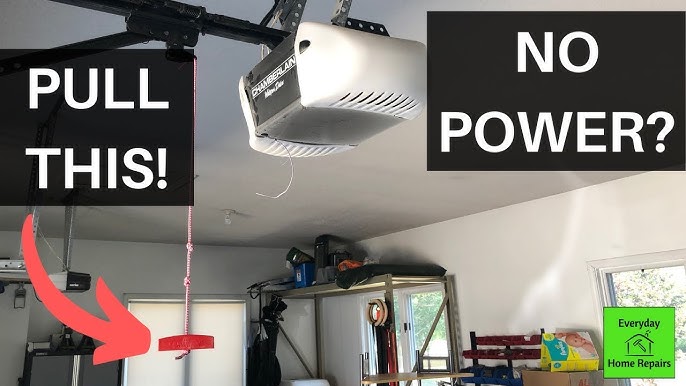
Garage door openers include a manual release—usually a red cord hanging from the opener’s rail. Pulling this cord disconnects the door from the opener, so you can move it by hand. If you don’t know where this cord is, look up at the center of your garage door (inside the garage).
Key Insight: Many people think the door is completely locked during an outage. In fact, the manual release is designed for emergencies like these.
Step-by-step Guide: Opening A Garage Door With No Power
Manual operation is simple if you follow the right steps. Here’s a breakdown for both situations: you are inside the garage, or you are outside.
If You Are Inside The Garage
1. Unlock The Door
Ensure the garage door is not locked manually. Many have a handle or deadbolt near the bottom; unlock it first.
2. Clear The Area
Remove any objects near the door. This prevents trips or falls.
3. Locate The Manual Release Cord
Look for the red cord hanging from the opener rail. It should be close to the motor.
4. Pull The Cord Firmly
Grasp the handle and pull down. This disengages the door from the opener trolley. You may hear a click.
5. Lift The Door Slowly
Hold the door with both hands near the bottom. Lift evenly. If the springs are in good shape, the door should move smoothly. If it’s heavy, ask for help.
6. Secure The Door Open
If you need to keep it open, prop it with a sturdy object. Some doors don’t stay open by themselves when disconnected.
7. Close The Door Carefully
Lower it slowly when done. Never let it drop.
If You Are Outside The Garage
Getting in from outside is trickier, but many doors have a manual release lock.
1. Find The Emergency Release Kit
Look for a small lock near the top center of the garage door. This keyhole is for the manual release.
2. Insert The Key And Unlock
Use the key to open the lock. Inside, you’ll see a cable. Pull it to release the door from the opener.
3. Lift The Door By Hand
Grab the handle at the bottom of the door. Lift slowly and evenly.
Important: If your door does not have an emergency release kit, you may not be able to open it from outside without damaging the door. This is a good reason to install a kit if you don’t have one.
Re-engaging The Opener After Power Returns
Once power is back, you should reconnect the opener.
1. Close The Door Completely
Make sure the door is all the way down.
2. Push The Manual Release Handle Forward
You’ll hear a click as it reconnects.
3. Test The Opener
Use your remote or wall button. The opener should operate normally.

Safety Precautions When Operating Manually
Garage doors are heavy and can be dangerous if handled incorrectly. Follow these safety tips every time:
- Never let the door drop. It can cause injury or damage.
- Use two hands for better control.
- Keep children and pets away from the door while moving it.
- Do not force the door if it’s stuck. Forcing can break the springs or cause other damage.
- Check the springs for wear. If they look stretched or you hear unusual noises, call a professional.
Expert Insight: Many injuries happen because people underestimate the weight of the door or do not watch their fingers. Always keep fingers away from the door’s edges.
Troubleshooting Common Problems
Sometimes, even with the right steps, your garage door won’t open. Here’s how to handle common issues.
The Door Is Too Heavy To Lift
This often means a broken spring. Springs carry most of the door’s weight. If one is broken, the door can weigh over 150 pounds.
- Do not try to force it. Call a garage door technician.
- Look for gaps in the spring above the door. That’s a sign it’s broken.
The Manual Release Cord Is Missing Or Broken
If you can’t find the cord, or it’s snapped:
- Look for the release lever on the opener trolley. You may be able to move it with a stick or tool.
- If stuck, call a professional. Forcing the mechanism can break it further.
The Door Is Jammed Or Off Track
If the door won’t move or is crooked:
- Stop immediately. Forcing a jammed door can make things worse.
- Inspect the tracks for obstructions or bends.
- If needed, call for service.
Non-obvious tip: Sometimes, a small rock or object in the track can stop the door. Shine a flashlight and check both sides.
The Door Re-engages But Opener Won’t Work
If the opener doesn’t pull the door after re-engaging:
- Ensure the door is closed fully. Openers need the door all the way down to reset.
- Check the opener’s power source. Sometimes, the outlet’s GFCI trips during an outage.
- Reset the opener by unplugging it for 30 seconds.
Comparing Manual Release Features On Different Garage Doors
Understanding your specific door’s features can make emergencies less stressful. Here’s a comparison of common types.
| Feature | Standard Sectional Door | One-Piece Tilt-Up Door | High-Lift/Commercial Door |
|---|---|---|---|
| Manual Release Cord | Usually present (red cord) | May have lever, not cord | Often chain or lever |
| Emergency Outside Release | Available as add-on kit | Rarely present | Usually inside only |
| Ease of Manual Lifting | Easy with good springs | Heavier, harder to lift | May require two people |
| Security When Disengaged | Needs manual lock | Manual locking bar | Commercial lock system |
Key Insight: Not all doors have the same safety features. Check yours before an emergency.
Preparing For Future Power Outages
A little preparation can save stress and time if the power goes out again.
Install An Emergency Release Kit
If you don’t have a way to open the door from outside, buy an emergency release kit. These are available online or at hardware stores. Installation is simple: drill a hole, insert the lock, and attach the cable to your manual release.
Test The Manual Release Regularly
Every few months, pull the cord to make sure it works. Lubricate the moving parts if needed.
Keep The Area Around The Door Clear
Store items away from the tracks and opener so you can get to the release quickly.
Maintain Springs And Rollers
Worn springs or rollers make manual operation much harder. If your door feels heavy or noisy, have it serviced.
Practical tip: Mark the manual release cord with a bright tag. In a blackout, you’ll find it quickly even with little light.
Alternative Solutions: Battery Backup, Smart Openers, And More
Some modern garage door openers offer extra convenience during power outages.
Battery Backup Systems
Many new openers come with battery backup. These units keep your door working for 1-2 days during an outage. You can open and close the door several times before the battery runs out.
- Cost: $50-$200 extra, depending on the model.
- Maintenance: Replace batteries every 2-3 years.
Smart Garage Door Openers
Some smart openers allow you to open the door with your phone, even if the power is out, as long as the opener has battery or you have another power source. Others send alerts if the door is left open.
Manual Deadbolts And Security
If you worry about security during an outage, consider adding a manual deadbolt. This prevents the door from being lifted from outside, even if someone releases the opener.
| Solution | Pros | Cons |
|---|---|---|
| Battery Backup Opener | Works without power, no manual lifting | Extra cost, batteries need replacing |
| Manual Deadbolt | Extra security, simple | Must be locked/unlocked by hand |
| Emergency Release Kit | Allows outside access | May reduce security if not used properly |
Expert advice: If your garage is attached to your house, always have a manual way to open it from both sides.
What To Do If You’re Locked Out
If you’re outside and can’t get in, your options are limited:
- Try all other doors and windows. Sometimes a side door is unlocked.
- Call a locksmith or garage door professional. They can open the door without damaging it.
- Consider installing an emergency release kit for the future.
Caution: Never try to force the door with a crowbar or similar tool. This can break the door panels and void your warranty.
Real-world Examples: When Power Loss Becomes An Emergency
Sometimes, opening a garage door manually is more than an inconvenience—it can be a safety issue.
- Fire or evacuation: During wildfires or storms, fast exit is critical. If you rely on the electric opener, you could be trapped.
- Medical emergencies: Needing to leave quickly for a hospital, but the door won’t open.
- Flooding: Water can knock out power. If your car is inside, you need a quick manual option.
Data point: According to the U.S. Fire Administration, about 6,000 garage fires occur each year. Quick exit matters.
Preventing Damage And Extending Door Life
Manually operating your garage door the right way prevents damage. Here’s how to keep your door working well:
- Lubricate moving parts (rollers, hinges, tracks) every 6-12 months.
- Inspect springs for signs of rust or stretching.
- Test the balance: With the door disconnected, lift halfway. It should stay in place. If it falls, springs need adjustment.
- Tighten bolts and screws regularly.
Non-obvious tip: If you notice black dust on the spring, it may be wearing out. Schedule service before it breaks.
Comparing Manual Operation Difficulty: Door Types And Sizes
Some doors are much easier to open by hand than others. Here’s a quick comparison:
| Door Size/Type | Manual Effort Needed | Best for Manual Use |
|---|---|---|
| Single Car (8×7 ft) | Light, easy for one person | Yes |
| Double Car (16×7 ft) | Heavier, may need two people | Possible with good springs |
| Insulated Door | Heaviest, may be difficult | Only if springs are perfect |
| Commercial/Industrial | Very heavy, often needs special tools | No, call a pro |
Helpful note: If your door is hard to move now, fixing it before an emergency is much easier than struggling during a power outage.
Professional Help: When To Call An Expert
While most homeowners can operate the manual release, some situations call for professional help:
- Broken or stretched springs
- Off-track doors
- Opener mechanism damage
- You feel unsafe or unsure
Garage door springs are under high tension. Improper handling can cause serious injury or death. Always hire a professional for spring repair or replacement.
Safety insight: If your door makes loud bangs or moves unevenly, stop and call for help. Attempting repair without proper tools is dangerous.
Frequently Asked Questions
How Do I Find The Manual Release Cord On My Garage Door?
Look above the center of your garage door, near the opener rail. The manual release cord is usually bright red and hangs down. It should be easy to reach from the ground. If you do not see it, check your opener’s manual or contact the manufacturer.
Is It Safe To Open A Heavy Garage Door By Myself During A Power Outage?
If your garage door is balanced and the springs are in good condition, most single doors can be lifted by one adult. Double or insulated doors may require two people. If the door feels stuck or extremely heavy, do not force it—call a professional.
What Should I Do If The Garage Door Won’t Open After Pulling The Manual Release?
First, check for obstructions in the tracks or visible damage. If nothing is obvious, your springs may be broken or the door may be off track. Avoid forcing the door, as this can make things worse. Contact a garage door technician for help.
Can I Re-engage The Opener After The Power Comes Back On?
Yes. Close the door fully, then push the manual release lever back toward the opener. You should hear a click. Test the opener with your remote or wall button. If it doesn’t work, check the opener’s power supply and consult your manual.
Are There Solutions To Prevent Manual Lifting During Outages?
Yes. Consider a battery backup opener or a smart opener with backup power. These devices allow you to open the garage door electrically even during outages. For more information, check resources like Consumer Reports.
Opening a garage door with no power is a basic skill that brings peace of mind, especially during storms, emergencies, or blackouts. With the right knowledge, a little practice, and some smart preparation, you’ll never be stuck again—no matter what the weather or the power company does.