
Now Reading: Why Does My Garage Door Open on Its Own? Top Causes Explained
- 01
Why Does My Garage Door Open on Its Own? Top Causes Explained
Why Does My Garage Door Open on Its Own? Top Causes Explained

Have you ever come home to find your garage door wide open—even though you know you closed it? Or maybe you’re inside your house, hear a strange noise, and realize the garage door is moving by itself. This is not just frustrating; it can be a serious security risk. Many homeowners face this mysterious problem and wonder, “Why does my garage door open on its own?” The answer can be simple, or sometimes surprisingly complex. Understanding the real reasons behind a self-opening garage door helps you keep your home safe, avoid expensive repairs, and regain peace of mind.
This in-depth guide explains why your garage door opens by itself. We’ll cover every possible cause—from common remote control issues to rare electrical faults. You’ll learn how to diagnose the problem, steps you can take to fix it, and when to call a professional. Whether you have a modern smart garage or an older system, this article will help you solve the mystery and protect your home.
How Garage Door Openers Work
Before we look at the reasons for accidental opening, it’s important to understand how garage door systems operate. Most garage doors use an electric opener connected to a motor. This opener is controlled by:
- Remote controls (handheld or in your car)
- Wall switches inside the garage
- Sometimes, a smartphone app or wireless keypad
The opener receives a signal, checks for safety (like sensors), and activates the motor to move the door up or down. If any part of this chain fails or gets a wrong signal, the door can open on its own.
Key Garage Door Components
- Remote transmitter: Sends the open/close signal.
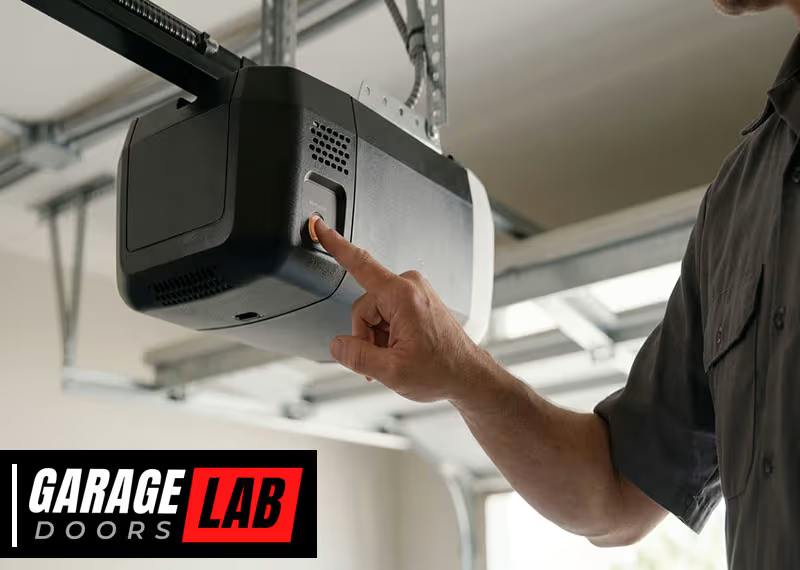
- Receiver unit: Built into the opener, listens for signals.
- Safety sensors: Infrared beams near the ground, stop the door if something is in the way.
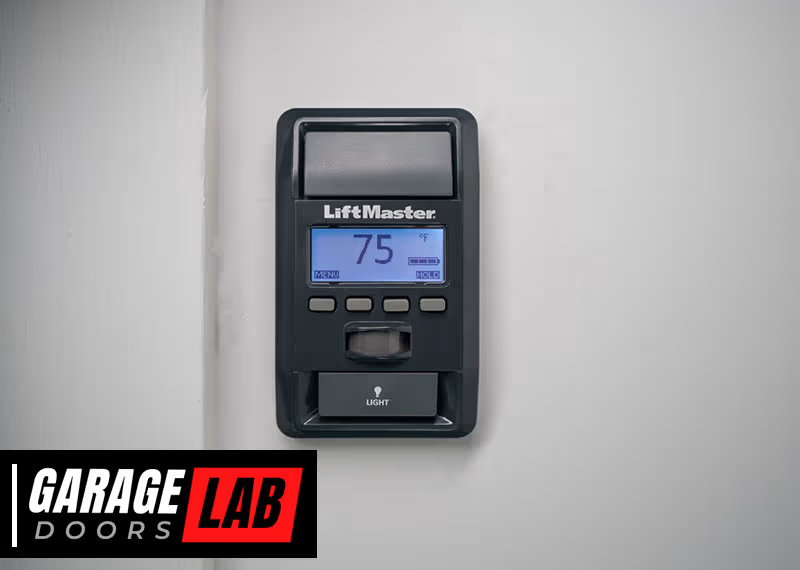
- Wall switch: Manual control inside the garage.
- Limit switches: Tell the opener when to stop moving.
- Control board: The system’s “brain,” processes all commands.
These parts must work together correctly. If any component malfunctions or receives interference, the door may open without warning.
Most Common Reasons Garage Doors Open By Themselves
There is no single answer to this problem. Let’s look at the most likely causes, with details to help you identify your specific issue.
1. Remote Control Problems
Remotes are often the main reason for unexpected garage door activity. Here’s how they can cause problems:
- Stuck buttons: Dirt or worn-out buttons can make the remote “stick,” sending a constant signal.
- Low batteries: Weak batteries can send incomplete or random signals.
- Lost remotes: If someone finds or steals your remote, they can open your door.
Check all remotes for stuck buttons and replace batteries regularly. If you’ve lost a remote, erase all codes from the opener and reprogram the ones you still use.
2. Radio Frequency (rf) Interference
Garage remotes operate on radio frequencies, usually between 300-400 MHz. Other devices in your neighborhood (like car alarms, baby monitors, or even airport radar) can use similar frequencies. This can cause cross-talk—your opener thinks it’s receiving a valid signal.
RF interference is more common in areas with many wireless devices. If your garage door opens at random times (not just when you use your remote), this may be the cause.
3. Faulty Wall Switch Or Wiring
The wall control inside your garage can also malfunction. If the wiring is damaged, worn, or exposed, it may send phantom signals to the opener.
Problems to look for:
- The wall button feels loose or sticky.
- You see frayed or exposed wires.
- The door moves on its own, even with remotes hidden.
Sometimes, rodents chew through wires, or humidity causes corrosion. Replacing a faulty switch or repairing wiring usually solves this issue.
4. Neighbor’s Remote Or Code Overlap
Older garage door openers (made before 1993) often used simple dip switch codes. If a neighbor’s remote shares the same code, their remote can open your door—and vice versa.
Even newer “rolling code” systems can sometimes overlap if not set up properly. If your garage door opens when your neighbor leaves or comes home, this is a strong clue.
5. Electrical Surges Or Power Issues
A power surge—from lightning or a sudden power outage—can scramble your opener’s electronics. This may reset the system, erase codes, or even trigger the door to open.
If you notice your garage door opens after a storm or blackout, a surge may be the cause. Use a surge protector for your opener to reduce this risk.
6. Faulty Safety Sensors
Garage doors use infrared sensors near the floor to prevent closing on objects or people. If these sensors are misaligned, dirty, or damaged, they can send mixed signals.
Symptoms of sensor problems:
- Door opens again immediately after closing.
- Door stops and reverses for no clear reason.
- Sensor lights blink or go out.
Clean the sensor lenses and check for alignment. If the problem continues, replace the sensors.
7. Control Board Malfunction
The control board is the opener’s circuit board. If it fails, it can send random signals to the motor—even if no remote or switch is pressed.
Signs of a bad control board:
- The door opens and closes at random times.
- Other controls (remote, wall switch) stop working.
- The opener makes clicking noises but doesn’t move the door.
Control board failure is more likely in older systems or after a power surge. Replacing the board is the best solution.
8. Smart Home Device Glitches
Modern garage doors often connect to Wi-Fi and smart home systems (like Google Home or Alexa). Software bugs, app glitches, or unauthorized access can trigger unwanted door activity.
If you use a smart garage system, check the app for logs or alerts. Update your software and change passwords regularly.
9. Programming Errors
Sometimes, improper setup or accidental programming can cause the opener to react to the wrong signals.
For example:
- Two remotes programmed with the same code.
- Keypad codes shared with other users.
- Opener set to “test” mode by accident.
Review your system’s manual and reset or reprogram devices as needed.
10. Environmental Factors
Extreme weather can affect garage door systems. High humidity, heavy rain, or freezing temperatures may cause switches to stick or sensors to fail. Rodents and insects can also chew through wires or build nests inside the opener.
If the problem happens only in certain weather, this may be a clue.
How To Troubleshoot: Step-by-step Guide
Finding the cause of a self-opening garage door takes patience and a systematic approach. Here’s a practical process you can follow at home:
Step 1: Rule Out Human Error
First, make sure everyone in your home knows how to use the system. Sometimes, a family member or neighbor accidentally presses the remote or wall switch. Keep remotes out of reach of children.
Step 2: Check All Remotes And Wall Controls
- Inspect remotes for stuck buttons or damage.
- Change the batteries.
- Remove batteries from each remote (one at a time) and see if the problem stops.
- Test the wall switch—does it feel sticky or loose?
Step 3: Look For Code Overlap
- Ask neighbors if their garage doors are acting strangely.
- Reprogram your remotes with a new code. For rolling code systems, follow the manual’s instructions.
Step 4: Inspect For Electrical Or Wiring Issues
- Look for frayed wires, especially near the wall switch.
- Check for signs of water damage, corrosion, or rodent activity.
- Tighten any loose connections.
Step 5: Test The Sensors
- Clean the sensors with a dry cloth.
- Make sure they are aligned (the lights should be steady, not blinking).
- Remove any objects blocking the sensor’s path.
Step 6: Observe Patterns
- Does the door open only at certain times? (e.g., after storms, at night, when using other devices)
- Write down when and how often the problem happens. This helps narrow down the cause.
Step 7: Disconnect Smart Devices
- If you use a smart garage opener, log out of the app and change your password.
- Disconnect from Wi-Fi and test the door manually.
Step 8: Power Cycle The Opener
- Unplug the opener for 30 seconds, then plug it back in.
- This can clear minor glitches in the control board.
Step 9: Reset The System
- Erase all remote codes from the opener’s memory.
- Reprogram only the remotes you still have.
Step 10: Call A Professional
If you’ve tried all the above steps and the problem continues, it’s time to consult a garage door technician. Some issues (like control board failure or deep wiring problems) require expert tools and knowledge.
Non-obvious Insights Most Homeowners Miss
Many articles cover the basics, but there are a few things most people overlook:
- Unusual RF Interference: Sometimes, interference comes from sources you wouldn’t expect. For example, military bases, TV broadcast towers, or even certain LED light bulbs can disrupt the signal. If you recently added new electronics in your home or neighborhood, consider turning them off one by one to test.
- Unsecured Smart Devices: If your garage is connected to Wi-Fi, hackers could exploit weak passwords. Use strong, unique passwords and update your software often. Check your device logs for unfamiliar access.
- Garage Door Opener Age Matters: Systems older than 20 years are much more likely to have code overlap, wiring issues, or worn-out parts. Sometimes, the safest solution is a full upgrade to a modern system with rolling codes and better security.
- Limit Switch Issues: If the limit switches are set incorrectly, the door might reopen after closing because it thinks it hasn’t reached the end. Adjusting these switches can stop the door from reopening itself.
- Hidden Remotes: Sometimes, a spare remote falls between car seats or is forgotten in a drawer. If the button gets pressed accidentally, the door may open. Do a full inventory of all remotes.
How To Prevent Garage Door From Opening On Its Own
Once you’ve solved the immediate problem, take steps to prevent it from happening again.
Upgrade To Rolling Code Technology
Modern openers use rolling codes—the remote and opener change codes every time you press the button. This stops thieves and neighbors from opening your door with their remotes.
If your system is older, consider upgrading for better security.
Use A Surge Protector
Connect your garage door opener to a surge protector. This simple device can prevent power surges from damaging the control board.
Regular Maintenance
- Lubricate moving parts.
- Clean and align sensors.
- Check wires for wear or damage.
- Replace batteries in remotes twice a year.
Secure All Remotes
- Keep remotes out of sight in your car.
- Never leave a remote in a car parked outside.
- If you lose a remote, erase all codes and reprogram.
Secure Smart Home Devices
- Use strong passwords and two-factor authentication.
- Update software and firmware regularly.
- Log out of unused devices and apps.
Professional Inspection
Have a professional inspect your garage door system every two years. They can spot problems you might miss.
When To Replace Your Garage Door Opener
Sometimes, fixing an old system costs more than replacing it. Here are signs you should consider a new opener:
- Your opener is over 15-20 years old.
- You have repeated electrical or control board issues.
- The system uses fixed codes (dip switches).
- Replacement parts are hard to find.
Modern systems offer better security, quieter operation, and smart features. They’re also less likely to open by themselves.
Here’s a quick comparison between old and modern garage door openers:
| Feature | Old Openers | Modern Openers |
|---|---|---|
| Code Technology | Fixed code (dip switch) | Rolling code (secure) |
| Smart Features | None | Wi-Fi, app control |
| Security | Easy to hack/interfere | High security |
| Power Surge Protection | Rare | Common |
| Replacement Parts | Often unavailable | Easy to find |
How Garage Door Brands Compare In Security
Not all garage door openers are equal. Some brands have better security features than others. Here’s a look at how popular brands compare:
| Brand | Standard Security | Rolling Code | Smart Integration |
|---|---|---|---|
| Chamberlain | High | Yes | Yes |
| LiftMaster | High | Yes | Yes |
| Genie | Medium | Yes | Some models |
| Craftsman | Medium | Yes | Some models |
| Linear | Low-Medium | Some models | No |
Choose a brand with rolling code technology and regular software updates for best results.
The Real Risks Of A Garage Door That Opens On Its Own
This isn’t just an annoyance. Here’s why you should take it seriously:
- Security risk: An open garage gives thieves easy access to your home and belongings.
- Weather damage: Wind, rain, or snow can enter your garage, damaging tools and vehicles.
- Safety hazard: Children or pets could wander into the garage and get hurt.
- Insurance issues: Some insurance policies may not cover theft or damage if the garage was left open.
A garage door that opens by itself is a sign something is wrong—don’t ignore it.
What To Do If You Can’t Fix The Problem
If you’ve tried all troubleshooting steps and the problem continues, here’s what to do:
- Unplug the opener when you’re not using it. This is not a long-term fix, but it prevents unwanted opening.
- Lock the manual latch on your garage door, if you have one.
- Call a licensed garage door technician. Look for reviews and certifications before hiring.
- Consider a full system upgrade if your opener is very old or replacement parts are unavailable.
Cost Of Repairs And Upgrades
Understanding costs helps you plan. Here are typical price ranges in the US:
- Remote replacement: $25–$60
- Wall switch replacement: $40–$80
- Sensor replacement: $50–$100
- Control board replacement: $100–$200
- Full opener replacement: $250–$600 (parts and labor)
- Smart opener upgrade: $300–$800
Prices vary by brand and region. Sometimes, a new opener is more cost-effective than repairing an old one, especially if you want smart features.
Expert Tips For Long-term Peace Of Mind
- Test your garage door’s operation every month.
- Store all spare remotes in a safe place.
- Write down your opener’s serial/model number for quick reference.
- Register your smart opener with the manufacturer for software updates.
- If you move to a new home, always reset and reprogram all remotes and codes.
Real-world Example
Consider this case: A family in Texas noticed their garage door opened every morning at 7:15 a.m. After ruling out remotes and smart devices, they discovered a new city bus route had started nearby, using a transmitter on the same frequency as their opener. Changing to a rolling code opener solved the problem instantly. This shows how unexpected sources can trigger your garage door.
Where To Find More Help
For technical details, you can check the U.S. Consumer Product Safety Commission’s garage door safety page at CPSC Garage Door Safety. This resource covers recalls, safety tips, and more.
Frequently Asked Questions
Why Does My Garage Door Open By Itself Only At Night?
This often happens due to electrical interference or power surges, which are more common when local power demand changes. It could also be a neighbor’s remote, or a smart device set to a timer.
Can Someone Hack My Garage Door Opener?
Yes, especially if you use an older system with fixed codes or a weak smart device password. Upgrade to a rolling code system and use strong passwords for smart openers to stay safe.
Will A New Garage Door Opener Stop This Problem?
In most cases, yes. Modern openers have better security, rolling codes, and improved electronics. If your current system is old or unreliable, a new opener is a smart investment.
What Should I Do If I Lost My Garage Door Remote?
Erase all codes from your opener and reprogram only the remotes you have. This prevents anyone who finds your old remote from opening your garage.
How Often Should I Service My Garage Door System?
It’s wise to have a professional check your garage door and opener every two years, or sooner if you notice strange behavior. Regular maintenance prevents most unexpected problems.
A garage door that opens on its own can be unnerving, but with careful troubleshooting and a few upgrades, you can restore security and confidence. Pay attention to the signs, act quickly, and don’t hesitate to seek expert help. Protect your home and enjoy peace of mind every day.